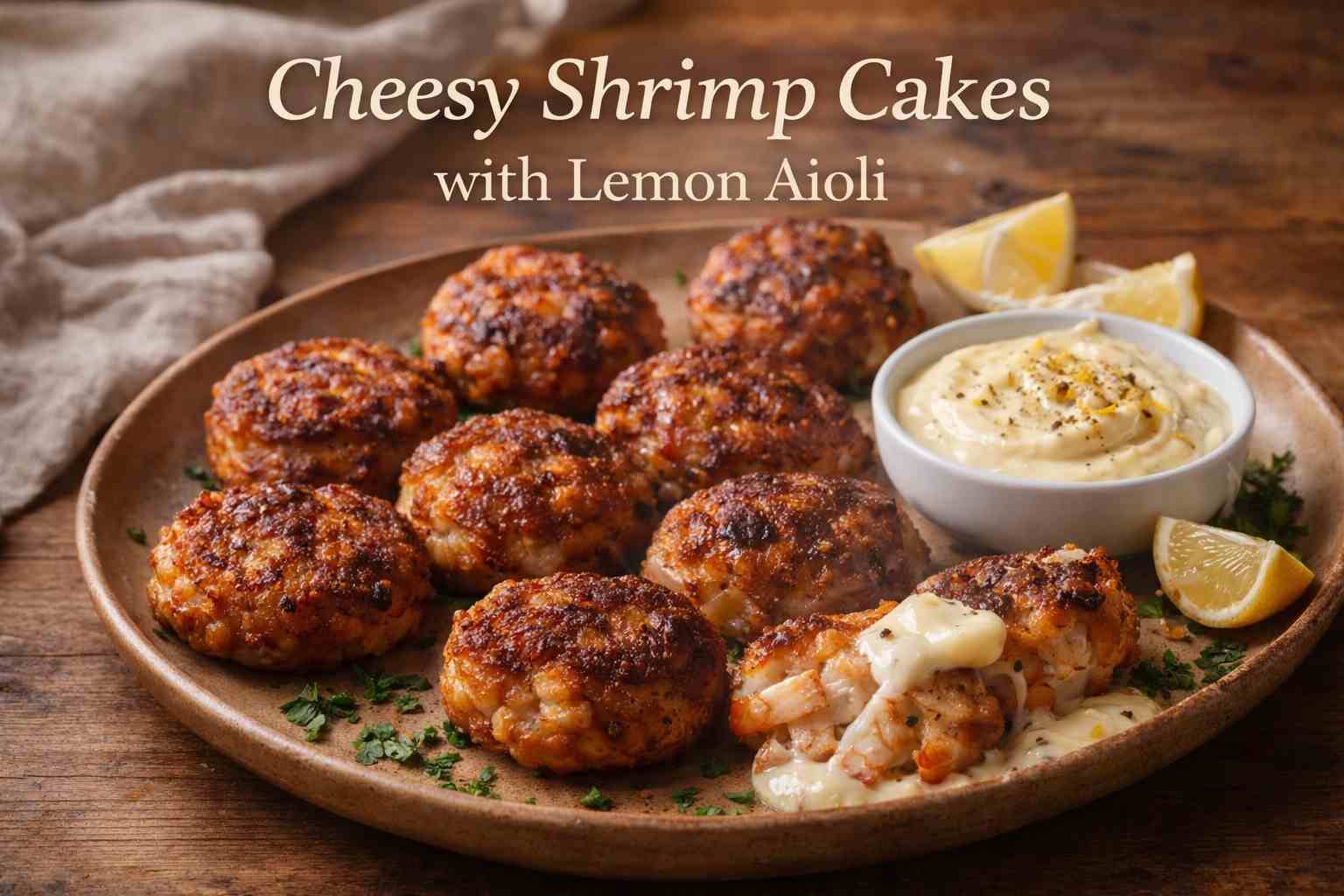
There is a particular category of appetizer that accomplishes something genuinely difficult in the kitchen: it looks and tastes like the product of considerably more skill and effort than it actually requires, impresses guests who would never think to attempt it themselves, and delivers a flavor combination so well-considered and complete that it functions simultaneously as a serious starter and a conversation piece. Cheesy Shrimp Cakes with Lemon Aioli belong squarely in this category, and they belong there with confidence. Twelve to fifteen golden, crispy-exteriors-tender-interior patties, each one packed with hand-chopped shrimp and stretchy mozzarella, served alongside a bright, garlic-forward lemon aioli that is both the dish’s dipping sauce and its flavor counterweight — this is the kind of appetizer that clears a serving platter in minutes and generates immediate requests for the recipe.
What makes these shrimp cakes work — and what separates this version from the simpler, blunter seafood cakes that appear at casual dining restaurants as an afterthought — is the combination of intelligent ingredient selection and disciplined technique at every stage. The shrimp are chopped by hand rather than processed in a food processor, because hand-chopping produces pea-sized pieces with distinct texture and presence rather than the uniform, protein-paste consistency that food-processed shrimp produces. The mozzarella is folded in as a structural and flavor element, not merely as a garnish — it melts during cooking and binds the interior of each cake into a cohesive, slightly chewy, richly flavored matrix that holds the chopped shrimp pieces together in a way that flour alone cannot accomplish. The binder is egg plus mayonnaise rather than the more conventional egg plus breadcrumbs, and this decision produces a meaningfully more tender interior — the mayo’s emulsified fat lubricates the protein network as it sets during cooking, preventing the compact, dry chewiness that breadcrumb-bound seafood cakes frequently exhibit. And the lemon aioli is made entirely from scratch in three minutes — real lemon zest and juice, real pressed garlic, real mayonnaise whisked together — producing a sauce with the bright, complex citrus character that any pre-made alternative cannot approach.
The total time from first ingredient to first bite is under 40 minutes. The technique required is intermediate rather than advanced. And the result, plated on a warm serving dish with the aioli in a small bowl alongside and a scatter of fresh lemon wedges for garnish, is the kind of appetizer that earns the specific compliment every cook wants most: “I can’t believe you made this at home.”
Recipe Details
| Detail | Info |
|---|---|
| Cuisine | American-Mediterranean |
| Course | Appetizer / Starter |
| Difficulty | Easy to Intermediate |
| Yield | 12–15 Cakes (4 Servings) |
| Prep Time | 20 Minutes |
| Cook Time | 15–18 Minutes |
| Total Time | 35–38 Minutes |
| Calories per Serving | 285–320 kcal |
Ingredients
For the Shrimp Cakes:
- 1 lb large shrimp (21–30 count), peeled, deveined, and patted completely dry
- 1½ cups shredded mozzarella cheese (approximately 4 oz)
- 1 large egg
- ¼ cup mayonnaise
- ¼ cup all-purpose flour (or gluten-free flour blend)
- 2 tbsp fresh flat-leaf parsley, finely chopped
- ½ tsp kosher salt
- ⅛ tsp freshly ground black pepper
- 1–2 tbsp olive oil, for cooking
For the Lemon Aioli:
- ½ cup mayonnaise
- 1 tsp fresh lemon zest
- 2 tbsp fresh lemon juice (approximately ½ large lemon, squeezed after zesting)
- 1 large garlic clove, pressed or very finely minced
Step-by-Step Instructions
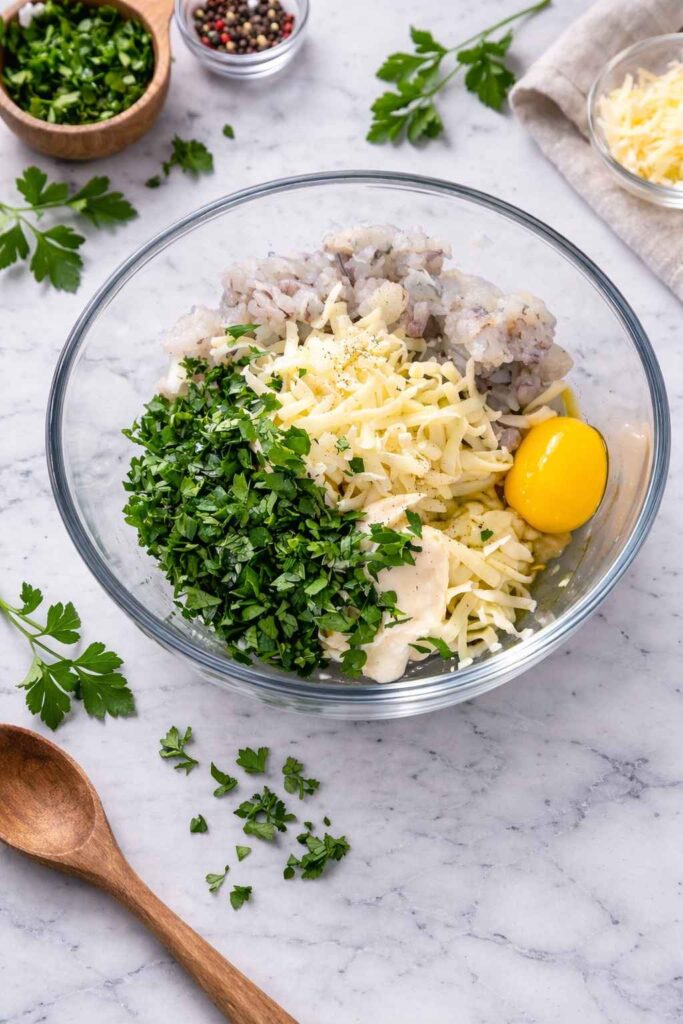
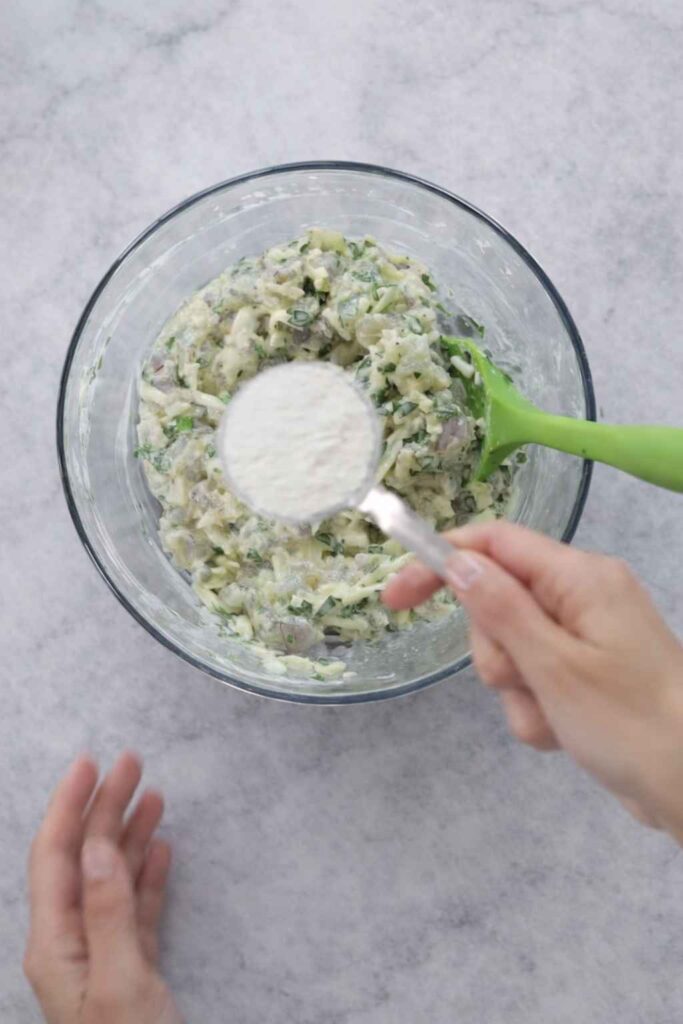
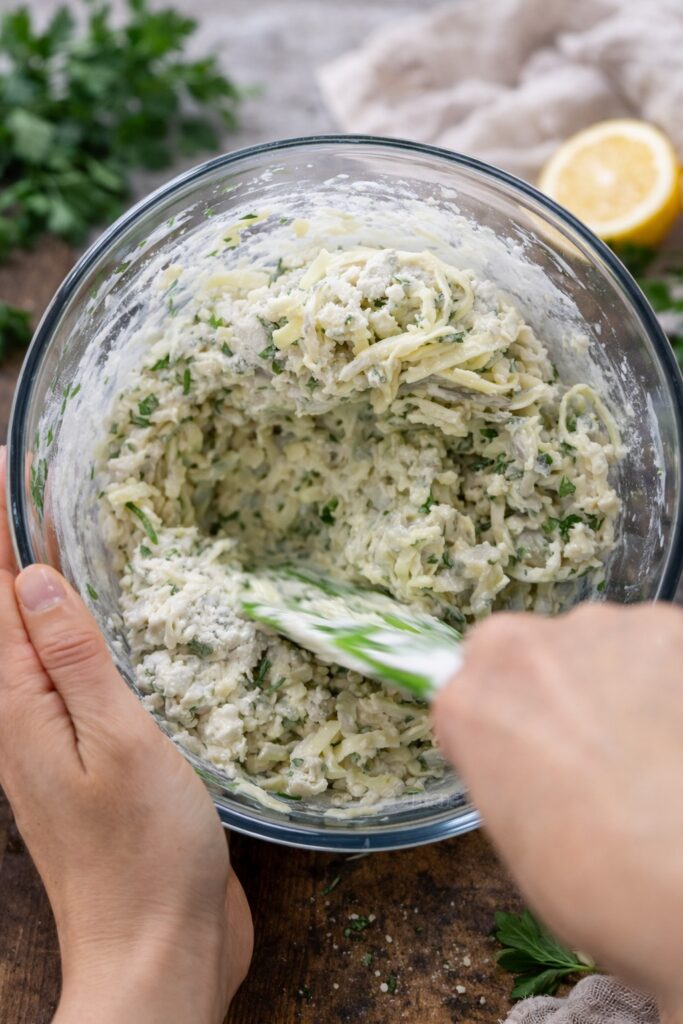
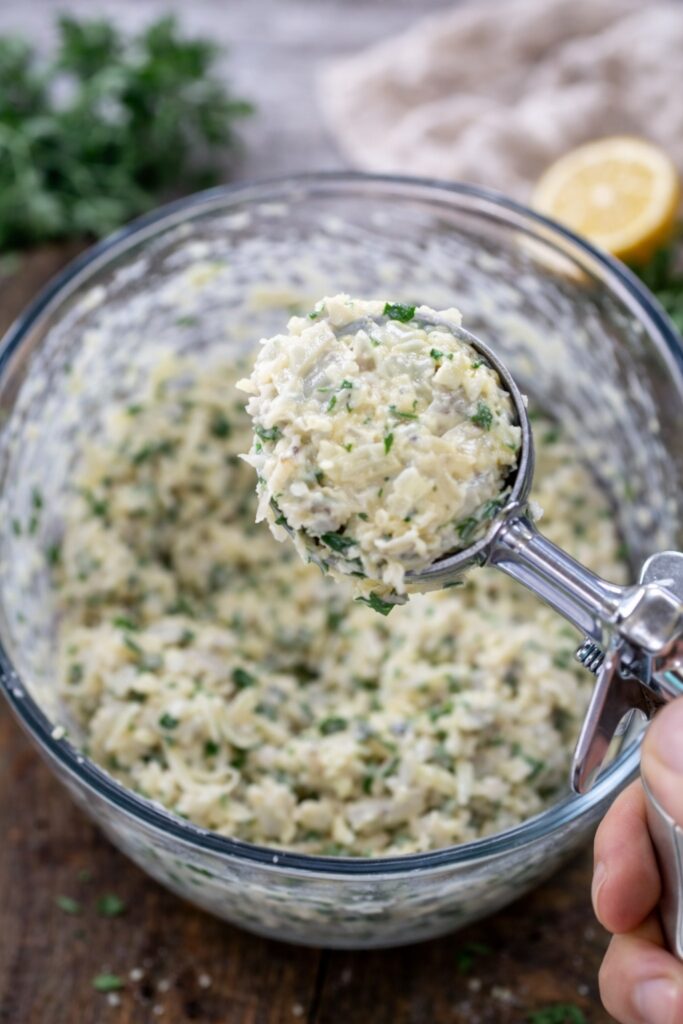
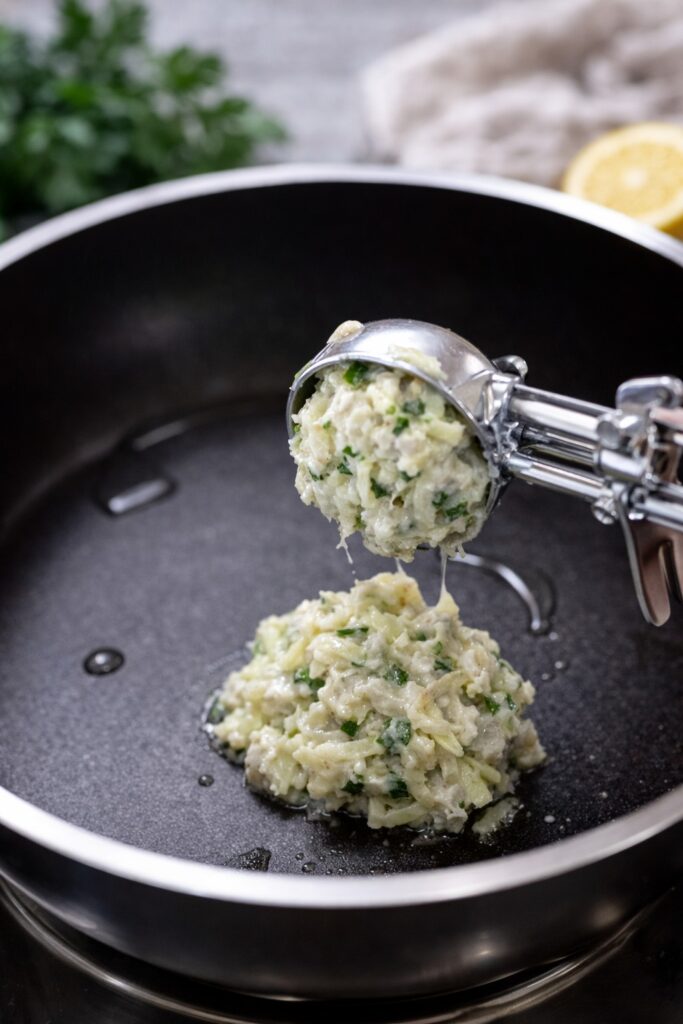
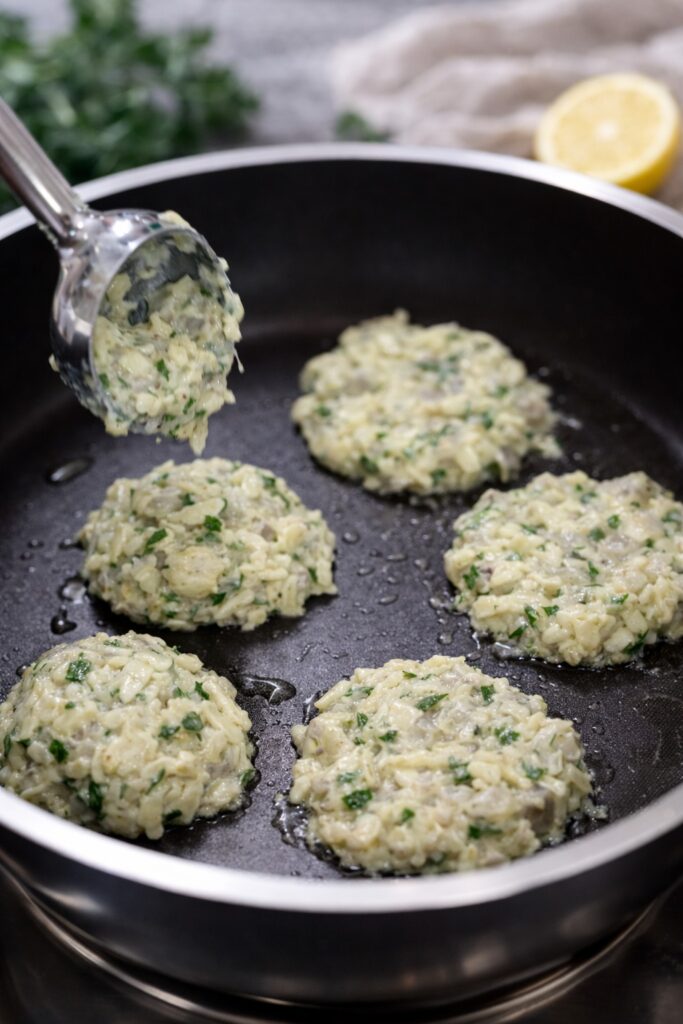
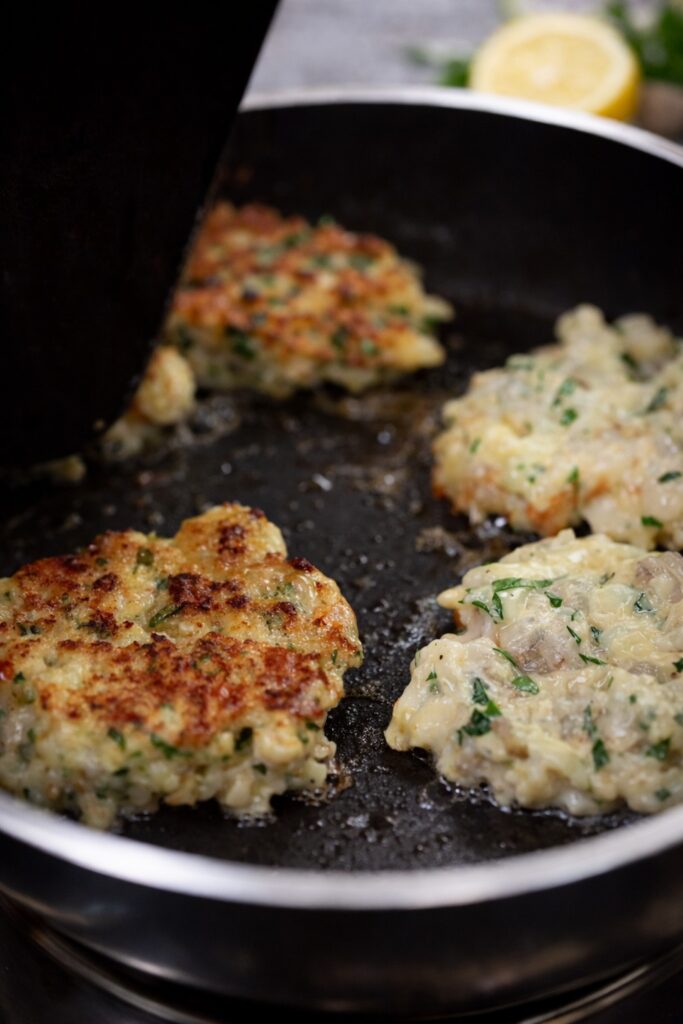
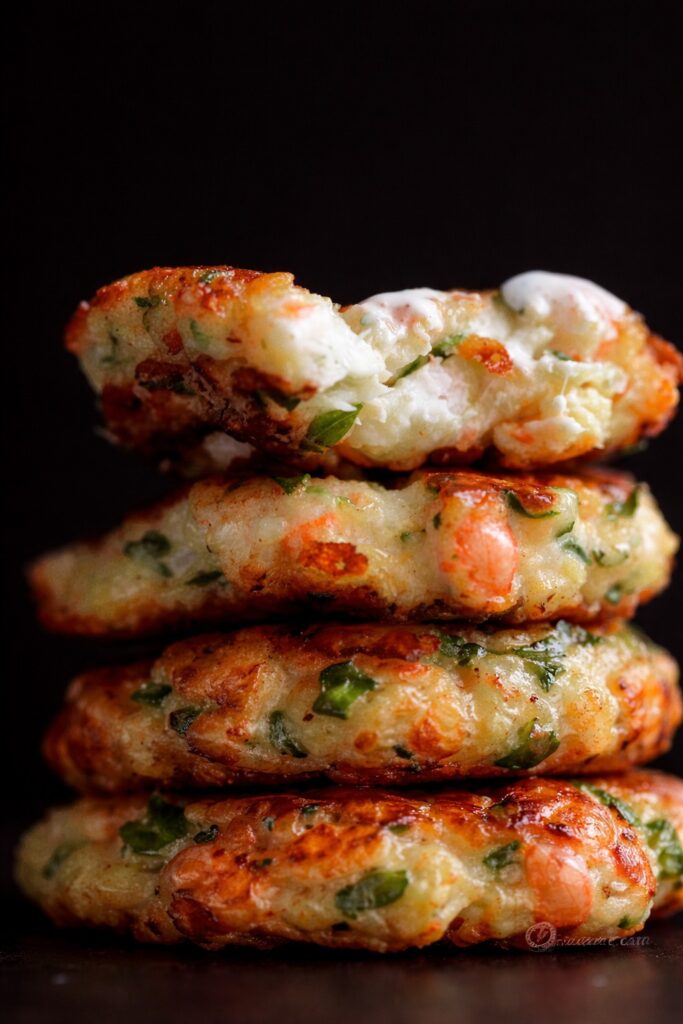
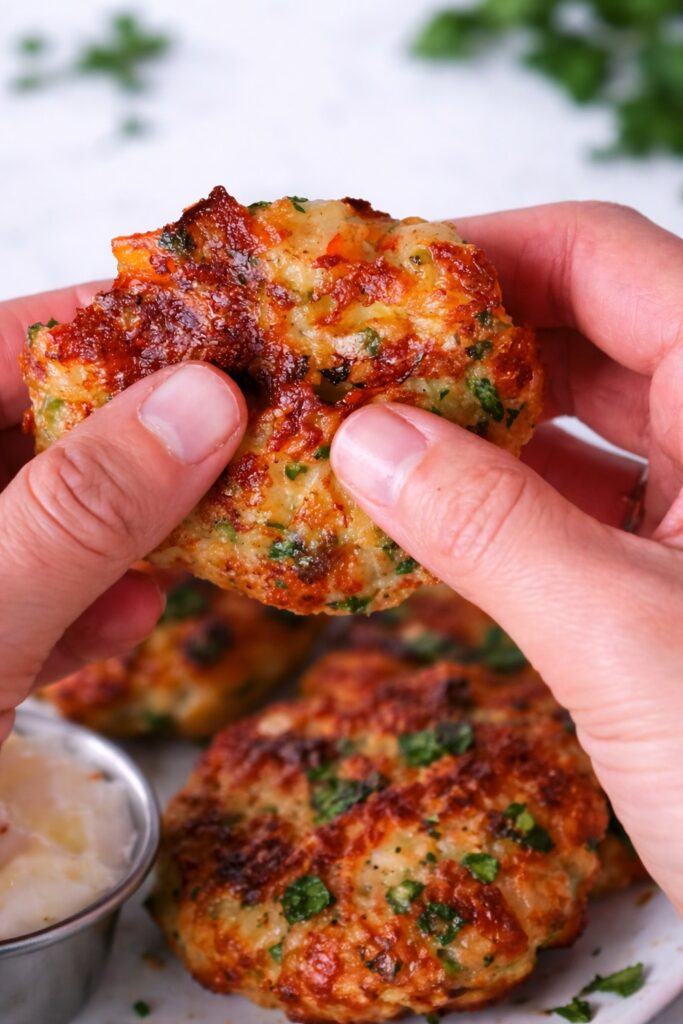
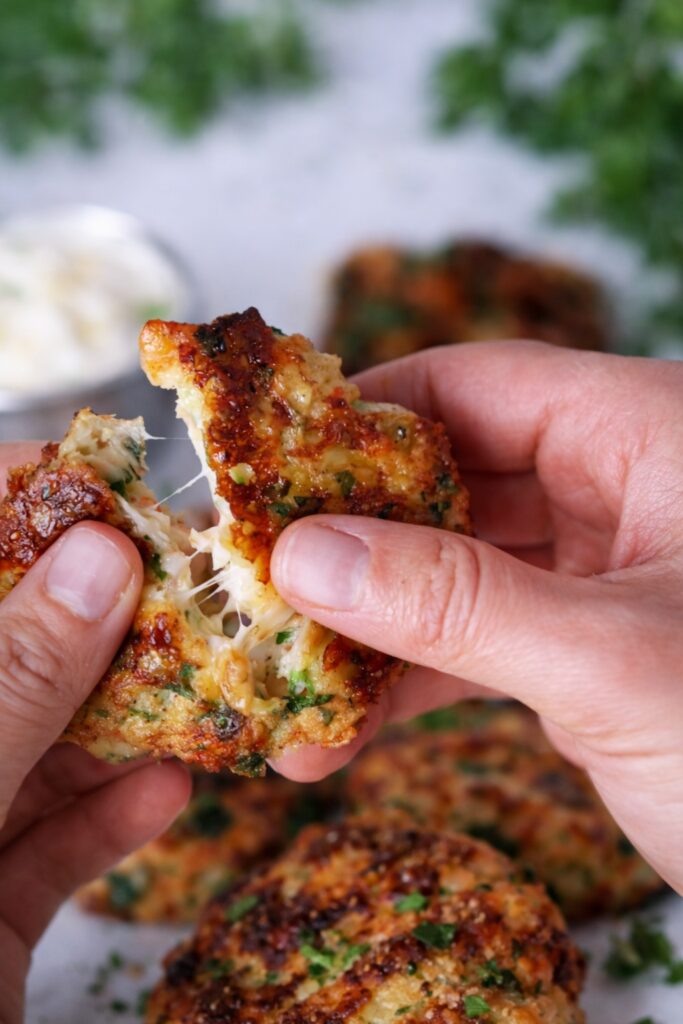
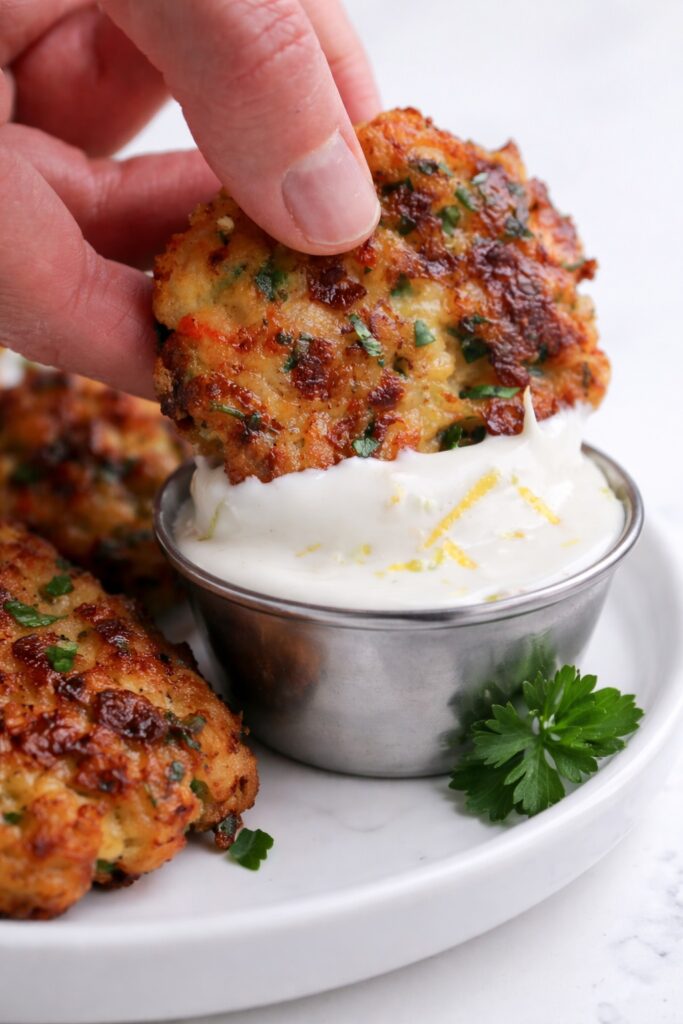
Step 1 — Prepare the Shrimp: Hand-Chopping for Superior Texture
The quality of every shrimp cake you produce begins and ends with this step, and it must be done correctly. Start by patting the peeled and deveined shrimp as thoroughly dry as you can — lay them flat on a double layer of paper towels, press another layer on top, and allow them to rest for a minute before proceeding. The reasoning is structural: surface moisture on the shrimp prevents clean chopping (the shrimp slide under the knife rather than cutting cleanly), causes the shrimp pieces to clump together when combined with the other wet ingredients, and introduces additional water content into the batter that must be compensated for with additional flour — compromising the tenderness of the finished cake. Dry shrimp chop cleanly, combine cleanly, and produce a batter of the correct consistency without adjustment.
On a clean cutting board, chop the dry shrimp with a sharp chef’s knife into approximately pea-sized pieces — roughly ¼ inch in any dimension. This is the critical texture decision that defines these cakes: pieces this size are small enough to distribute evenly throughout the batter and hold together during cooking, but large enough to provide distinct, identifiable shrimp texture in every bite rather than disappearing into the surrounding binder. Do this by hand and with patience — do not be tempted by the speed of the food processor. A food processor, even pulsed briefly, applies indiscriminate mechanical force that produces a significant quantity of paste-like mince alongside the larger pieces, creating an inconsistent texture in the finished cake. A knife gives you complete control over every piece.
Step 2 — Build the Wet Base
In a large mixing bowl, crack the egg and whisk it vigorously for 30 to 45 seconds — until the yolk and white are completely homogenized, with no visible streaks of white remaining. Any unincorporated egg white in the batter will create dense, white, rubbery pockets within the finished cake where the protein has set separately from the surrounding mixture. Add the ¼ cup of mayonnaise to the beaten egg and whisk until the two are completely smooth and unified. The egg and mayonnaise combination functions as this recipe’s primary binder — the egg provides protein that coagulates during cooking and holds the cake’s structure, while the mayonnaise provides the emulsified fat that lubricates the protein network as it sets, preventing toughness and keeping the interior creamy and tender. This is the functional argument for mayonnaise over breadcrumbs: breadcrumbs absorb moisture and provide structure, but they do not actively contribute fat-based tenderness the way mayonnaise’s oil-in-water emulsion does.
Step 3 — Add the Shrimp, Cheese, and Seasonings
Add the hand-chopped shrimp to the wet base and stir to coat. Follow with the shredded mozzarella, distributing it as evenly as possible through the mixture rather than dropping it in as a single mass. Add the finely chopped parsley, the salt, and the freshly ground black pepper. Using a silicone spatula or wooden spoon, fold these ingredients together with a gentle, turning motion — not stirring, which would compress the mixture — until they are evenly distributed and the batter appears uniform in color throughout. Stop the moment you reach this point. Overmixing at any stage of this recipe works against you: it compresses the mixture, encourages myosin cross-linking in the shrimp protein, and begins developing gluten in the flour that will be added in the next step — all of which produce a dense, rubbery finished cake rather than the tender, yielding result the recipe targets.
Step 4 — Add the Flour and Assess the Consistency
Sprinkle the ¼ cup of flour evenly over the surface of the shrimp mixture rather than adding it in a concentrated pour — even distribution means less mixing required to incorporate it, which means less gluten development and a more tender cake. Fold the flour into the mixture with the same gentle motion until it is completely incorporated and no dry flour pockets are visible. Assess the consistency: the batter should be thick enough to hold a mounded shape when scooped and to maintain that shape when flattened in the pan, but not so stiff that it resists flattening or so wet that it flows and spreads. The reference texture is thick crab cake batter — substantial and cohesive without being heavy or overly dense. If the batter appears too wet (it spreads or flows when placed on a surface), add flour one tablespoon at a time, folding gently after each addition. If it appears too dry (it cracks at the edges when flattened), add mayonnaise one tablespoon at a time.
If time allows, refrigerate the batter for 20 to 30 minutes before cooking. The cold temperature firms the mozzarella and slightly stiffens the mayonnaise emulsion, producing a batter that scoops more cleanly, holds its shape more reliably during the flattening step, and releases from the pan more easily. This is a useful step for first-time makers of this recipe, as it provides additional insurance against the common failure mode of cakes that spread or fall apart in the pan.
Step 5 — Heat the Pan Correctly
Place a wide, heavy-bottomed non-stick skillet over medium heat and allow it to preheat for 1 full minute before adding oil. A pan that is preheated before the oil is added reaches a more even, stable temperature distribution across its surface than one in which oil and pan heat simultaneously — the oil can then be brought quickly to cooking temperature without the uneven hot spots that form when a cold pan is rapidly heated with oil already present. Add 1 tablespoon of olive oil and allow it to heat for approximately 30 to 45 seconds until it shimmers visibly across the pan surface — the shimmer indicates the oil has reached approximately 350–375°F (175–190°C), the correct temperature for developing a golden-brown crust on the shrimp cakes within the 3-minute cooking window per side without burning the exterior before the interior cooks through.
The temperature calibration here matters specifically because the cakes contain raw shrimp that must reach 165°F (74°C) at their thickest interior point during the approximately 6 minutes of total pan time. Medium heat maintains the pan temperature in the correct range to achieve surface browning and interior protein coagulation simultaneously — high heat would brown the exterior in 1 to 2 minutes and leave the center undercooked, while low heat would cook the interior through without developing the golden crust that provides this recipe’s defining textural contrast.
Step 6 — Cook the First Batch: Patience and Timing
Using a heaping tablespoon or a small ice cream scoop (approximately 2 tablespoons of batter per cake), portion the shrimp mixture into the hot pan, placing portions with clear space between them — typically 4 to 5 cakes in a standard 10-inch skillet. Immediately after placing each portion, use a spatula to gently press it to approximately ½ inch thickness. Apply the flattest, broadest portion of the spatula to each cake and press with moderate, even pressure — enough to create a flat, uniform disc with consistent thickness across its surface, not enough to compress the cake into a dense, hockey-puck texture. Uniform thickness is essential for even cooking: a cake that is thicker in the center than at its edges will have an undercooked center when the edges are correctly done, or perfectly cooked edges when the center finally reaches temperature.
Allow the cakes to cook completely undisturbed for exactly 3 minutes. The temptation to check, nudge, or lift the cakes before this time has elapsed is one of the most common failure points in this recipe: disturbing the cakes before the protein at their base has fully set and the mozzarella has melted and created a cohesive bottom surface causes the crust to separate, the cakes to stick, and the carefully assembled structure to fall apart when you attempt the flip. Three minutes of undisturbed contact with the hot pan surface builds the structural crust that makes the flip possible. After 3 minutes, slide a thin, rigid spatula fully underneath each cake — ensuring complete support before lifting — and flip in a single, confident motion. Allow the second side to cook for 3 minutes undisturbed. Transfer the cooked cakes to a warm plate and tent loosely with foil — not tightly, which would trap steam and soften the just-developed crust.
Step 7 — Complete the Remaining Batches
Wipe the pan thoroughly with a folded paper towel between batches, removing any browned bits or residual batter that would burn in the hot pan and impart bitter, overcooked notes to the next batch’s cakes. Add another tablespoon of fresh olive oil, allow it to reach temperature, and repeat the process with the remaining batter. Monitor the pan temperature through the second and any subsequent batches — the pan may be hotter from the first batch than it was at the start, and cakes added to an overly hot pan will brown too rapidly before the interior has had adequate cooking time. If you notice the cakes darkening significantly faster than the first batch did, reduce the heat slightly to medium-low before adding the second batch.
Step 8 — Make the Lemon Aioli
While the final batch of cakes finishes cooking, prepare the aioli — a 3-minute assembly that requires no cooking. In a small bowl, whisk the mayonnaise briefly to smooth out any separation that may have occurred during storage, then stir in the lemon zest. Zest must always be added before juice — the zest’s essential oils (primarily limonene) are fat-soluble and distribute readily through the fat-based mayonnaise when stirred, but are difficult to incorporate evenly once the acidic lemon juice has begun breaking down the mayonnaise’s emulsion structure. Add the lemon juice gradually, stirring constantly, incorporating it into the mayonnaise slowly enough that the emulsion absorbs the acid without breaking — the finished aioli should remain thick, creamy, and spoonable rather than becoming thin or watery. Add the pressed or very finely minced garlic and stir until evenly distributed. Taste and adjust: more lemon juice for additional brightness, a pinch of salt if needed, a whisper of white pepper if desired.
Step 9 — Serve
Arrange the warm shrimp cakes on a serving platter with a small bowl of the lemon aioli alongside, or place a small dollop of aioli directly atop each cake for a more composed presentation. Garnish with fresh lemon wedges and additional parsley if desired. Serve immediately while the exteriors are at peak crispness.
Shrimp Cakes with Lemon Aioli
Hand-chopped shrimp + mozzarella cakes with a bright, garlicky lemon aioli
- 1 lb large shrimp (21–30), peeled, deveined, patted dry
- 1½ cups shredded mozzarella (about 4 oz)
- 1 large egg
- ¼ cup mayonnaise
- ¼ cup all-purpose flour (or GF blend)
- 2 tbsp flat-leaf parsley, finely chopped
- ½ tsp kosher salt
- ⅛ tsp black pepper
- 1–2 tbsp olive oil, for cooking
- ½ cup mayonnaise
- 1 tsp lemon zest
- 2 tbsp lemon juice (about ½ large lemon)
- 1 large garlic clove, pressed or minced
Hand-Chop the Shrimp
Pat shrimp very dry. Chop by hand into pea-sized pieces (~¼”). Avoid food processor for best texture.
Make the Wet Base
Whisk egg until fully smooth. Whisk in ¼ cup mayo until unified and glossy.
Fold in Mix-Ins
Fold in shrimp, mozzarella, parsley, salt, and pepper gently until evenly distributed.
Add Flour & Chill (Optional)
Sprinkle flour over the top and fold just until incorporated. If possible, chill 20–30 min for easier shaping.
Heat the Pan
Preheat a non-stick skillet over medium 1 minute. Add 1 tbsp olive oil; heat until shimmering.
Cook the Cakes
Scoop ~2 tbsp per cake, press to ½” thick. Cook undisturbed 3 min per side until golden and set. Cook in batches.
Make Lemon Aioli
Stir mayo + zest first, then whisk in lemon juice gradually. Stir in garlic. Adjust to taste.
Serve
Serve warm shrimp cakes with lemon aioli on the side (or dolloped on top). Enjoy immediately.
Conclusion: Three Principles for Perfect Shrimp Cakes
The Cheesy Shrimp Cakes with Lemon Aioli recipe is built on three fundamental principles, and understanding them makes every aspect of the process make sense. First: moisture management. Dry shrimp, properly assessed batter consistency, and the refrigeration rest before cooking all serve the same goal — controlling the water content in the batter to produce cakes that brown crisply rather than steaming in their own moisture. Every moisture-control step in this recipe is there for a specific structural reason, and skipping any of them compromises the final result in a predictable and identifiable way.
Second: protein protection. The decision to mix minimally, to use mayonnaise rather than breadcrumbs, and to cook at medium rather than high heat are all decisions made in service of the same outcome — keeping the shrimp and egg proteins from forming the tight, chewy, cross-linked network that produces dense, rubbery seafood cakes. Every instruction that says “fold gently” or “do not overmix” or “resist the urge to press hard” is preventing this protein toughening. Follow these instructions and the cakes will be tender. Ignore them and the texture will suffer in proportion.
Third: the lemon aioli is not optional. It would be technically possible to serve these cakes with any number of dipping sauces — tartar sauce, cocktail sauce, a simple remoulade — and they would be good. But the specific combination of mayonnaise, lemon zest, lemon juice, and fresh garlic in this aioli creates a sauce that is simultaneously a flavor complement (its bright citrus and garlic notes contrast perfectly with the rich, cheesy, savory cakes) and a textural contrast (its cool, creamy smoothness against the warm, golden-crusted exterior). The pairing was designed, and it works. Make the aioli.
At 285–320 calories per serving, these shrimp cakes provide a meaningfully satisfying appetizer with excellent protein content — 24g per serving from the shrimp and cheese — in a format that scales easily for larger groups, prepares partially in advance, and presents beautifully at any occasion from casual entertaining to formal dinner parties. They are, in every practical sense, the ideal gourmet home appetizer.
Common FAQs on Shrimp Scampi Crostini
Why does patting the shrimp dry specifically improve both the chopping process and the final batter quality?
Surface moisture on raw shrimp creates a hydration layer between the shrimp’s surface and the knife blade that reduces the blade’s mechanical contact with the shrimp tissue — rather than cutting cleanly through the cell walls, the blade partially slides on the wet surface, producing a tearing-and-crushing action rather than clean cuts. This tearing ruptures more shrimp cells per chop than a clean cut would, releasing more intracellular fluid into the surrounding moisture and producing a stickier, wetter, more paste-adjacent chopped shrimp texture. Dry shrimp surface allows the blade to contact the tissue directly, making clean, precise cuts that produce distinct, separate pieces with minimal cellular rupture and minimal additional moisture release into the batter.
What specific chemical properties of fresh lemon zest make it produce a different flavor contribution than lemon juice?
Lemon zest (the flavedo, or outer yellow layer of the lemon peel) contains oil glands densely packed with the lemon’s essential oil — primarily limonene (approximately 65–70% of the essential oil fraction), linalool, citral (neral and geranial), and α-terpineol. These compounds are fat-soluble terpenes and aldehydes with boiling points well above room temperature but with extremely low odor thresholds, meaning they are intensely aromatic at very small concentrations. When zest is stirred into the mayonnaise-based aioli, these fat-soluble compounds dissolve readily into the mayonnaise’s oil phase and distribute through the entire sauce, providing a fragrant, intensely lemony aromatic character that is three-dimensionally complex — fruity, floral, and slightly resinous simultaneously. Lemon juice’s primary flavor contribution is citric acid — a water-soluble compound that provides sourness and brightness but almost none of the volatile aromatic complexity that the zest’s fat-soluble essential oils provide.
What is the chemical argument against using bottled lemon juice specifically in the aioli?
Fresh lemon juice contains its full complement of volatile aromatic compounds — primarily those that migrated from the peel into the juice sacs during the lemon’s development — which degrade through oxidation, hydrolysis, and evaporation within hours to days of pressing. Commercial bottled lemon juice, preserved with sodium benzoate or potassium sorbate and pasteurized to extend shelf life, has lost virtually all of these volatile aromatics through the pasteurization heat and through the extended storage period between processing and use. What remains is primarily citric acid in water — functional as an acidulant but entirely without the complex aromatic character that makes fresh lemon juice alive and vibrant in a sauce. Additionally, the preservatives in bottled lemon juice contribute perceptible off-flavors at the high concentrations used in this aioli — the sodium benzoate in particular has a faintly antiseptic, artificial quality that conflicts with the clean, bright flavor the aioli should have.
What is the dietary compatibility profile of this recipe and which modifications support specific dietary requirements?
In its base form, this recipe is gluten-containing (from the all-purpose flour) but gluten-free-adaptable through a 1:1 substitution of any commercial gluten-free flour blend. It is naturally low-carbohydrate at approximately 8g carbohydrate per serving — compatible with ketogenic dietary approaches at the portion sizes specified. It is pescatarian-compatible as written. It is not dairy-free (mozzarella), egg-free (egg in the batter), or vegan without substantial reformulation. For dairy-free adaptation, a vegan mozzarella substitute can be used though the melt behavior will differ. For egg-free adaptation, a flax egg (1 tbsp ground flaxseed plus 3 tbsp water, rested 5 minutes) provides structural binding through mucilage rather than protein coagulation, with somewhat reduced structural strength in the finished cake. The aioli can be made dairy-free with vegan mayonnaise without any flavor or texture compromise.
What is the mechanism by which refrigerating the assembled batter for 20–30 minutes improves cooking performance?
At room temperature, the mayonnaise’s oil phase is fully liquid, the mozzarella’s fat is softened, and the egg is in its standard mobile state — all of which produce a batter of moderate viscosity that is functional but somewhat prone to spreading when scooped into the pan. During refrigeration at 38–40°F (3–4°C), three structural changes occur. First, the mayonnaise’s dispersed oil droplets partially crystallize (above their melting point but approaching it), increasing the emulsion’s viscosity and the batter’s overall firmness. Second, the mozzarella’s fat partially solidifies, reducing its tendency to flow and helping it maintain its distributed position in the batter rather than migrating to the bottom. Third, the starch in the flour has additional time to absorb moisture from the surrounding batter through hydration, slightly thickening the overall consistency. Together, these changes produce a firmer, more scoopable, more shape-stable batter that holds its portioned shape more reliably and flattens to a more uniform disc when pressed.
Discover an even more extensive selection of culinary creations spanning every meal and occasion imaginable. Begin your day with our five egg breakfast ideas, chili crisp egg avocado toast, and protein powder cinnamon rolls. For healthier morning choices, try healthy oatmeal apple banana cake, coconut cove baked oatmeal, and blueberry apple morning oats cake. For lunch, savor our ultimate big mac salad, quick ham and cheese pinwheels, crispy potato tacos, and vegan bulgogi pinwheels. Our impressive main courses include Vietnamese lemongrass chicken, honey balsamic pomegranate glazed chicken, mushroom stuffed chicken breast, baked French onion chicken, and low carb Tuscan chicken bake. Meat enthusiasts will delight in three Italian style meatloaves, pan seared pork tenderloin in creamy peppercorn gravy, citrus glazed roasted pork ribs with creamy mushroom potatoes, beef bourguignon, sausage ragu, and Korean sweet spicy beef meatballs. For pasta and seafood lovers, explore shrimp aglio e olio, creamy chicken meatball orzo, red pesto gnocchi, one pan Tuscan orzo with chicken, creamy peri peri chicken pasta, teriyaki pork noodles, one pan chicken chorizo orzo, and brown butter and sage mezzi rigatoni. Our soup collection spans creamy broccoli and garlic soup, carnival squash soup with turmeric, split pea soup, ham bean soup, hearty vegetable barley soup, creamy asparagus soup, French cream of chestnut soup, classic Provençal fish soup, New England creamy clam chowder, and Manhattan clam chowder soup. Vegetarian delights include vegan ramen, quick vegan lasagna, vegan cabbage rolls, spicy maple tofu rice bowl, and vegan chicken and dumpling soup. Side dishes shine with garlic butter cheese bombs, oven baked potatoes with meatballs and cheese, broccoli recipes that taste amazing, oven roasted crispy potato, honey butter cornbread, and 3-ingredient carnivore bun. Appetizers feature the ultimate crispy buffalo chicken wonton cups, the ultimate buffalo chicken cauliflower dip, the ultimate buffalo chicken garlic bread, garlic parmesan wings, brown sugar bacon wrapped smokies, Philly cheesesteak stuffed rolls, bacon cheeseburger dip, and pepperoni pizza dip. Desserts range from blueberry tiramisu and heavenly molten mini chocolate lava cakes to thin and chewy chocolate chip cookies. Special occasion treats include red velvet cookies, Valentine heart cookies, ombre heart buttercream cake, and homemade Valentine’s day mini cake delight. Keto enthusiasts can enjoy keto schnitzel, sugar free keto German chocolate cake, keto yogurt almond cake, keto beef roulades, fluffy keto cloud bread, keto muffins, Korean marinated eggs, and low carb cottage cheese ice cream. Health-conscious options also feature sugar free oat cakes and sugar free banana oat brownies. For cocktail lovers, explore our collection including classic whiskey sour, hot apple whisky lime cocktail, easy margarita, Paloma tequila cocktail, vodka cranberry cocktail, Angel Face cocktail, Mandarin Sunrise cocktail, Aperol Spritz, homemade Piña Colada, virgin Piña Colada mocktail, Moscow Mule, Old Fashioned, Manhattan cocktail, Pomegranate Gimlet, Southside gin cocktail, Paper Plane cocktail, Mango Chilli Margarita, and our ten best rum cocktails. This comprehensive collection ensures there’s a perfect recipe for every craving, celebration, and culinary occasion.