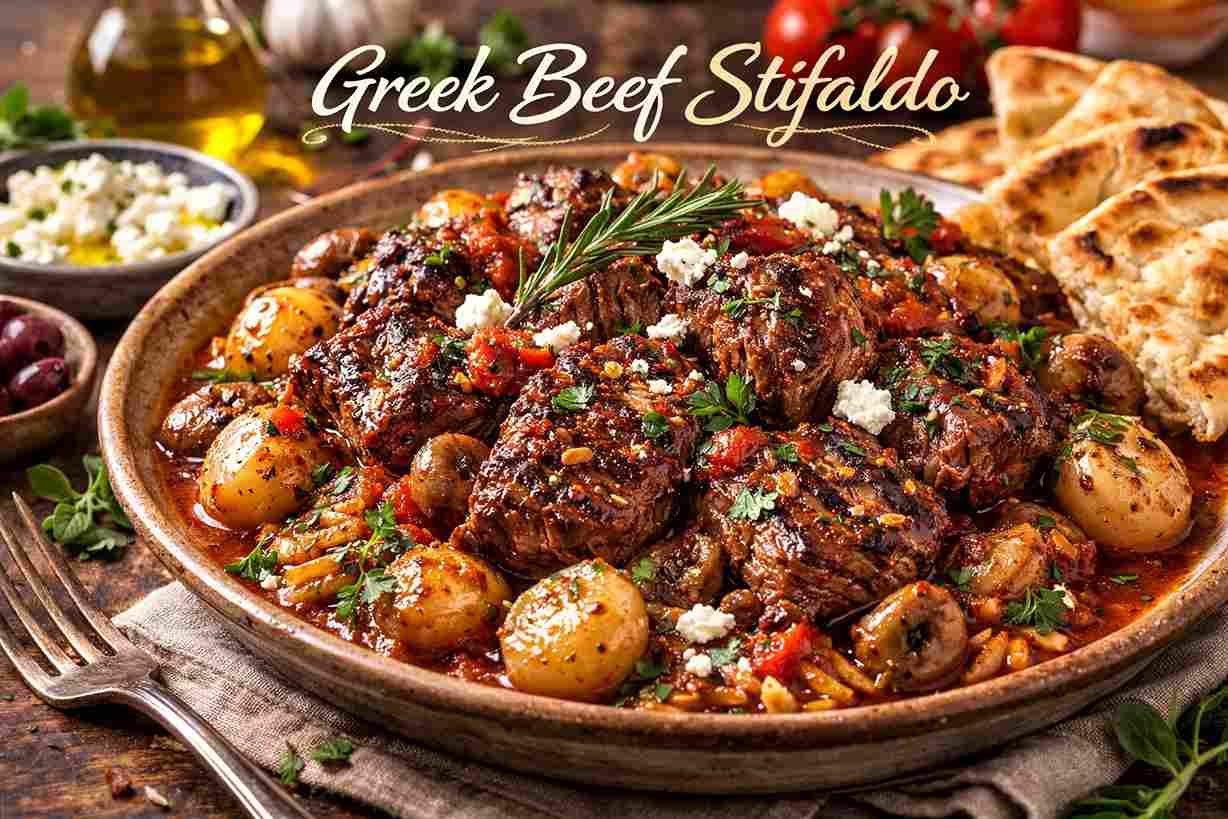
When the days grow shorter and a chill settles into the air, there is one dish that Greeks across the country turn to with absolute certainty and deep affection: Greek Beef Stifado. This is not simply another beef stew. It is a slow-simmered, deeply aromatic, wholly transporting experience that belongs to an entirely different category of comfort food — one that fills your kitchen with the warm, intoxicating fragrance of cinnamon, cloves, and roasting garlic long before anyone lifts a fork. Rich, glossy, and complex in a way that belies the simplicity of its ingredients, Stifado is the kind of meal that demands to be eaten slowly, at a table surrounded by people you love, with crusty bread close at hand for the inevitable sauce-mopping.
What truly distinguishes Stifado from every other beef stew you have ever made is the combination of its signature ingredients and its unhurried process. Whole shallots or pearl onions are caramelized until deeply golden, then reunited with the beef toward the end of cooking, where they absorb the rich tomato sauce and emerge impossibly tender and sweet. Balsamic vinegar adds a subtle dark complexity. A single cinnamon stick and a few whole cloves introduce a warmth that is unmistakably Greek and unmistakably ancient — a direct inheritance from Byzantine-era cooking that has survived intact across centuries because it is simply perfect. Whether you are making this dish for the first time or the hundredth, this complete, step-by-step guide will walk you through every stage of the process and equip you with the knowledge to produce a Stifado worthy of any Greek family table. Let us get started.
Recipe at a Glance
Everything you need to know before you begin:
| Detail | Info |
|---|---|
| Cuisine | Greek / Mediterranean |
| Course | Main Course |
| Difficulty | Easy to Intermediate |
| Servings | 6 people |
| Prep Time | 30 minutes |
| Cook Time | 1 hour 45 minutes |
| Calories per Serving | Approximately 520 kcal |
What Is Greek Beef Stifado? The Story Behind the Stew
The word Stifado (στιφάδο) comes from the Italian stufato, meaning “stew” or “braised,” a linguistic remnant of the Venetian occupation of parts of Greece during the medieval period. But while the name may have Italian origins, the dish that bears it is thoroughly, unmistakably Greek — shaped by centuries of local ingredient traditions, Byzantine spice influences, and the deeply ingrained Greek philosophy that the best food requires patience, not complexity.
At its core, Stifado is defined by two things above all else: the meat and the onions. Traditional recipes call for a generous ratio of whole onions or shallots to beef — often nearly equal weights of each — and this is not incidental. The onions are the co-star of the dish, not a supporting aromatics player. They are cooked separately, caramelized until golden and sweet, then added back into the stew during the final half-hour of cooking, where they soften further and absorb the rich, spiced tomato sauce surrounding them. The result is a onion that has transformed entirely — no longer sharp or pungent, but meltingly sweet, deeply savory, and absolutely irresistible.
The spice profile of Stifado traces directly to the Politiki cuisine of Constantinople (modern-day Istanbul), which profoundly influenced Greek cooking after the fall of the Byzantine Empire. The use of cinnamon sticks, whole cloves, and bay leaves in a savory meat dish might seem unusual to Western palates accustomed to reserving these spices for desserts or baked goods. But in Greek cooking, these aromatic spices create a warmth and depth in slow-cooked meat dishes that is unlike anything achievable through herbs and black pepper alone. They do not make the stew taste sweet or spiced in the Christmas pudding sense — they add a background resonance, a complexity that you experience more as a feeling than a distinct flavor.
Used widely across generations, Stifado has long been the Greek home cook’s answer to a tough cut of beef. The extended braise — nearly two hours of low, gentle heat — dissolves the connective tissue in an economical chuck roast into silky gelatin, producing a sauce that is naturally thick, richly glossy, and deeply nourishing. This is old-fashioned cooking wisdom at its most practical and its most delicious.
Ingredients for Greek Beef Stifado (Serves 6)
Quality matters enormously in a dish this simple. Choose a good canned tomato, a genuine aged balsamic vinegar, and the best chuck roast your butcher has available. The results will reflect every one of those decisions.
The Meat:
- 2.25 lbs (approximately 1 kg) beef chuck roast or stew beef, cut into 1.5 to 2-inch chunks
- Olive oil for searing
The Star Onions:
- 2 lbs (approximately 900g) shallots or pearl onions, both ends trimmed and fully peeled, kept whole
The Tomato Sauce Base:
- 1 tablespoon tomato paste
- 1 can (28 oz / 794g) crushed tomatoes
- 2 tablespoons balsamic vinegar (or red wine vinegar for a sharper, tangier result)
- 1 teaspoon sugar or honey, to balance acidity
- Enough water to fully cover the meat (approximately 1 to 2 cups)
The Aromatics:
- 5 cloves of garlic, finely grated or minced
- 1 cinnamon stick
- 3 whole cloves
- 6 whole black peppercorns
- 2 bay leaves
- 1 teaspoon dried oregano
- Pinch of crushed red pepper flakes (optional, for a subtle background heat)
Seasoning and Garnish:
- 1.5 teaspoons kosher salt, plus more to taste
- Freshly ground black pepper
- Fresh flat-leaf parsley, roughly chopped, for serving
- Crumbled feta cheese (optional but highly recommended as a finishing touch)
Step-by-Step Instructions
Step 1: Caramelize the Shallots — Do Not Rush This
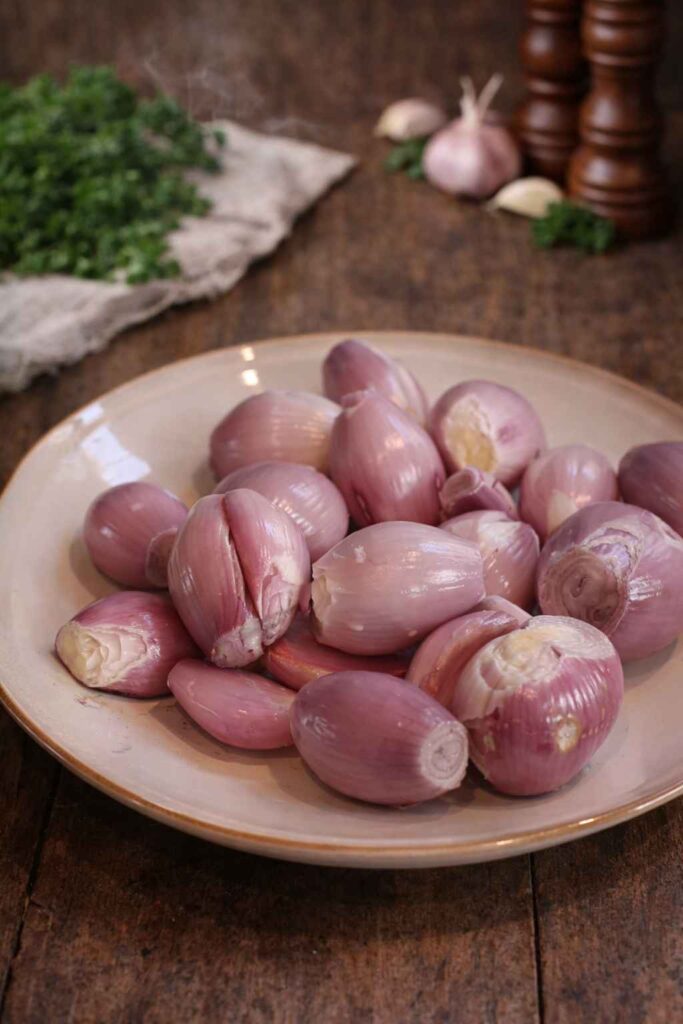
Begin with the shallots, because this step sets the flavor foundation for the entire dish. If you are using shallots, slice off both the root end and the tip, then peel away the papery outer skin, keeping each one fully intact. If using pearl onions, blanch them briefly in boiling water for 30 seconds, then drain and slip off their skins — a much faster and less frustrating method than peeling them raw.
Heat a generous drizzle of olive oil in a large, heavy-bottomed pot or Dutch oven over medium heat. Add all of the shallots in a single layer — or as close to it as your pot allows — and let them cook undisturbed for several minutes at a time before turning. The goal is a deep, even, mahogany-golden color on as many surfaces as possible. This caramelization process takes a full 10 minutes and should not be rushed. The natural sugars in the shallots need time to develop into the complex, sweet flavor that gives Stifado its signature character.
Once the shallots are deeply golden all over, transfer them to a plate and set aside. They will return to the pot later. Do not wipe out the pot — those browned bits and residual oil are flavor.
Step 2: Sear the Beef in Batches
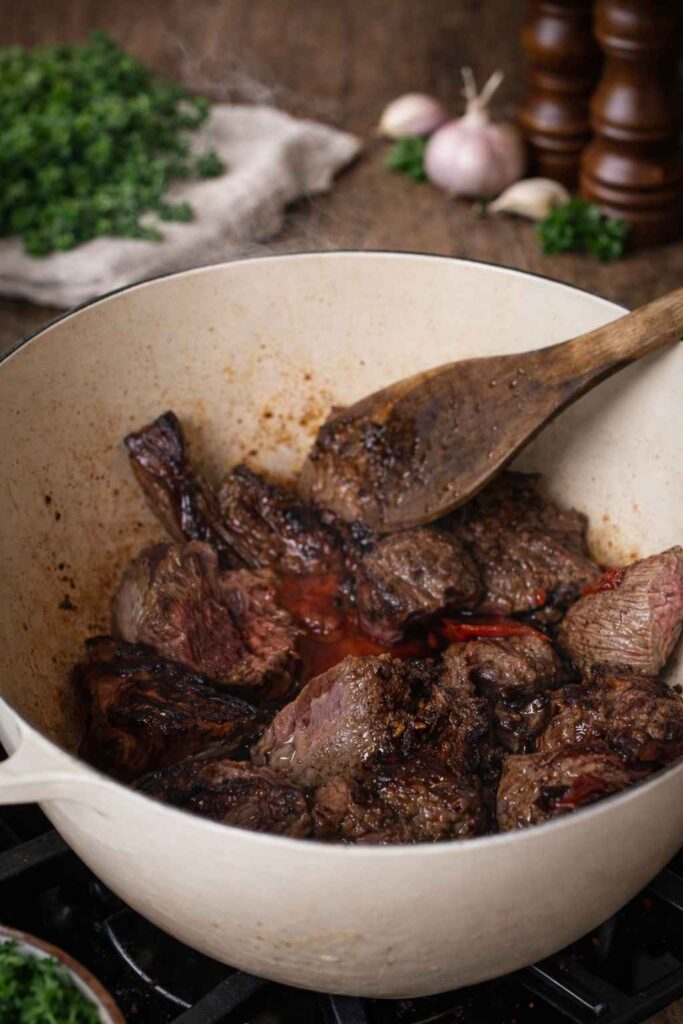
Increase the heat to medium-high. While the pot reheats, pat your beef chunks thoroughly dry with paper towels. Dry beef sears; wet beef steams — and the difference between a deeply browned crust and a grey, anemic exterior is entirely a function of surface moisture. Season the beef generously on all sides with salt and freshly cracked black pepper.
Add the beef to the hot pot in a single layer, working in two batches if your pot is not large enough to accommodate all the pieces without crowding. Crowding drops the pan temperature dramatically and results in steaming rather than searing. Cook each batch for 5 to 6 minutes per side without moving the pieces — they will naturally release from the pan surface when the crust is properly formed. You are looking for a rich, dark-brown color on each face of the beef, not a light tan. This deep browning — the Maillard reaction — creates hundreds of complex flavor compounds that form the savory backbone of the entire stew.
Once all the beef is seared, leave it in the pot and reduce the heat to medium.
Step 3: Build the Flavor Base
Push the seared beef to the outer edges of the pot to expose the center of the pan. Add the tomato paste directly to the cleared center and let it cook for 30 to 60 seconds, stirring continuously. This brief toasting step removes the raw, metallic edge of the paste and deepens its flavor into something richer and more rounded.
Add the grated garlic and stir it through the paste for another 30 seconds until fragrant. Now, pour the balsamic vinegar directly into the pot. You will hear it sizzle vigorously and see it deglaze the browned bits from the pan floor — use a wooden spoon to scrape up every last piece of that concentrated, caramelized fond. This is one of the most flavorful moments in the entire recipe. Nothing should be wasted.
Step 4: Assemble and Begin the Long Simmer
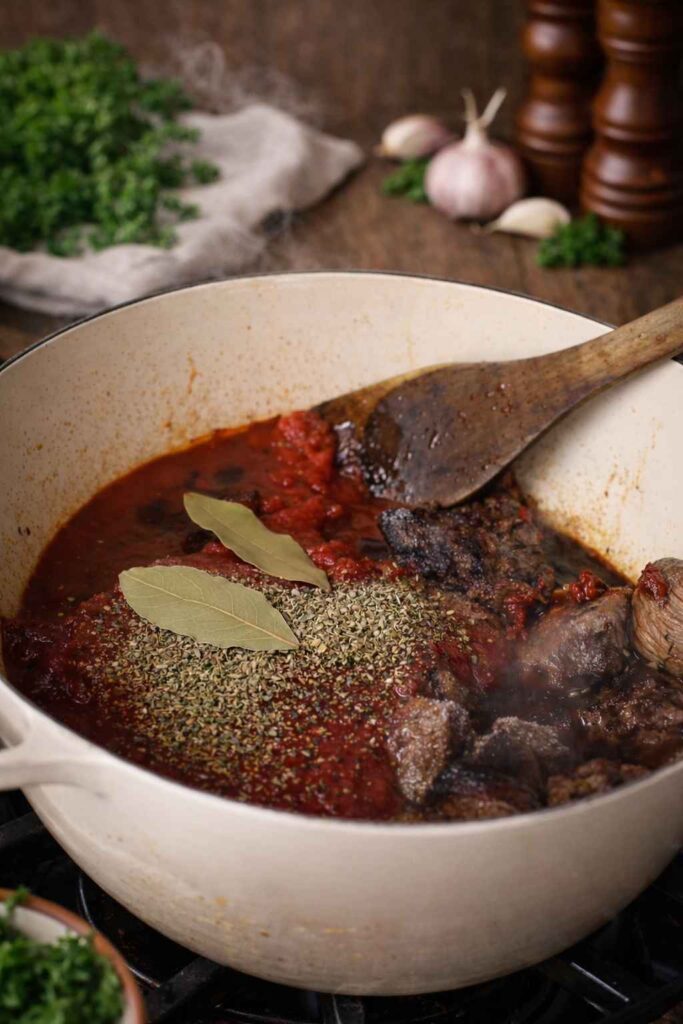
Pour the crushed tomatoes into the pot and stir to incorporate everything. Add the sugar or honey, dried oregano, and salt, then nestle in the cinnamon stick, bay leaves, whole cloves, black peppercorns, and red pepper flakes if using. Pour in enough water to just cover the surface of the meat — roughly one to two cups, depending on your pot size.
Stir gently to combine, bring the pot to a full boil over high heat, then reduce the heat to low and cover with a tight-fitting lid. Allow the stew to simmer gently for 1 hour and 15 minutes. During this time, the collagen-rich connective tissue in the chuck roast slowly dissolves into gelatin, the tomato sauce thickens and deepens, and the whole spices slowly release their warmth into the surrounding liquid. Check occasionally to ensure the liquid is at a gentle simmer rather than a rolling boil — too vigorous and the beef can toughen rather than tenderize.
Step 5: Reintroduce the Shallots
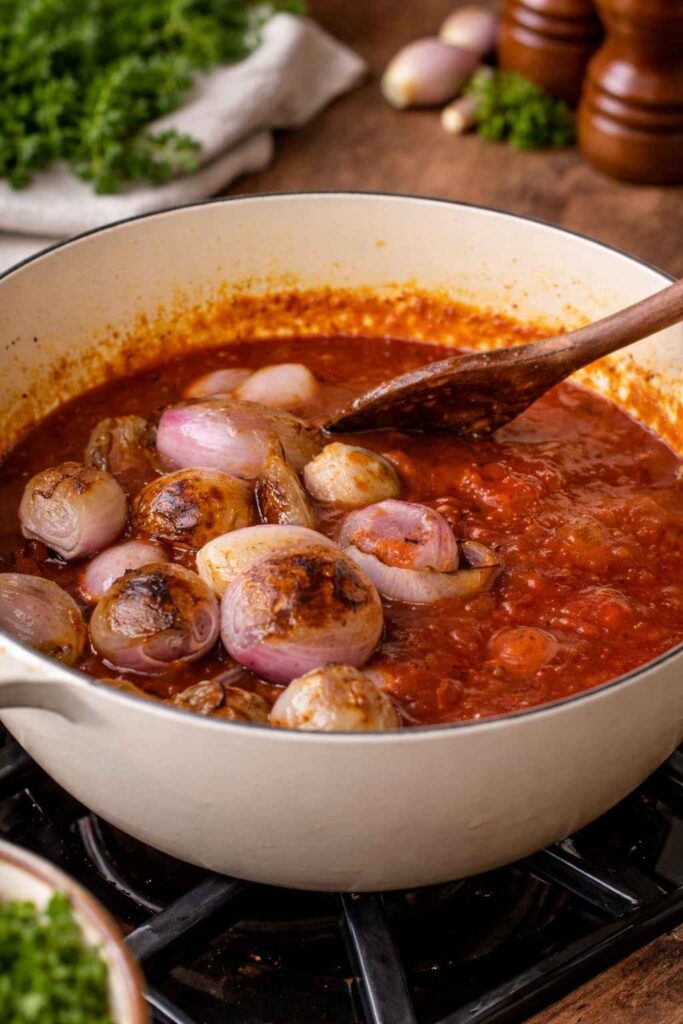
After the first hour and 15 minutes, lift the lid and assess. The beef should be significantly tender — not quite falling apart yet, but offering little resistance to a fork. Taste the sauce and adjust the balance: if it tastes sharp or acidic, add a pinch more sugar. If it tastes flat, add a little more salt.
Now carefully add the golden caramelized shallots back into the pot, nestling them gently among the beef pieces. Handle them with care — the whole point is that they arrive at the table intact and beautiful, sweet and yielding, not broken into pieces and dissolved into the sauce. Gently shake the pot to settle them into the liquid rather than stirring aggressively.
Step 6: The Final 30-Minute Braise
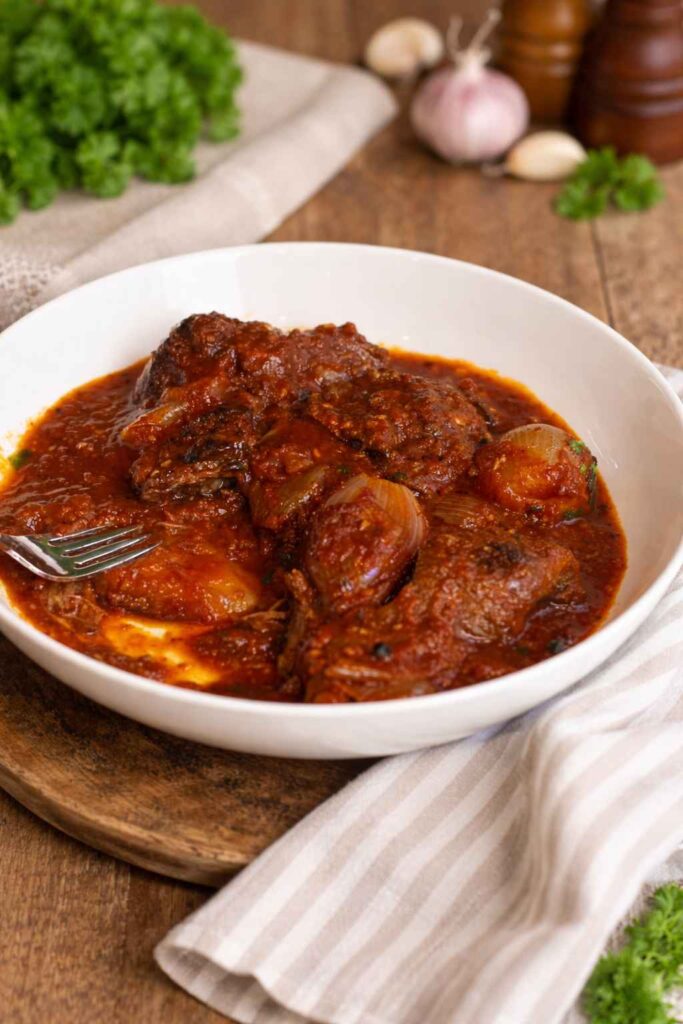
Replace the lid and continue to simmer over very low heat for a final 30 minutes. During this stage, the shallots become completely tender all the way through without losing their shape, the beef reaches that ideal point of fork-tender perfection where it pulls apart effortlessly, and the sauce tightens into a thick, richly glossy gravy that coats the back of a spoon deeply and generously.
Remove and discard the cinnamon stick, bay leaves, and any whole cloves or peppercorns you can locate before serving. Taste one final time and adjust seasoning as needed. The finished Stifado should taste simultaneously rich, sweet, savory, warm, and subtly tangy — a deeply layered flavor profile that is far greater than the sum of its individual parts.
How to Serve Greek Beef Stifado
Stifado is traditionally brought to the table directly in its cooking pot, which serves both a practical and an aesthetic purpose — the pot retains the heat of the stew throughout the meal, and the presentation of a bubbling, fragrant Dutch oven being set at the center of the table is one of the great theatrical moments of home cooking.
Over Orzo or Rice: Ladling Stifado over a bed of buttered orzo or steamed white rice creates a complete, satisfying meal where every grain or piece of pasta absorbs the magnificent sauce.
With Crusty Bread: Non-negotiable, according to virtually every Greek grandmother. The sauce is too good to leave in the bowl, and only thick-sliced, toasted country bread does it full justice.
Over Mashed Potatoes: A non-traditional but deeply comforting serving option, particularly popular in the colder winter months when you want maximum warmth on the plate.
With Feta and Parsley: Scatter a generous amount of freshly chopped flat-leaf parsley over each serving for brightness and color. A crumble of cold, salty feta cheese provides a beautifully sharp counterpoint to the sweet shallots and rich tomato sauce — this garnish is not mere decoration, it is an essential flavor element.
Pair the meal with a glass of robust Greek red wine — an Agiorgitiko from Nemea or a structured Xinomavro from Naoussa are both outstanding choices whose earthy, spiced character mirrors the flavors in the stew.
Expert Tips for Perfect Stifado Every Time
Shallots over pearl onions for ease. While small pearl onions are the more traditional choice in rural Greek cooking, shallots are significantly easier to peel, slightly larger and meatier, and deliver a beautifully sweet, rounded flavor that suits the dish perfectly. Most experienced cooks making Stifado at home prefer them.
Balsamic vinegar over red wine vinegar when possible. The aged balsamic adds a subtle richness and dark sweetness that integrates seamlessly with the cinnamon. Red wine vinegar delivers a brighter, sharper result that is also delicious but slightly different in character.
Never crowd the searing pan. This is the single most common mistake in stew-making. Two properly seared batches will always produce a better result than one crowded, steamed batch.
Make it the day before. Like almost every slow-cooked stew, Stifado improves dramatically overnight. The flavors continue to meld and deepen in the refrigerator, and the sauce tightens further. Reheated the following day over gentle heat, it is arguably even better than it was fresh from the pot.
Frequently Asked Questions
Can I make Stifado in a slow cooker? Yes. Complete Steps 1 through 3 on the stovetop as directed, then transfer everything to a slow cooker. Cook on LOW for 7 to 8 hours or HIGH for 4 to 5 hours, adding the caramelized shallots in the final hour of cooking.
Can I use lamb instead of beef? Absolutely — lamb Stifado is equally traditional in many parts of Greece and particularly popular during the Easter season. Use bone-in lamb shoulder pieces and keep the cooking time and method identical.
How do I store and reheat leftovers? Stifado keeps beautifully in an airtight container in the refrigerator for up to 4 days, and the flavor genuinely improves over time. Reheat gently in a covered saucepan over low heat, adding a small splash of water if needed to loosen the sauce. It also freezes well for up to 3 months.
My sauce is too thin — what do I do? Remove the lid for the final 15 to 20 minutes of cooking and increase the heat slightly to allow the excess liquid to reduce and evaporate. Alternatively, remove a ladleful of the sauce, whisk in a teaspoon of tomato paste, and stir it back in.
Conclusion: A Dish That Earns Its Place in Your Regular Rotation
There are recipes that you make occasionally, on special occasions or when you want to impress. And then there are recipes that quietly earn a permanent, trusted place in your cooking life — the ones you return to again and again because they never disappoint, never fail to deliver warmth and satisfaction, and never fail to make the people you cook for feel genuinely cared for. Greek Beef Stifado is firmly and deservedly in that second category.
What this recipe ultimately teaches is something broader than the mechanics of making a Greek stew. It teaches the value of each individual step: the patience of a proper sear, the restraint of a long and unhurried simmer, the judgement of when to add the onions back and when to leave well alone. It teaches that humble, affordable ingredients — a chuck roast, some shallots, a can of crushed tomatoes — when treated with time and respect, can produce something that tastes genuinely luxurious, complex, and extraordinary.
Whether you are making this dish for a quiet weeknight dinner at home, a weekend gathering of friends, or a special occasion that calls for something truly memorable, Stifado will rise to every occasion without ever letting you down. The cinnamon-and-clove warmth, the melt-in-your-mouth beef, the impossibly sweet whole shallots, and that magnificent, glossy tomato sauce are waiting for you at the end of less than two hours of mostly hands-off cooking. All you have to do is begin. As they say across Greece when a meal this good arrives at the table: Kali Orexi!
🍽️ Explore More Recipes
Browse our collection by category