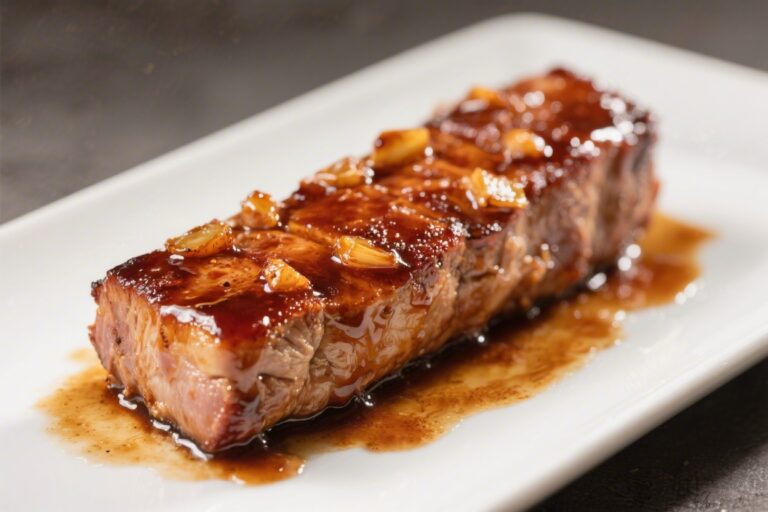
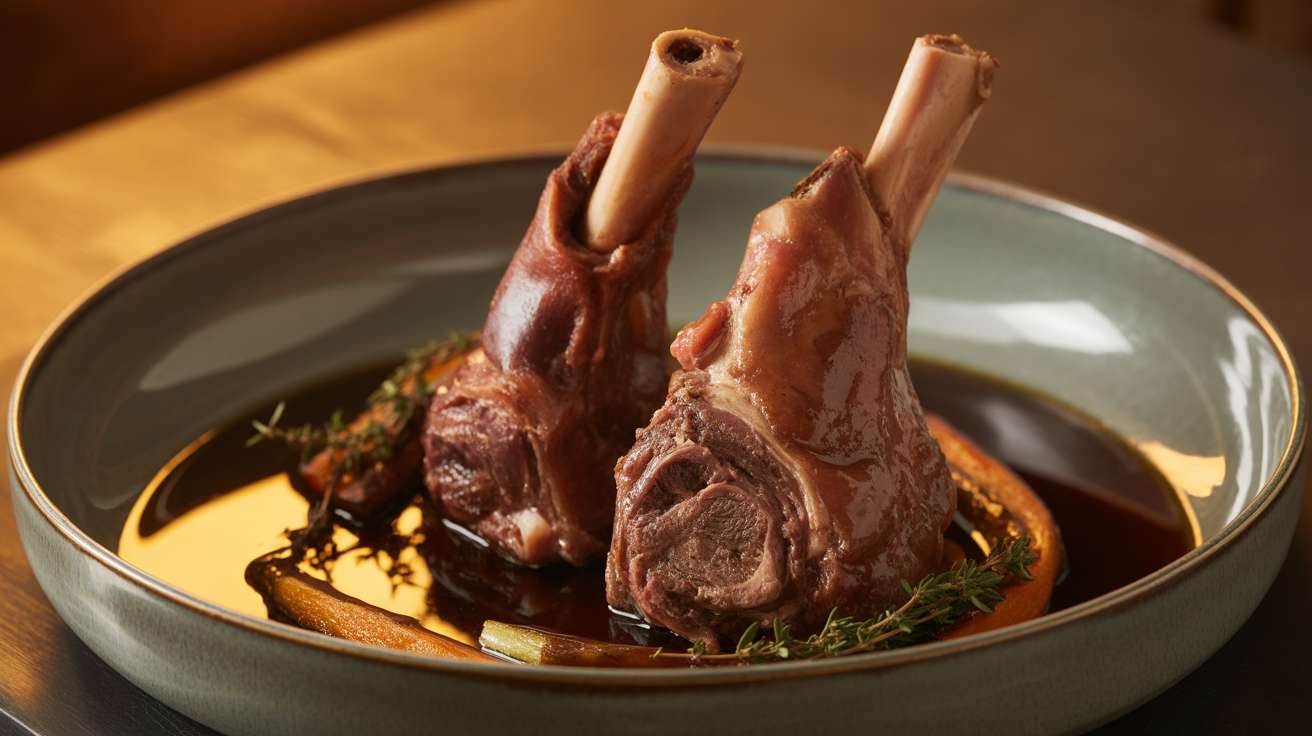
SOven-Braised Lamb Shanks with Nutrient-Rich Bone Broth Jus are the kind of dish that fills the house with the most incredible smell for hours and then delivers on every bit of that promise at the table. Two meaty, bone-in shanks braised low and slow until the meat falls away from the bone at the touch of a fork, sitting in a glossy, concentrated jus made from nothing more than beef bone broth and the pan drippings. It’s primal, elegant, and deeply satisfying all at once.
This recipe asks for patience, not complexity. Four ingredients, one pot, and a few hours of hands-off time in the oven produce something that looks and tastes like a fine-dining centrepiece. It’s the kind of cooking where the oven does the real work and you take all the credit.
Jump to RecipeWhy This Recipe Works
This recipe is built on the science of collagen. Lamb shanks are loaded with connective tissue that’s tough when cooked fast but transforms into silky gelatin over hours of gentle heat. The initial sear in beef tallow builds a deep crust through the Maillard reaction, locking in flavour before the braise begins. Deglazing with bone broth lifts all the caramelised fond and turns it into the jus foundation. Reducing that liquid at the end concentrates every bit of meaty, collagen-rich flavour into a glossy sauce that clings to the shank.
In short, a hard sear, a slow braise, and a final reduction turn four simple ingredients into something extraordinary.
What You’ll Need
2 lamb shanks, bone-in and meaty
1.5 cups beef bone broth (homemade is best, store-bought with salt only works too)
2 tablespoons beef tallow
1 tablespoon coarse sea salt (used in stages)
Equipment: Dutch oven or heavy-bottomed cast-iron pot with lid, tongs, wooden spoon
Step-by-Step Instructions
Temper the shanks. Remove the lamb from the fridge at least 45 minutes before cooking. Cold meat hitting hot fat shocks the surface and produces a tougher texture. Pat every side bone dry with paper towels — dry meat sears, wet meat steams.
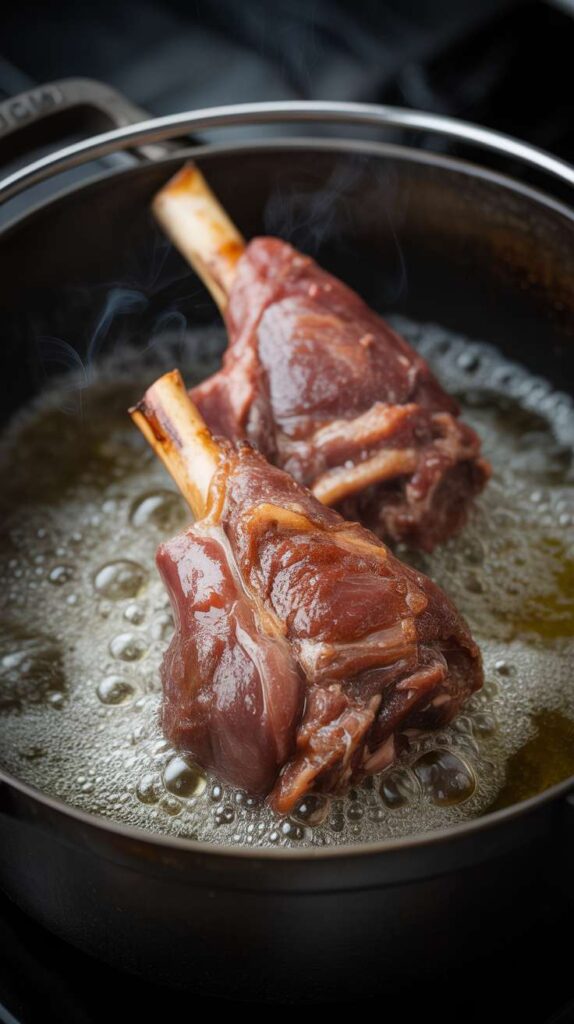
Sear hard. Heat a Dutch oven over medium-high heat with the beef tallow. Once shimmering, place the shanks in and sear for 3 to 4 minutes per side until every surface is deep mahogany brown. Don’t rush — the colour you build now becomes the flavour of the finished dish.
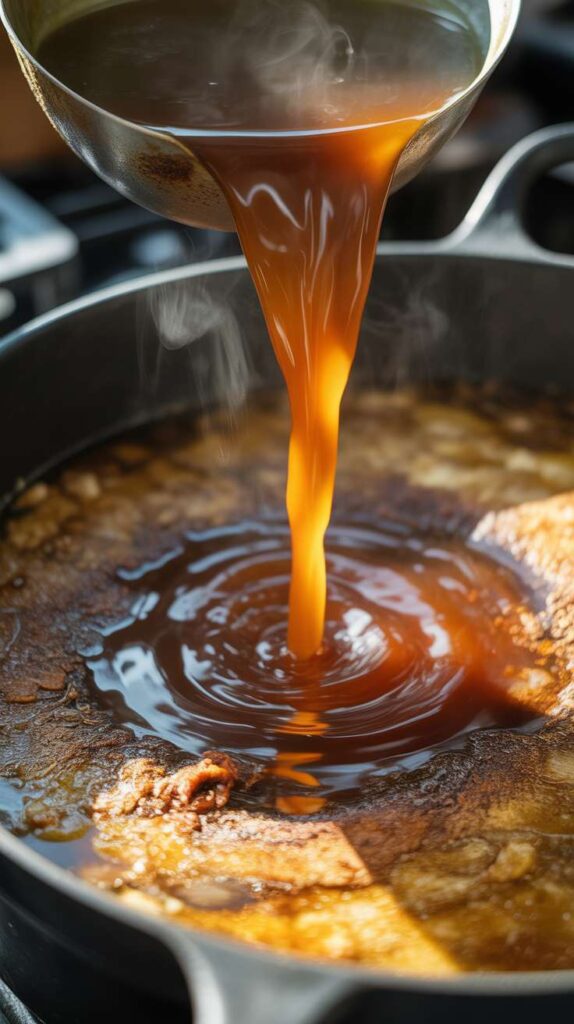
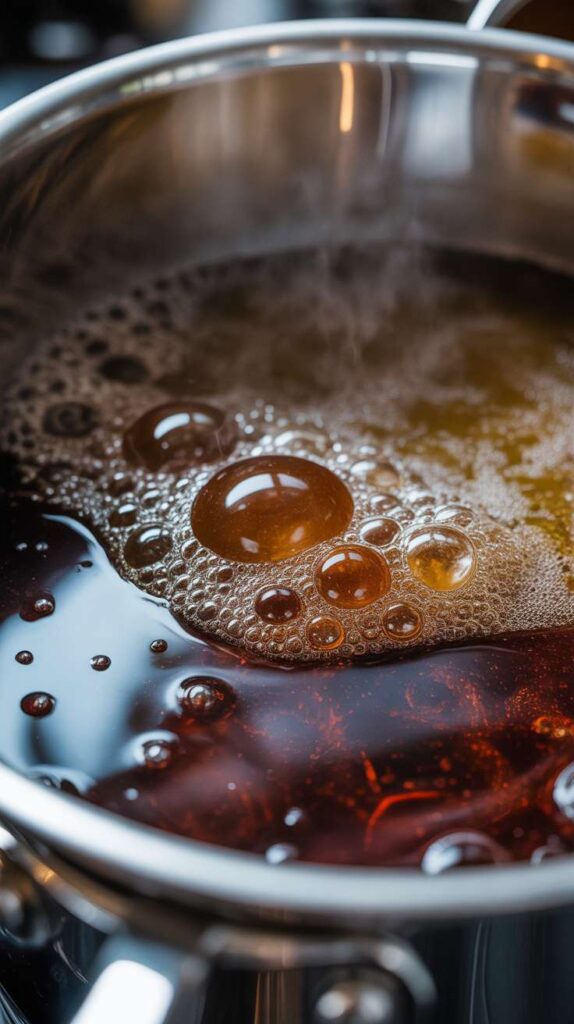
Deglaze with broth. Remove the shanks briefly. Pour the bone broth into the hot pot and scrape up every bit of fond — the caramelised bits on the bottom. This is where the deepest flavour lives.
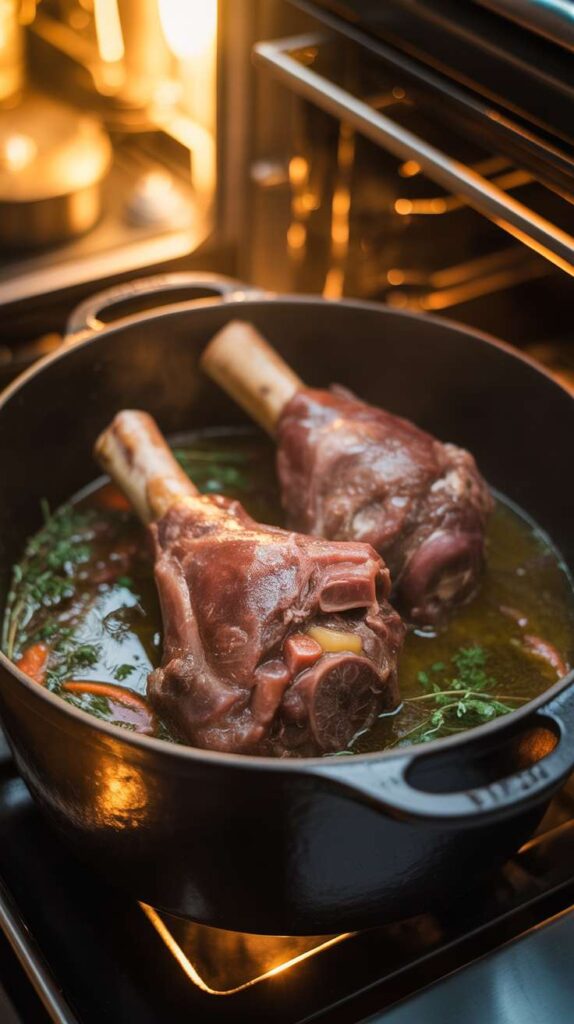
Braise low and slow. Return the shanks to the pot. The broth should come about halfway up the meat. Season with a generous pinch of salt, then cover with a tight-fitting lid. For the oven method, roast at 150 degrees Celsius for 3.5 to 4 hours. For a slow cooker, transfer everything and cook on low for 7 to 8 hours. The meat is done when it literally pulls away from the bone with just a fork.
Reduce the jus. Carefully remove the tender shanks and set them aside to rest. Place the pot on the stove over high heat and bring the braising liquid to a boil. Let it reduce by about half until it becomes glossy and slightly thickened — a concentrated, meaty sauce with real body. Taste and add a pinch more salt if needed.
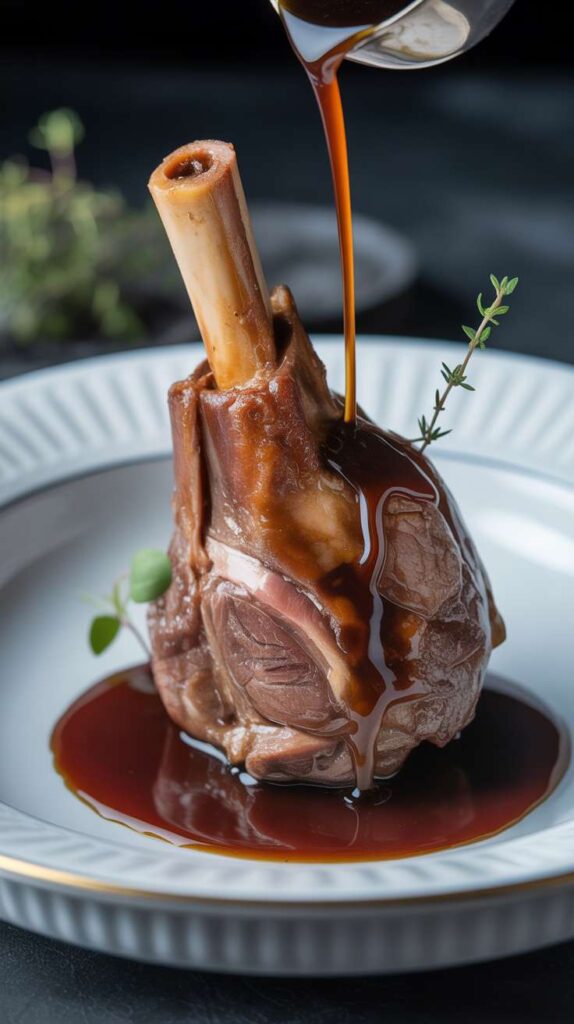
Plate and serve. Stand each shank upright in a shallow bowl. Pour the hot, reduced jus directly over the top so it glistens and pools around the base. Serve immediately while everything is steaming and the jus is at its glossiest.
Slow-Roasted Lamb Shanks with Bone Broth Jus
Fall-off-the-bone lamb shanks with rich, glossy bone broth jus
For the Lamb
- 2 lamb shanks
- 1.5 cups beef bone broth
- 2 tbsp beef tallow
- 1 tbsp coarse sea salt
Instructions
- Temper the MeatLet lamb shanks sit at room temperature for about 45 minutes and pat dry.Dry meat ensures a better sear.
- Sear the ShanksHeat tallow in a Dutch oven and sear shanks on all sides until deeply browned.This builds the base flavor.
- DeglazeRemove shanks, add bone broth, and scrape up browned bits from the pot.Fond adds depth to the jus.
- BraiseReturn shanks to the pot, cover, and cook at 150°C for 3.5–4 hours.Low and slow breaks down collagen.
- Reduce JusRemove shanks and boil the liquid until reduced by half.Creates a thick, glossy sauce.
- ServePlate lamb shanks and pour the reduced jus over the top.Serve hot for best texture and flavor.
Tips for the Best Results
- Always sear the meat for maximum flavor.
- Do not rush the braising process.
- Keep liquid level halfway up the shanks.
- Reduce sauce for proper consistency.
- Let meat rest before serving.
- Use quality bone broth for best results.
- Cook covered to retain moisture.
- Reheat gently to maintain tenderness.
How to Store
Braised lamb shanks store beautifully. Cool completely, then refrigerate the shanks and jus together in an airtight container for up to 3 days. The jus will set into a gel — that’s the collagen at work. Reheat gently in a covered pot over low heat. These also freeze well for up to 2 months. Thaw overnight before reheating. The flavour actually deepens after a day in the fridge.
Health Benefits
Collagen-rich meat: Lamb shanks are one of the best sources of natural collagen, which supports joint health, gut lining integrity, and skin elasticity as it breaks down during braising.
Bone broth benefits: The broth adds additional gelatin, amino acids like glycine and proline, and minerals that support digestive health and immune function.
High-quality protein: Lamb delivers complete protein with all essential amino acids, supporting muscle repair and long-lasting satiety.
Iron and zinc: Red meat is an excellent source of heme iron and zinc, both critical for energy, immunity, and cognitive function.
Zero carbs: With no flour, sugar, or starch involved, this dish is naturally carbohydrate-free and fits carnivore, keto, and paleo frameworks.
Pitfalls to Watch Out For
Skipping the sear: Without that deep, mahogany crust, the finished dish lacks flavour complexity. The sear builds the fond that becomes the jus — skip it and the sauce tastes flat.
Wet shanks: Any moisture on the surface prevents proper browning. Pat them completely dry before they hit the hot tallow.
Braising too hot: High oven temperatures tighten the meat instead of breaking down collagen gently. Stay at 150 degrees Celsius and let time do the work. Low and slow is non-negotiable.
Too much liquid: The broth should come halfway up the shank, not cover it. Submerging the meat fully produces boiled lamb rather than braised — the exposed top needs dry heat to develop texture.
Skipping the reduction: Unreduced braising liquid is thin and watery. Boiling it down by half concentrates the flavour and gives the jus its glossy, clinging consistency.
Not resting: Resting lets the fibres relax and reabsorb juices. Cutting or pulling the meat immediately means drier results.
Alternatives
Herb-infused version: For a non-strict-carnivore take, add a sprig of rosemary, a few thyme branches, and a bay leaf to the braising liquid. The herbs perfume the jus beautifully.
Red wine braise: Replace half the bone broth with a dry red wine for a richer, more complex sauce with tannic depth. Let the wine reduce before adding the broth.
Different cuts: Beef short ribs or oxtail braise identically with the same method. Short ribs give meatier portions, oxtail delivers even more collagen.
Slow cooker convenience: The 7 to 8 hour low setting works perfectly for a set-and-forget approach. The sear still matters — do it on the stove before transferring.
Serving options: Pair with cauliflower mash, roasted root vegetables, or creamy polenta for a non-carnivore side. Plain bone broth in a mug alongside also works beautifully.
Finishing touches: A drizzle of high-quality olive oil, a scatter of flaky salt, or gremolata on top adds brightness to the rich, meaty base.
FAQ
How Do I Know When the Shanks Are Done?
The meat should pull away from the bone with zero resistance. Insert a fork and twist — if it slides apart effortlessly, it’s ready. If there’s toughness, return to the oven for another 30 minutes.
Can I Use Lamb Stock Instead of Beef Bone Broth?
Absolutely. Lamb stock doubles down on the lamb flavour and makes the jus even more cohesive. Any high-quality bone broth with minimal additives works well.
Why Did My Jus Turn Greasy?
Fat rises to the surface during braising. Before reducing, skim the excess fat off the top with a spoon. The jus should be rich and glossy, not oily.
Can I Braise These on the Stovetop?
Yes. Keep the heat at the lowest possible simmer with the lid on. Check occasionally to ensure it’s not boiling — stovetop braising requires more attention than the oven but produces identical results.
Do I Need to Flip the Shanks During Braising?
It helps but isn’t essential. Turning them once halfway through ensures even cooking and allows both sides to spend time submerged in the broth.
Can I Make This a Day Ahead?
Yes, and many cooks prefer it. The flavour deepens overnight. Refrigerate the shanks in the jus, skim the solidified fat, and reheat gently.
Jump to RecipeWrapping Up
Slow-roasted lamb shanks with bone broth jus are proof that the simplest ingredients can produce the most impressive results. A hard sear, a long braise, and a quick reduction — that’s the entire method, and the reward is fork-tender meat in a glossy, deeply savoury sauce. Keep the temperature low, the lid tight, and the patience steady. This is the kind of dish that earns its place at the center of the table and stays in your rotation for good.