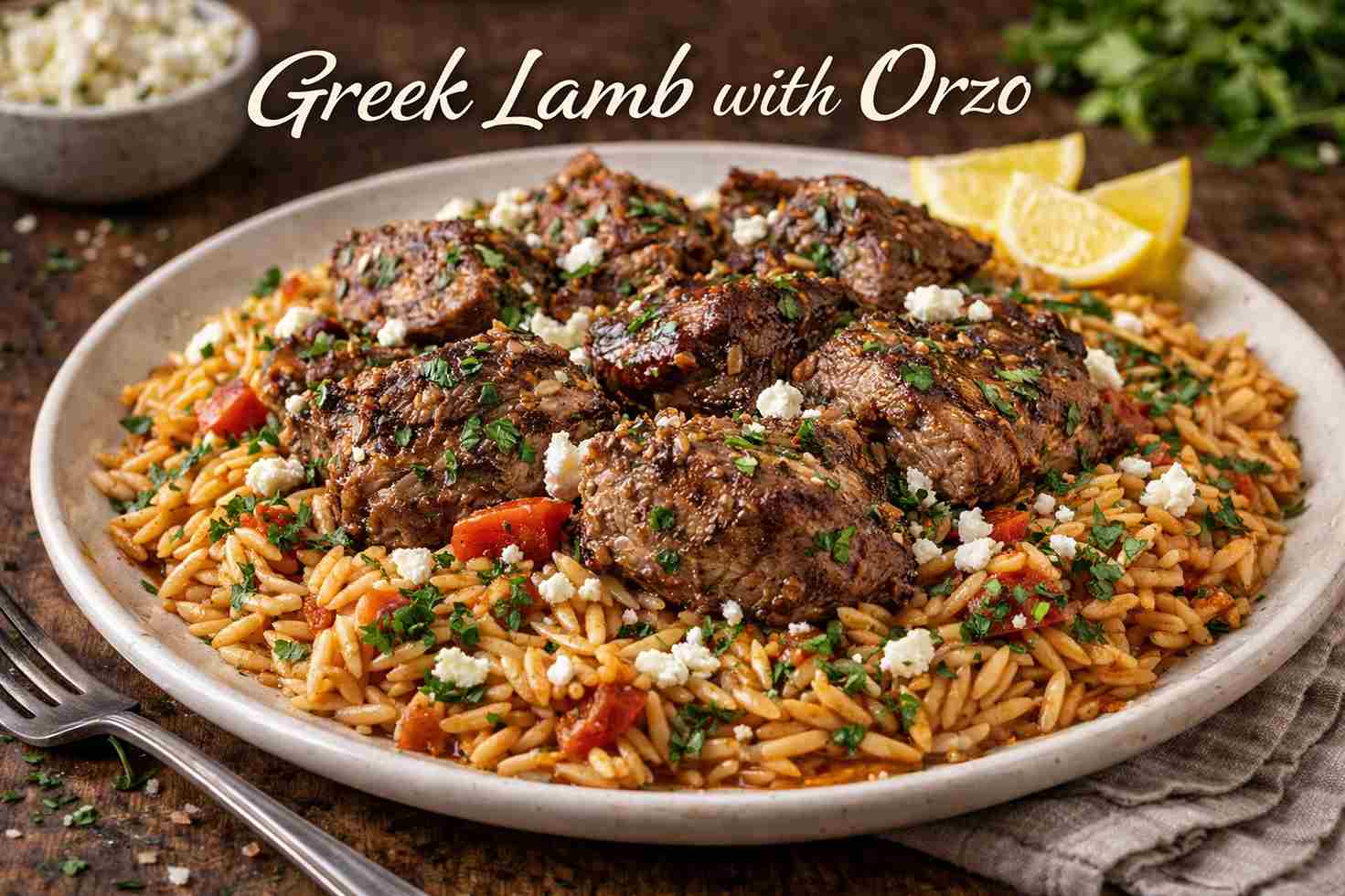
There are certain dishes in the world of Mediterranean cooking that go beyond mere recipes — they are experiences, traditions, and memories baked into a single pan. Greek Lamb with Orzo, known throughout Greece as Yiouvetsi (pronounced you-vet-see), is unquestionably one of those dishes. It is the kind of meal that makes your entire home smell extraordinary for hours before it ever reaches the table. Warm with cinnamon, deep with slow-roasted lamb, and rich with a fragrant tomato sauce that the orzo slowly drinks up during its time in the oven, Yiouvetsi is Mediterranean comfort food at its most magnificent and soul-satisfying.
If you have been looking for a Greek lamb recipe that delivers genuine, restaurant-quality results without requiring professional cooking skills, this is it. The method follows a beautifully logical sequence: the lamb is seared to a gorgeous golden brown, then slow-simmered on the stovetop with aromatics, vegetables, and a tomato-wine sauce until it is on the verge of falling apart. Dry orzo pasta is stirred in along with cinnamon sticks and bay leaves, then the whole dish transfers to the oven for a final 45 minutes of baking that transforms the orzo into something silky, creamy, and deeply flavored. The result has been described as a cross between a Greek roast and a risotto, and that comparison is both accurate and entirely insufficient — because Yiouvetsi is entirely its own magnificent thing. This step-by-step guide covers everything you need to know to make it perfectly the very first time.
Recipe at a Glance
All the essential details you need before you begin:
| Detail | Info |
|---|---|
| Cuisine | Greek / Mediterranean |
| Course | Main Dish |
| Difficulty | Intermediate (multi-stage cooking) |
| Servings | 6 people |
| Prep Time | 20 minutes |
| Cook Time | 2 hours 15 minutes (1.5 hrs stovetop + 45 mins oven) |
| Calories per Serving | Approximately 680 kcal |
What Is Yiouvetsi? Understanding This Greek Classic
Before we get into the kitchen, it is worth taking a moment to understand exactly what Yiouvetsi is and why it holds such a special place in Greek culinary culture. The word Yiouvetsi (also spelled Giouvetsi or Youvetsi) actually refers to the traditional clay baking vessel in which this dish was originally prepared — a deep, wide earthenware pot that retained heat evenly and allowed the contents to slow-cook gently over a long period. Over time, the name transferred from the vessel to the dish itself, and today Yiouvetsi refers to this specific preparation of slow-cooked meat and orzo baked together in a rich tomato sauce.
The dish is built around two central components: lamb (arni) and orzo (kritharaki). Orzo is a small, rice-shaped pasta that is used extensively in Greek cooking, and its unique shape makes it particularly well-suited for absorbing liquid during baking. As the orzo cooks in the oven alongside the braised lamb, it soaks up the tomato sauce, the rendered lamb fat, and the aromatic pan juices, swelling and becoming dense with flavor. This is why Yiouvetsi is so frequently compared to a risotto — the orzo achieves a similarly creamy, almost flowing texture that is deeply satisfying.
What genuinely sets Yiouvetsi apart from Italian pasta dishes, however, is its spice profile. The addition of cinnamon sticks and bay leaves is a direct inheritance from the Byzantine era, when trade routes brought aromatic Eastern spices into Greek kitchens and they became embedded in the culinary tradition. The cinnamon does not overpower the dish — used whole and removed before serving, it provides a background warmth and subtle sweetness that gives Yiouvetsi its unmistakably Greek character. Paired with the earthiness of rosemary and the slow-cooked depth of the tomato sauce, the result is a flavor profile that is entirely unique to this dish.
Ingredients for Greek Lamb with Orzo — Yiouvetsi (Serves 6)
Gather the following before you begin. As with all Mediterranean cooking, quality matters significantly — good olive oil and ripe canned tomatoes will noticeably elevate the final result.
The Lamb and Vegetables:
- 1.5 kg (approximately 3.3 lbs) leg of lamb, cut into large chunks
- Extra virgin Greek olive oil for searing and sautéing
- 2 large onions, roughly chopped
- 2 medium carrots, diced
- 1 red bell pepper, diced
The Sauce:
- 2 tablespoons tomato paste
- 1 can (400g / 14 oz) crushed or diced tomatoes
- ½ cup red wine
- 1 teaspoon honey
- 1 chicken stock cube
- Enough water to fully submerge the ingredients (approximately 3–4 cups)
The Aromatics:
- 2 cinnamon sticks
- 2 bay leaves
- A few sprigs of fresh rosemary
- Salt and freshly ground black pepper to taste
The Pasta:
- 500g (one standard bag) dried orzo pasta (kritharaki)
The Finishing Toppings:
- Mizithra cheese, finely grated (substitute with Feta or Pecorino Romano)
- Fresh flat-leaf parsley, roughly chopped
Step-by-Step Instructions
Step 1: Sear the Lamb to Build Deep Flavor
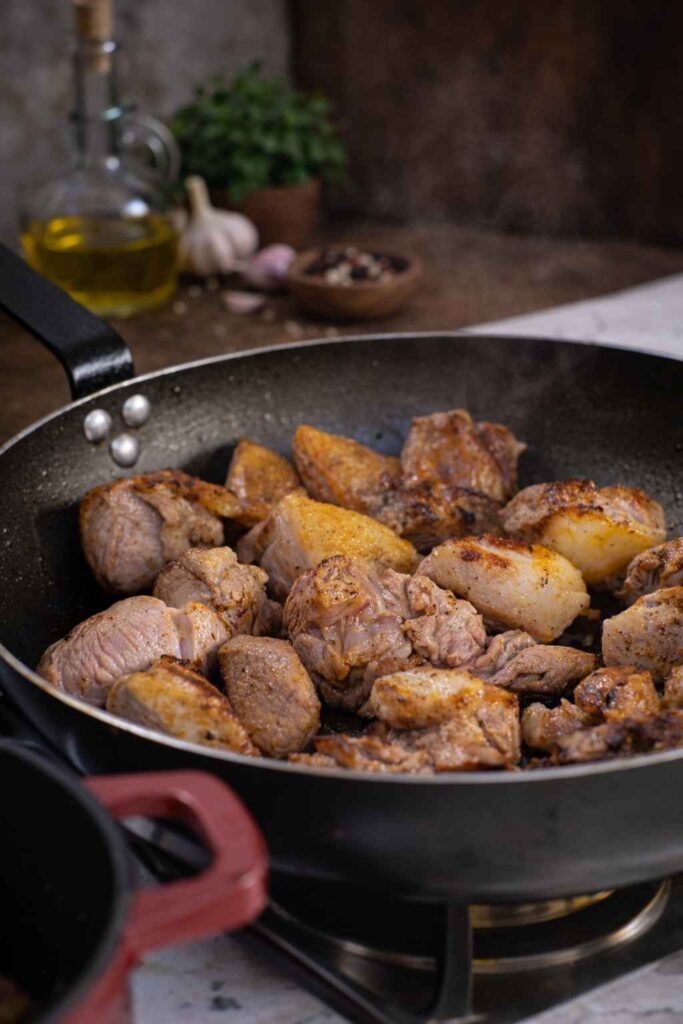
The foundation of a great Yiouvetsi is built in this first step, and it is one you should never be tempted to rush or skip. Place a large, heavy-bottomed skillet or frying pan over high heat and drizzle generously with olive oil. While the pan heats, pat your lamb pieces dry with paper towels — dry surfaces sear, wet surfaces steam, and the difference in result is dramatic.
Season the lamb chunks generously on all sides with salt and freshly cracked black pepper. Working in batches to avoid crowding the pan (which would drop the temperature and result in steaming rather than searing), add the lamb pieces and cook undisturbed for 3–4 minutes per side until each surface is deeply browned, almost mahogany in color. This process — known as the Maillard reaction — creates hundreds of complex flavor compounds on the surface of the meat that cannot be created any other way. These caramelized, browned surfaces are what give the final dish its extraordinary depth and richness. Set the seared lamb aside, but do not discard the pan or its contents.
Step 2: Build the Vegetable Base
In a separate large, deep pot — ideally a Dutch oven or heavy casserole — heat another drizzle of olive oil over medium-high heat. Add the roughly chopped onions, diced carrots, and diced red bell pepper all at once. Season lightly with salt and sauté, stirring occasionally, for approximately 5 minutes until the onions begin to turn translucent and the vegetables soften at the edges.
Do not worry about cutting these vegetables into perfectly uniform, neat pieces. After 1.5 hours of simmering, the onions and carrots will largely dissolve into the sauce, contributing flavor and body without being individually identifiable. Their purpose is to create a sweet, savory aromatic base — think of them as the foundation of the flavor architecture rather than a side vegetable.
Step 3: Add Tomato Paste and Deglaze with Wine
Push the sautéed vegetables to the sides of the pot and add the tomato paste directly to the center, letting it contact the hot surface of the pan. Stir and cook for 60–90 seconds, allowing the paste to caramelize very slightly and lose its raw, sharp flavor. This brief toasting of the tomato paste deepens its flavor considerably.
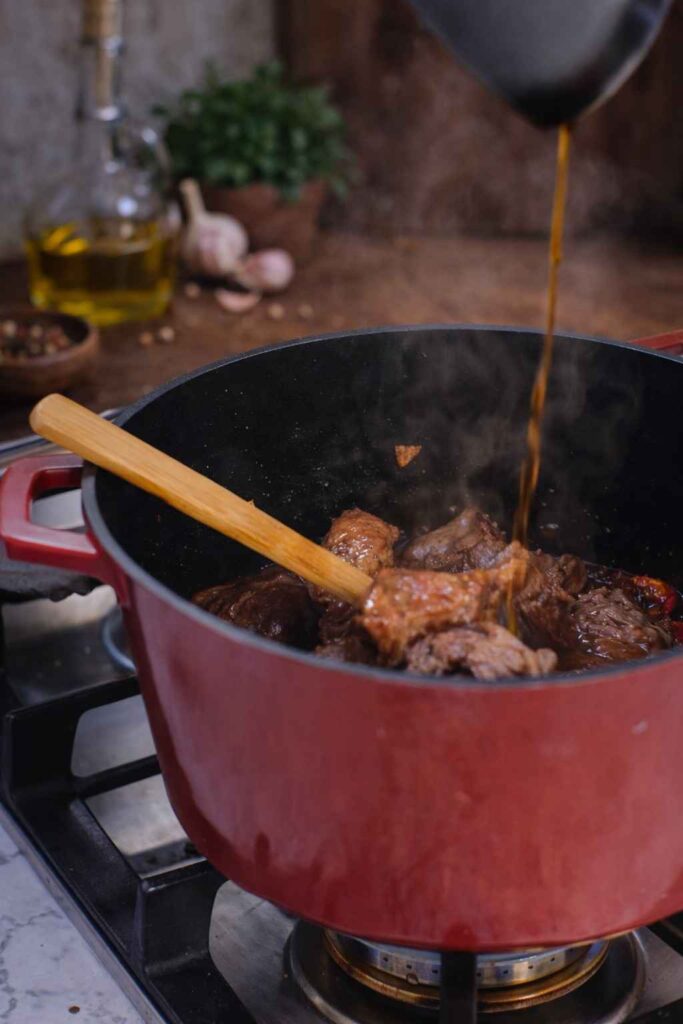
Now for one of the most satisfying moments in cooking: return to your lamb searing pan and pour the red wine directly into it over medium heat. Using a wooden spoon, scrape up every last brown, caramelized bit adhered to the pan bottom — this is the fond, and it is pure concentrated flavor. Pour the wine and all its dissolved goodness into the vegetable pot, then transfer the seared lamb pieces in on top. The combination of the deglazed fond with the tomato paste and vegetables is what gives the Yiouvetsi sauce its remarkable, layered depth.
Step 4: The 1.5-Hour Stovetop Simmer
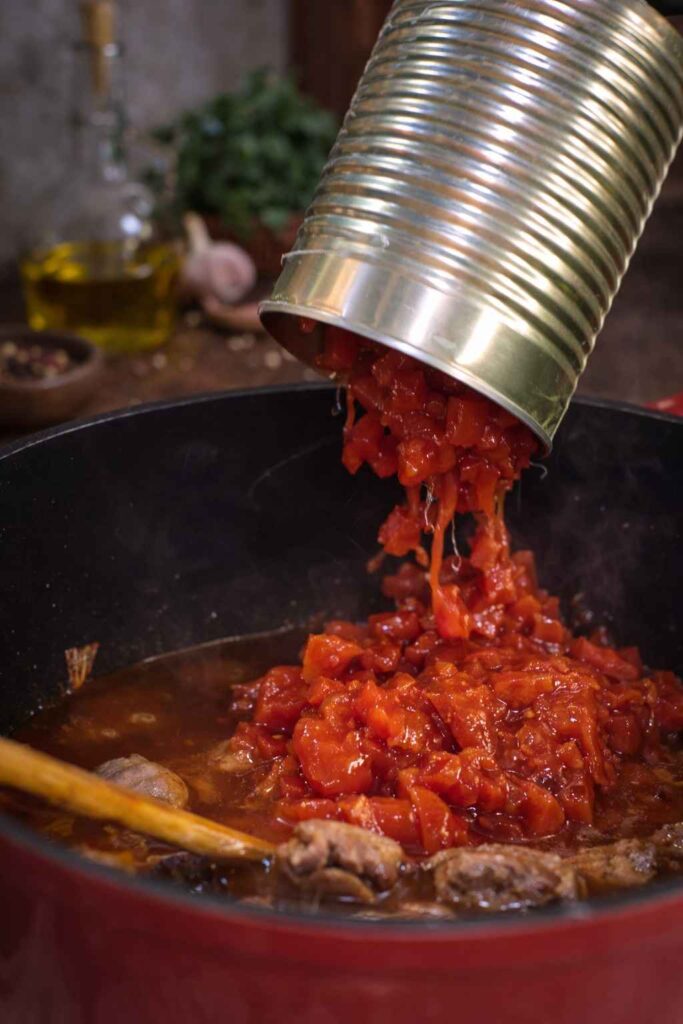
Add the canned tomatoes, crumbled chicken stock cube, teaspoon of honey, and fresh rosemary sprigs to the pot. Pour in enough water to fully submerge the lamb and vegetables — approximately 3 to 4 cups, though this will vary depending on the width of your pot. Stir gently, bring the pot to a full boil, then reduce the heat to low, cover with a tight-fitting lid, and simmer for 1 hour and 30 minutes.
The honey deserves a special mention here. While it may seem like an unusual addition to a savory meat dish, a small amount of honey is a widely used technique in Greek tomato-based sauces. It does not make the dish sweet — it simply rounds off the sharp edges of the canned tomato acidity, creating a sauce that tastes smoother and more balanced. Do not skip it.
By the end of the 1.5 hours, your kitchen should smell absolutely extraordinary. The lamb will be nearly — but not quite — fork-tender at this stage. It still has the oven phase ahead of it, which will finish the job completely.
Step 5: Add the Orzo and Transfer to the Baking Dish
Preheat your oven to 180°C (350°F / Gas Mark 4). Remove the lid from the pot and check that there is still plenty of liquid — the mixture should look quite soupy and runny at this stage. This is essential. The dry orzo is about to be added, and it will absorb a significant amount of liquid during baking. If your pot looks dry at this point, add another cup or two of hot water before proceeding.
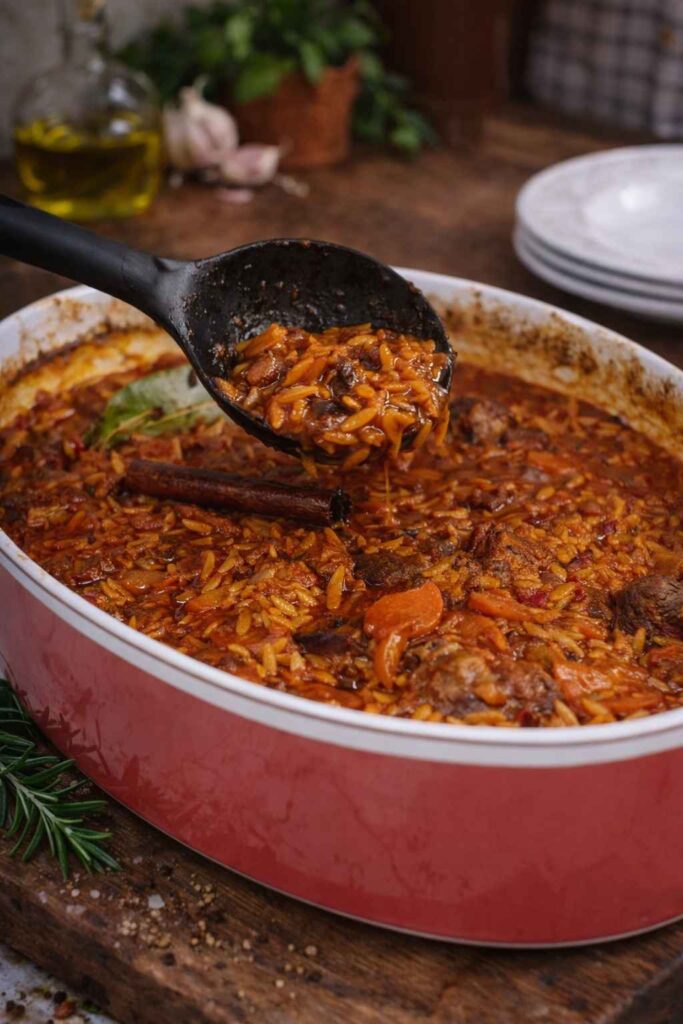
Add the dry orzo, cinnamon sticks, and bay leaves directly to the pot. Stir well to distribute the pasta evenly throughout the lamb and sauce. Transfer the entire contents of the pot into a large baking dish — traditionally a clay yiouvetsi pot if you have one, but any deep, oven-safe roasting dish works perfectly well. Spread everything out so the orzo is as evenly distributed as possible and the lamb pieces are nestled throughout.
Step 6: Bake, Then Finish Uncovered
Cover the baking dish tightly with aluminum foil, pressing the edges down firmly to create a good seal. Place in the preheated oven and bake for 30 minutes covered. During this time, the trapped steam drives the liquid into the orzo, beginning the absorption process while keeping everything moist and preventing the top layer of pasta from drying out.
After 30 minutes, carefully remove the foil — watch for the rush of steam when you lift it. Return the dish to the oven, uncovered, for a final 15 minutes. This last uncovered phase allows the surface of the orzo to take on a little color, the sauce to thicken from a liquid into something glossy and clinging, and the visible lamb pieces to develop a slightly caramelized, roasted appearance on their exposed surfaces.
Remove from the oven and allow the Yiouvetsi to rest, uncovered, for 5 to 10 minutes before serving. This resting period is important — the orzo will continue to absorb the remaining loose liquid as it cools slightly, reaching its ideal creamy, cohesive consistency.
How to Serve Yiouvetsi
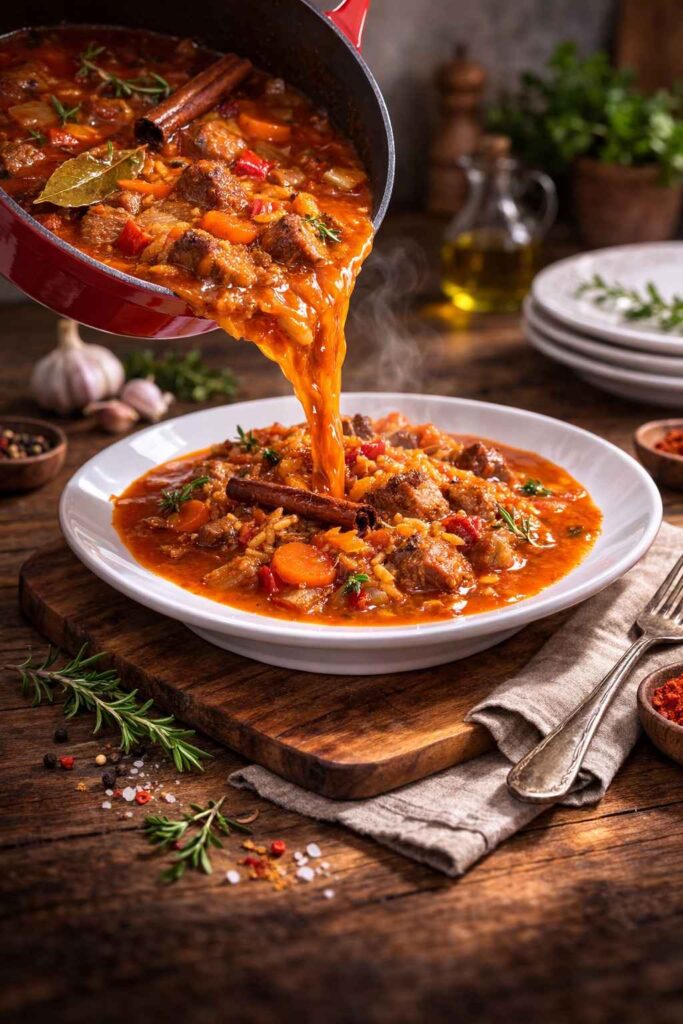
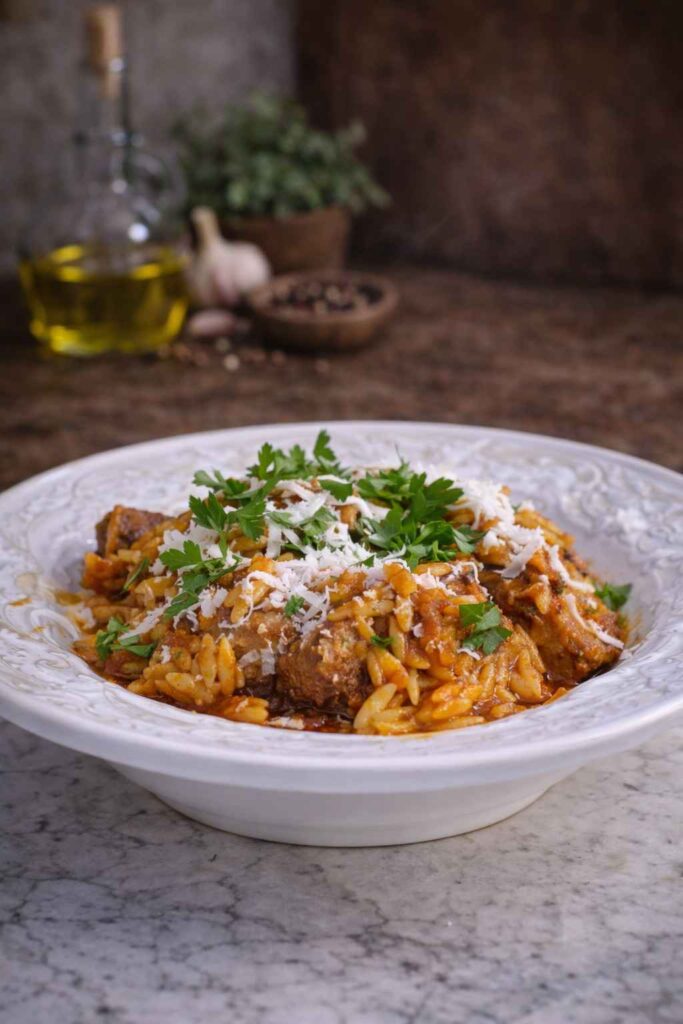
Bring the baking dish directly to the center of the table — this is a dish that begs to be presented in its cooking vessel, with the foil peeled back dramatically at the table so the fragrant steam can do its work. Serve generous portions into deep bowls and finish each one with a heavy grating of Mizithra cheese. This hard, salty Greek cheese is the traditional partner for Yiouvetsi and provides a sharp, saline counterpoint to the rich, sweet sauce. If you cannot source Mizithra, Pecorino Romano is an excellent substitute; crumbled Feta also works and adds a creamy tang.
Scatter fresh flat-leaf parsley over each bowl just before eating for a hit of brightness and color. Accompany the dish with thick slices of crusty bread for sauce-mopping, a simple Greek salad dressed with olive oil and oregano, and a glass of robust Greek red wine — an Agiorgitiko or Xinomavro would be ideal.
Expert Tips for the Best Yiouvetsi
Keep the liquid generous going into the oven. The most common mistake when making Yiouvetsi is under-estimating how much liquid the orzo requires. If the mixture looks too thick before you add the pasta, add more water. It should look almost soup-like before going into the oven.
Do not overcook the orzo. Check the dish at the 30-minute covered mark. The orzo should be al dente — just slightly firm at the center — when the foil comes off. The final 15 minutes of uncovered baking plus the resting period will finish it perfectly without turning it mushy.
Use leg of lamb, not shoulder, for chunks. While shoulder is wonderful for whole slow-roasting, leg provides cleaner, more uniform chunks that hold their shape through the two-stage cooking process without falling into stringy pieces prematurely.
Finish with olive oil if needed. If your final dish looks dry due to particularly lean lamb, a generous drizzle of good extra virgin olive oil stirred through just before serving will restore the silky, glossy quality the dish should have.
Frequently Asked Questions
Can I make Yiouvetsi with beef instead of lamb? Yes — beef is a common and delicious variation. Use a braising cut such as beef chuck or shin, which has enough connective tissue to become tender over the long cooking time. The flavor profile will be slightly different but equally satisfying.
Can Yiouvetsi be made ahead of time? The lamb can be fully simmered through Step 4 a day in advance and refrigerated. When ready to serve, reheat the lamb and sauce on the stovetop, add the orzo and aromatics, and proceed with the oven bake as directed. This actually improves the depth of flavor.
How do I store leftovers? Store cooled Yiouvetsi in an airtight container in the refrigerator for up to 3 days. Note that the orzo will continue to absorb liquid as it sits and may thicken considerably. When reheating, add a splash of water or stock to loosen the texture and stir well before serving.
Can I freeze Yiouvetsi? Pasta dishes with significant amounts of sauce can be frozen, though orzo’s texture does soften slightly upon thawing. Freeze in portions for up to 2 months and thaw overnight in the refrigerator before reheating gently with added liquid.
Conclusion: Why Yiouvetsi Deserves a Place in Every Home Kitchen
There is a reason why Yiouvetsi has been at the center of Greek family tables for generations, and a single bite of this dish explains it more eloquently than any words could. It is the kind of meal that makes people go quiet in the best possible way — the kind of quiet that means they are entirely focused on what is in front of them because it is simply too good to speak over. The lamb, after two-plus hours of slow cooking, is impossibly tender, falling apart at the touch of a fork and carrying within it the depth of all those aromatics and the sweet, slightly smoky richness of the caramelized tomato sauce. The orzo is silky and creamy in the way only properly braised pasta can be, every grain fat with absorbed flavor.
What makes this recipe so rewarding beyond its extraordinary taste is what it represents in the kitchen: the triumph of patience and process over complexity. There are no difficult techniques here, no specialist equipment required, and no obscure ingredients that are difficult to source. What Yiouvetsi demands is simply your time, your attention, and your willingness to let the process unfold without rushing it. In return, it gives you a dish that looks and tastes like it required far more skill than it actually did — the hallmark of the very best home cooking. Whether you are making it for a Sunday family gathering, a festive dinner, or simply because you want to bring something genuinely special to your weeknight table, Yiouvetsi will deliver every single time. As they say across Greece with great enthusiasm when a meal this good is placed on the table: Kali Orexi!
🍽️ Explore More Recipes
Browse our collection by category