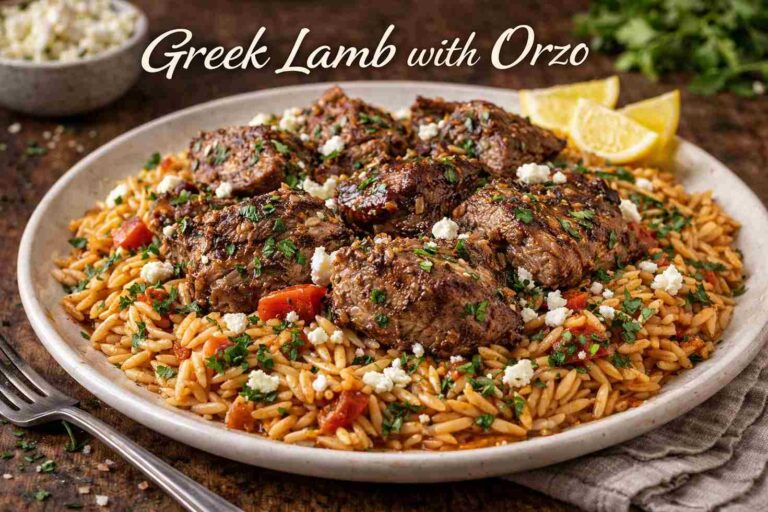
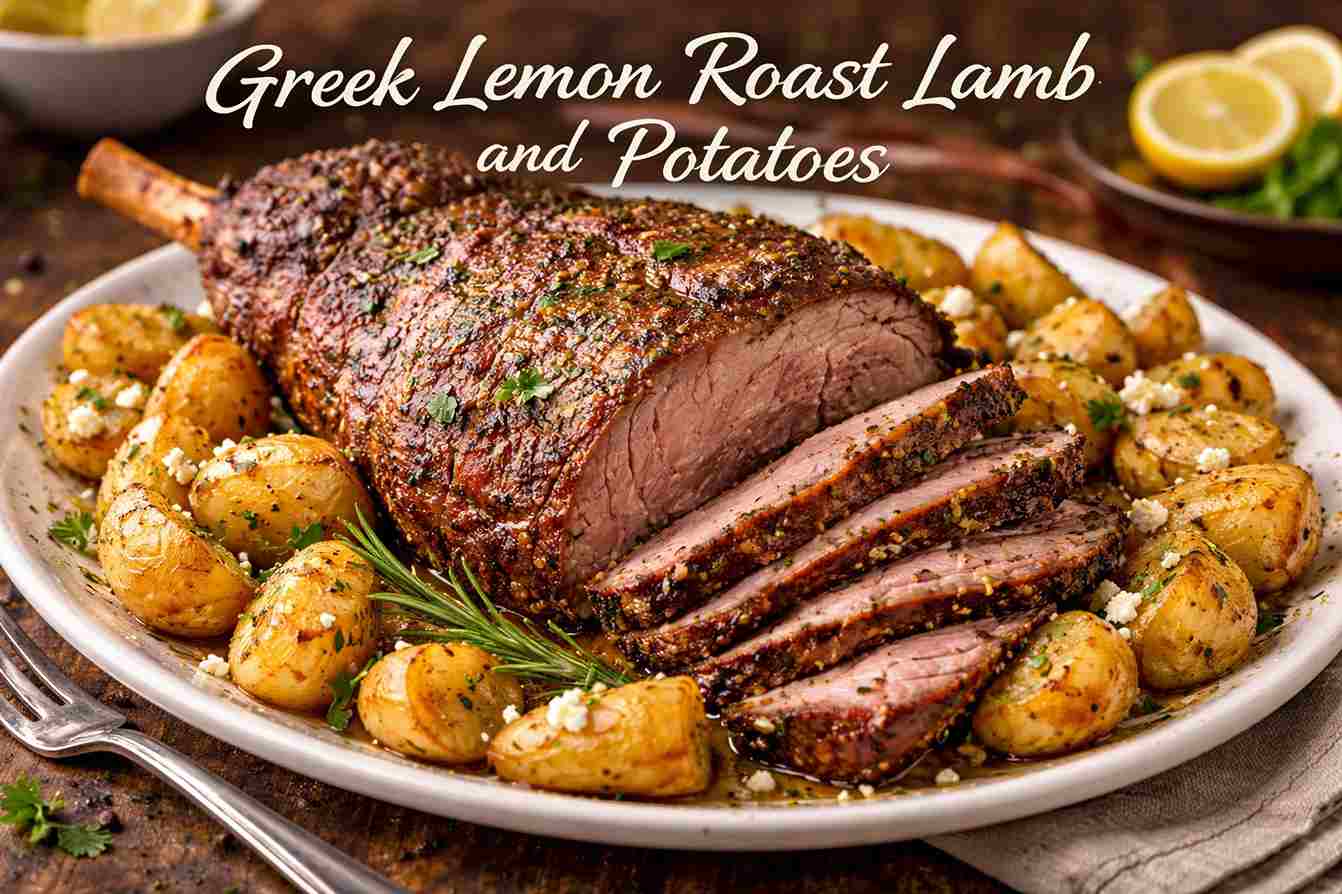
If you have been searching for the perfect showstopper recipe to anchor your next Sunday family dinner or festive celebration, you have just found it. Greek Lemon Roast Lamb and Potatoes — known in Greece as Arni me Patates sto Fourno — is one of the most beloved and iconic dishes in all of Mediterranean cuisine. It is the kind of meal that fills your entire home with an intoxicating aroma of roasting garlic, bright lemon, and fragrant rosemary long before anyone even sits down at the table. This is the dish that Greek grandmothers have been slow-roasting in deep pans for generations, and for very good reason: the results are nothing short of extraordinary.
What makes this recipe so special is the harmony between its few, simple components. A bone-in leg of lamb, some chunky potato wedges, a generous pour of extra virgin Greek olive oil, and a vibrant marinade of lemon, honey, mustard, oregano, and garlic — that is truly all you need. The oven does the rest. Over the course of three and a half unhurried hours, the lamb slowly surrenders its juices into the pan, the potatoes absorb every last drop of that citrus-herb-infused fat, and the whole thing emerges as a unified, golden, meltingly tender masterpiece. Whether you are cooking for a crowd or celebrating a special occasion, this classic Greek roast lamb recipe is guaranteed to impress every single time. Let us walk you through everything you need to know.
Recipe at a Glance
Here is a quick overview of all the essential details before we get started:
| Detail | Info |
|---|---|
| Cuisine | Greek / Mediterranean |
| Course | Main Course |
| Difficulty | Easy (requires patience, minimal active prep) |
| Servings | 6–8 people |
| Prep Time | 15 minutes |
| Cook Time | 3 hours 30 minutes |
| Calories per Serving | Approximately 650 kcal |
The Cultural Story Behind Greek Roast Lamb
To truly appreciate this dish, it helps to understand the deep cultural roots it carries within Greek society. In Greece, food is far more than sustenance — it is an expression of love, hospitality, and community. Roast lamb holds a place of extraordinary significance in Greek culture, most famously as the centrepiece of the Easter (Pascha) table, the single most important celebration in the Greek Orthodox calendar. Families gather from across the country, and the slow-roasted lamb — whether prepared in a wood-fired oven or a modern electric one — signals the arrival of the feast.
But lamb is not reserved for Easter alone. In households across Greece, a slow-roasted leg of lamb on a Sunday is a weekly tradition and a ritual of togetherness. The combination of lemon juice and olive oil that defines this dish is so fundamental to Greek cooking that it has its own name: Ladolemono (λαδολέμονο), meaning simply “oil and lemon.” This ancient pairing appears in Greek kitchens in dozens of forms, but nowhere does it shine more brilliantly than in a slow-roasted lamb that has had hours to drink it in.
This particular recipe was popularized by the renowned and widely beloved Greek chef Akis Petretzikis, whose modern approach to traditional Greek cooking has introduced a new generation of home cooks to the classics. His genius here lies in the efficiency of the marinade method — using a blender to create a fully emulsified, deeply flavorful sauce in minutes — and the one-pan approach that makes the whole dish remarkably accessible, even for beginner cooks.
Why This Recipe Works: The Science of Slow Roasting
Before diving into ingredients and technique, it is worth understanding why this recipe produces such consistently spectacular results. The answer lies in the science of slow, low-temperature cooking.
When a bone-in leg of lamb is placed in the oven at a relatively modest 170°C (340°F) and covered tightly with aluminum foil, something remarkable happens. The trapped steam and liquid in the pan create a self-basting, braising environment. The collagen-rich connective tissues in the lamb — the same tissues that can make the meat tough if cooked quickly at high heat — slowly dissolve over three hours into rich, silky gelatin. This is what gives the meat that almost impossibly tender quality where it quite literally falls off the bone.
The potatoes, meanwhile, are doing something equally important. As they sit beneath and around the lamb, they absorb the rendered lamb fat, the lemon-herb marinade, and the steam from the stock. They become dense with flavor — creamy and almost melting on the inside. Then, when the foil is removed for the final 30 minutes and the heat intensifies, their exteriors caramelize and crisp against the hot pan, creating an irresistible textural contrast.
The honey in the marinade plays a critical supporting role here. While it may seem unexpected in a savory roast, the natural sugars in the honey help the outer skin of the lamb achieve that signature deep-golden lacquer in the final uncovered phase of cooking. Without it, the lamb skin would lack that visually stunning color and the subtly sweet, sticky character that makes it so addictive.
Ingredients for Greek Lemon Roast Lamb and Potatoes (Serves 6–8)
Gather the following ingredients before you begin. Quality matters here — this is a recipe where great extra virgin olive oil and genuine dried Greek oregano (rigani) make a noticeably different result.
The Proteins and Vegetables:
- 1 whole bone-in leg of lamb (approximately 2–2.5 kg / 4.5–5.5 lbs)
- 1.5 kg (about 3.3 lbs) of starchy potatoes such as Russet or Yukon Gold, peeled and cut into large, chunky wedges
The Powerhouse Marinade:
- 4 tablespoons extra virgin Greek olive oil
- Zest and juice of 2 large lemons
- 1–2 tablespoons honey
- 1 tablespoon yellow or Dijon mustard
- 3 large garlic cloves, minced
- 2 tablespoons dried Greek oregano (rigani)
- A few sprigs of fresh rosemary
- 1 chicken stock cube, crumbled
- Salt and freshly ground black pepper to taste
For the Pan:
- 1 to 2 cups of water or prepared chicken or vegetable stock
Step-by-Step Instructions
Step 1: Preheat and Prepare Your Pan
Begin by preheating your oven to 170°C (340°F / Gas Mark 3). While the oven comes to temperature, peel your potatoes and cut them into large, generous wedges. The size is important — if the pieces are too small, they will break down and dissolve during the three hours of cooking. Aim for wedges that are approximately 5–6 cm (2 inches) across. Arrange them in a single layer across the bottom of a large, deep roasting pan.
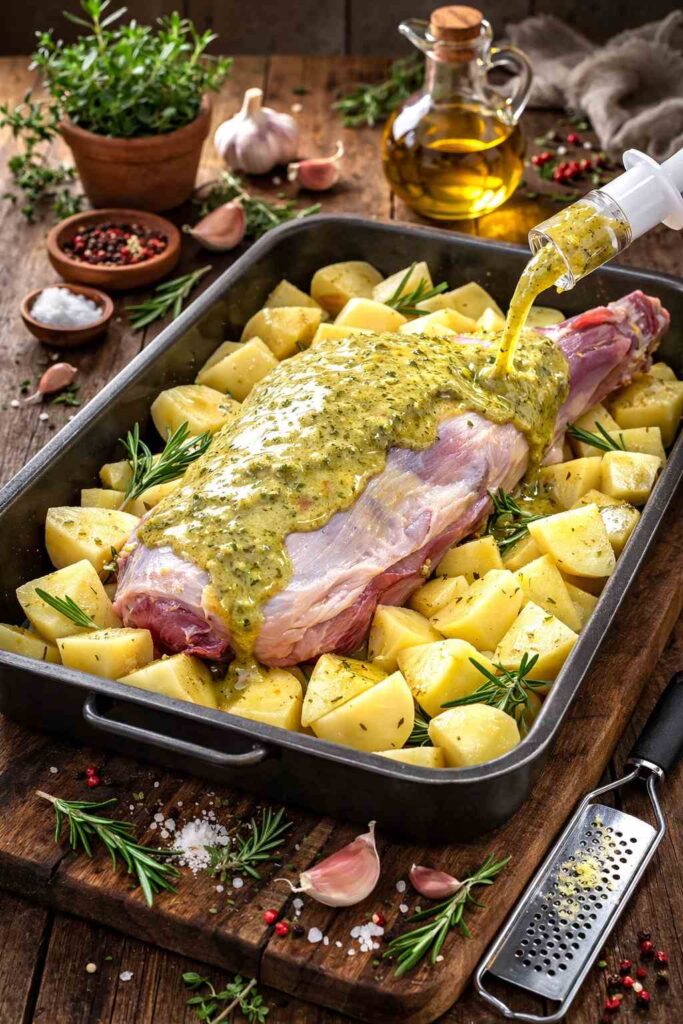
Place the leg of lamb directly on top of the potato layer. Setting the lamb above the potatoes is a crucial technique: as the lamb renders its fat and releases its juices, everything drips directly down into the potatoes below, infusing them continuously throughout the entire cooking process.
Step 2: Make the Marinade
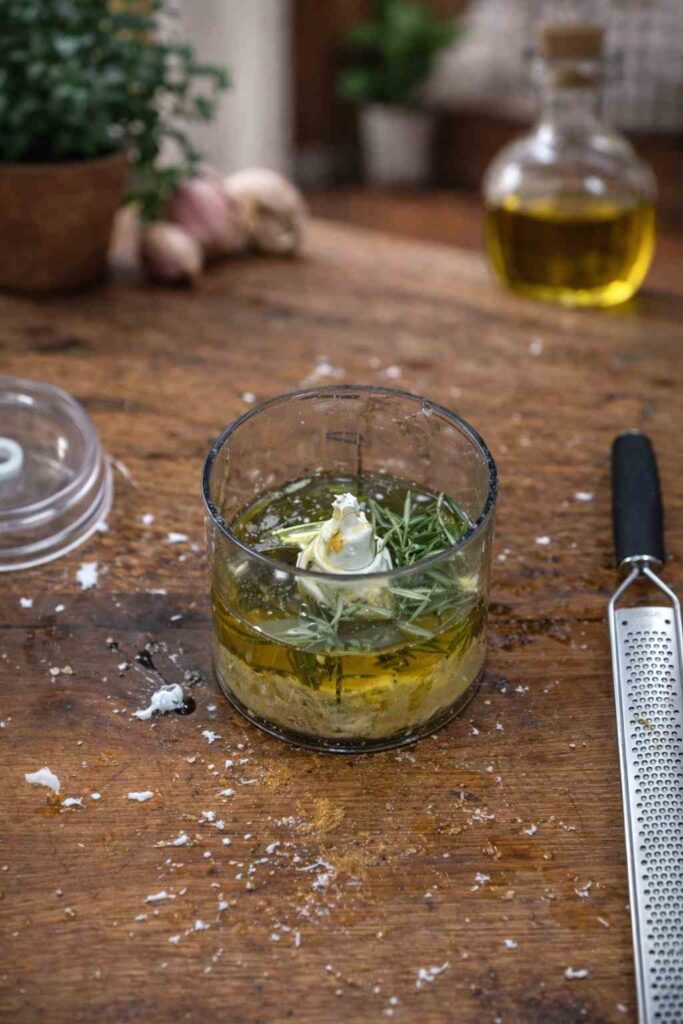
This is where the recipe becomes truly exceptional. Place the olive oil, lemon juice, lemon zest, honey, mustard, minced garlic, dried oregano, fresh rosemary, and crumbled stock cube into a blender or small food processor. Season generously with salt and freshly ground black pepper. Blend everything together for 30–60 seconds until the mixture is fully emulsified and you have a smooth, glossy, intensely aromatic marinade.
This blended approach creates a marinade that is far more cohesive and evenly distributed than simply whisking by hand. Every drop contains every flavor, ensuring consistent seasoning across the entire surface of both the lamb and the potatoes.
Step 3: Coat Everything Thoroughly
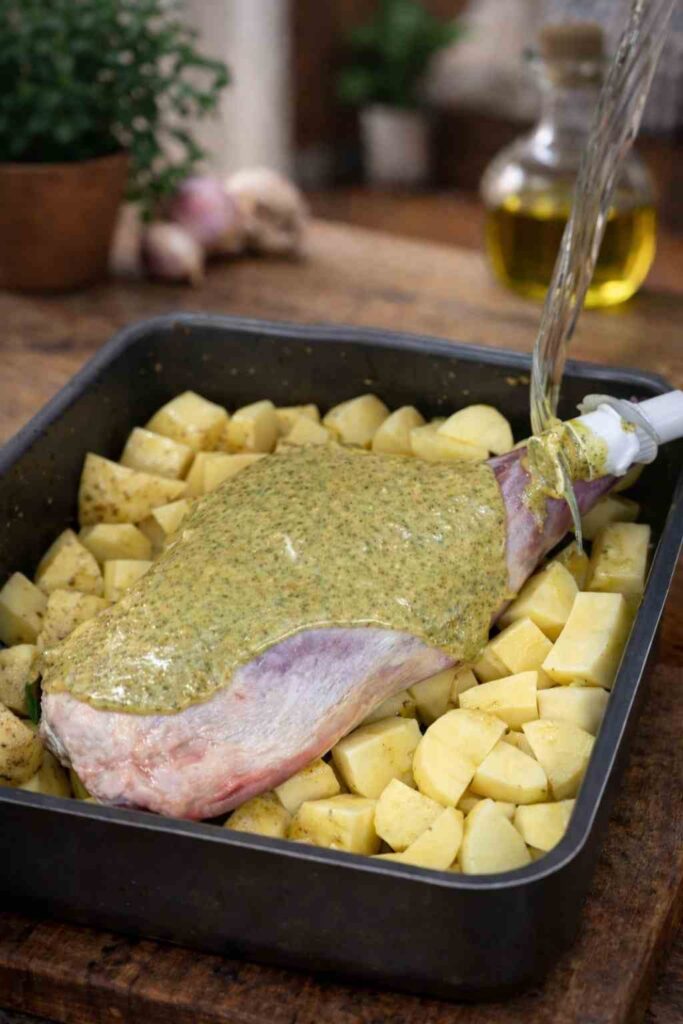
Pour the marinade generously and evenly over the lamb, then over the potatoes. Use your hands to massage the marinade deeply into the surface of the lamb, pressing it into any natural crevices in the meat. Toss the potato wedges in the pan so every piece is well coated on all sides.
Now pour 1 to 2 cups of water or stock directly into the bottom of the pan. This liquid is absolutely essential. It creates steam during the covered cooking phase, maintains moisture in the pan, and prevents the natural sugars in the honey and the lemon juice from scorching onto the pan bottom before the lamb has had a chance to render its own protective juices.
Step 4: Cover and Slow Roast for 3 Hours
Tear off a large piece of aluminum foil and cover the roasting pan tightly, pressing the edges down around the rim to create as good a seal as possible. This is the single most important step in the entire recipe. The foil trap keeps moisture, steam, and heat circulating within the pan, essentially braising the lamb in its own juices and aromatics simultaneously.
Place the covered pan in the preheated oven and roast for 3 hours. During this time, the collagen in the lamb slowly melts away, the meat becomes impossibly tender, and the potatoes gradually absorb the accumulating flavors in the pan liquid. Check the pan once or twice during this period — if the liquid has fully evaporated, carefully add another half-cup of water to maintain a small amount of moisture on the pan floor.
The patience required here is the only real challenge in this recipe. Everything else is straightforward; the oven handles the hard work entirely.
Step 5: Uncover and Crisp for 30 Minutes
After 3 hours, carefully remove the pan from the oven and peel back the foil. The lamb should already look cooked through, and the whole pan will be bubbling with fragrant, golden-tinted juices. Now it is time for the transformation.
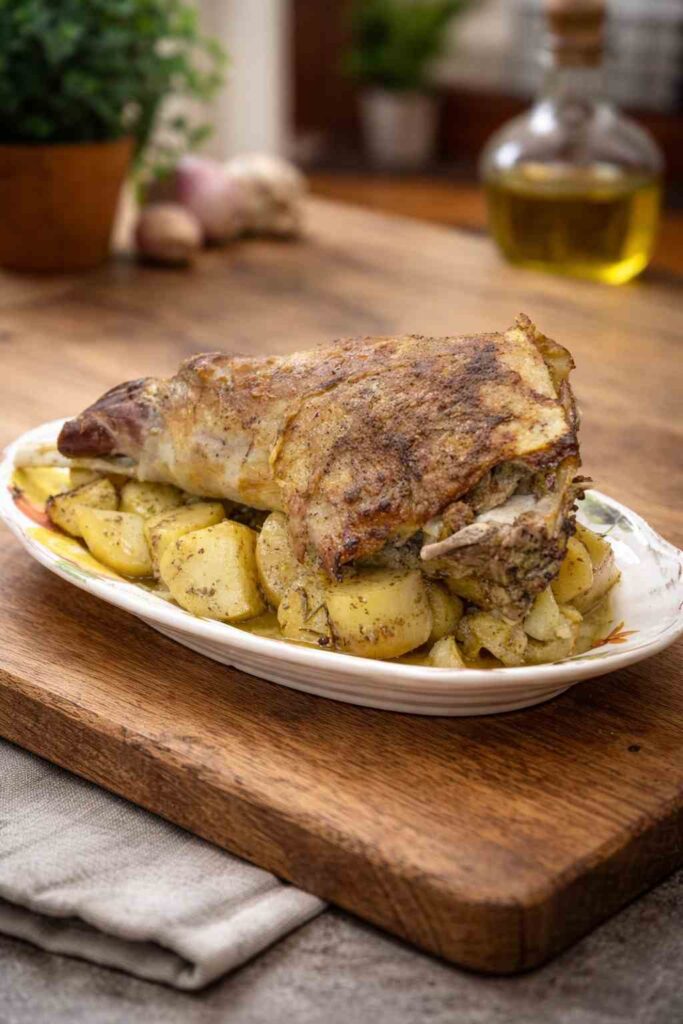
Increase the oven temperature slightly or switch on the fan/convection function. Return the uncovered pan to the oven and roast for a final 30 minutes. During this phase, the surface of the lamb develops a deep, chestnut-brown crust with crispy edges where the marinade has concentrated and caramelized. The potatoes, now largely cooked through and saturated with flavor, develop golden, slightly crisp exteriors as the residual moisture evaporates from the pan.
Keep a close eye during this final phase — the honey in the marinade means things can darken quickly. You are looking for deep golden brown, not burnt.
Step 6: Rest, Carve, and Serve
Remove the pan from the oven and allow the lamb to rest, uncovered, for a minimum of 15 minutes before carving. This resting period is not optional. It allows the muscle fibers, which contract tightly during the high heat of the final crisping phase, to relax and reabsorb the juices that have been pushed toward the center of the joint. Skip this step and you will lose those precious juices onto the cutting board rather than keeping them in the meat.
After resting, transfer the lamb to a large carving board and slice or pull the meat away from the bone in generous pieces. Arrange on a large serving platter surrounded by the golden lemon potatoes, spooning any remaining pan juices over everything as a natural sauce. Serve immediately.
Serving Suggestions
This dish is satisfying and complete on its own, but a few thoughtful accompaniments elevate the meal further into true Greek taverna territory.
Greek Salad (Horiatiki): A simple salad of ripe tomatoes, cucumber, red onion, Kalamata olives, and a thick slab of feta cheese dressed with olive oil and oregano is the natural companion. Its freshness and acidity cut beautifully through the richness of the lamb.
Tzatziki: This cool, creamy yogurt and cucumber dip is a classic pairing with roast lamb. The tang of the strained yogurt and the cooling cucumber provide a refreshing contrast to the warm, deeply savory meat.
Warm Crusty Bread: Absolutely essential for mopping up the extraordinary pan juices left in the roasting tray after the lamb and potatoes have been served.
Roasted Vegetables: Add a separate tray of roasted red peppers, zucchini, and red onion dressed with olive oil and herbs to round out the spread for larger gatherings.
For beverages, a medium-bodied Greek red wine such as Agiorgitiko or Xinomavro pairs beautifully with the lamb, while a crisp Assyrtiko white wine from Santorini works wonderfully with the lemon notes in the marinade.
Expert Tips for Perfect Greek Roast Lamb Every Time
Source authentic Greek oregano. Standard dried oregano from a supermarket spice rack is a pale shadow of genuine dried Greek rigani, which is harvested from wild plants growing in the mountains of Greece. It is significantly more pungent, floral, and complex. Many specialty grocery stores and online retailers carry it — the flavor difference in this recipe is noticeable and well worth the effort of seeking it out.
Do not skip the bone. A bone-in leg of lamb is specifically called for and strongly recommended. The bone conducts heat into the centre of the joint during cooking and, more importantly, releases collagen and marrow that add incredible depth of flavour to the pan juices and the potatoes.
Choose starchy potatoes. Floury, starchy varieties like Russet or Maris Piper absorb moisture and fat beautifully during slow cooking, becoming creamy and flavour-dense throughout. Waxy varieties stay firm and do not absorb the pan liquid as effectively, resulting in a less satisfying texture.
Let the rest time do its work. Fifteen minutes is the minimum; twenty is better. Tent the lamb loosely with a piece of foil during resting to keep it warm without steaming the crispy skin soft.
Frequently Asked Questions
Can I prepare this the night before? Yes — and it actually improves the result. You can coat the lamb and potatoes in the marinade, cover the pan tightly, and refrigerate overnight. The extended marinating time allows the flavors to penetrate even more deeply. Simply bring everything to room temperature for 30 minutes before placing in the oven.
Can I use lamb shoulder instead of leg? Absolutely. A bone-in lamb shoulder is an excellent alternative and is often considered even more flavourful due to its higher fat content and connective tissue. It works perfectly with the same cooking time and method.
What if I do not have a blender for the marinade? Whisk all the marinade ingredients together vigorously by hand in a bowl. It will not emulsify as completely, but the flavor will be equally good. Alternatively, use a fork to mash the garlic into a paste before adding the remaining ingredients.
How do I store and reheat leftovers? Store cooled leftover lamb and potatoes together in an airtight container in the refrigerator for up to 3 days. Reheat in a covered baking dish with a small splash of water at 160°C (320°F) for 20–25 minutes to maintain moisture. The leftover lamb is also spectacular shredded cold over a salad or wrapped in warm flatbread with tzatziki.
Conclusion: A Recipe Worth Making Again and Again
There are recipes you try once, enjoy, and forget. And then there are recipes that quietly become a permanent fixture in your home — dishes that people request by name and that define what it means to gather around a table together. Greek Lemon Roast Lamb and Potatoes belongs firmly in that second category. It is the kind of cooking that reminds us why slow food endures in a world that increasingly moves too fast. It asks very little of you — fifteen minutes of preparation, the patience to let the oven work undisturbed — and rewards you with results that feel genuinely special and deeply nourishing.
What this recipe ultimately represents is the best tradition of Mediterranean cooking: the belief that quality ingredients, treated with simplicity and given adequate time, will always produce something extraordinary. The lemon brightens. The oregano grounds. The honey caramelizes. The olive oil binds everything together with its characteristic richness. And the lamb — slow-roasted to falling-off-the-bone tenderness — anchors it all with a depth of flavour that no shortcut cooking method can replicate.
Whether you are making this for a festive Easter gathering, a milestone birthday, a Sunday family lunch, or simply because you want to fill your home with one of the most welcoming aromas in all of cooking, this recipe will not let you down. Make it once and you will understand why generations of Greek families have trusted this dish to anchor their most important meals. Kali Orexi — good appetite.
🍽️ Explore More Recipes
Browse our collection by category