
Close your eyes for a moment and imagine the kind of meal that stops a conversation cold — the kind that lands on the table and immediately commands every person’s full, undivided attention. That is exactly what Jamaican Jerk Chicken and Fried Plantains does, every single time, without exception. This iconic Caribbean dish is not merely food — it is an experience, a sensory journey that carries with it the heat of the tropics, the fragrance of island spice markets, and the deeply communal, celebratory spirit that defines Jamaican cooking at its very best. From the first waft of the blended marinade hitting a hot grill pan to the final bite of sweet, caramelized plantain alongside charred, fiery chicken, every moment of this dish is extraordinary.
What makes authentic Jamaican Jerk Chicken genuinely different from every other spiced chicken recipe you have ever made is the complexity and intentionality of its marinade. This is not a one-dimensional heat — it is a layered, aromatic, deeply fragrant blend built on the fruity fire of Scotch bonnet peppers, the earthy backbone of allspice (pimento), the warm sweetness of cinnamon and nutmeg, the brightness of fresh ginger and thyme, and the savory depth of garlic and scallions. Together, blended into a smooth, thick paste and massaged deep into every crevice of the chicken, this marinade does not just season the surface of the meat — it transforms it entirely from the inside out. Paired with fried ripe plantains whose natural sugars have caramelized into sweet, golden softness, this complete Caribbean plate is a study in brilliant balance: fiery and sweet, smoky and tender, bold and deeply satisfying. This comprehensive guide will walk you through every step to make it perfectly.
Recipe at a Glance
| Detail | Info |
|---|---|
| Cuisine | Jamaican / Caribbean |
| Course | Main Course |
| Difficulty | Intermediate |
| Servings | 4 people |
| Prep Time | 45 minutes (including marinating) |
| Cook Time | 25 minutes |
| Calories per Serving | Approximately 580 kcal |
The Story of Jamaican Jerk: Where This Recipe Comes From
To truly appreciate what you are making, it helps to understand the remarkable history behind Jerk cooking. The tradition of jerk originated with the Maroons — African freedom fighters who escaped British colonial enslavement in Jamaica during the 17th century and established communities in the island’s rugged Blue Mountains. Forced to live off the land and conceal their cooking fires from pursuing soldiers, they developed a technique of heavily spicing and slow-cooking pork over pimento wood in underground pits, creating food that could be preserved and eaten over multiple days.
The defining ingredients of that original technique — pimento (allspice), Scotch bonnet peppers, scallions, and fresh thyme — remain the non-negotiable core of authentic jerk seasoning to this day. Over centuries, jerk evolved and expanded across the island, becoming the national culinary identity of Jamaica and eventually spreading its influence across the Caribbean diaspora and into kitchens worldwide. When you make this recipe from scratch with a homemade marinade rather than a jar from the supermarket shelf, you are participating in a cooking tradition that is nearly 400 years old — and that history is present in every bite.
The fried ripe plantain (maduros) served alongside is equally embedded in Caribbean food culture. Plantains are a staple crop across the Caribbean, Central America, and West Africa, and in their fully ripened state — when the skin has turned from yellow to heavily speckled black — they are transformed from a starchy, neutral vegetable into something almost dessert-like in its sweetness. Fried in hot oil until caramelized and golden, they serve both a culinary and a functional purpose alongside jerk chicken: their gentle sweetness and soft texture provide the perfect counter-balance to the fierce, smoky heat of the jerk marinade.
Understanding the Ingredients: Why Each One Matters
Every ingredient in an authentic jerk marinade is present for a specific reason. Understanding the role each plays will help you make informed adjustments and produce consistently outstanding results.
Scotch Bonnet Pepper — The Soul of the Heat
The Scotch bonnet is not interchangeable with a standard habanero, despite their visual similarity. While both are extraordinarily hot, the Scotch bonnet carries a distinct fruity, almost floral quality that is uniquely Caribbean in character. It is this fruitiness — bright, tropical, and slightly sweet even at high heat levels — that gives authentic jerk its signature flavor profile. A habanero substitution is acceptable in a pinch, but the flavor will be marginally different. For the closest result to authentic island jerk, source genuine Scotch bonnets from a Caribbean or international grocery store.
For those sensitive to extreme heat, remove the seeds and white membrane from inside the pepper before blending — this is where the majority of the capsaicin is concentrated. Using half a pepper is also a completely valid approach that still delivers excellent flavor without overwhelming heat.
Allspice (Pimento) — The Backbone
Allspice, known locally in Jamaica as pimento, is the single most important spice in jerk seasoning. Its name comes from the fact that its flavor profile encompasses notes of cinnamon, cloves, and black pepper simultaneously — a natural spice blend within a single berry. In a traditional Jamaican jerk pit, pimento wood is used as the fuel source, infusing the meat with its aromatic oils from two directions simultaneously: the spice in the marinade and the wood in the smoke. When cooking indoors or in an oven, including a generous amount of ground allspice in the marinade compensates for the absence of pimento wood smoke.
Nutmeg and Cinnamon — The Unexpected Warmth
These two spices might feel more at home in a holiday baking recipe than a savory chicken marinade, but their inclusion in jerk seasoning is deeply intentional and historically grounded. Both nutmeg and cinnamon were valuable Caribbean trade commodities during the colonial era, and both add a warm, rounded sweetness to the marinade that bridges the gap between the sharp heat of the Scotch bonnet and the earthiness of the allspice. They do not make the finished chicken taste sweet or spiced in a dessert sense — used in the appropriate amounts, they create a background warmth that makes the whole flavor profile feel deeper and more complex.
Browning Sauce — The Secret to That Signature Color
Browning sauce is a caramelized sugar-based liquid condiment that is a staple in Caribbean cooking, used to give dishes their characteristic deep, rich, dark color. In jerk chicken, it provides the visual indicator of authenticity — that almost mahogany-dark exterior — without adding bitterness or burning the spices. If you cannot find browning sauce at your local store, a teaspoon of dark soy sauce combined with a small amount of molasses makes a workable substitute. Do not skip this ingredient entirely — the color it provides is part of the identity of the dish.
Ripe Plantains — The Perfect Cooling Counterpart
The ripe plantain is distinguished from its unripe counterpart by its skin color: a fully ripe plantain suitable for frying will be heavily yellow with significant black spotting, indicating that the internal starches have converted to natural sugars. When these sugar-dense plantains are sliced and fried in hot oil, those sugars caramelize rapidly against the hot surface, creating a golden, slightly crisp exterior over a yielding, almost creamy interior that is genuinely sweet. The contrast they provide against the fiery jerk chicken is not accidental — it is the architectural principle of the entire plate.
Ingredients for Jamaican Jerk Chicken and Fried Plantains (Serves 4)
The Chicken:
- 2 lbs bone-in, skin-on chicken pieces (legs, thighs, and drumsticks recommended)
- 1 fresh lemon or ¼ cup white vinegar, for washing
The Homemade Jerk Marinade:
- 1 to 2 Scotch bonnet peppers (adjust to your heat tolerance)
- 1 medium onion, roughly diced
- 2 to 3 stalks of celery, roughly chopped
- 4 to 5 green onions (scallions), roughly chopped
- A generous handful of fresh thyme sprigs (or 1 teaspoon dried)
- 1 tablespoon fresh ginger paste or finely grated fresh ginger
- 1 tablespoon garlic paste or 4 to 5 cloves garlic, minced
- 1 teaspoon ground allspice (pimento)
- ½ teaspoon ground nutmeg
- ½ teaspoon ground cinnamon
- 1 teaspoon seasoned salt
- 1 teaspoon chicken seasoning or all-purpose seasoning
- 1 teaspoon browning sauce
The Fried Plantains:
- 2 large ripe plantains (heavily yellow with black spots)
- Vegetable oil for frying (enough for approximately ½ inch depth in your pan)
For Serving:
- Fried rice or rice and peas (traditional accompaniments)
- Lime wedges
Step-by-Step Instructions
Step 1: Clean and Prepare the Chicken
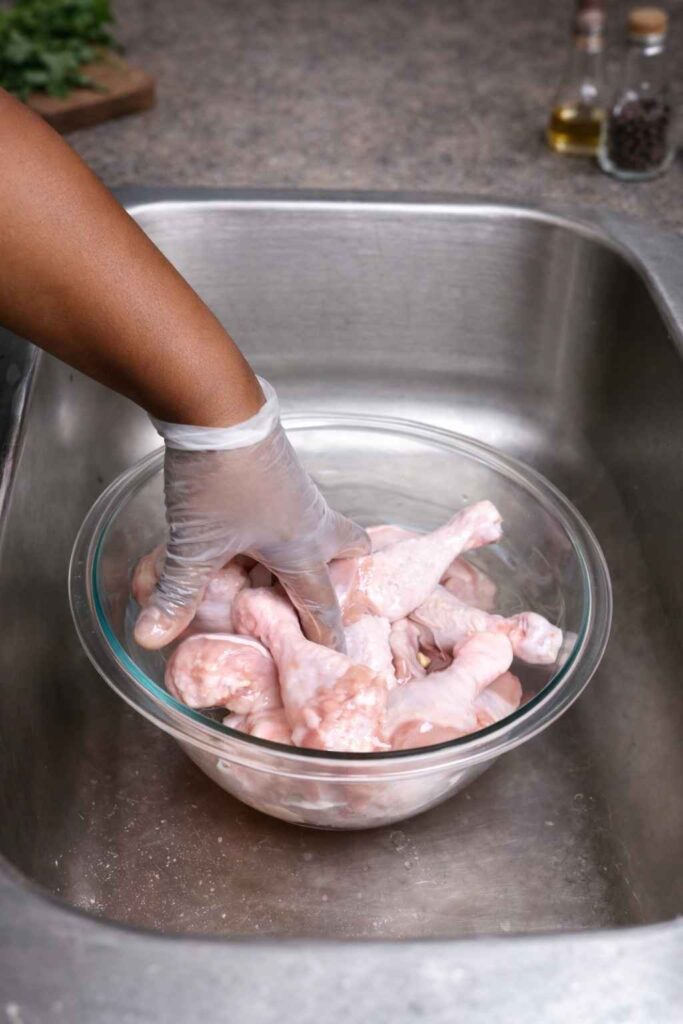
In authentic Caribbean cooking, washing the chicken before cooking is a standard and important practice. Place your chicken pieces in a large bowl and squeeze the juice of one fresh lemon generously over them, or pour over a quarter cup of white vinegar. Using your hands, rub the lemon or vinegar all over the surfaces of each piece, including under the skin where possible. Rinse thoroughly with cold water and then pat every piece completely dry with paper towels.
This cleaning step does more than just address any poultry odor — drying the chicken thoroughly after washing is equally important. Dry surfaces mean the marinade will adhere more effectively to the meat, and later under the broiler, dry skin will crisp and char more readily than wet skin ever could.
Using a sharp knife, score the chicken pieces with 2 to 3 deep cuts through the skin and into the flesh of each piece. These cuts are not decorative — they create channels for the marinade to penetrate directly into the interior of the meat rather than sitting only on the surface. This is particularly important for thicker pieces like thighs and leg quarters.
Step 2: Blend the Jerk Marinade
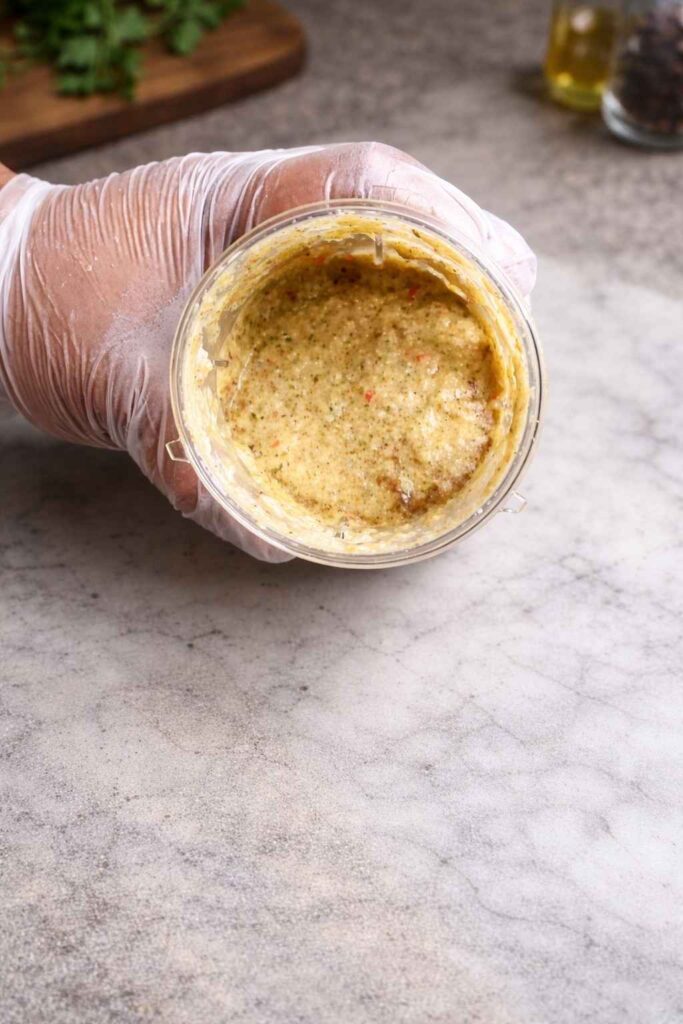
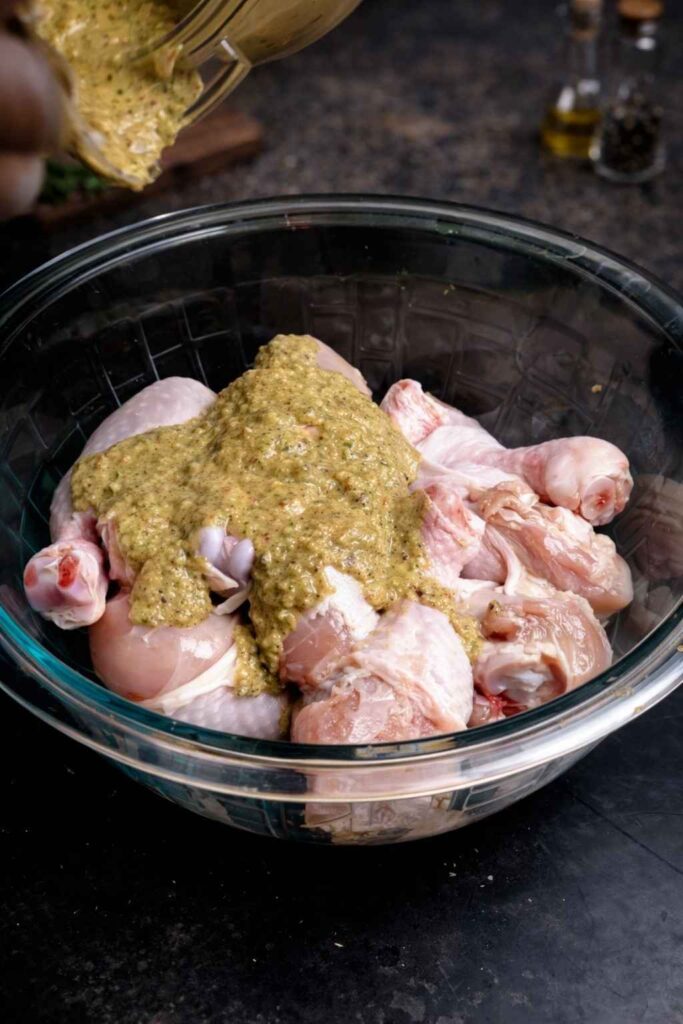
Place the roughly diced onion, chopped celery, scallions, Scotch bonnet pepper or peppers, and fresh thyme into a blender. Add the ginger paste, garlic paste, ground allspice, nutmeg, cinnamon, seasoned salt, chicken seasoning, and browning sauce. Blend the mixture on high speed until it is completely smooth and uniform — a thick, fragrant, deep-colored paste with no visible chunks of vegetable remaining.
Take a moment to smell the marinade before applying it to the chicken. The aroma should be simultaneously sharp, fruity, warm, and deeply complex — the Scotch bonnet’s heat rising above a base of allspice and scallion, with the cinnamon and nutmeg providing a sweet warmth underneath. If this marinade smells extraordinary in the bowl, imagine what it will taste like after 20 minutes under a hot broiler.
Step 3: Marinate the Chicken
Pour the blended jerk marinade over the prepared chicken pieces in a large bowl or resealable bag. Using your hands, work the marinade thoroughly into every surface of each piece, pushing it into the scored cuts and under the skin wherever possible. Every inch of the chicken should be coated in the thick, fragrant paste.
Cover and refrigerate for a minimum of 30 minutes. However — and this cannot be overstated — if you have the foresight to marinate the chicken for 4 to 8 hours, or overnight, the difference in flavor depth is significant and absolutely worth the planning. The longer the chicken sits in the jerk marinade, the more the aromatics penetrate the meat and the more profoundly the flavors develop. If you are making this for a weekend dinner, marinate on Friday night and cook Saturday evening for the best possible result.
Step 4: Broil the Chicken
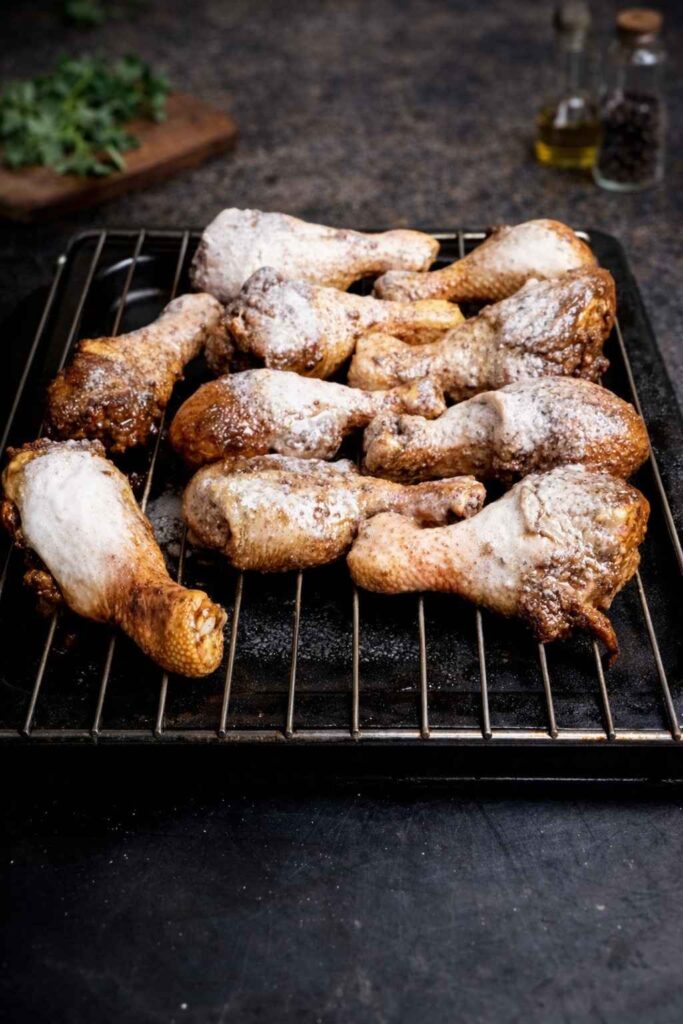
Preheat your oven’s broiler to 400°F (200°C) and position the oven rack in the upper third of the oven, close to the heating element. Remove the chicken from the refrigerator at least 15 minutes before cooking to take the chill off — cold meat placed directly under a broiler cooks unevenly.
Arrange the marinated chicken pieces on a grill pan or a wire rack set over a foil-lined baking sheet. The rack allows heat to circulate underneath the chicken, preventing the bottom from steaming and ensuring even cooking. Lightly spray the tops of the chicken pieces with a fine mist of cooking oil spray — this promotes the development of that signature crispy, charred exterior.
Place the pan under the broiler and cook for 10 to 12 minutes without opening the oven. After the first side has developed a deep char with some blackened edges — this charring is intentional and characteristic of jerk, not a sign of burning — carefully flip each piece using tongs. Return to the broiler for a further 10 minutes until the second side is equally charred and the chicken is cooked through to an internal temperature of 165°F (74°C).
The finished chicken should be deeply dark on the surface, with charred edges where the marinade has caramelized and slightly blackened in the intense heat, and visibly juicy at every cut or natural joint.
Step 5: Fry the Ripe Plantains
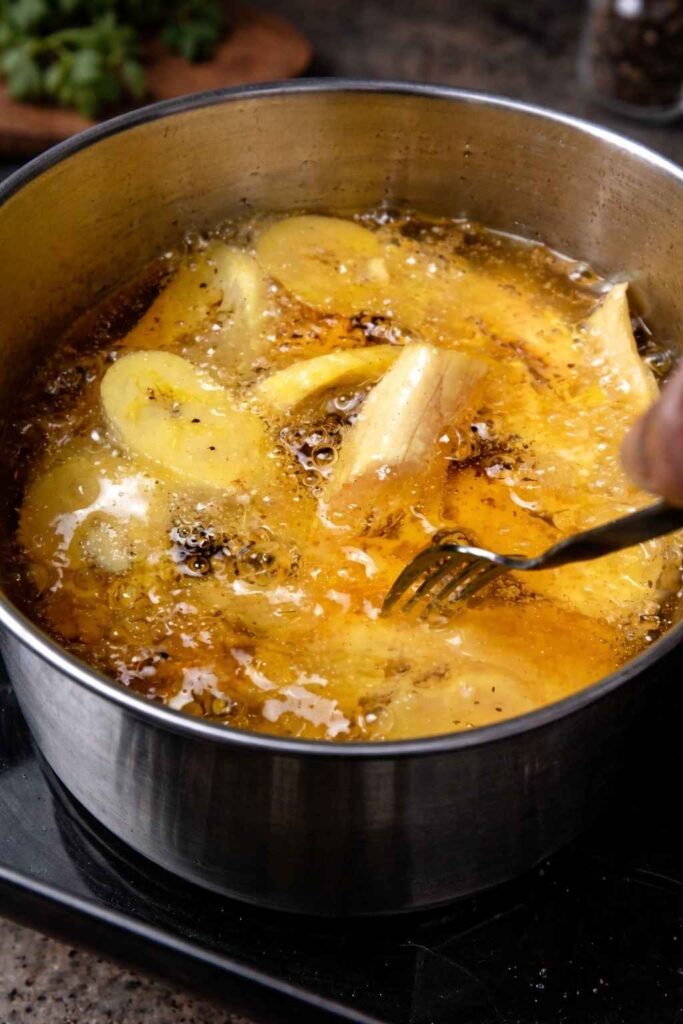
While the chicken is broiling, prepare the plantains. Trim both ends of each plantain and peel by slicing along the natural ridges of the skin lengthwise, then peeling it back like a banana. Slice the plantains on a diagonal into rounds approximately half an inch to three-quarters of an inch thick. The diagonal cut maximizes the surface area of each piece, which means more caramelization per slice.
Pour vegetable oil into a wide frying pan to a depth of approximately half an inch. Heat over medium to medium-high heat until the oil is hot and shimmering — test it by dropping a small piece of plantain in; it should sizzle immediately on contact. Working in batches to avoid crowding, add the plantain slices in a single layer.
Fry for approximately 2 to 3 minutes per side until each surface is deep golden to amber in color and you can see the edges caramelizing where the natural sugars have met the hot oil. Remove with a slotted spoon and drain briefly on a plate lined with paper towels. Season with a tiny pinch of salt immediately upon removal from the oil — the contrast of salt against the sweet caramelized plantain is a brilliant finishing touch.
Step 6: Plate and Serve
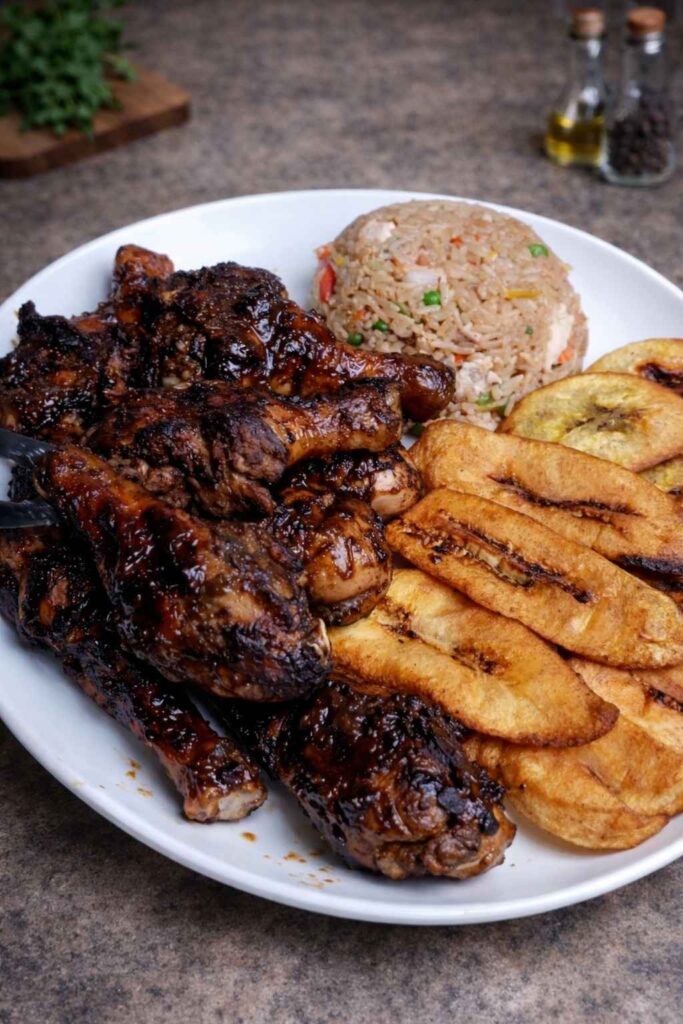
Arrange the jerk chicken pieces on a large serving plate or platter and nestle the fried plantains alongside. Serve immediately while the chicken is hot and the plantain is at its peak of caramelized sweetness. A side of coconut rice and peas — white rice cooked in coconut milk with kidney beans, thyme, and scallions — is the most traditional and complementary accompaniment. Fried rice also works beautifully. Provide lime wedges at the table for squeezing over the chicken just before eating — the citrus acid lifts every flavor and cuts the rich heat of the jerk marinade in the most satisfying way.
Expert Tips for Perfect Jerk Chicken Every Time
Score deep enough to matter. Shallow surface scratches will not allow the marinade to penetrate. Cut firmly through the skin and at least half an inch into the flesh for meaningful flavor penetration.
Embrace the char. The darkened, slightly blackened patches on jerk chicken are not a mistake — they are a defining characteristic of the dish. The caramelized, almost bitter edge of those charred spots is part of the complex flavor profile. Do not panic and pull the chicken early because it looks dark.
Use bone-in, skin-on pieces exclusively. Boneless, skinless chicken breast is not suitable for this recipe. The bone conducts heat evenly through the joint, preventing the common problem of raw meat near the bone with overcooked meat at the exterior. The skin protects the flesh from the fierce broiler heat and provides the surface on which the marinade caramelizes into its characteristic crust.
Let the plantains fully ripen. Using an underripe or just-yellow plantain will produce a starchy, bland result that misses the point entirely. Wait until the skin is at least 50 percent black before using, and fully black-skinned plantains will produce the sweetest, most caramelized result of all.
Frequently Asked Questions
Can I cook jerk chicken on an outdoor grill instead of the oven broiler? Absolutely — and an outdoor grill over charcoal is arguably the superior method, producing a smokiness that no oven broiler can replicate. Grill over medium-high heat with the lid closed, flipping once, until cooked through. Cooking over charcoal with a few pieces of allspice wood or bay leaves added to the coals brings the preparation closest to the traditional pit method.
Can I use a store-bought jerk seasoning or marinade? You can, but the flavor difference between a fresh, homemade blended marinade and a jarred product is dramatic. The freshness of the blended onion, celery, scallion, and pepper creates an aromatic intensity that no commercially processed product achieves. The homemade version is always worth the extra ten minutes.
How long does leftover jerk chicken keep? Store cooled jerk chicken in an airtight container in the refrigerator for up to 4 days. Reheat in the oven at 350°F (175°C), covered loosely with foil, for 15 minutes, or under the broiler briefly to refresh the exterior. The flavor actually deepens slightly overnight.
What if I cannot find Scotch bonnet peppers? Habanero peppers are the closest available substitute and share a similar fruity heat profile. Use in the same quantity. A combination of habanero and a small amount of a milder red chilli provides good results if the full heat of a whole habanero feels too intense.
Conclusion: Why Authentic Jamaican Jerk Chicken Belongs at Your Table
There are recipes that you cook because they are convenient, and there are recipes that you cook because they matter — because they carry history, soul, and a depth of flavor that reminds you why cooking from scratch is always worth the effort. Jamaican Jerk Chicken with Fried Plantains falls emphatically into the second category. Every element of this dish has been refined over generations to achieve a balance that is simply perfect: the fierce, fruity heat of the Scotch bonnet tempered by the warm sweetness of allspice and cinnamon, the smoky char of the broiled skin contrasting with the juicy, tender meat beneath, and the gentle caramelized sweetness of the fried plantain providing the relief and contrast that makes the next bite of spicy chicken taste even better than the last.
By making the jerk marinade entirely from scratch — blending fresh aromatics and whole spices into a smooth, fragrant paste rather than reaching for a jar — you honor the tradition this dish comes from and you guarantee a depth of flavor that no commercial shortcut can approach. By choosing bone-in chicken, scoring it deeply, and giving it adequate time to marinate, you ensure that the flavor reaches every part of the meat and that the finished dish is as juicy and tender as it is bold and spiced. And by choosing genuinely ripe plantains and frying them with patience until properly caramelized, you complete the plate with a side dish that is not an afterthought but an essential, intelligent companion. Make this recipe on a weekend when you have the time to enjoy the process, and bring a little of the spirit and soul of Jamaica to your own table. One love.
🍽️ Explore More Recipes
Browse our collection by category