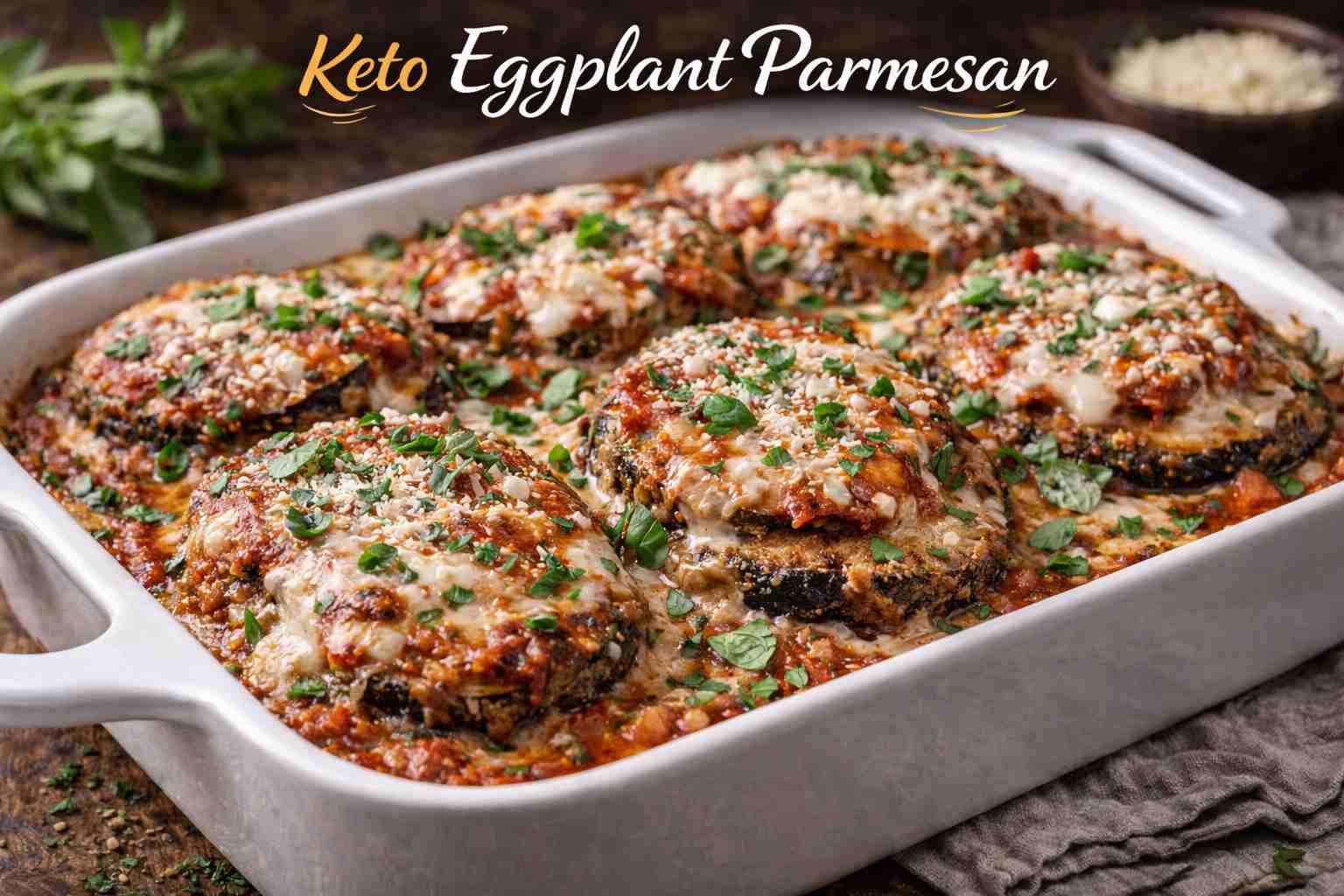
Italian food holds a special place in the hearts of comfort food lovers everywhere. There is something profoundly satisfying about the combination of rich tomato sauce, molten melted cheese, and a hearty, substantial base that soaks up every drop of flavor from the ingredients surrounding it. Eggplant Parmesan — known in Italy as Melanzane alla Parmigiana — is one of the great jewels of the Italian culinary tradition, a dish that has been warming tables and filling bellies across southern Italy for generations. It is bold, deeply savory, visually stunning, and utterly soul-satisfying in a way that very few vegetarian dishes manage to achieve.
For anyone following a ketogenic or low-carb lifestyle, however, traditional Eggplant Parmesan presents a frustrating problem. The conventional preparation involves coating each eggplant slice in flour and breadcrumbs before frying, which immediately transforms an otherwise naturally low-carb vegetable into a carbohydrate-heavy dish that can knock you clean out of ketosis. It is one of those recipes that sits on the periphery of your keto life, tantalizing and seemingly out of reach.
The brilliant discovery at the heart of this recipe — inspired by the culinary expertise of Sahil from Headbanger’s Kitchen — is that the breadcrumbs are not what make Eggplant Parmesan great. The breadcrumbs are filler. What makes this dish extraordinary is the eggplant itself, properly prepared so it is tender and meaty rather than soggy and bitter. It is the quality of the marinara sauce. It is the two-cheese combination of tangy, salty Parmesan and stretchy, creamy buffalo mozzarella melting together into something genuinely spectacular. Remove the breadcrumbs and you do not lose anything that matters. You simply get closer to the soul of the dish — and in the process, you create something that is completely keto-compatible, nutritionally outstanding, and every bit as magnificent as the original. This complete guide will show you exactly how to do it.
Recipe Overview
| Detail | Information |
|---|---|
| Cuisine | Italian / Keto |
| Course | Main Course / Vegetarian |
| Difficulty | Easy to Moderate |
| Servings | 2–4 |
| Prep Time | 45 minutes (includes 30 minutes for eggplant draining) |
| Cook Time | 25 minutes |
| Calories per Serving | ~350–400 kcal (varies by cheese quantity) |
Why Keto Eggplant Parmesan Works So Brilliantly
The single most important insight behind this recipe is understanding what eggplant actually brings to the table when it is treated correctly. Raw eggplant is often misunderstood — it can be bitter, spongy, and unpleasantly soft when cooked without the proper preparation. These qualities have led many home cooks to mask the eggplant behind breadcrumb coatings and heavy seasoning, effectively using it as a neutral vehicle for sauce and cheese rather than celebrating it as an ingredient in its own right.
When eggplant is properly salted and drained — a process described in detail in the instructions below — something remarkable happens to its cellular structure. The salt draws out the moisture and the compounds responsible for bitterness, leaving behind a firmer, denser, far more flavorful slice that cooks up with a genuinely meaty texture. This transformation is the key to the entire recipe. A properly prepared eggplant slice does not need breadcrumbs to feel substantial. It holds its own against the richness of the marinara and the intensity of two excellent cheeses and delivers a bite that is deeply satisfying in a way that surprises even committed meat-eaters.
From a ketogenic perspective, the nutritional profile of this dish is outstanding. Eggplant is extraordinarily low in net carbohydrates — a full cup of cooked eggplant contains just 5 to 6 grams of net carbs — while providing meaningful amounts of dietary fiber, potassium, and a range of antioxidants including nasunin, a flavonoid found in the purple skin that has been studied for its potential neuroprotective properties. The olive oil used in cooking provides heart-healthy monounsaturated fats. The two cheeses contribute substantial healthy fat along with protein and calcium. By eliminating the flour and breadcrumbs of the traditional preparation, the net carbohydrate count of this dish drops by more than 70% compared to the conventional version — yet nothing essential is sacrificed in the process.
Ingredients
| Ingredient | Quantity | Notes |
|---|---|---|
| Large eggplant | 1 | Fresh and firm, sliced into thick, even rounds |
| Keto marinara sauce | As needed | Homemade or high-quality no-sugar-added store-bought |
| Fresh buffalo mozzarella | As needed | Squeezed to remove excess water before use |
| Parmesan cheese, freshly grated | As needed | For layering and topping |
| Salt | Generous amount | For sweating the eggplant and seasoning |
| Avocado oil or olive oil | As needed | For pan-frying the eggplant |
| Italian herbs (optional) | To taste | Dried oregano, basil, thyme |
| Garlic powder (optional) | To taste | — |
| Chili flakes (optional) | To taste | For extra heat |
Ingredient Notes and Essential Substitutions
Eggplant: Choose a large, firm eggplant with smooth, taut, unblemished skin. When you press it gently, it should feel solid with just a slight give — not soft or spongy, which would indicate an older specimen with more developed seeds and a more pronounced bitterness. A fresh, firm eggplant is the single most important ingredient decision you will make for this recipe. The variety most commonly available in Western grocery stores — the large, oval, deep purple globe eggplant — works perfectly. Longer, slender Japanese eggplants can also work, though their smaller diameter produces thinner slices that may cook more quickly.
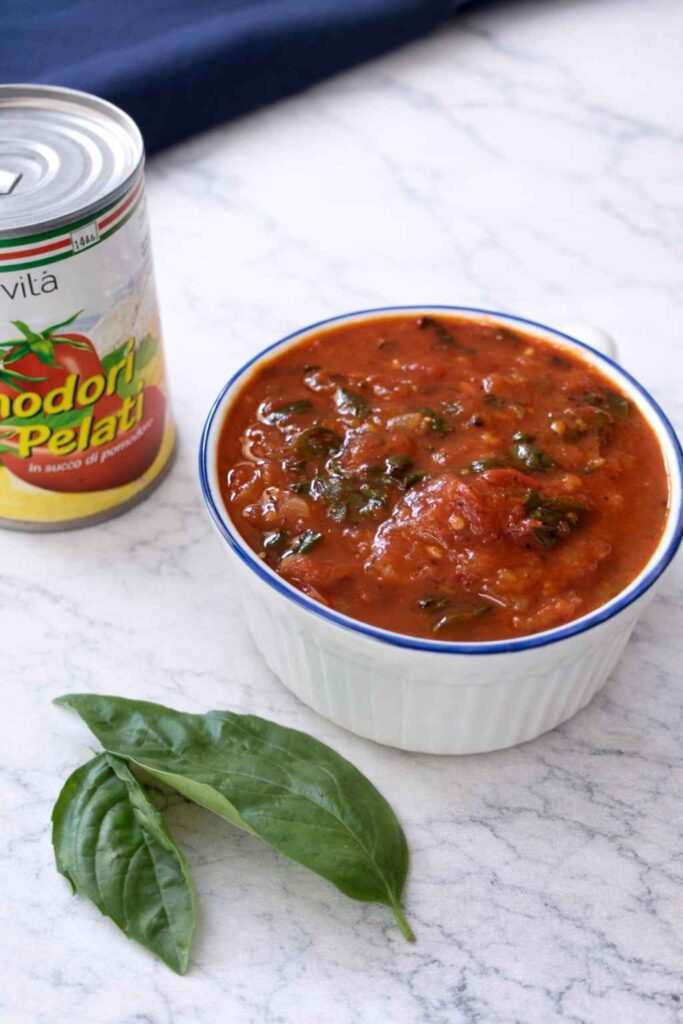
Keto Marinara Sauce: This is an ingredient that deserves your full attention. Because the recipe contains so few components, the quality of each one matters enormously to the final dish. Standard commercial marinara sauces frequently contain added sugar — sometimes listed as cane sugar, glucose syrup, or even concentrated fruit juice — that can contribute a meaningful number of hidden carbohydrates to an otherwise keto-compliant meal. Read labels carefully and look specifically for sauces that contain zero added sugar. Better still, a simple homemade marinara made from canned crushed tomatoes, olive oil, garlic, and fresh basil takes about 20 minutes and gives you complete control over what goes into the sauce. The flavor of a good homemade marinara in this dish is genuinely superior to any jarred alternative.
Fresh Buffalo Mozzarella: Fresh buffalo mozzarella is the authentic choice for Eggplant Parmesan and the one most worth seeking out. Its flavor is richer, creamier, and more complex than regular cow’s milk mozzarella, and it melts with a beautiful, stringy quality that produces those iconic, spectacular cheese pulls that make this dish so visually satisfying. The critical caveat with fresh mozzarella of any kind is its high water content. Fresh mozzarella is packed and sold in brine or whey, which means it holds a significant amount of moisture that will release during baking and — if not addressed — can turn the bottom of your baking dish into a watery pool that dilutes the sauce and produces a soggy result. The solution is simple and non-negotiable: squeeze the mozzarella firmly before using it to express as much liquid as possible.
Parmesan Cheese: Always choose a block of authentic Parmigiano-Reggiano and grate it fresh. The difference between freshly grated real Parmesan and the powdery pre-grated product sold in shelf-stable canisters is profound in terms of both flavor intensity and melting behavior. Freshly grated Parmesan forms a beautiful golden crust on top of the casserole during baking that the pre-grated alternative simply cannot replicate.
Cooking Oil: Avocado oil is the preferred choice for pan-frying the eggplant slices due to its high smoke point, which allows you to achieve proper golden browning without the oil degrading at cooking temperature. Extra virgin olive oil can also be used at moderate heat and adds a wonderful, characteristically Mediterranean flavor to the cooked eggplant.
Step-by-Step Instructions
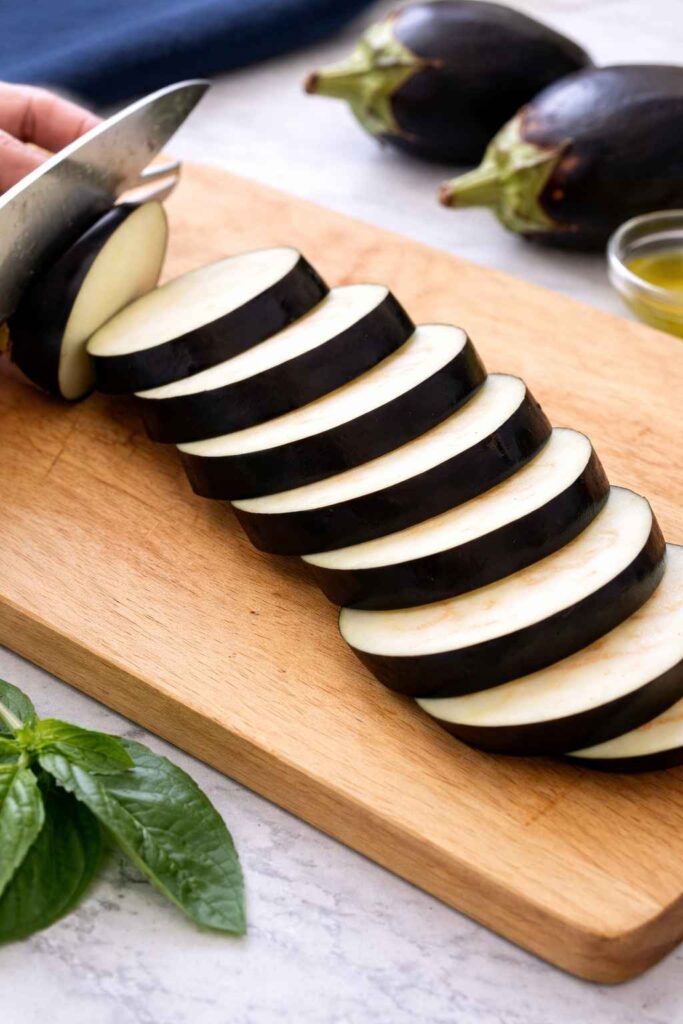
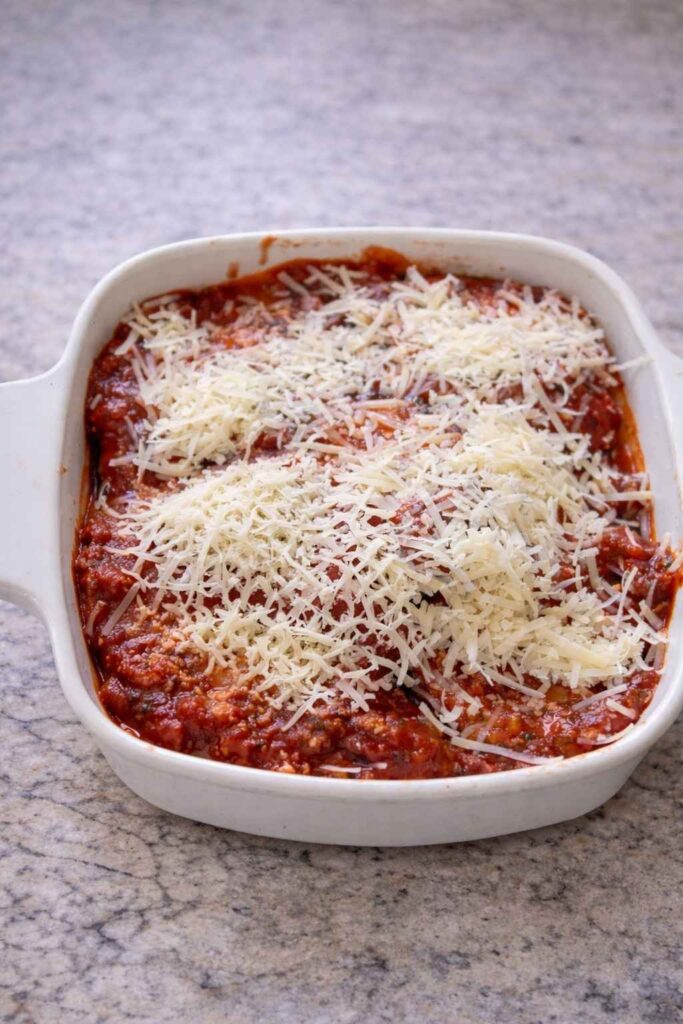
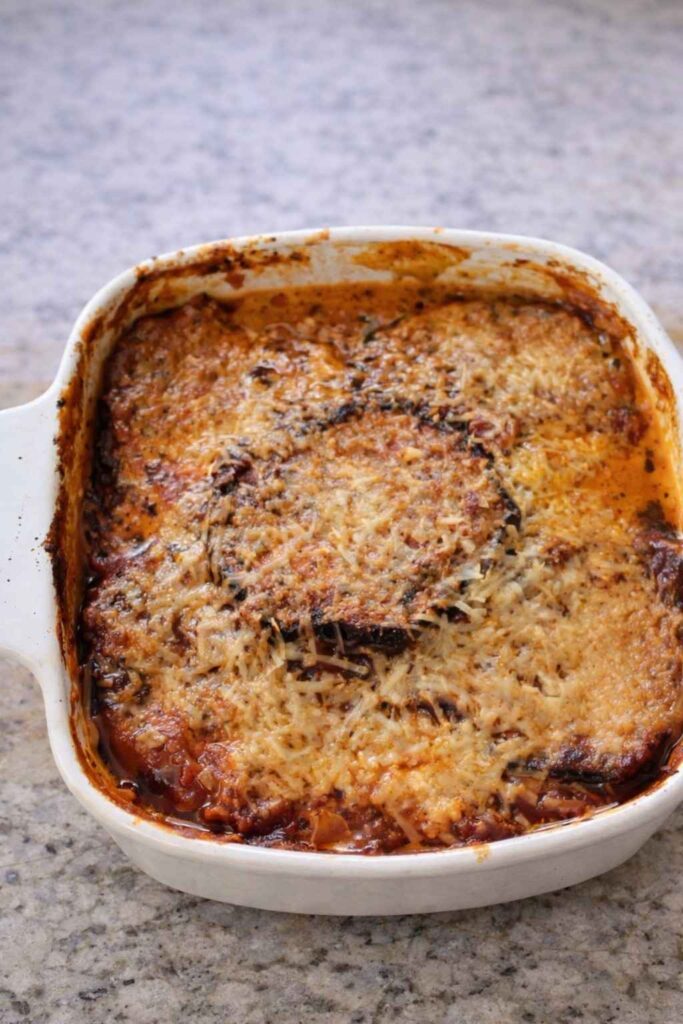
Step 1: Slice and Salt the Eggplant — The Sweating Process
Begin by washing the eggplant and trimming the stem end. Slice it into thick, even rounds — aim for approximately 1 centimeter thickness. Slices that are too thin will disappear into the sauce during baking; slices that are too thick will take too long to cook through and may remain tough in the center. Even thickness across all slices is important so that every piece cooks at the same rate.
Sprinkle a generous amount of salt over both sides of every eggplant slice, coating the cut surfaces thoroughly. Stack or arrange the salted slices in a colander placed over the sink or over a bowl. Allow them to sit undisturbed for a minimum of 30 minutes, though 45 minutes to an hour will yield even better results. During this time you will see small beads of liquid forming on the surface of each slice — this is the moisture and bitter compounds being drawn out of the eggplant by the salt. This process, commonly referred to as sweating, is the single most important technical step in the entire recipe. Do not rush it and do not skip it. The difference between an eggplant that has been properly sweated and one that has not is the difference between a meaty, flavorful, satisfying slice and a spongy, bitter, waterlogged disappointment.
Step 2: Pat Dry and Prepare to Cook
After the sweating period is complete, rinse each eggplant slice briefly under cold running water to remove the excess surface salt. Then pat every slice completely dry on both sides using paper towels. Be thorough — any residual moisture on the surface of the slices will interfere with the browning process in the next step, causing the eggplant to steam rather than sear. Dry slices brown quickly and develop deep color; wet slices just simmer sadly in the oil.
While you are patting the slices dry, preheat your oven to 200°C (400°F) so it is fully up to temperature by the time the assembled casserole is ready to bake.
Step 3: Pan-Fry the Eggplant Slices
Heat a generous amount of avocado oil or olive oil in a large skillet over medium-high heat until shimmering. Working in batches to avoid crowding the pan — crowding causes steaming rather than frying — lay the dried eggplant slices in the hot oil in a single layer. Cook for approximately 2 to 3 minutes per side until each slice develops a deep golden-brown color on both cut surfaces. You are not cooking the eggplant all the way through at this stage — just par-cooking it to approximately halfway done and developing the golden color that will add depth and richness of flavor to the finished casserole.
Set the pan-fried slices aside on a plate lined with paper towels as you finish each batch. Add more oil to the pan as needed between batches — eggplant absorbs oil readily, and a dry pan will cause the slices to scorch rather than brown evenly. If you prefer a lighter cooking method, the eggplant slices can also be grilled on a hot grill pan or outdoor grill rather than pan-fried, which produces beautiful char marks and a slightly smokier flavor profile that works beautifully in this dish.
Step 4: Season the Eggplant (Optional Enhancement)
While the freshly cooked eggplant slices are still warm, you can season them lightly with a sprinkle of dried Italian herbs, a dusting of garlic powder, or a pinch of chili flakes if you enjoy a gentle background heat. This optional step adds another layer of seasoning that permeates the layers of the casserole from within rather than only coming from the surface, contributing to a more complex and fully developed final flavor.
Step 5: Build the Layers
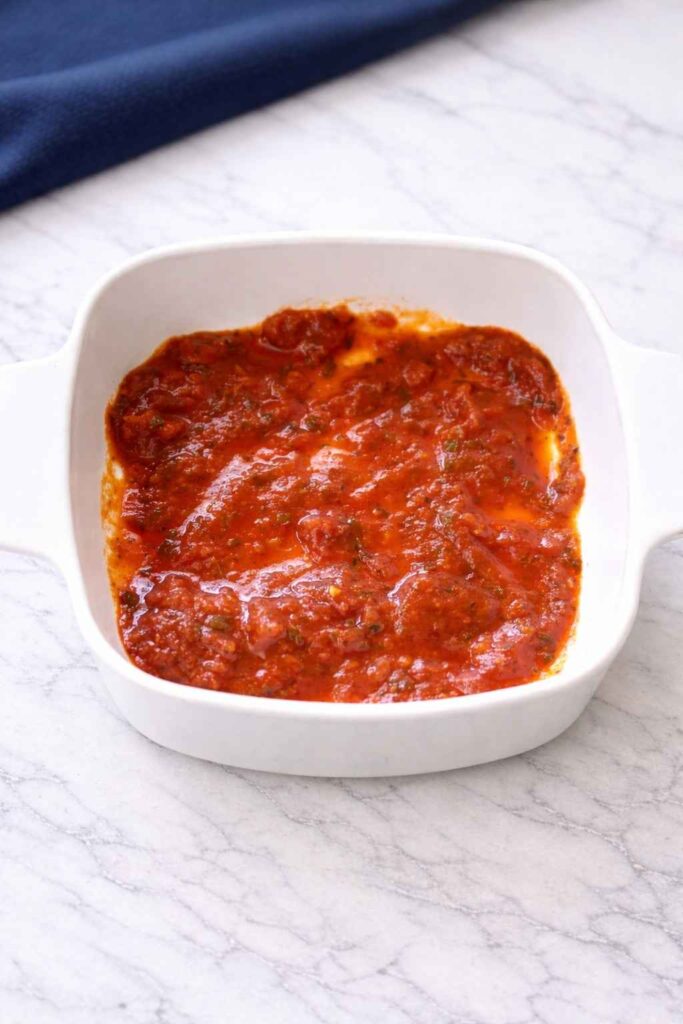
Select a baking dish of appropriate size — a standard rectangular casserole dish or a square baking dish works well. Begin layering with a thin, even spread of keto marinara sauce across the entire bottom of the dish. This base layer of sauce prevents the bottom eggplant layer from sticking to the dish and adds moisture that steams upward through the layers during baking.
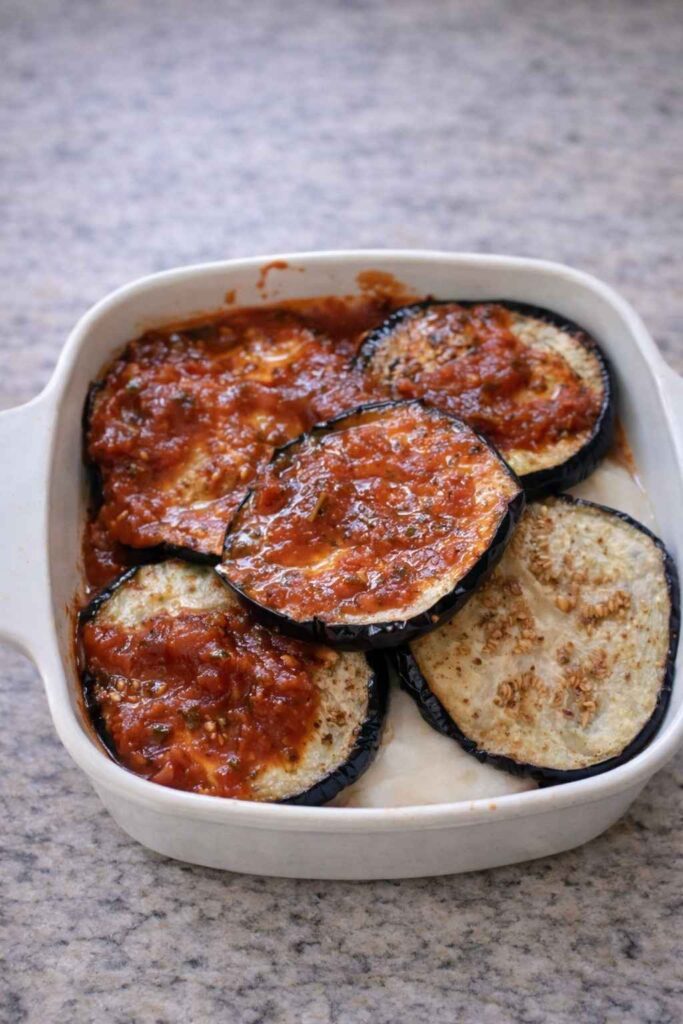
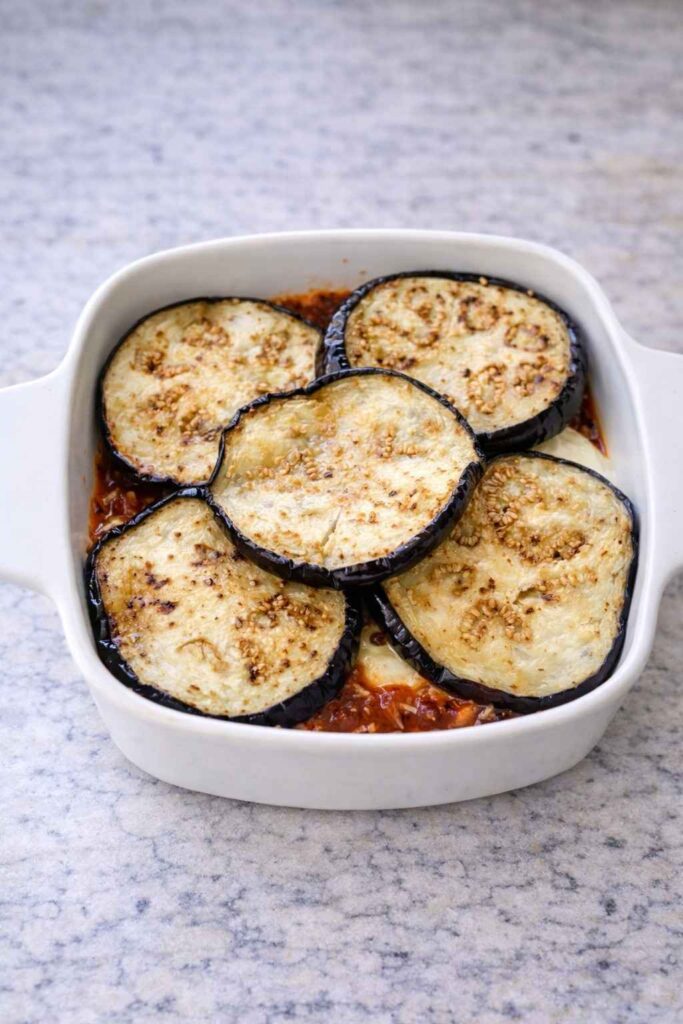
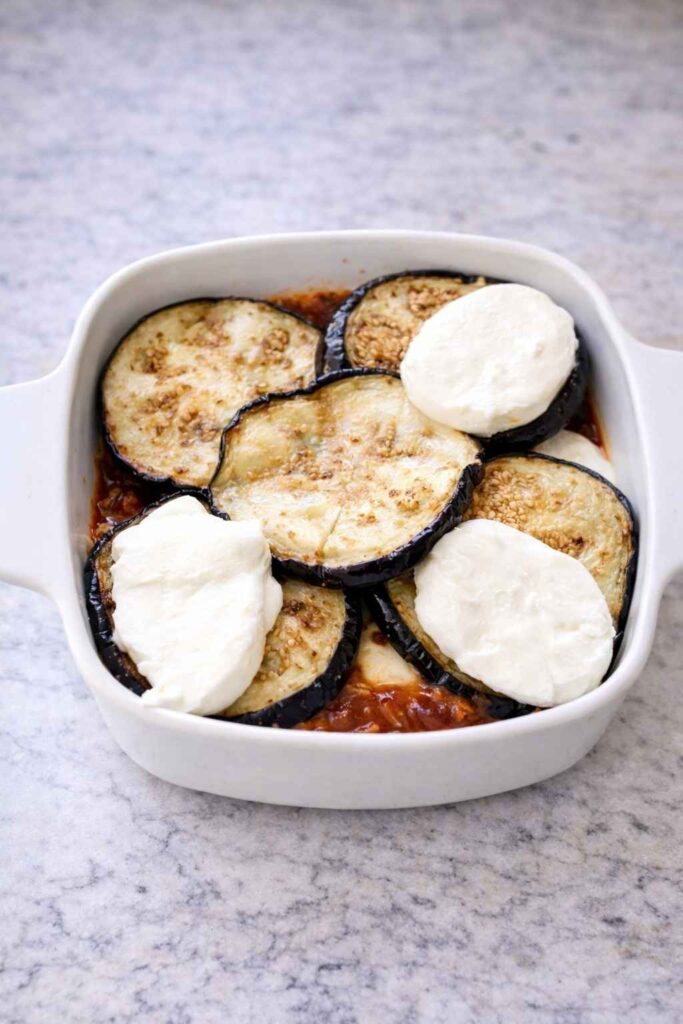
Over the sauce, sprinkle a layer of freshly grated Parmesan cheese. Lay the first layer of pan-fried eggplant slices over the Parmesan, arranging them in a single, slightly overlapping layer that covers the base as completely as possible. Over the eggplant, distribute chunks of freshly squeezed buffalo mozzarella, spacing them evenly so that every slice of eggplant will be near a piece of melting cheese. Add another layer of eggplant slices over the mozzarella, then spoon another layer of marinara sauce over the top of this second eggplant layer. Finish the entire assembled casserole with a final, very generous layer of freshly grated Parmesan cheese covering the complete surface. This top Parmesan layer is what will transform under the oven heat into the signature golden, slightly crisped crust that defines the visual appeal and textural contrast of a great Eggplant Parmesan.
The layering order — sauce, Parmesan, eggplant, mozzarella, eggplant, sauce, Parmesan — is the classic structure, but it is a guideline rather than a rigid rule. If you have enough eggplant for three layers rather than two, simply repeat the sequence. The essential principles are that the bottom has sauce to prevent sticking, the mozzarella is embedded within the layers so it melts into the interior, and the final surface is Parmesan.
Step 6: Bake to Golden Perfection
Slide the assembled baking dish into your preheated 200°C (400°F) oven and bake for 15 to 20 minutes, until the cheese across the top has completely melted and turned a gorgeous, deep golden-brown. The edges of the casserole should be visibly bubbling, and the aroma filling your kitchen should be extraordinary — rich, cheesy, herby, and deeply savory. If the top is not browning as deeply as you would like after 20 minutes, switch the oven to the broil or grill setting for the final 2 to 3 minutes, watching it carefully to prevent the Parmesan from burning.
Step 7: Rest and Serve
Remove the casserole from the oven and allow it to rest on the counter for at least 5 minutes before attempting to serve it. This resting time is important — the molten cheese and sauce need a few minutes to settle and firm up slightly so that when you cut and serve individual portions, they hold together cleanly rather than collapsing into a molten heap. Serve with a simple green salad dressed with lemon and olive oil for a complete, balanced, and utterly satisfying keto meal.
Nutritional Breakdown
| Nutrient | Approximate Amount Per Serving |
|---|---|
| Calories | 350–400 kcal |
| Protein | 18–24g |
| Total Fat | 24–30g |
| Net Carbohydrates | 8–12g |
| Fiber | 4–5g |
| Calcium | ~30–35% of daily recommended intake |
Values are approximate and vary based on the quantity of cheese used and whether additional oil is absorbed during frying.
Expert Tips for Flawless Results
Never skip the salt bath. Thirty minutes is the minimum — the cellular changes that the salt bath induces in the eggplant are what transform it from a spongy, bitter vegetable into a dense, meaty, flavorful ingredient that can stand up to the intensity of two strong cheeses and a robust marinara sauce. This is the step that separates a great Eggplant Parmesan from a mediocre one.
Squeeze your mozzarella firmly and without mercy. Fresh mozzarella carries more water than most home cooks realize. If that water is not removed before the cheese goes into the casserole, it will release during baking and pool at the bottom of the dish, diluting your sauce and producing a watery, rather than saucy, result. Wrap the mozzarella in a clean kitchen towel and squeeze it firmly over the sink until no more liquid runs out.
Make it ahead for even better flavor. Like many layered casseroles, Keto Eggplant Parmesan tastes noticeably better the day after it is made. The layers have time to settle and integrate overnight in the refrigerator, the sauce permeates the eggplant more deeply, and the entire dish develops a more cohesive, complex flavor. Make it the evening before a dinner party and simply reheat it in a 160°C oven for 15 to 20 minutes before serving.
Take care with your marinara sauce. Read every label when buying store-bought marinara and reject any sauce that lists sugar, glucose syrup, or sweeteners of any kind in the ingredients. The hidden sugar in commercial tomato sauces is one of the most common unintentional sources of excess carbohydrates in an otherwise well-constructed keto meal.
Variations Worth Trying
The Four-Cheese Variation: Add a layer of thinly sliced smoked provolone between the first and second eggplant layers. Smoked provolone adds a wonderful depth of smoky, slightly sharp flavor that plays beautifully against the sweet marinara and creamy mozzarella.
The Fresh Herb Finish: Scatter torn fresh basil leaves over the top of the casserole immediately after removing it from the oven. The residual heat will wilt the basil very slightly while preserving its bright, herby freshness and beautiful green color. A drizzle of your best extra virgin olive oil over the finished dish at this stage is the classic Italian finishing touch.
The Spicy Arrabbiata Version: Replace the standard marinara sauce with a homemade arrabbiata sauce featuring Calabrian chilis or a generous amount of dried red chili flakes. The heat of the spicy tomato sauce against the creamy, cooling mozzarella creates an irresistible contrast that transforms the character of the entire dish.
Conclusion
Keto Eggplant Parmesan is one of those rare recipes that does not merely succeed as a low-carb alternative — it stands entirely on its own merits as a genuinely outstanding dish, regardless of dietary context. It is deeply flavorful, texturally rich, visually beautiful, and satisfying in the most fundamental comfort food sense of the word. When you pull it from the oven with its golden, bubbling Parmesan crust and the scent of marinara and melted cheese filling every corner of your kitchen, it does not feel like a compromise or a substitution. It feels like exactly what it is: a magnificent Italian casserole that happens to be completely compatible with a ketogenic lifestyle.
The lessons this recipe teaches extend well beyond the dish itself. It demonstrates that the most important elements of great cooking are not the specific ingredients traditionally associated with a dish — not the flour, not the breadcrumbs, not the pasta — but rather the underlying principles of proper ingredient preparation, quality sourcing, and thoughtful layering of flavors and textures. Remove the breadcrumbs from Eggplant Parmesan and nothing essential is lost because the breadcrumbs were never essential. They were convention. The eggplant, the sauce, the two cheeses, the olive oil — these are the soul of the dish, and they are all naturally, beautifully keto.
Whether you are cooking this for a quiet weeknight dinner, preparing it as part of a week’s worth of keto meal prep, or serving it to guests who have no interest in low-carb eating whatsoever, this casserole will impress every single person at the table. It is proof that the ketogenic lifestyle is not a journey of deprivation but one of discovery — of learning to find and celebrate the genuine, essential flavors within beloved classics, stripped of everything unnecessary and more glorious for it. So salt those eggplants, squeeze that mozzarella, layer with confidence, and prepare to enjoy one of the most satisfying low-carb meals your oven will ever produce. Buon appetito — and keep cooking!
🍽️ Explore More Recipes
Browse our collection by category