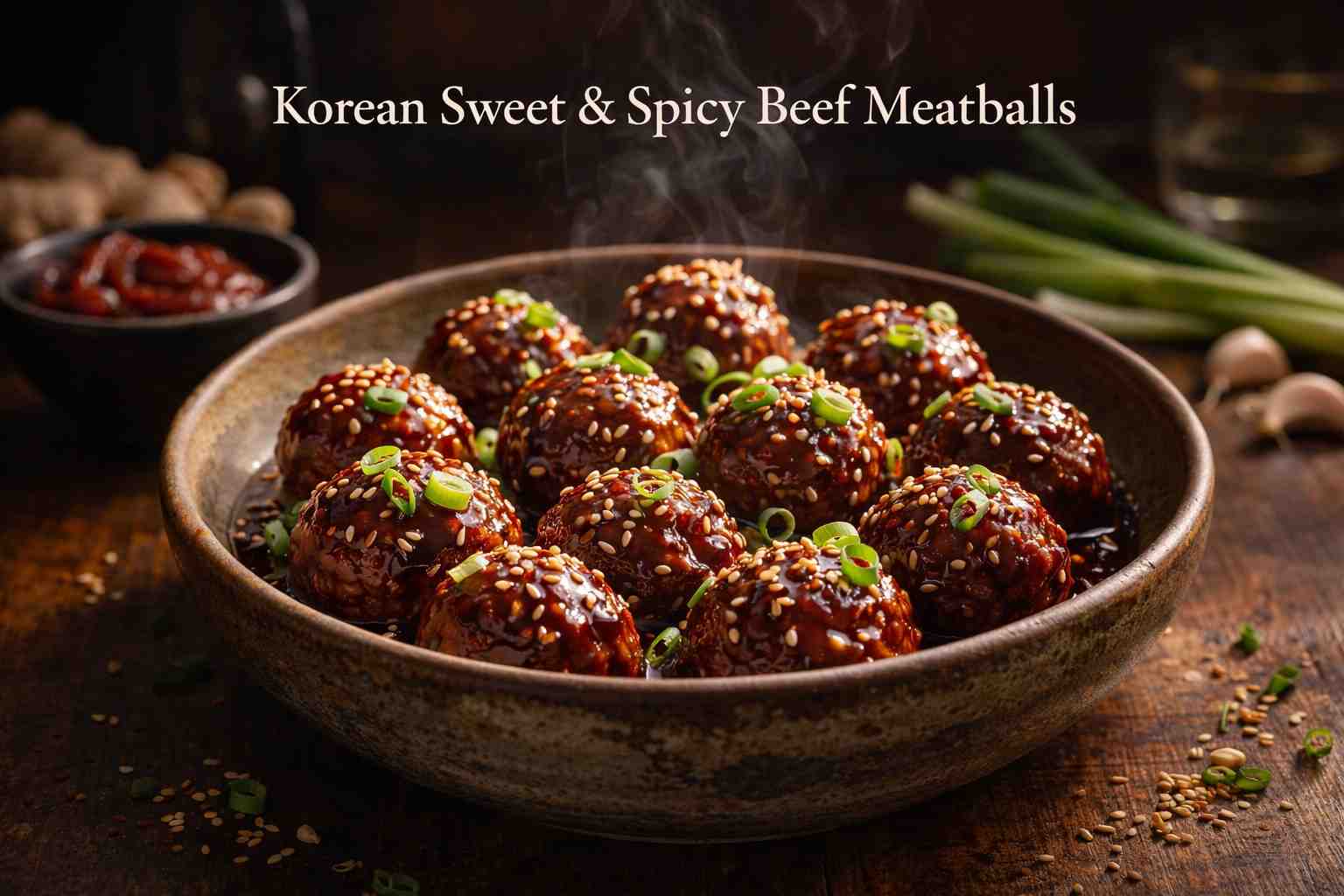
There is a specific kind of recipe that every home cook eventually encounters — the recipe that teaches you something genuinely new about cooking while simultaneously producing one of the most delicious things you have made in recent memory. Korean Sweet & Spicy Beef Meatballs, as developed and taught by Chef John of Food Wishes, is exactly this kind of recipe. It will teach you about proteolytic enzymes in fresh ginger, about why Ritz crackers make a measurably superior binder than standard breadcrumbs, about the precise moment to add a cornstarch slurry to a reducing sauce for maximum glossiness, and about the extraordinary flavor depth that Gochujang — the fermented Korean chili paste that is one of the most complex and underutilized ingredients in the American home kitchen — can bring to a preparation that most people would never think to associate with Korean cuisine at all. And while you are learning all of this, you will also be producing twelve beautifully glazed, impossibly juicy, sweet-spicy-savory meatballs coated in a lacquered Korean barbecue glaze that is, in the most unambiguous possible terms, spectacular.
The brilliant core concept of this recipe is the collision of two food cultures in a format that honors both without compromising either. The meatball is one of the most universally beloved comfort food formats in the world — tender, satisfying, endlessly versatile, and possessed of a nostalgic warmth that transcends any single culinary tradition. Korean barbecue is one of the most complexly flavored and sensory-rich cooking traditions in the world — built on the foundation of fermented ingredients, toasted sesame, the sweet-salt-heat balance of soy-based glazes, and the particular depth that only fermentation can produce. In bringing these two traditions together through the medium of the meatball — shaped from 85/15 ground beef seasoned with Gochujang, soy sauce, ginger, garlic, and green onion, baked at high heat to develop a browned crust, and then glazed in a shimmering sauce of brown sugar, rice vinegar, more Gochujang, and sesame oil — Chef John creates something that is genuinely greater than the sum of its parts.
The recipe comes with one important technical warning that should be taken seriously: fresh ginger contains an enzyme called zingibain — a powerful proteolytic (protein-digesting) enzyme that will, if given too much time in contact with raw ground beef, begin breaking down the meat’s protein structure and turning your meatball mixture to an unrollable paste. Understanding this warning, respecting the proportions and timing specified, and handling the ginger correctly are what separate a cook who makes this recipe once with great success from a cook who makes it indefinitely and never has a problem. Let us make it correctly, thoroughly, and brilliantly.
Recipe Specifications
| Detail | Info |
|---|---|
| Cuisine | Korean-American Fusion |
| Course | Main Course / Appetizer |
| Difficulty | Medium |
| Servings | 4 (as main) or 12 (as appetizer) |
| Prep Time | 20 Minutes |
| Cook Time | 30 Minutes |
| Calories per Serving | Approx. 385 kcal (3 meatballs with sauce) |
Ingredients
For the Meatballs:
- 1 lb ground beef, 85/15 lean-to-fat ratio
- 1 tbsp Gochujang (Korean fermented chili paste)
- 1 tbsp soy sauce
- 1 tsp fresh ginger, very finely minced (do not exceed — see technique note)
- 3 cloves garlic, crushed and minced
- ¼ cup green onions, finely sliced
- ½ cup Ritz cracker crumbs (approximately 12–14 crackers, crushed fine)
- Kosher salt and freshly ground black pepper, to taste
For the Korean BBQ Glaze:
- 1 tsp reserved beef fat from the roasting pan (or neutral oil)
- 3 cloves garlic, minced
- 2 tbsp rice vinegar
- ¼ cup soy sauce
- ⅓ cup brown sugar
- ¼ cup beef broth or water
- 1 tbsp Gochujang
- 1 tsp toasted sesame oil
- Sriracha, to taste
The Slurry (Thickener):
- 2 tsp cornstarch
- 1 tbsp cold water
Garnish:
- Toasted sesame seeds
- Thinly sliced green onions
For Serving:
- Steamed short-grain or jasmine white rice
- Kimchi (strongly recommended as an accompaniment)
Step-by-Step Instructions
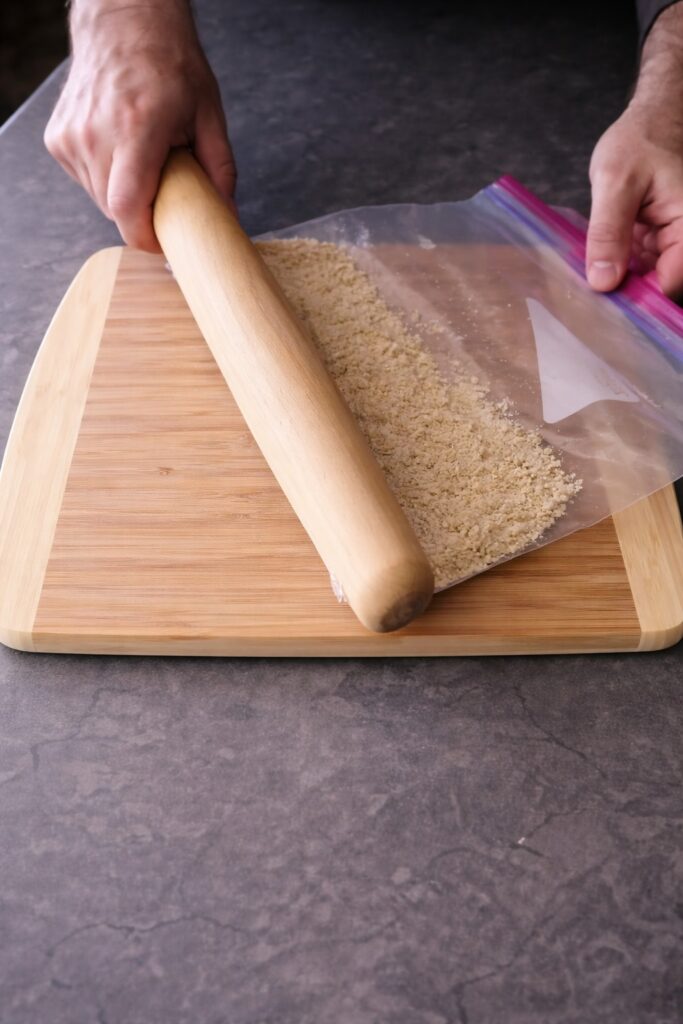
Step 1 — Prepare the Meatball Base
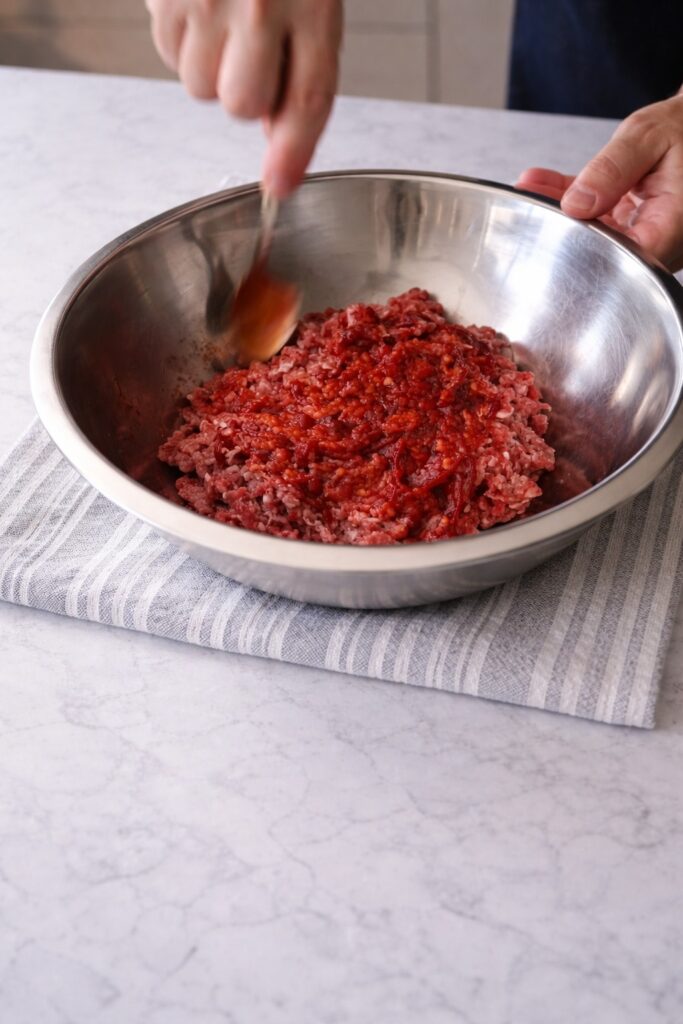
Place the ground beef in a large mixing bowl and allow it to sit at room temperature for 10 minutes if it has come directly from the refrigerator. Do not begin seasoning until you are ready to mix and immediately shape the meatballs — the timing here matters, specifically because of the fresh ginger’s proteolytic enzyme content (discussed in detail in Step 2). Spread the Gochujang, soy sauce, salt, and black pepper evenly across the surface of the ground beef rather than dropping them in a concentrated pile — even distribution of seasonings before mixing means less mixing required to achieve uniform seasoning, and less mixing means a more tender, more open-textured finished meatball. The protein in ground beef, when mixed aggressively, forms tight myosin cross-links that produce a dense, rubbery, unpleasant texture — exactly the opposite of the tender, yielding, juicy meatball this recipe is designed to deliver.
Step 2 — The Ginger Warning: Understand Your Ingredient
Before adding the fresh ginger, it is worth understanding precisely what it will do. Fresh ginger contains zingibain — a cysteine protease enzyme in the same general family as papain (from papaya) and bromelain (from pineapple). Like all proteolytic enzymes, zingibain’s function is to cleave the peptide bonds in protein chains, breaking long protein polymers into shorter fragments. In the context of raw ground beef, this means zingibain actively degrades the myofibrillar proteins — myosin and actin — that are responsible for the meat mixture’s ability to bind together and hold a spherical shape during baking. Left in contact with raw ground beef for more than 15 to 20 minutes, even a teaspoon of fresh ginger can begin producing noticeable textural softening; left for 45 minutes to an hour at room temperature, the mixture will become so protein-degraded that it cannot be rolled into coherent balls. The practical instructions are therefore: mince the ginger very fine immediately before adding it to the meat mixture, add it along with all other aromatics, mix the meatball mixture only until just combined, and proceed immediately to shaping. Do not prepare the meatball mixture in advance and refrigerate it with fresh ginger already incorporated. If you must prepare ahead, deactivate the ginger first by briefly heating it in a dry pan or soaking it in the rice vinegar (which the acid will use to inactivate the enzyme) before adding it to the cold meat.
Step 3 — Mix and Shape
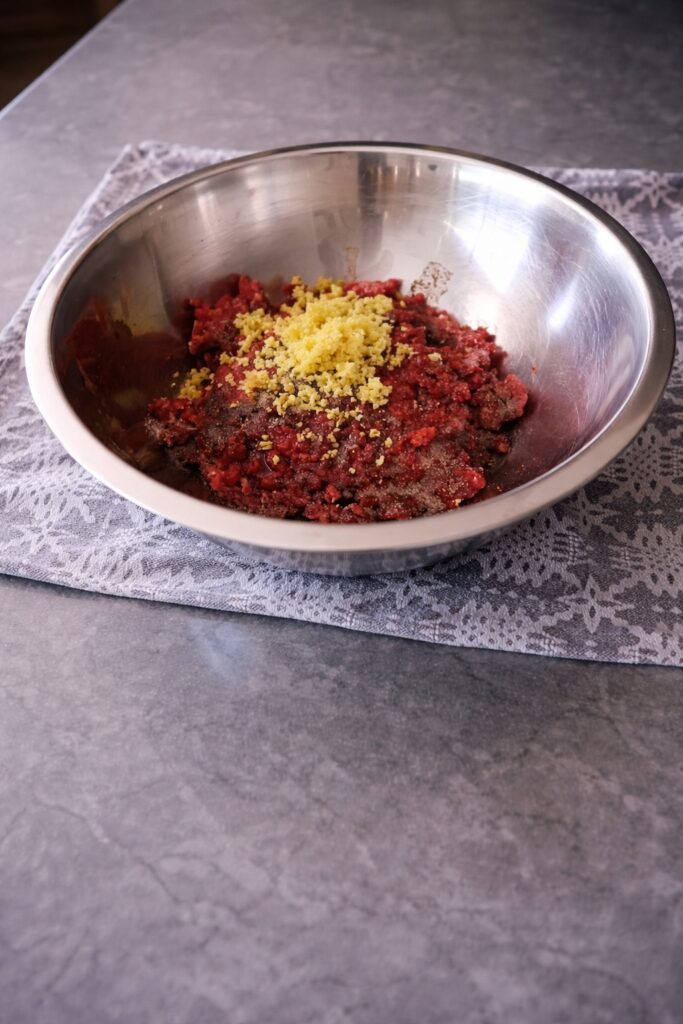
Add the finely minced ginger, crushed garlic, sliced green onions, and Ritz cracker crumbs to the seasoned beef. Mix the entire contents of the bowl with a fork — specifically a fork rather than your hands or a spatula. The fork’s tines penetrate the meat mixture without applying the compressive pressure that hand-mixing or spatula-folding produces, keeping the texture loose and aerated rather than dense and compact. Mix only until the ingredients are evenly distributed — stop the moment you can no longer see distinct pockets of any single ingredient. The mixture will look slightly shaggy and imperfectly combined. This is correct. Over-mixing for visual uniformity produces the rubbery texture that makes mediocre meatballs mediocre.
Dampen your hands thoroughly with cold water — the moisture prevents the meat mixture from sticking to your palms and allows you to apply consistent rolling pressure without the mixture dragging against dry skin. Divide the mixture into 12 approximately equal portions (roughly 1.5 oz each) and roll each portion between your damp palms using a smooth, circular motion, applying enough pressure to compact the meat into a sphere but not so much that you are squeezing moisture out of it. As each meatball is shaped, place it in a lightly greased heavy roasting pan with space between each ball. Shape and place all 12 within a 5 to 7 minute window from the point at which the ginger was added — the enzyme clock is running from that moment.
Step 4 — High-Heat Oven Browning
Preheat the oven to 450°F (230°C) — a temperature that will surprise anyone accustomed to baking meatballs at 375°F. The 450°F temperature is deliberate and critical: at this heat, the meatballs’ exterior proteins and sugars reach the Maillard reaction threshold within the first several minutes of baking, developing a deeply browned, slightly crispy crust that creates both visual appeal and the concentrated savory fond that will become the flavor backbone of the glaze. At lower temperatures, the meatballs would cook through to their target internal temperature before the exterior had time to develop adequate browning, producing a pale, less flavorful result. The geometry of a sphere works in the cook’s favor here: the surface area relative to the volume is high, meaning the crust development happens quickly while the interior — insulated by its own mass — reaches its target temperature more gradually. Bake for 20 minutes at 450°F. The meatballs should emerge with a deep, mahogany-brown exterior and an internal temperature of 160°F — fully cooked through and juicy from the 85/15 fat content.
Step 5 — Build the Glaze Base
Remove the meatballs from the roasting pan and set them aside on a plate. The pan will contain rendered beef fat and deeply browned fond — the caramelized residue of meat proteins and sugars that is the richest, most concentrated beef flavor source in the entire recipe. Carefully drain most of the rendered fat from the pan, leaving approximately 1 teaspoon — enough to sauté the garlic without burning it, while ensuring the fond remains in the pan where it will be dissolved and incorporated into the sauce. Place the roasting pan directly on the stovetop over medium heat. Add the minced garlic and cook for approximately 60 to 90 seconds, stirring constantly, until fragrant and just barely beginning to turn golden at the edges. Do not allow the garlic to darken further — at this stage, the fond in the pan is already at high risk of burning on the stovetop’s direct heat, and any distraction will take the garlic from golden to scorched in seconds.
Step 6 — Deglaze and Build the Sauce
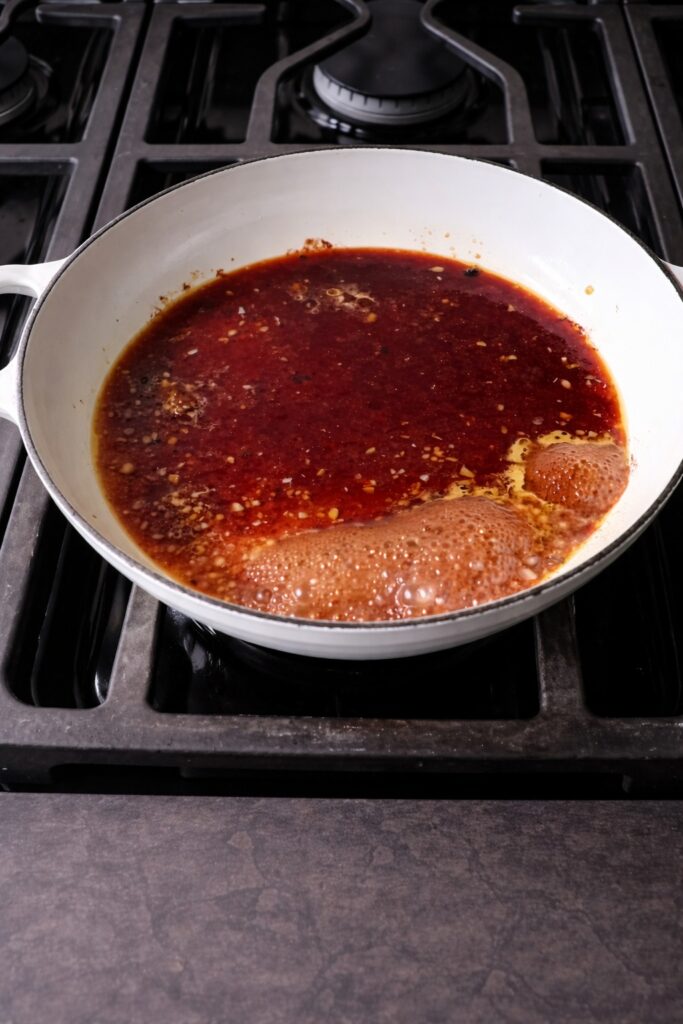
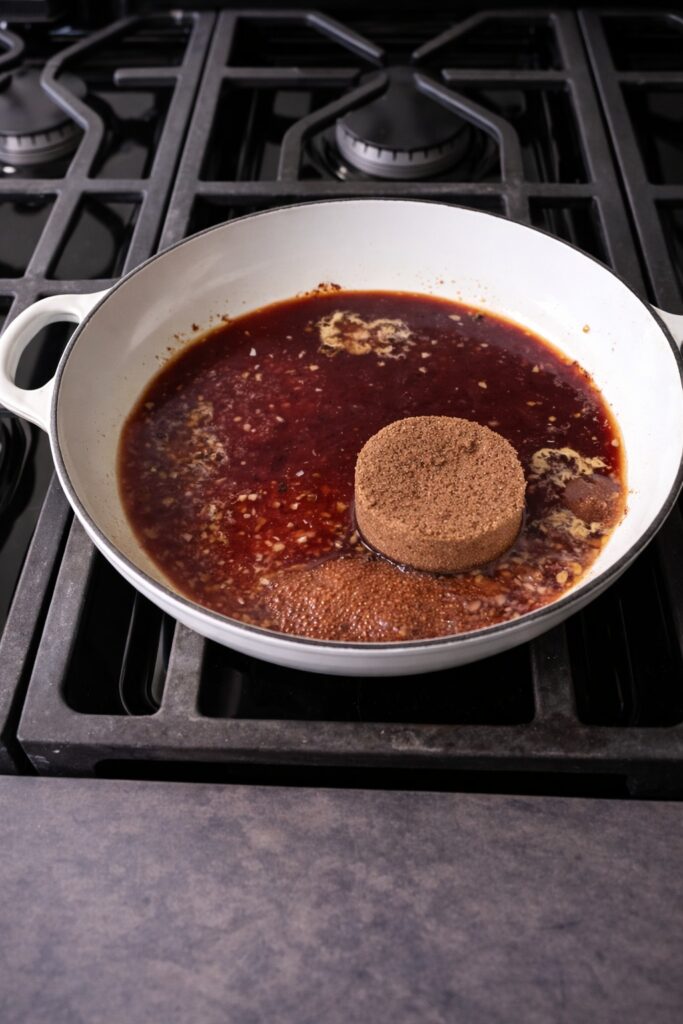
Pour the rice vinegar and soy sauce directly into the hot pan together and immediately use a wooden spatula or whisk to scrape the pan’s entire bottom surface, dissolving the brown fond into the liquid. This deglazing step — the process of using an acidic liquid to dissolve the caramelized residue from a cooking surface — is one of the most flavor-generating techniques in all of cooking: the fond, which consists of Maillard reaction products, concentrated beef proteins, and caramelized fat compounds, contains more intense beef flavor per gram than the meatballs themselves, and every molecule of it that is incorporated into the sauce rather than left stuck to the pan bottom is a meaningful flavor addition to the finished glaze. Once the fond is dissolved, add the brown sugar, beef broth, Gochujang, toasted sesame oil, and Sriracha to taste. Stir to combine all ingredients and bring to an active simmer over medium heat.
Step 7 — Reduce, Thicken, and Glaze
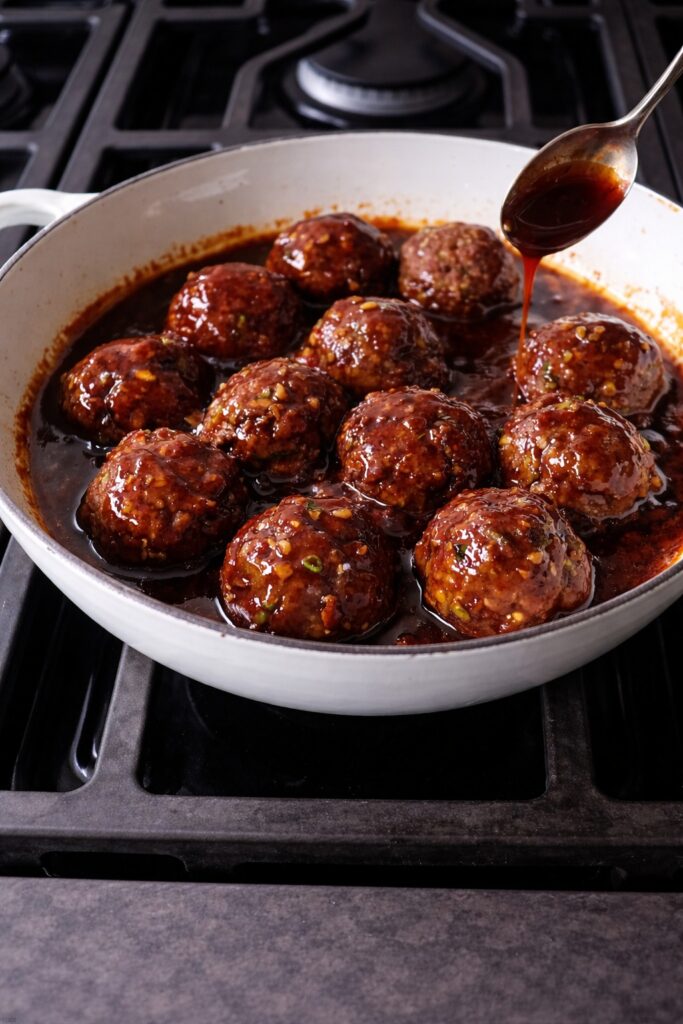
Allow the sauce to simmer actively, stirring occasionally, until it has reduced by approximately one-third of its original volume — a process that typically takes 4 to 6 minutes at a vigorous simmer. This reduction concentrates the sugar and soy compounds, intensifying the glaze’s sweetness and depth, and increases its natural viscosity through the concentration of dissolved sugars. Once reduced, prepare the cornstarch slurry by whisking the 2 teaspoons of cornstarch with the tablespoon of cold water in a small bowl until completely smooth and lump-free. With the sauce at a steady simmer, pour the slurry into the pan in a thin, steady stream while whisking continuously. Within 30 to 60 seconds of the slurry’s incorporation, the sauce will undergo a dramatic visible thickening — the gelatinized starch granules creating a glossy, coating, lacquer-like consistency that clings to a spoon rather than dripping from it. This is the visual signal that the glaze is ready.
Return the meatballs to the pan and baste them generously and repeatedly, turning them in the sauce to coat every surface multiple times. The sauce should cling to each meatball in a visible, shiny layer — if it seems too thick to coat evenly, add a small splash of water and stir to loosen it back to glaze consistency. Heat through for 2 to 3 minutes until the meatballs are warmed through at their centers and every surface is completely lacquered.
Step 8 — Garnish and Serve
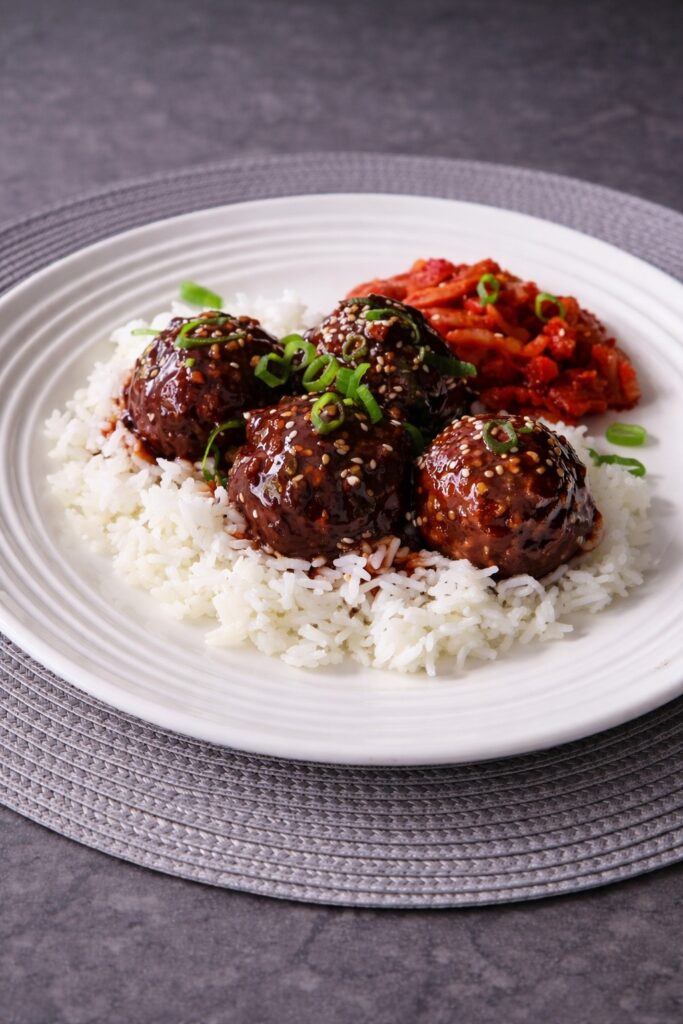
Transfer the glazed meatballs to a serving dish or serve directly from the pan over beds of steamed short-grain rice. Scatter toasted sesame seeds generously over the surface — their nutty, slightly bitter crunch providing both textural contrast and an additional aromatic dimension that completes the Korean flavor profile. Finish with freshly sliced green onions for a clean, bright, grassy counterpoint to the rich, dark, intensely savory glaze. Serve kimchi alongside as a palate-refreshing condiment — its cold, acidic, fermented crunch is one of the most perfectly conceived flavor contrasts for the warm, sweet, sticky meatballs imaginable.
Conclusion: The Ginger Lesson and the Art of the Glaze
Korean Sweet & Spicy Beef Meatballs will make you a better cook — not because the recipe is technically demanding in the way that advanced pastry or fine-dining preparations are demanding, but because it teaches you to think about ingredients with scientific intelligence rather than simply following steps mechanically. The ginger lesson is the recipe’s most valuable educational contribution: understanding that fresh ginger contains a proteolytic enzyme (zingibain) that actively degrades meat proteins — and therefore that fresh ginger in contact with raw ground meat is a time-sensitive variable requiring management rather than simply a flavor ingredient to be added at leisure — changes the way you think about every future recipe involving fresh ginger and raw protein. This is the kind of knowledge that transfers immediately and broadly, making every future cooking decision more informed.
The Ritz cracker binder is equally instructive. Standard breadcrumbs are neutral in flavor — they contribute moisture retention and structural binding without adding any independent flavor of their own. Ritz cracker crumbs, by contrast, contain butter, sugar, and the Maillard-developed flavors of a baked, slightly sweet cracker — they add richness, a subtle sweetness, and a complexity that aligns naturally with the Korean barbecue glaze’s own sweet-savory profile. The substitution is both technically sound (the cracker crumbs bind exactly as breadcrumbs would) and flavor-intelligent (they actively improve the meatball’s independent flavor before the glaze is even applied).
The glaze, built from the rendered beef fat and the pan’s browned fond, is a lesson in concentrated flavor extraction — a demonstration of why deglazing a pan is not a cleaning step but a cooking step of genuine importance. At approximately 385 calories per serving for three glazed meatballs over rice, this dish is satisfying, nourishing, and balanced in its macronutrients. It is fast enough for a weeknight, impressive enough for company, and scientifically interesting enough to make the experience of cooking it as rewarding as the experience of eating it.
Common FAQs about Korean Sweet & Spicy Beef Meatballs
What is the specific 85/15 fat ratio’s technical function and what failure modes result from leaner ratios?
Ground beef’s intramuscular and intermuscular fat (at 15% of total weight in 85/15 chuck) serves three simultaneous functions during baking. First, as the fat renders above 95°F (35°C), it migrates through the meatball’s interior and coats the muscle fiber bundles, acting as a continuous lubricating medium that prevents the proteins from drying out as they cook — this is the primary mechanism of juiciness. Second, the rendered fat carries fat-soluble Maillard reaction flavor compounds from the meatball’s interior to its surface, enriching the crust’s flavor. Third, the fat softens the structural feel of the meatball’s cooked texture by interrupting the continuous protein network — producing a tender bite rather than a firm, rubbery one. At 90/10 or 93/7 ratios, all three mechanisms are significantly diminished, producing drier, tougher, less flavorful meatballs that require compensation through additional fat-based ingredients.
What specific compounds in Gochujang produce its distinctive flavor profile and how do they differ from standard chili paste?
Gochujang is a fermented paste produced from Korean chili powder (gochugaru), glutinous rice (mealssal), fermented soybean powder (meju), salt, and barley malt — typically fermented for a minimum of 6 months in traditional production. This extended fermentation produces three categories of flavor compounds that generic chili pastes lack. First, free glutamates from the breakdown of soybean proteins — creating a powerful umami background absent from fresh chili pastes. Second, organic acids from lactic acid bacterial fermentation (primarily lactic acid, acetic acid, and succinic acid) — producing a complex, rounded acidity rather than the one-dimensional heat of unfermented chili paste. Third, Maillard reaction products from the glutinous rice’s interaction with the fermentation’s amino acids during the drying process — contributing caramel-like depth and a subtle sweetness beneath the heat.
Why does toasted sesame oil specifically need to be added at the end of the glaze preparation rather than at the beginning?
Toasted sesame oil is produced by pressing sesame seeds that have been roasted to high temperature — a process that produces a distinctive profile of aromatic compounds including pyrazines, furans, and phenolics at concentrations far higher than cold-pressed sesame oil. These aromatic compounds are the sesame oil’s entire culinary value — they have very low odor thresholds and are extremely volatile, evaporating rapidly at cooking temperatures above approximately 150°F (65°C). Adding toasted sesame oil early in the sauce-building process (when the pan is at high heat) would evaporate these aromatic compounds into the kitchen air within seconds, leaving behind only the neutral sesame fat without any of the distinctive toasted aromatic character. Adding it at the end of cooking — after the pan is off the heat or at its lowest temperature — preserves the volatile aromatic compounds in the sauce where they are available as flavor at the moment of serving.
What is the specific function of rice vinegar in the glaze and how does it differ from other vinegars in this application?
Rice vinegar (pH approximately 3.0–3.5, acetic acid content 4–5%) is the mildest of the commonly available vinegars — significantly less acidic than white wine vinegar (6% acetic acid), red wine vinegar (6–7%), and apple cider vinegar (5–6%). In this glaze, it performs three functions. First, acidity balance: it provides the sour element that counterbalances the brown sugar’s sweetness and the soy’s salt without the more aggressive tartness of Western vinegars. Second, fond dissolution: its mild acidity is sufficient to hydrolyze the pan’s fond during deglazing without introducing the sharp, harsh acidity that a stronger vinegar would. Third, flavor compatibility: rice vinegar’s clean, lightly fermented character has no competing flavor dimension — it supports the soy, sesame, and Gochujang without introducing a vinegar-forward note that would be inconsistent with Korean BBQ’s flavor expectations.
Why does the recipe recommend short-grain rice specifically rather than long-grain varieties for serving with these meatballs?
Short-grain rice (used for Japanese sushi rice, Korean steamed rice, and similar preparations) has a starch composition of approximately 20% amylose and 80% amylopectin — a high amylopectin content that makes cooked short-grain rice distinctly stickier and more cohesive than long-grain rice (which has approximately 23–26% amylose and a drier, more separate-grain texture). This stickiness is functionally important when eating with a sauce-heavy Korean BBQ preparation: the slightly sticky grains cling together and to the meatball surface, allowing the glaze to coat the combined rice-and-meatball bite rather than flowing off separate, loose rice grains. Short-grain rice also has a softer, more yielding cooked texture that contrasts appropriately with the meatball’s substantial chew without competing with it.
Explore our extensive collection of culinary delights that range from quick weeknight dinners to impressive entertaining dishes. Start your morning right with our five essential egg breakfast ideas, or try our chili crisp egg avocado toast for a modern twist. For those seeking healthier morning options, discover our healthy oatmeal apple banana cake, coconut cove baked oatmeal, and blueberry apple morning oats cake. Vegetarian breakfast enthusiasts will love our protein powder cinnamon rolls. For lunch, enjoy classics like the ultimate big mac salad, crispy potato tacos, quick ham and cheese pinwheels, and vegan bulgogi pinwheels. Our main course selection includes impressive options such as Vietnamese lemongrass chicken, honey balsamic pomegranate glazed chicken, mushroom stuffed chicken breast, and baked French onion chicken. Meat lovers should try our three Italian style meatloaves, pan seared pork tenderloin in creamy peppercorn gravy, and citrus glazed roasted pork ribs with creamy mushroom potatoes. For pasta and seafood, explore shrimp aglio e olio, New England creamy clam chowder, Manhattan clam chowder soup, red pesto gnocchi, brown butter and sage mezzi rigatoni, and creamy peri peri chicken pasta. Our soup collection features creamy broccoli and garlic soup, carnival squash soup with turmeric, split pea soup, ham bean soup, hearty vegetable barley soup, and creamy asparagus soup. Vegetarian options include vegan ramen, quick vegan lasagna, vegan cabbage rolls, spicy maple tofu rice bowl, and vegan chicken and dumpling soup. For sides, enjoy garlic butter cheese bombs, oven baked potatoes with meatballs and cheese, broccoli recipes that taste amazing, oven roasted crispy potato, honey butter cornbread, and one pan Tuscan orzo with chicken. Our appetizer selection includes the ultimate crispy buffalo chicken wonton cups, the ultimate buffalo chicken cauliflower dip, the ultimate buffalo chicken garlic bread, and garlic parmesan wings. Desserts range from blueberry tiramisu and heavenly molten mini chocolate lava cakes to thin and chewy chocolate chip cookies. For special occasions, try red velvet cookies, Valentine heart cookies, ombre heart buttercream cake, and homemade Valentine’s day mini cake delight. Keto dieters will appreciate our keto schnitzel, sugar free keto German chocolate cake, keto yogurt almond cake, keto beef roulades, fluffy keto cloud bread, keto muffins, Korean marinated eggs, and low carb cottage cheese ice cream. Additional healthy options include sugar free oat cakes, sugar free banana oat brownies, and low carb Tuscan chicken bake. For beverage enthusiasts, enjoy our cocktail collection including classic whiskey sour, hot apple whisky lime cocktail, easy margarita, Paloma tequila cocktail, vodka cranberry cocktail, Angel Face cocktail, Mandarin Sunrise cocktail, Aperol Spritz, homemade Piña Colada, virgin Piña Colada mocktail, Moscow Mule, Old Fashioned, Manhattan cocktail, Pomegranate Gimlet, Southside gin cocktail, Paper Plane cocktail, Mango Chilli Margarita, and our ten best rum cocktails. These carefully curated recipes offer something for every palate, occasion, and dietary preference.