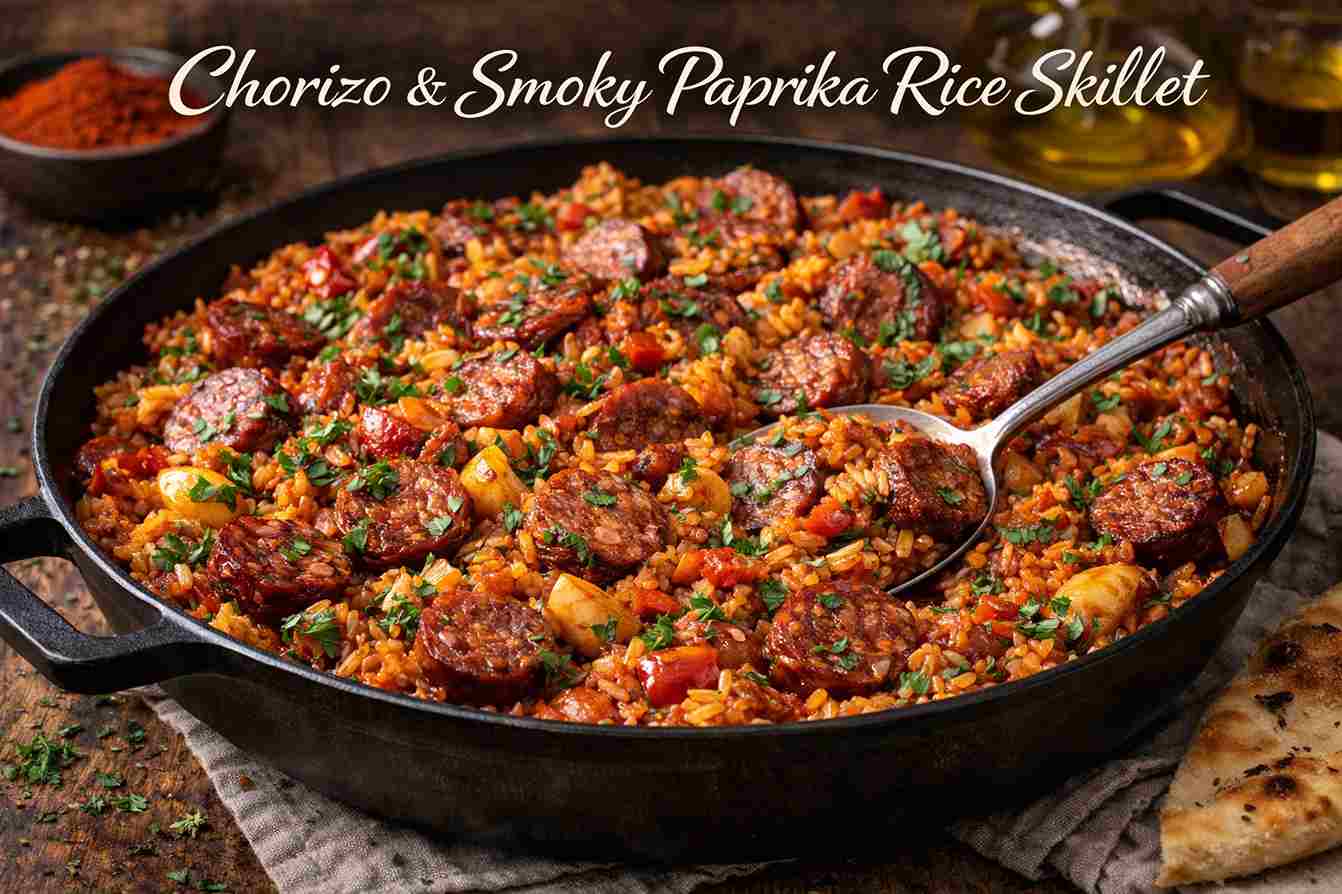
Let’s be completely honest about something: most of us do not have an hour and a half to spend in the kitchen on a Tuesday evening. Between the demands of work, the chaos of family schedules, and the very reasonable desire to actually sit down and relax before the day ends, a long, laborious dinner simply is not always an option. But here is the thing — the absence of time should never mean the absence of a genuinely great meal. And nothing proves that point more convincingly than the One-Pan Chorizo and Rice Skillet. This is the dinner that saves weeknights, the recipe that makes people genuinely look forward to cooking on a busy evening, and the dish that will have everyone at your table asking why it does not appear more often.
In just 30 minutes, using a single pan and a handful of powerful, well-chosen ingredients, you can produce a meal that is smoky, deeply savory, vibrantly colored, and thoroughly satisfying in the way that only a perfectly cooked skillet dinner can be. The bold, paprika-rich fat rendered from Spanish-style chorizo flavors every single grain of rice as it cooks. Fire-roasted tomatoes add a subtle charred sweetness. A carefully chosen spice blend blooms in the hot oil, transforming what could have been a simple sausage-and-rice dish into something that genuinely tastes like it took far more time and skill than it did. Whether you are cooking for a hungry family, meal-prepping for the week ahead, or simply want a reliably delicious dinner that requires almost no effort to clean up afterward, this recipe is your answer. Read on for the complete guide to mastering it perfectly every single time.
Recipe at a Glance
All the essential details at a single glance:
| Detail | Info |
|---|---|
| Cuisine | Spanish-Inspired / Mediterranean |
| Course | Main Course |
| Difficulty | Easy |
| Servings | 4 people |
| Prep Time | 10 minutes |
| Cook Time | 20 minutes (plus 5 minutes resting) |
| Calories per Serving | Approximately 485 kcal |
Why This Recipe Works: The One-Pan Philosophy
Before we dive into ingredients and technique, it is worth taking a moment to understand why the one-pan method is not just a convenience — it is actually a superior way to cook a dish like this. In a conventional approach, you might cook your sausage separately, make your rice in a different pot, and combine everything at the end. The result would be competent but ultimately flat, because each component would have cooked in isolation without ever truly interacting.
The one-pan method does something fundamentally different. When the chorizo is sliced and seared in the skillet, it renders out a generous amount of deeply flavored, vibrantly red fat — fat that is saturated with the smoked paprika, garlic, and pork that defines this particular sausage. When the bell peppers are added next, they cook directly in that fat, absorbing its character immediately. When the spices are added and bloom in that same fat, they integrate into a single, unified flavor base. And when the rice is stirred in before the liquid, it toasts very lightly and coats itself in the spiced chorizo oil, ensuring that every grain is seasoned not just from the outside by the cooking liquid, but from within by the fat it has absorbed.
The result is a dish where every component tastes of everything else — a cohesion and depth of flavor that simply cannot be replicated by cooking things separately and combining them afterward. This is one-pan cooking at its most logical, its most efficient, and its most delicious.
Understanding the Key Ingredients
Every ingredient in this skillet has been chosen deliberately. Understanding why each one is here will help you make smart substitutions when needed and appreciate the thought behind the recipe.
Spanish-Style Chorizo — The Flavor Engine
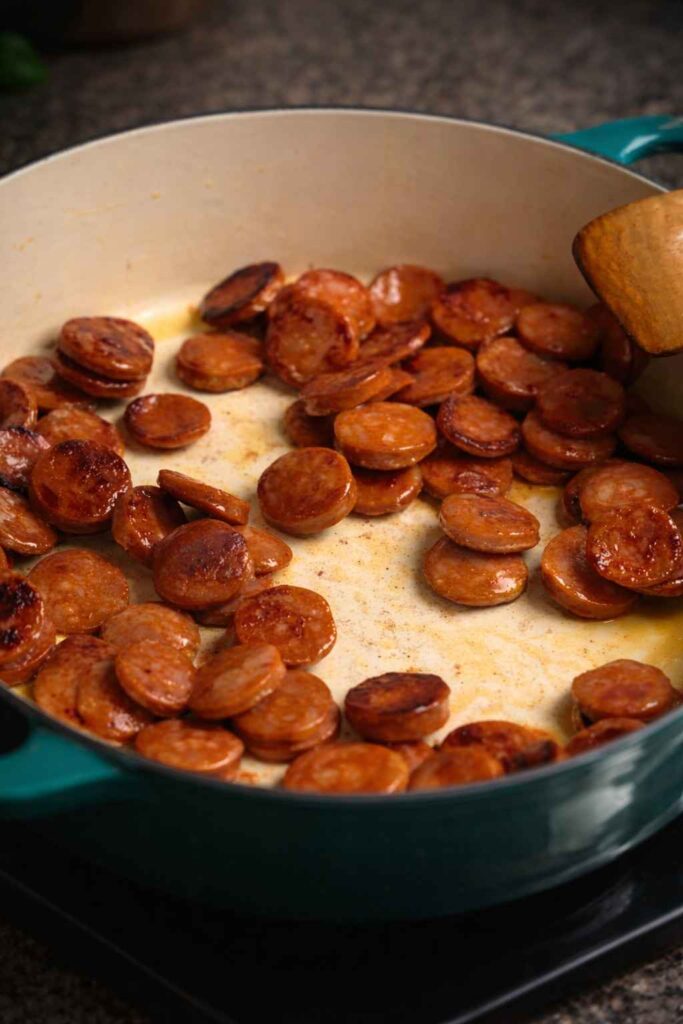
Not all chorizo is the same, and the distinction matters enormously here. Spanish-style chorizo is a firm, cured, ready-to-eat sausage that is deeply seasoned with smoked paprika (pimentón) and garlic. It is sold sliced like a salami and does not require cooking through from raw — it simply needs to be browned to render its fat and develop a caramelized crust.
This is entirely different from Mexican chorizo, which is a fresh, raw, loose sausage that crumbles when cooked and has a different spice profile. For this recipe, Spanish-style is specifically what you want. When sliced and seared, it releases a gorgeous, brick-red, smoky fat that becomes the flavor foundation of the entire dish.
Fire-Roasted Tomatoes — Not Just Regular Canned Tomatoes
The choice of fire-roasted canned tomatoes over standard crushed or diced tomatoes is a deliberate upgrade that significantly affects the final flavor. Fire-roasted tomatoes are charred over a flame before canning, which concentrates their natural sugars slightly, adds a subtle smoky note to their acidity, and gives them a more complex, rounded flavor than their standard counterparts. In a dish that is already built around smokiness from the chorizo and paprika, they provide a deeply compatible supporting flavor rather than a flat, sharp tomato acidity.
Long-Grain White Rice — The Perfect Absorber
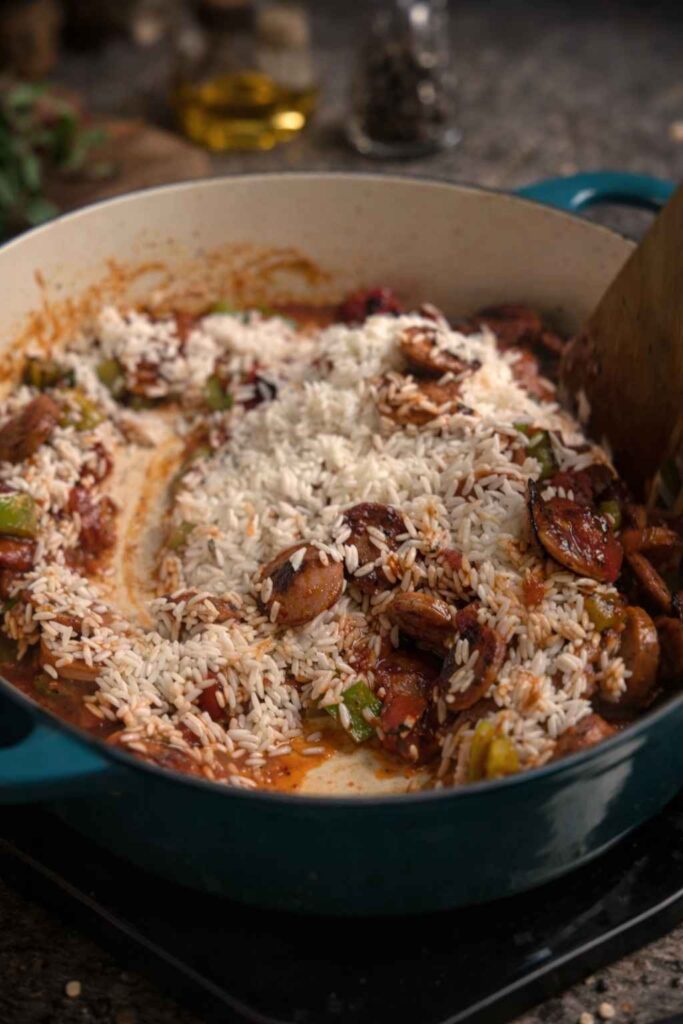
Long-grain white rice is specifically chosen here for one key reason: it absorbs liquid cleanly and cooks relatively quickly without becoming sticky or mushy. Its individual grains remain distinct after cooking, providing a light, fluffy texture that contrasts beautifully with the dense, meaty chorizo slices. The neutral flavor of white rice also means it does not compete with the bold spice profile — it simply carries and amplifies the flavors already present in the cooking liquid.
The Spice Blend — The Invisible Architecture of the Dish
The spice blend in this recipe may look simple on paper, but each element is playing a specific role. The smoked paprika reinforces the natural paprika notes of the chorizo, deepening the overall smokiness without adding more meat. Dried oregano and thyme provide a Mediterranean herbal underpinning that gives the dish a sense of place and sophistication. Garlic and onion powder contribute quiet background umami. Cayenne adds a back-of-the-throat heat that wakes up all the other flavors. Together, bloomed in hot fat, they create the aromatic architecture that makes this dish taste complex and layered rather than simply “sausage and rice.”
Ingredients for One-Pan Chorizo and Rice Skillet (Serves 4)
The Main Ingredients:
- 1 lb (approximately 450g) Spanish-style cured chorizo sausage, sliced into rounds
- 1 cup long-grain white rice, rinsed under cold water
- 1 green bell pepper, diced
- 1 can (14 oz / 400g) fire-roasted diced tomatoes
- 1.5 cups chicken stock
- 1 tablespoon olive oil
The Spice Blend:
- 1 teaspoon smoked paprika
- ½ teaspoon dried oregano
- ½ teaspoon dried thyme
- ¼ teaspoon garlic powder
- ¼ teaspoon onion powder
- ⅛ teaspoon cayenne pepper (or more to taste)
- Freshly ground black pepper to taste
For Serving:
- Fresh flat-leaf parsley or cilantro, roughly chopped
- Wedges of lime or lemon
- Sour cream or Greek yogurt (optional, for cooling richness)
Step-by-Step Instructions
Step 1: Sear the Chorizo and Render the Fat
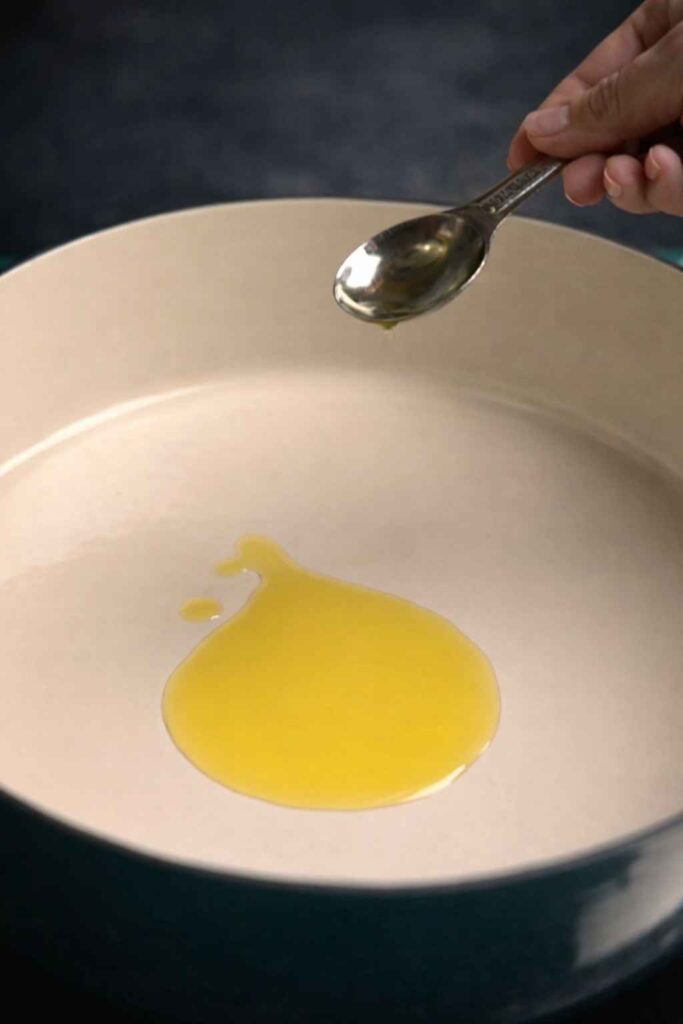
Place a large, wide skillet — ideally 12 inches or larger — over medium heat. Add the tablespoon of olive oil and allow it to heat until shimmering. Add the sliced chorizo rounds in a single layer. You will almost immediately see the oil begin to turn a rich, vivid red-orange as the paprika-saturated fat starts rendering from the sausage — this is exactly what you want.
Cook the chorizo for approximately 2 to 3 minutes per side, until each slice has a deep brown, caramelized crust. Do not rush this step. The browned surfaces are not just visually appealing — the Maillard reaction occurring on those cut faces of the sausage is creating complex, savory compounds that will flavor the entire dish. Once browned, leave the chorizo in the pan and proceed directly to the next step without draining the fat. That rendered, spiced fat is liquid gold for everything that follows.
Step 2: Sauté the Bell Pepper
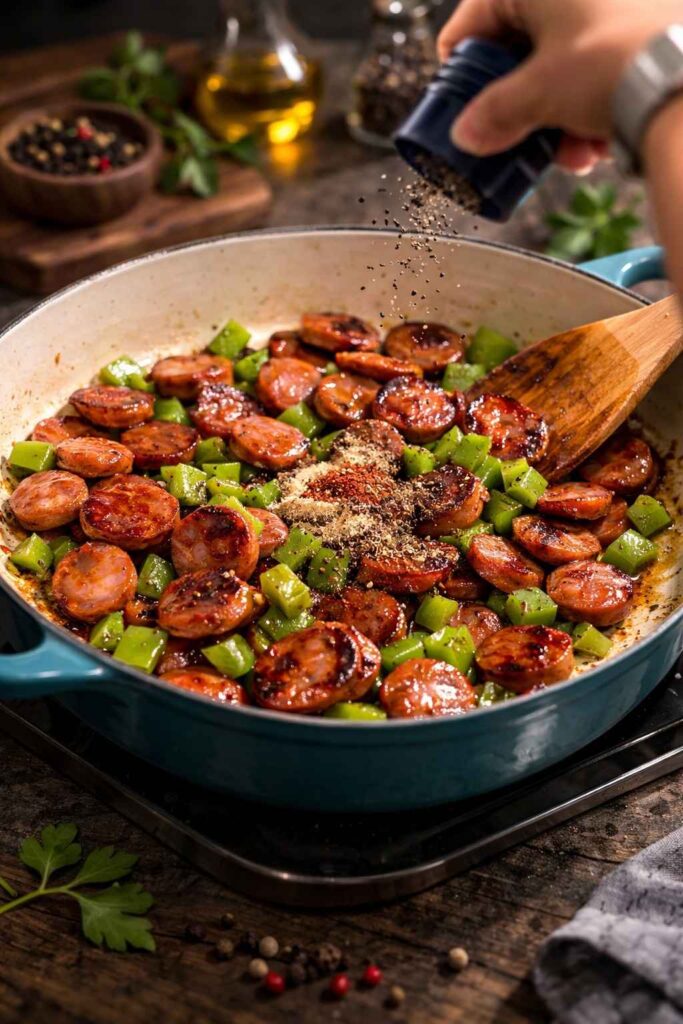
Add the diced green bell pepper directly into the skillet with the chorizo and its rendered fat. Stir to coat the pepper pieces in the spiced oil and sauté over medium heat for approximately 2 to 3 minutes, until the pepper begins to soften at the edges and picks up a little color. The bell pepper plays a dual role here: it adds a gentle, earthy sweetness that tempers the heat of the chorizo, and it provides textural variety in the final dish, offering a pleasant bite against the tender rice and chewy sausage rounds.
At this stage your kitchen should already smell extraordinary — the combination of rendered chorizo fat, caramelized sausage, and softening pepper is one of the more compelling aromas in weeknight cooking.
Step 3: Bloom the Spices
Sprinkle the smoked paprika, dried oregano, dried thyme, garlic powder, onion powder, cayenne, and black pepper directly into the pan over the chorizo and peppers. Stir continuously for 30 to 60 seconds. This brief but critical step is known as blooming — heating dry spices in fat to activate and release their volatile aromatic compounds. A spice stirred into a pot of liquid at the end of cooking simply sits on the surface and tastes dusty and raw. A spice bloomed in hot fat for 60 seconds releases its oils into the cooking medium, integrating its flavor at a molecular level into everything it touches.
You will notice the aroma shift dramatically during this step — from simply smelling like chorizo to something far more complex, layered, and deeply enticing.
Step 4: Add the Tomatoes and Toast the Rice
Pour the entire can of fire-roasted tomatoes into the pan and stir to combine with the spiced chorizo and pepper mixture. Add the rinsed white rice and stir everything together well. Allow the rice to cook in the pan for approximately 60 seconds, stirring frequently. This brief toasting step allows the exterior of the rice grains to absorb a small amount of the spiced tomato-chorizo fat before any cooking liquid is introduced. It builds flavor directly into the rice rather than leaving it to absorb flavor only from the outside during the simmer, and it also helps the grains maintain their structural integrity throughout the cooking process.
Rinsing the rice before adding it is also important — it removes excess surface starch that can cause the grains to clump together and turn the final dish gluey rather than fluffy and distinct.
Step 5: Add the Stock and Simmer
Pour the chicken stock into the pan and stir gently to distribute everything evenly. Increase the heat to bring the mixture to a full boil, then immediately reduce the heat to its lowest setting and cover the pan with a tight-fitting lid.
Allow the skillet to simmer undisturbed on low heat for 20 minutes. Resist the urge to lift the lid during this time — every time the lid is removed, steam escapes, and it is that trapped steam that is cooking the rice as much as the liquid below. The tight seal created by the lid is doing the same work as a proper rice cooker: maintaining a consistent, steamy environment that drives heat evenly through the rice from all directions simultaneously.
Step 6: Rest, Then Serve
After 20 minutes, turn off the heat entirely. Do not open the lid. Allow the covered skillet to rest off the heat for 5 full minutes. This resting step is not optional and should not be skipped. During those five minutes, the residual steam still trapped under the lid continues to cook and fully hydrate the uppermost layer of rice that may not have been fully submerged in liquid. The result is rice that is uniformly fluffy, light, and perfectly cooked from the top of the pan to the bottom, rather than undercooked on top and slightly overcooked below.
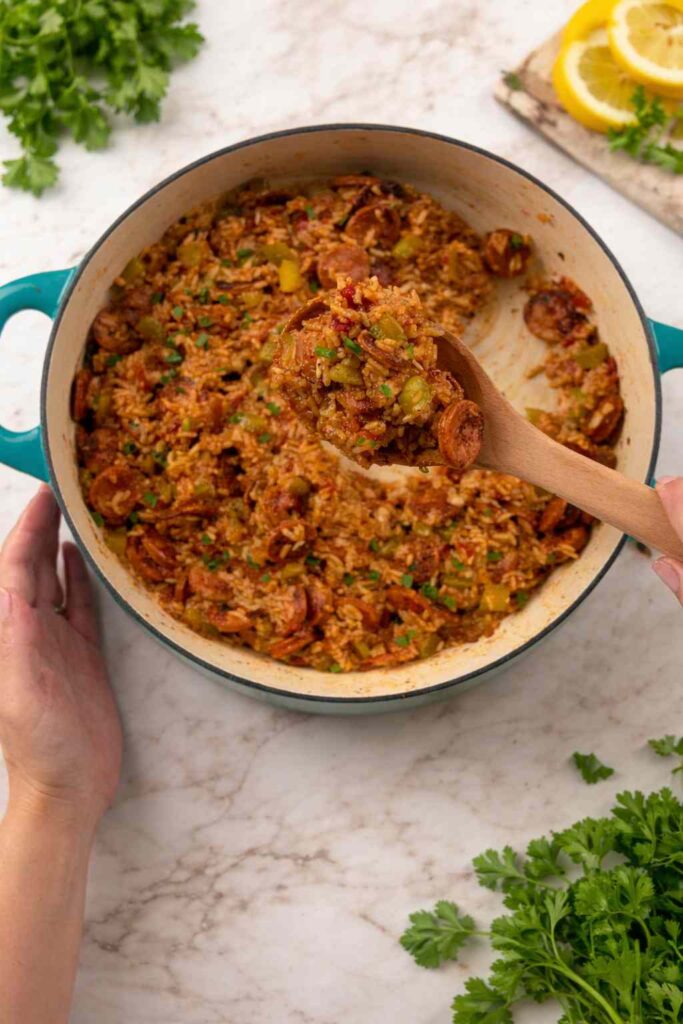
After 5 minutes, lift the lid, fluff the rice gently with a fork, and take a moment to appreciate what you have created. The rice should be tender and fully cooked, the chorizo rounds nestled throughout, the color a deep, warm orange-red from the tomatoes and paprika. Taste and adjust the seasoning with salt, black pepper, or an extra pinch of cayenne as needed.
How to Serve the Chorizo and Rice Skillet
This dish is satisfying and complete as a standalone meal, but a few simple finishing touches elevate it considerably.
Fresh Herbs: A generous scatter of freshly chopped flat-leaf parsley over the finished skillet adds brightness, color, and a clean herbal note that lifts the richness of the dish beautifully. Cilantro works equally well for a slightly different flavor profile.
Citrus: Serve with wedges of lime or lemon at the table. A quick squeeze of citrus juice over a bowl of the hot rice and chorizo cuts through the fat of the sausage and enhances every other flavor in the dish. This finishing acid is one of the most impactful small additions you can make.
A Cooling Element: If the cayenne was generous, a dollop of cold sour cream or thick Greek yogurt alongside provides a creamy, dairy counterpoint that tames the heat while adding its own pleasant tang.
Simple Side Salad: A small arugula salad dressed with lemon juice, olive oil, and a pinch of salt served alongside the skillet creates a complete, balanced meal with minimal extra effort.
Variations and Customizations
Add More Vegetables: Frozen peas, whole kernel corn, or diced zucchini can all be stirred in along with the bell pepper without affecting the cooking time. They add color, nutrition, and variety to the finished dish.
Swap the Sausage: If Spanish chorizo is unavailable, a smoked Andouille sausage or a spicy kielbasa with an extra teaspoon of smoked paprika will produce excellent results. The key characteristic you are looking for is a cured, smoked sausage with sufficient fat content to render into the pan.
Vegetarian Version: Use a high-quality soy-based chorizo and substitute vegetable stock for the chicken stock. A small dash of liquid smoke added along with the spices will replicate the characteristic smokiness of the cured sausage.
Cheesy Finish: For a richer, more indulgent result, scatter a handful of grated Monterey Jack or sharp cheddar over the rice during the 5-minute resting period. The residual heat will melt it into a bubbling, golden topping.
Frequently Asked Questions
Can I use brown rice instead of white? Brown rice requires significantly more liquid and a longer cooking time — approximately 40 to 45 minutes rather than 20. If substituting, increase the chicken stock to 2 cups and extend the covered simmering time accordingly, checking for doneness before removing the lid.
Can I make this ahead of time? Yes. The finished skillet keeps well in an airtight container in the refrigerator for up to 4 days. Reheat in a covered skillet over medium-low heat with a small splash of water or stock to restore moisture, or microwave in 90-second intervals, stirring between each.
My rice is still crunchy after 20 minutes — what went wrong? The most common cause is insufficient liquid or a lid that was not sealing tightly enough, allowing steam to escape. Add a quarter cup of hot water, replace the lid firmly, and cook on low for an additional 5 minutes.
Can I use a different type of pepper? Absolutely. Red or yellow bell pepper will add a sweeter, slightly milder flavor. Diced poblano adds a gentle earthy heat. A combination of pepper varieties makes for a more colorful and complex final dish.
Conclusion: The One-Pan Dinner That Belongs in Every Recipe Collection
There is something quietly but genuinely triumphant about pulling a skillet off the stove thirty minutes after you started, lifting the lid to reveal a perfectly cooked, vibrantly colorful, deeply fragrant meal that required almost no effort and produced almost no washing up. It is the kind of cooking win that reminds you why having a small collection of truly reliable, fast weeknight recipes matters so much — not just for the sake of convenience, but for the sake of actually enjoying the experience of feeding yourself and the people around you without feeling exhausted by the process.
The One-Pan Chorizo and Rice Skillet earns its place in that small, trusted collection without hesitation. It is fast, requiring a total of just 30 minutes from first ingredient to first bite. It is affordable, built around pantry staples and an economical sausage that delivers extraordinary flavor for its price. It is flexible, adapting easily to whatever vegetables, sausages, or heat levels you prefer. And above all else, it is genuinely, consistently, and deeply delicious — the kind of dinner that does not feel like a compromise or a shortcut, but rather like the ideal version of exactly what you wanted to eat that evening.
Make it once on a busy weeknight and notice how everyone at the table responds. Make it again when you want something reliable and impressive with minimal effort. Keep the ingredients stocked in your pantry so it is always available when you need it most. This is the kind of recipe that quietly becomes one of the most cooked dishes in your home — not because it demands attention, but precisely because it does not need to. Happy cooking.
🍽️ Explore More Recipes
Browse our collection by category