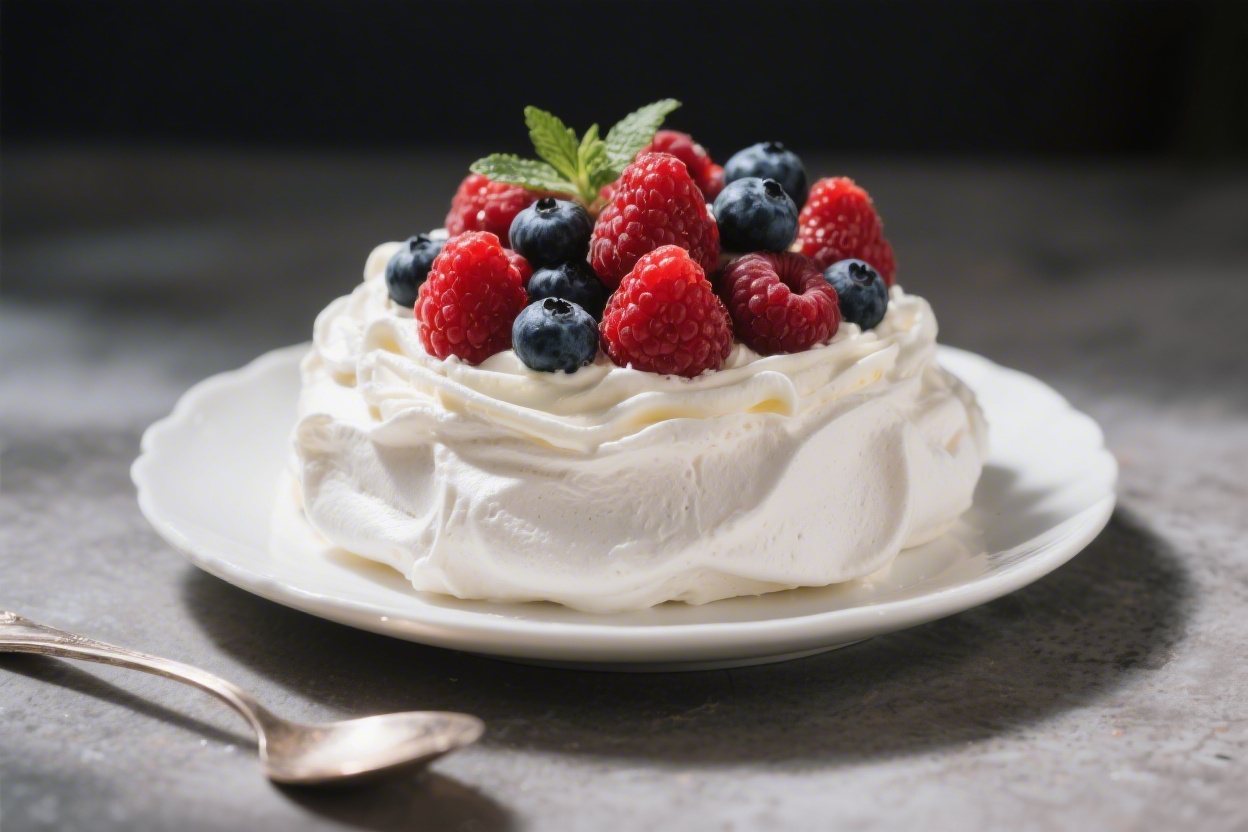
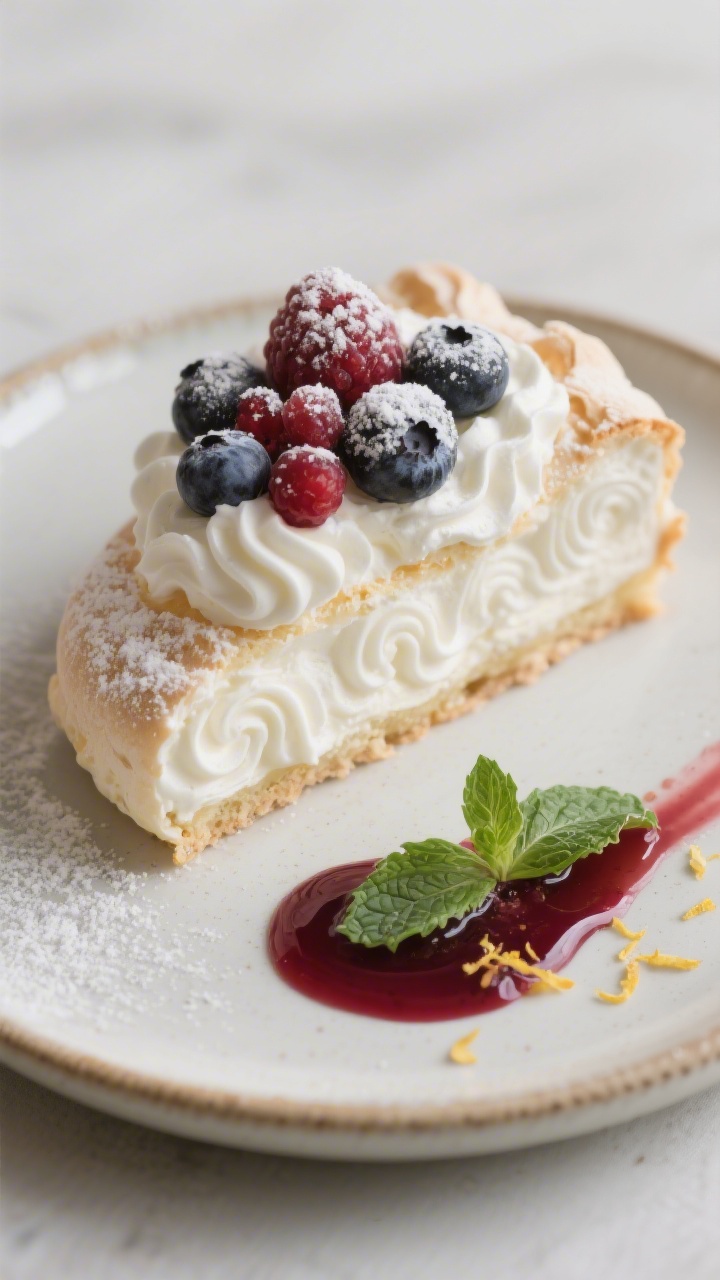
Pavlova is that dessert people remember long after the plates are cleared. It’s crisp on the outside, marshmallow-soft inside, and piled high with whipped cream and juicy berries. It looks stunning but doesn’t ask for fancy skills or tools.
Jump to RecipeWith a few simple tricks, you can get that glossy meringue shell and a center that’s soft and cloud-like. If you’re looking for something that feels special without being fussy, this pavlova is it.
What Makes This Recipe So Good
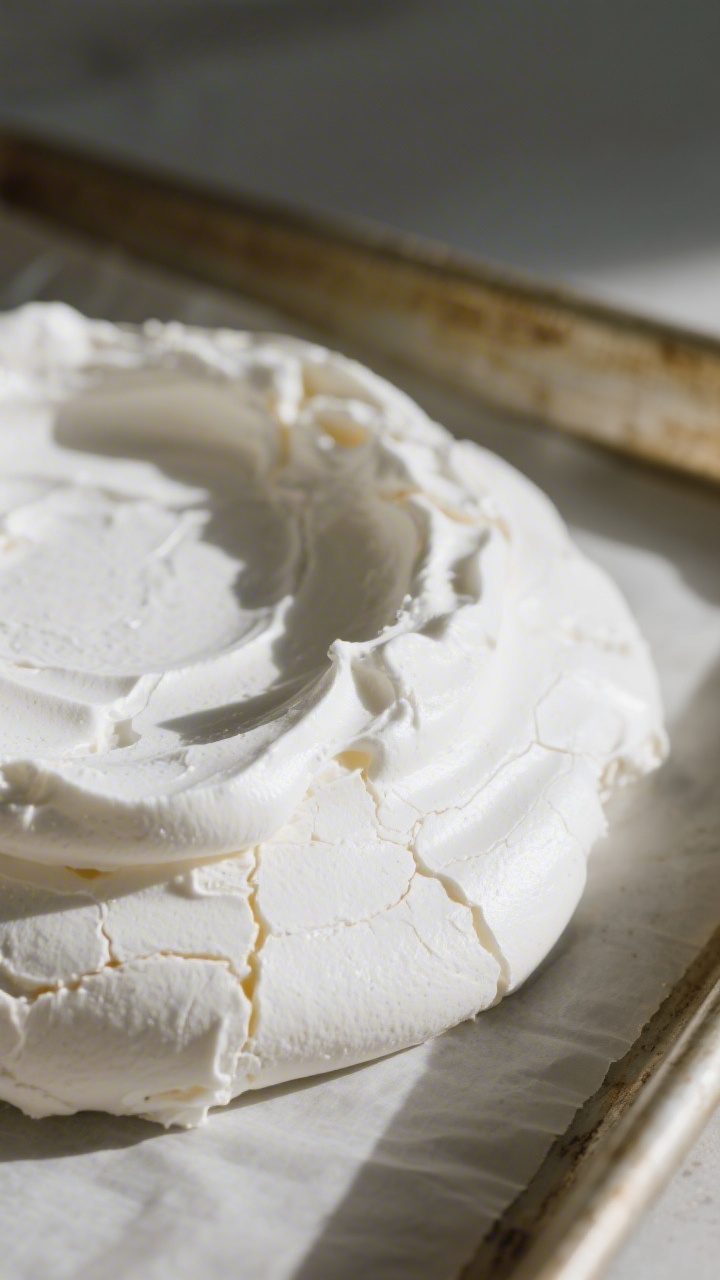
- Texture that wins every time: Crisp, crackly edges give way to a soft, marshmallowy middle. It’s a perfect contrast to cool cream and tart berries.
- Simple ingredients, big payoff: Egg whites, sugar, and a few pantry basics become something spectacular.
- Make-ahead friendly: You can bake the pavlova base ahead and assemble just before serving.
- Light but satisfying: It feels airy rather than heavy, making it ideal after a rich meal.
- Naturally gluten-free: No flour, no problem.Great for mixed-diet gatherings.
What You’ll Need
- Egg whites (4 large) at room temperature
- Granulated sugar (1 cup / 200 g)
- Cornstarch (2 teaspoons)
- Distilled white vinegar or lemon juice (1 teaspoon)
- Pure vanilla extract (1 teaspoon)
- Heavy cream (1 cup / 240 ml), cold
- Powdered sugar (2–3 tablespoons) for the cream
- Fresh berries (2–3 cups total): strawberries, raspberries, blueberries, blackberries
- Optional accents: lemon zest, mint leaves, passion fruit pulp, or a drizzle of berry coulis
- Pinch of salt
Step-by-Step Instructions
- Prep the oven and pan: Heat oven to 275°F (135°C). Line a baking sheet with parchment. Draw a 7–8 inch circle on the paper as a guide, then flip the paper so the ink or pencil is underneath.
- Wipe the bowl clean: Any fat kills volume.Wipe your mixing bowl and whisk with a little vinegar or lemon juice, then dry.
- Whip the egg whites: Add egg whites and a pinch of salt to the bowl. Beat on medium speed until soft peaks form and the whites look foamy and opaque.
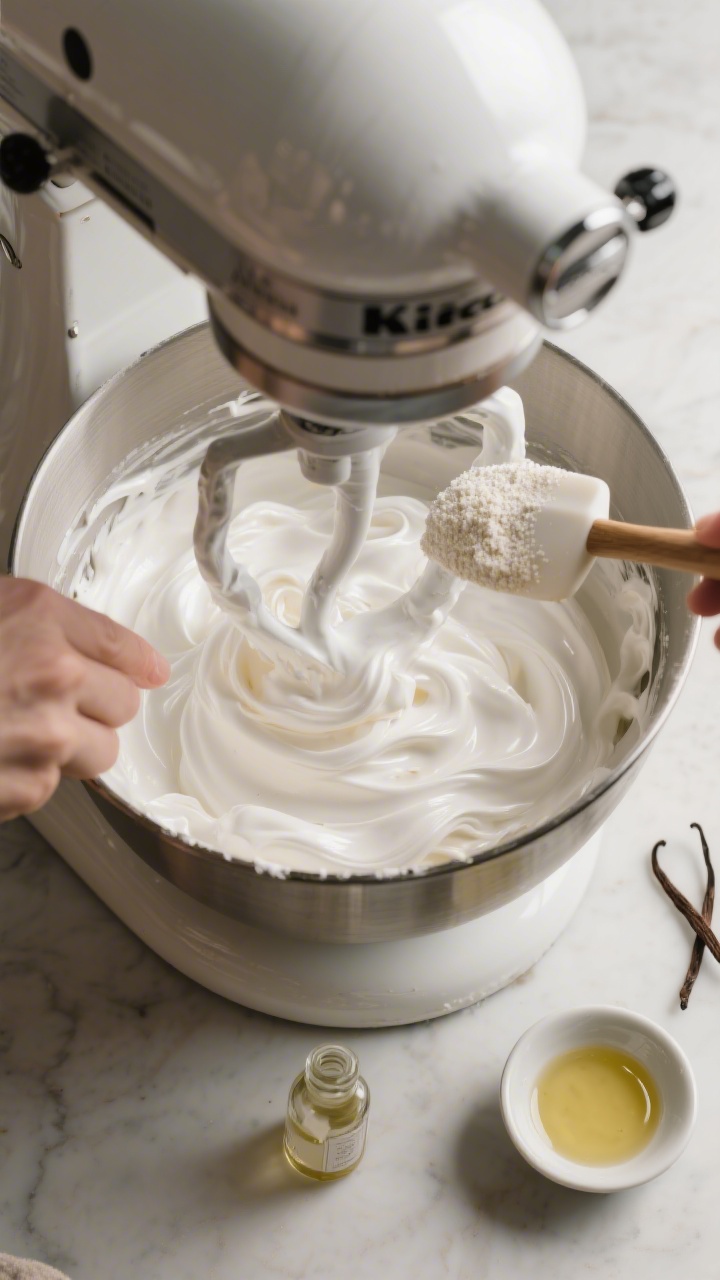
- Add sugar slowly: With the mixer running, add sugar one tablespoon at a time. Take 7–8 minutes total.Beat until glossy, thick, and forming stiff peaks. Rub a bit between your fingers—if it’s gritty, keep beating.
- Fold in stabilizers: Sift in cornstarch. Add vinegar and vanilla.Gently fold with a spatula just until combined. Don’t deflate the meringue.
- Shape the pavlova: Spoon the meringue onto the parchment within your circle. Use a spatula to mound it high with slightly sloped sides.Create a shallow well in the center to hold the cream and berries.
- Bake low and slow: Place in the oven and immediately reduce heat to 250°F (120°C). Bake 75–90 minutes, until the outside is dry and set but not browned. Small hairline cracks are normal.
- Cool in the oven: Turn the oven off, crack the door, and let the pavlova cool inside for 1–2 hours.This helps prevent major cracks from a sudden temperature change.
- Whip the cream: In a chilled bowl, whip heavy cream with powdered sugar and a splash of vanilla to soft peaks. It should hold shape but still look silky.
- Prep the berries: Hull and slice strawberries. Leave delicate berries whole.If berries are very tart, toss with a teaspoon of sugar and a little lemon zest. Let sit 10 minutes.
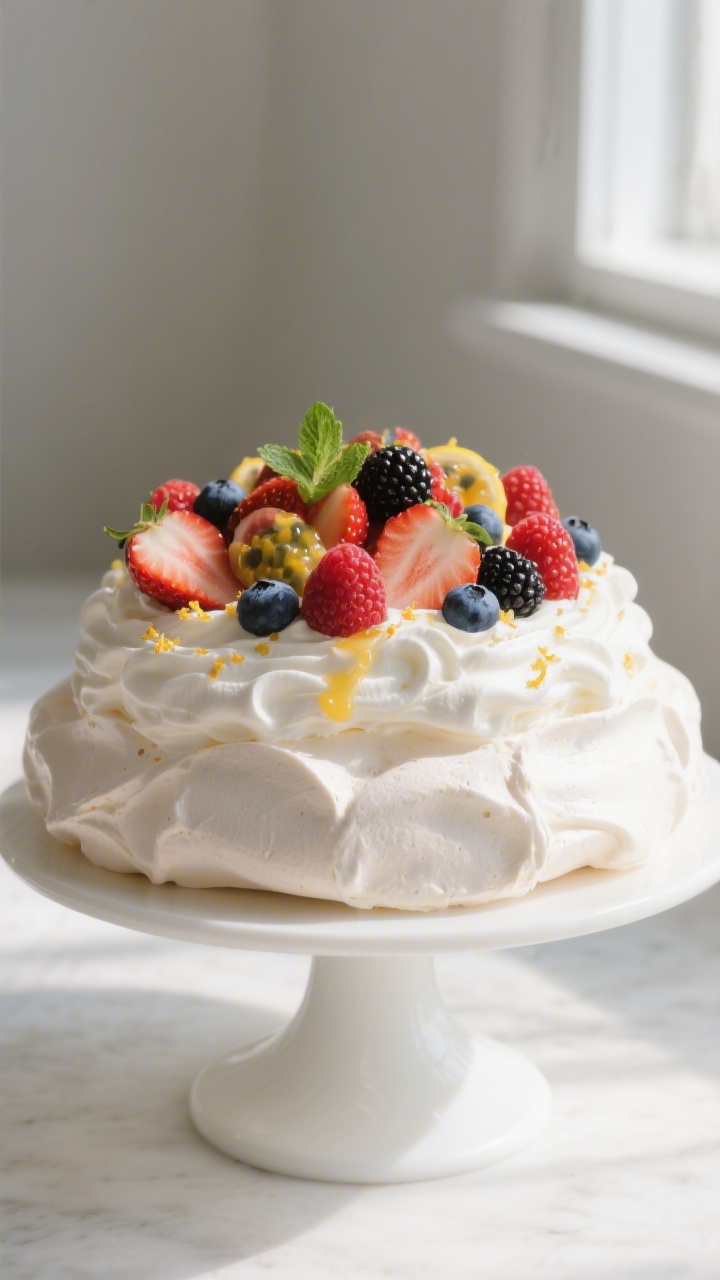
- Assemble just before serving: Transfer the cooled pavlova to a platter. Add the whipped cream to the center, spreading gently.Top generously with fresh berries. Finish with mint, lemon zest, or passion fruit if you like.
- Serve immediately: Pavlova is best within the first hour of assembly, while the shell is still crisp.
Pavlova with Fresh Berries
Crisp meringue, marshmallow-soft center, whipped cream, and juicy berries — a dessert that always feels like a celebration
For the Pavlova
- 4 large egg whites, room temperature
- 1 cup (200 g) granulated sugar
- 2 tsp cornstarch
- 1 tsp distilled white vinegar or lemon juice
- 1 tsp pure vanilla extract
- Pinch of salt
For the Topping
- 1 cup (240 ml) heavy cream, cold
- 2–3 tbsp powdered sugar
- Splash of vanilla extract
- 2–3 cups fresh berries such as strawberries, raspberries, blueberries, and blackberries
Optional Garnishes
- Lemon zest
- Mint leaves
- Passion fruit pulp
- Berry coulis
Instructions
- Prep the Oven and PanPreheat the oven to <strong>275°F (135°C)</strong>. Line a baking sheet with parchment paper. Draw a <strong>7–8-inch</strong> circle on the parchment as a guide, then flip the paper over so the ink or pencil stays underneath.Using a circle guide helps keep the pavlova evenly shaped and high enough in the center.
- Clean the BowlWipe the mixing bowl and whisk with a little vinegar or lemon juice, then dry thoroughly. Any trace of grease can keep the egg whites from whipping properly.Even a tiny bit of fat or egg yolk can stop the whites from reaching full volume.
- Whip the Egg WhitesAdd the egg whites and a pinch of salt to the bowl. Beat on medium speed until the whites look foamy and hold soft peaks.Room-temperature egg whites whip more easily and give better volume.
- Add the Sugar SlowlyWith the mixer running, add the sugar one tablespoon at a time over 7–8 minutes. Continue beating until the meringue is very thick, glossy, and holds stiff peaks. Rub a little between your fingers — if it still feels gritty, keep beating.Slow sugar addition is one of the most important steps for a stable, smooth pavlova.
- Fold in the StabilizersSift in the cornstarch, then add the vinegar and vanilla. Gently fold with a spatula just until combined, being careful not to deflate the meringue.Fold lightly so the meringue keeps its volume and stays cloud-like.
- Shape the PavlovaSpoon the meringue onto the parchment inside the drawn circle. Use a spatula to mound it high with gently sloped sides, then create a shallow well in the center for the cream and berries.A slight well helps hold the topping in place after baking.
- Bake Low and SlowPlace the pavlova in the oven and immediately reduce the heat to <strong>250°F (120°C)</strong>. Bake for <strong>75–90 minutes</strong>, until the outside feels dry and set but not browned. Small cracks are normal.Low heat keeps the shell pale and crisp while the center stays marshmallow-soft.
- Cool in the OvenTurn the oven off, crack the door open, and let the pavlova cool inside for <strong>1–2 hours</strong>. This gentle cooling helps prevent major cracking from a sudden temperature change.Do not rush this step — slow cooling makes a big difference in the final texture.
- Whip the CreamIn a chilled bowl, whip the heavy cream with the powdered sugar and a splash of vanilla until soft peaks form. The cream should hold its shape but still look smooth and silky.Do not overwhip or the cream can become grainy instead of soft and luxurious.
- Prep the BerriesHull and slice the strawberries and leave delicate berries whole if you like. If the berries are very tart, toss them with a teaspoon of sugar and a little lemon zest, then let them sit for 10 minutes.Prepping the fruit just before serving keeps it fresh and glossy.
- Assemble and ServeTransfer the cooled pavlova to a serving platter. Spoon the whipped cream into the center and spread gently. Top generously with the berries, then finish with mint, lemon zest, passion fruit, or berry coulis if desired. Serve immediately.Assemble close to serving time so the shell stays crisp as long as possible.
Tips for the Best Results
- Add the sugar slowly and beat until fully dissolved to avoid a grainy or weepy meringue.
- Make sure the bowl and whisk are completely grease-free before whipping the egg whites.
- Do not bake pavlova at too high a temperature or it can brown too much and collapse.
- Small cracks are normal, but cooling slowly in the oven helps prevent deep cracks.
- The shell can be made ahead and stored in an airtight container at room temperature for up to 2 days.
- Humidity is the enemy of pavlova, so store it somewhere dry and assemble only at the last minute.
- If the unfilled shell softens, place it in a <strong>225°F (110°C)</strong> oven for <strong>15–20 minutes</strong>, then cool completely.
- Whipped cream keeps for about 24 hours in the fridge, but the pavlova is best assembled just before serving.
- For mini pavlovas, divide the meringue into 6 to 8 smaller nests and bake for <strong>45–55 minutes</strong>.
- For a dairy-free version, use whipped coconut cream in place of the heavy cream.
Keeping It Fresh
- Store the shell: Keep the unfilled pavlova in an airtight container at room temperature for up to 2 days. Humidity is the enemy—add a few grains of dry rice or a silica pack to help ward off moisture.
- Cream and berries: Refrigerate separately.Whipped cream holds for 24 hours. Berries keep 1–2 days, but are best fresh.
- After assembly: Eat within a few hours. The shell softens as it absorbs moisture from the cream and fruit.
- Reviving a soft shell: If the unfilled shell goes a bit sticky, place it in a 225°F (110°C) oven for 15–20 minutes, then cool completely before filling.
Health Benefits
- Protein from egg whites: Egg whites offer lean protein without added fat.
- Antioxidants in berries: Blueberries, strawberries, raspberries, and blackberries bring vitamin C, fiber, and polyphenols.
- Lower in fat than many cakes: The meringue itself is fat-free.You control how much cream you add.
- Gluten-free by nature: No flour needed, making it a good option for those avoiding gluten.
What Not to Do
- Don’t rush the sugar: Dumping it in all at once leads to weeping and a grainy texture.
- Don’t use a greasy bowl: Any trace of yolk or fat will stop the whites from whipping properly.
- Don’t bake too hot: High heat browns the pavlova and can collapse the center.
- Don’t assemble early: Cream and berries will soften the shell. Wait until just before serving.
- Don’t skip cooling in the oven: Quick temperature changes cause dramatic cracks.
Recipe Variations
- Mini pavlovas: Make six to eight smaller nests and bake 45–55 minutes. Great for portion control and easy serving.
- Chocolate swirl: Fold 2 tablespoons of sifted cocoa into the meringue, or drizzle melted dark chocolate over the cooled shell.
- Citrus twist: Add finely grated lemon or orange zest to the meringue and the whipped cream for brightness.
- Tropical finish: Top with mango, kiwi, pineapple, and passion fruit pulp instead of berries.
- Yogurt cream: Fold equal parts Greek yogurt and whipped cream for a tangier, lighter topping.
- Berry compote: Simmer a handful of berries with a little sugar and lemon until syrupy.Cool and spoon over the fresh fruit for extra jammy flavor.
FAQ
Why did my pavlova crack?
Small cracks are normal. Big ones usually come from sudden temperature changes or overbaking. Cool the pavlova in the oven with the door cracked and avoid opening the oven during baking.
Can I use brown sugar?
You can, but it changes texture and color.
Brown sugar adds moisture and can make the meringue weep. For a classic white, crisp pavlova, use superfine granulated sugar.
How do I know when it’s done?
The outside should feel dry and crisp, and it should lift slightly from the parchment. The center should still feel a bit soft when you tap it.
If it’s sticky and pale, give it another 10–15 minutes.
Jump to RecipeCan I make it the day before?
Yes. Bake the shell the day before and store it airtight at room temperature. Whip the cream and prep the fruit on the day you plan to serve.
What if my egg whites won’t whip?
Check for fat or yolk in the bowl, and make sure your whites are at room temperature.
Use clean equipment and add the sugar slowly. A pinch of cream of tartar can also help stabilize the foam.
Is there a dairy-free option?
Use chilled coconut cream whipped with a bit of powdered sugar and vanilla. It’s rich, stable, and pairs beautifully with berries.
Can I reduce the sugar?
A little, but not too much.
Sugar stabilizes the meringue. Cutting it drastically will affect the structure. If you want a less sweet bite, balance with tangy toppings like passion fruit or yogurt cream.
How do I prevent weeping (liquid at the base)?
Beat until the sugar fully dissolves, avoid humid conditions if possible, and bake low and slow.
Adding cornstarch and vinegar helps stabilize and reduce weeping.
What size eggs should I use?
Large eggs are standard. If your eggs are smaller, add an extra white to reach roughly 120 g of egg whites total.
Can I freeze pavlova?
It’s not ideal. Freezing introduces moisture that softens the shell.
If you must, freeze the unfilled shell and thaw uncovered at room temperature, but expect some loss of crispness.
Jump to RecipeIn Conclusion
Pavlova with fresh berries is a showstopper that doesn’t weigh you down. With a crisp shell, soft center, and a crown of cream and fruit, it brings just the right balance of sweetness and tartness. Follow the simple steps, keep the oven low, and assemble at the last minute for the best texture.
Whether it’s a holiday table or a casual summer dinner, this dessert earns its applause every single time.