
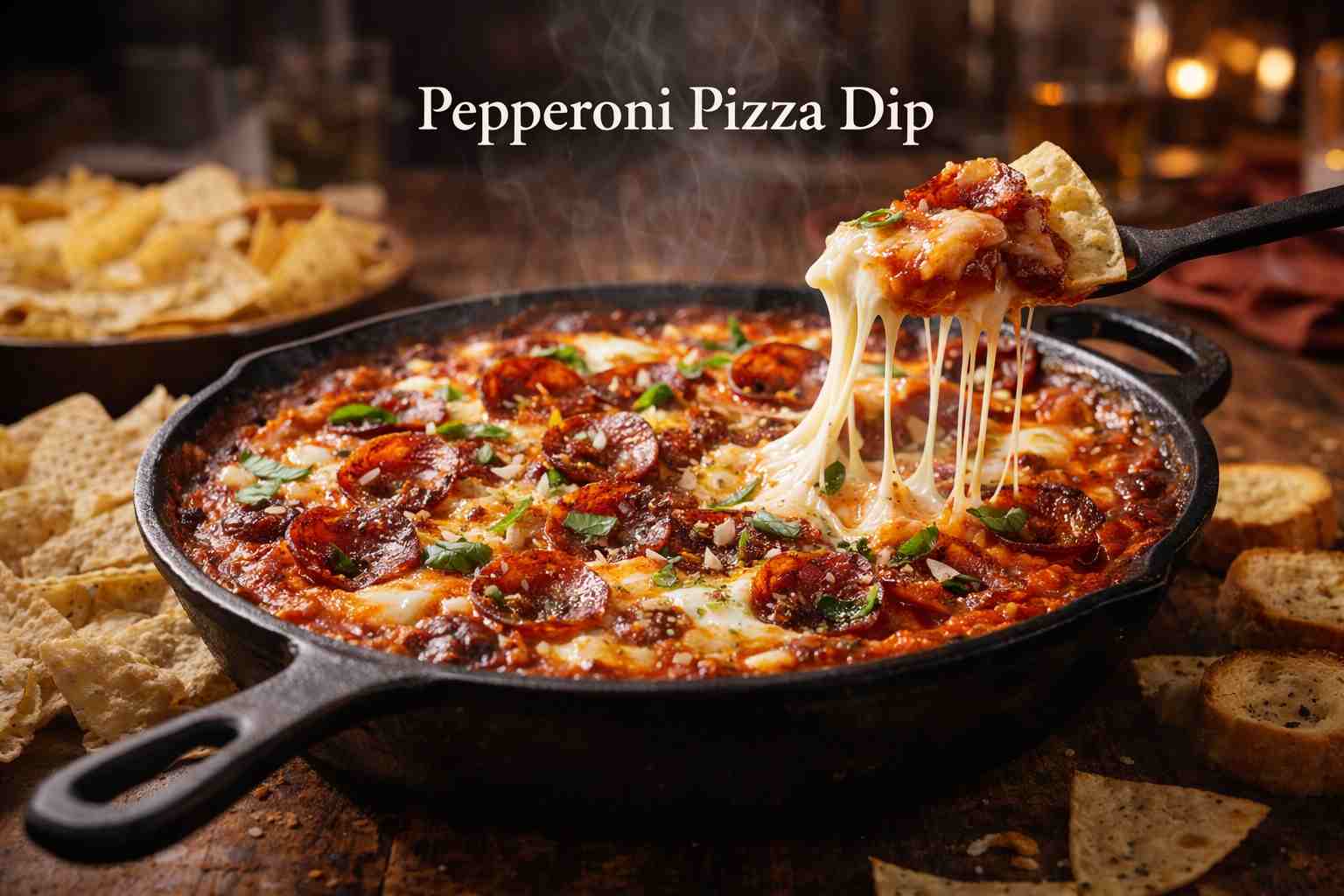
If you have ever stood at a party table, chip in hand, staring into a bubbling, cheese-covered skillet that smells exactly like the interior of a great pizzeria, and thought to yourself that this is the finest thing you have encountered at any social gathering in recent memory — you have encountered a great pizza dip. And if that pizza dip was made with any seriousness, any real commitment to the craft of transforming one of America’s most beloved food experiences into its most shareable and socially irresistible format, it was probably made something like this.
Pepperoni Pizza Dip is not simply a bowl of cheese with some tomato sauce poured over it. It is a genuinely engineered layered preparation — a deconstructed pizza experience that builds flavor, texture, and structural integrity from the ground up, layer by deliberate layer. The foundation is a triple-cheese base of cream cheese, ricotta, and Parmesan, bound with an egg that transforms the mixture into something more structured and custard-like than a simple cheese spread. On top of that goes a thickened San Marzano tomato sauce — reduced to concentrate its sweetness and prevent the layers from collapsing into each other during baking. Then the sautéed vegetables, the sautéed aromatics, and finally the recipe’s defining technical achievement: pepperoni that has been “sweated” in its own rendered fat until it achieves a bacon-like crispness that survives the baking process intact. The whole thing is blanketed in torn fresh mozzarella and baked until the cheese is golden, bubbling, and stretching.
Every step in this recipe exists for a reason. The pepperoni is sweated rather than simply placed raw onto the dip because raw pepperoni releases its fat during baking, pooling grease across the surface and making the dip oily and soggy. The tomato sauce is thickened before it is applied because a thin sauce would flow through the cheese layers and collapse the structural distinction between layers that makes this dip so visually dramatic when scooped. The egg is added to the cheese base because without it, the ricotta and cream cheese, when warmed, become too soft and flowing to hold their position at the bottom of the dish. Each of these details reflects the difference between a great pizza dip recipe and a mediocre one — and this is emphatically the former.
Whether you are making this for a Super Bowl spread, a casual Friday gathering, a family movie night, or simply because you want the most impressive appetizer anyone in the room has ever seen emerge from your oven, this recipe will deliver. Get ready to watch the serving dish empty faster than you thought possible.
Recipe Profile
| Detail | Info |
|---|---|
| Cuisine | American-Italian Fusion |
| Course | Appetizer |
| Difficulty | Easy to Moderate |
| Servings | 8–10 People |
| Prep Time | 20 Minutes |
| Cook Time | 20 Minutes |
| Calories per Serving | Approx. 320 kcal |
Ingredients
The Cheese Base:
- 8 oz cream cheese, fully softened to room temperature
- ⅔ cup whole milk ricotta cheese
- ½ cup freshly grated Parmesan cheese
- 1 whole egg
- 2 cloves garlic, minced
- 1 tsp dried oregano
- Red chili flakes, salt, and freshly ground black pepper, to taste
The Sauce and Toppings:
- 1 cup San Marzano tomato sauce, reduced and thickened
- ½ cup pepperoni slices, sweated until crispy
- ½ cup cremini mushrooms, sliced and sautéed
- ¼ cup red bell pepper, diced
- ¼ cup onion, diced and sautéed
- 1 cup fresh mozzarella, torn or shredded
- Olive oil and/or vegetable oil for sautéing
For Serving:
- Toasted pizza dough strips, crostini, or sturdy breadsticks
- Optional: fresh basil leaves, balsamic glaze drizzle (added after baking)
Step-by-Step Instructions
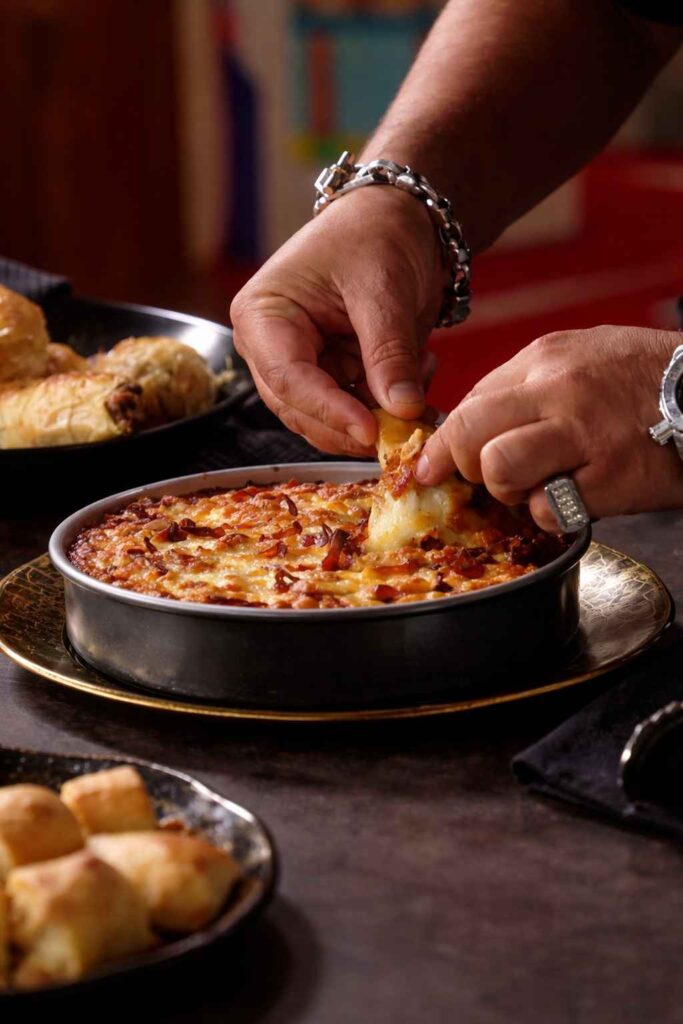
Step 1 — Reduce the Tomato Sauce
Before any other preparation begins, address the tomato sauce. Open your San Marzano tomatoes (whole or crushed) and simmer them in a small saucepan over medium heat, stirring occasionally, until the sauce has reduced by approximately one-quarter to one-third of its original volume — thick enough to hold its shape when spooned onto a surface rather than flowing freely. This reduction step is technically essential rather than merely optional: a thin, watery tomato sauce applied over the cheese base will permeate downward through the softened cream cheese layer during baking, collapsing the structural distinction between layers and producing a mixed, undifferentiated dip rather than the clearly delineated layered presentation that makes this recipe so visually impressive when scooped. Season the sauce with salt and a pinch of oregano while it reduces. Set aside to cool slightly.
Step 2 — Sweat the Pepperoni
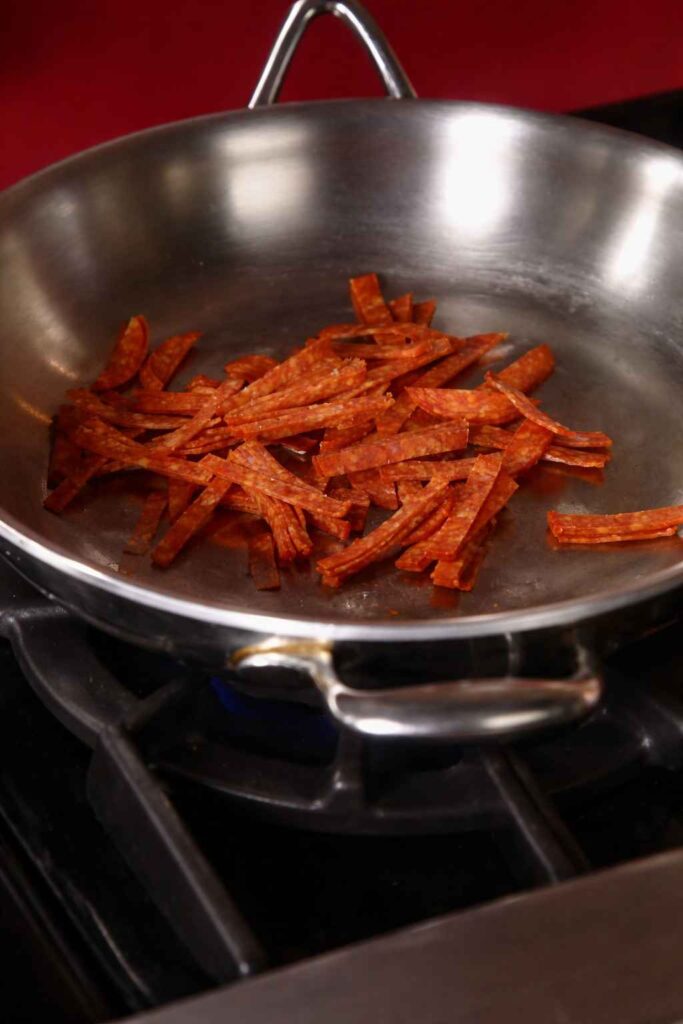
Place a wide, shallow pan over medium heat and add a very light drizzle of olive oil — just enough to initiate the rendering process. Add the pepperoni slices in a single layer and cook over medium heat, turning once or twice, for approximately 4 to 6 minutes. You are looking for a specific textural transformation: the pepperoni should go from its initial soft, pliable disc format to a curled, slightly crispy, firm piece that resembles a miniature version of fried bacon in its texture and snap. This “sweating” process achieves two things simultaneously. First, it renders out the significant quantity of saturated fat that pepperoni contains — fat that, if left in the slices and added directly to the raw dip, would melt and pool across the dip’s surface during baking, creating a greasy, oily finish that undermines the dip’s texture and appearance. Second, it develops Maillard reaction browning on the pepperoni’s surface, deepening its smoky, spicy, savory flavor beyond what raw pepperoni provides. Remove the crisped pepperoni to a paper towel-lined plate. Do not skip this step — it is, as the recipe’s own conclusion accurately identifies, the single most important technical detail separating a great pizza dip from a mediocre one.
Step 3 — Sauté the Aromatics and Vegetables
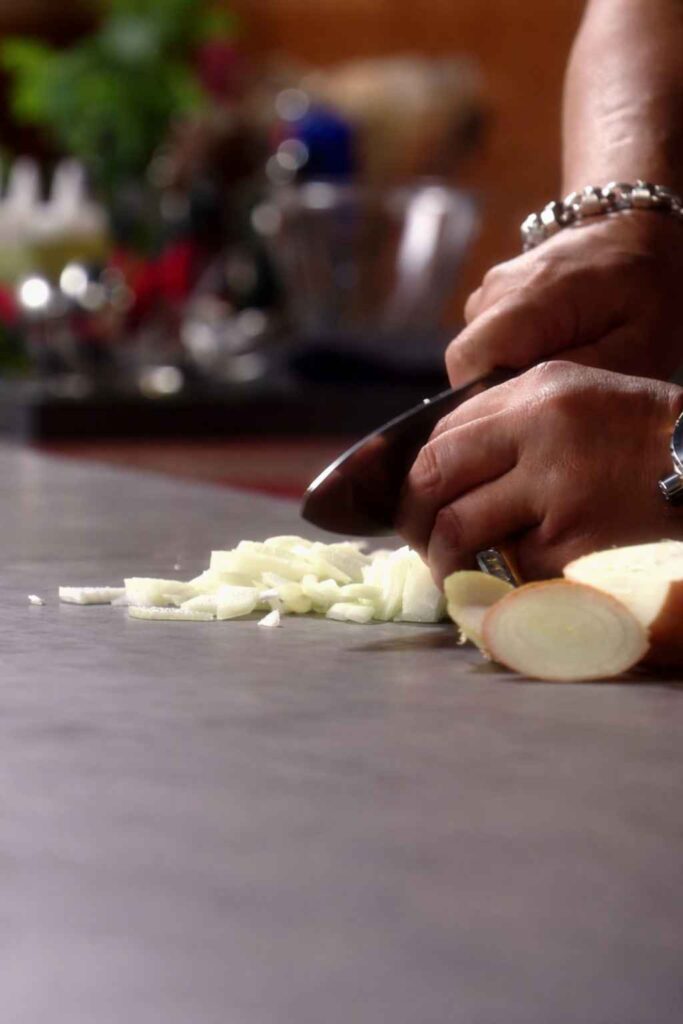
In a separate pan, heat a tablespoon of vegetable oil (which has a higher smoke point than olive oil and will not impart competing flavor during the initial high-heat onion cook) over medium-high heat. Add the diced onion and cook, stirring regularly, for 4 to 5 minutes until translucent and just softened. Add a pinch of red chili flakes during the onion cooking — the fat-soluble capsaicin compounds in the chili flakes dissolve into the hot oil and distribute throughout the cooking aromatics, providing a background heat that permeates the entire dish rather than existing as isolated flakes of spice in specific bites. Add the sliced cremini mushrooms and diced red bell pepper to the pan and continue cooking for 3 to 4 more minutes. The mushroom sautéing step is mandatory and non-negotiable: raw cremini mushrooms contain approximately 92% water by weight — water that releases during baking and would make the finished dip visibly watery if added raw. Sautéing evaporates this water before the mushrooms enter the dish, concentrating their flavor and eliminating the moisture problem entirely.
Step 4 — Prepare the Cheese Base
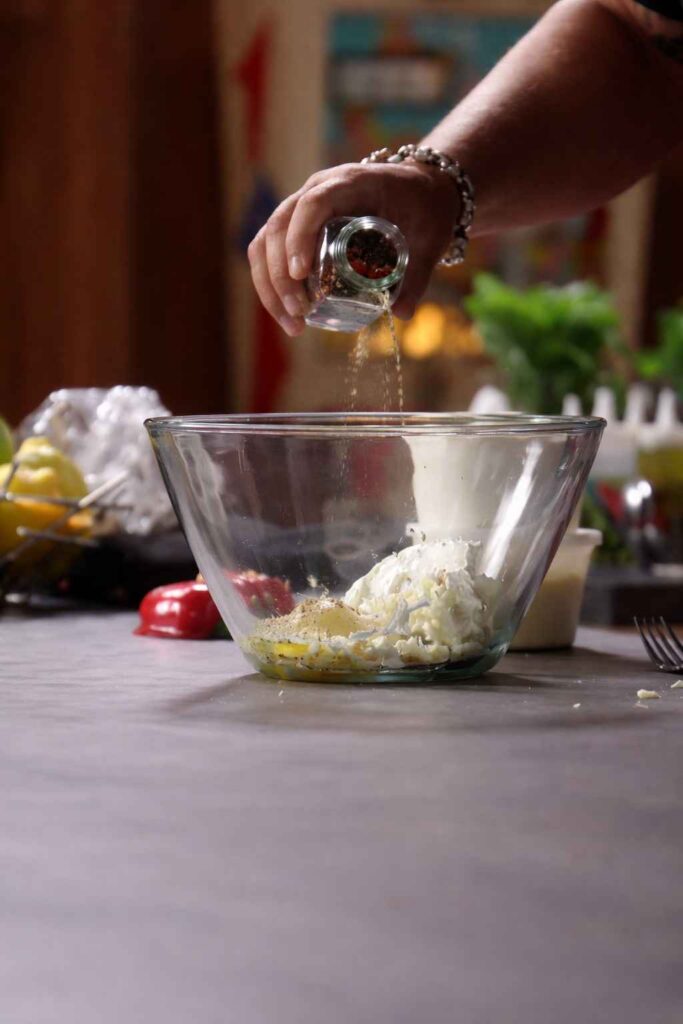
In a large mixing bowl, combine the room-temperature cream cheese, ricotta, and freshly grated Parmesan. Add the minced garlic, dried oregano, red chili flakes, salt, and black pepper. Stir to combine. Now add the egg and mix thoroughly until the egg is completely incorporated and the mixture is smooth, uniform, and slightly stiffer than the plain cream cheese mixture was before the egg’s addition. The egg is the recipe’s most technically intelligent ingredient. Egg yolk contains lecithin — a powerful emulsifier that stabilizes fat-water emulsions at high temperatures. More crucially, the egg’s proteins (ovalbumin, ovomucin, and others) coagulate during the 350°F bake, transforming the soft, molten cream cheese base into a partially set, custard-like structure that holds its position when scooped rather than flowing freely. Without the egg, the heat of the oven would reduce the cream cheese, ricotta, and Parmesan to a fully liquid pool beneath the sauce — impossible to scoop coherently with a chip. With the egg, the base firms slightly around the edges and bottom while remaining creamy in its center — structurally stable and perfectly scoopable.
Step 5 — Layer the Dip
This is the step that separates a layered pizza dip from a mixed pizza dip, and the order of layers is not arbitrary — it is architecturally functional. Begin by spreading the cheese base evenly across the bottom of a cast-iron skillet or oven-safe baking dish with sides high enough to contain the layers without overflow risk. Use a spatula to smooth the cheese base into an even, consistent layer that reaches the edges of the dish — any gap between the cheese base and the dish wall will allow the sauce to flow beneath the cheese during baking, undermining the layered structure. On top of the cheese base, spoon the thickened tomato sauce and spread it carefully and evenly across the entire cheese surface. The cheese base, being firm from the cream cheese’s structure, acts as the “pizza dough” of this preparation — a stable platform upon which the sauce sits cleanly without sinking.
Step 6 — Add the Toppings and Mozzarella
Distribute the sautéed onion, mushroom, and red bell pepper mixture evenly across the surface of the tomato sauce layer. Scatter the crisped pepperoni pieces over the vegetables, distributing them as evenly as possible so that each scoop of the finished dip has a reasonable chance of capturing one. Finally, distribute the torn or shredded fresh mozzarella generously across the entire surface of the dip, covering it as completely as possible. The mozzarella will serve as both the visual and textural star of the finished dish — it is the ingredient responsible for the golden surface browning, the cheese pull when scooped, and the quintessentially pizza-like appearance when the dish emerges from the oven.
Step 7 — Bake Until Golden and Bubbling
Place the assembled dip in a preheated 350°F (175°C) oven and bake for 15 to 20 minutes. Monitor the dip from the 15-minute mark — the visual cues for doneness are: active bubbling around the edges of the dish (indicating the cheese base has reached serving temperature throughout), golden-brown spotting across the mozzarella surface (from Maillard browning of the cheese proteins), and the pepperoni pieces showing slightly deepened color and curlier edges from the oven’s radiant heat. Do not overbake past the point of enthusiastic bubbling and golden browning — extended time in the oven drives the cheese’s moisture to evaporate beyond the desirable threshold, causing the mozzarella surface to become tough rather than stretchy and the cream cheese base to begin oiling out at its edges.
Step 8 — Rest, Garnish, and Serve
Allow the dip to rest for 3 to 5 minutes after removing from the oven. Serve directly in the baking vessel — the cast-iron skillet retains heat for up to 30 minutes, making it the superior serving choice for a party where the dip will be accessed continuously over an extended period. If using fresh basil, scatter the leaves over the surface immediately before serving — basil’s volatile aromatic compounds (linalool, eugenol) evaporate within seconds at the dip’s surface temperature, so adding it before baking would leave only green visual color with no flavor contribution. Arrange toasted pizza dough strips, sturdy baguette crostini, or thick breadsticks around the skillet for dipping. Serve immediately.
Layered Pepperoni Pizza Dip
Baked ricotta-cream cheese base, thick tomato layer, crispy pepperoni + sautéed veg, and melty mozzarella
- 8 oz cream cheese, fully softened
- ⅔ cup whole-milk ricotta
- ½ cup Parmesan, freshly grated
- 1 whole egg
- 2 cloves garlic, minced
- 1 tsp dried oregano
- Red chili flakes, salt, black pepper (to taste)
- 1 cup San Marzano tomato sauce, reduced & thickened
- ½ cup pepperoni, sweated until crispy
- ½ cup cremini mushrooms, sliced & sautéed
- ¼ cup red bell pepper, diced
- ¼ cup onion, diced & sautéed
- 1 cup fresh mozzarella, torn or shredded
- Olive oil and/or vegetable oil, for sautéing
- Toasted pizza dough strips, crostini, or sturdy breadsticks
- Optional: fresh basil, balsamic glaze (after baking)
Reduce the Tomato Sauce
Simmer sauce until reduced by ¼–⅓ and thick enough to mound. Season lightly with salt + oregano; cool slightly.
Sweat the Pepperoni
Lightly oil a pan and cook pepperoni 4–6 minutes until curled and crisp; drain on paper towels.
Sauté Onion + Veg
Sauté onion 4–5 minutes; add mushrooms + bell pepper and cook 3–4 minutes to drive off moisture. Cool slightly.
Make the Cheese Base
Mix cream cheese + ricotta + Parmesan with garlic, oregano, chili flakes, salt, pepper. Add egg and mix until smooth.
Layer
Spread cheese base in a skillet/dish. Top with thickened sauce, spreading edge-to-edge for clean layers.
Add Toppings + Mozzarella
Scatter sautéed veg, then crispy pepperoni. Finish with mozzarella across the top.
Bake
Bake at 350°F (175°C) for 15–20 minutes until bubbling at edges with golden spots on the mozzarella.
Rest & Serve
Rest 3–5 minutes. Add basil and/or balsamic glaze after baking. Serve with crostini, breadsticks, or dough strips.
Conclusion: The Technique That Makes the Difference
Pepperoni Pizza Dip succeeds where lesser pizza dips fail because it approaches the deconstructed pizza format with genuine culinary intelligence rather than simply throwing pizza ingredients into a baking dish and hoping for the best. Every preparation decision — the reduced sauce, the sweated pepperoni, the sautéed mushrooms, the egg-bound cheese base, the deliberate layering order — exists to solve a specific problem that would otherwise compromise the finished dish’s texture, structure, or flavor. Understanding why each step exists transforms this recipe from a set of instructions into a reproducible technique that can be adapted, customized, and improved over time.
The sweated pepperoni deserves its reputation as the recipe’s defining detail. This single step — 5 to 6 minutes of gentle rendering in a warm pan — is the difference between a pizza dip with a greasy, oily surface that disappoints on second look and one with crispy, flavorful, deeply savory pepperoni pieces that retain their character through the baking process and provide genuine textural contrast in every scoop. San Marzano tomatoes deserve equal acknowledgment: their lower acidity and higher natural sweetness (from the fertile volcanic soil of the Campanian Plain where they are grown) produce a sauce with a cleaner, more naturally balanced flavor than standard canned tomatoes can achieve even after seasoning adjustment. These are not premium ingredients used for status — they are premium ingredients used because they produce a measurably better result.
The versatility of this recipe is real and worth using. Italian sausage instead of pepperoni, black olives and jalapeños as additional toppings, mascarpone replacing cream cheese for a richer base, or a finishing drizzle of balsamic glaze for acidic counterpoint — all are legitimate and welcome variations that preserve the recipe’s structural integrity while personalizing its flavor profile. At approximately 320 calories per serving, it represents a generous, satisfying appetizer portion that earns every calorie through the depth and completeness of its flavor. Make it once and you will understand immediately why it has become one of the most reliably crowd-pleasing appetizers in the American party food canon.
Common FAQs About Pepperoni Pizza Dip Recipe
What is the “sweating” technique for pepperoni and how does it differ from frying or broiling?
Sweating — in this pepperoni context — refers to rendering fat from the meat through gentle, sustained low-to-medium heat application rather than the aggressive, rapid fat rendering of high-heat frying or the radiant-heat crisping of broiling. At medium heat in an oiled pan, pepperoni’s saturated fat (primarily palmitic and stearic acids, with melting points of 145°F/63°C and 157°F/69°C respectively) renders gradually — liquifying and migrating to the surface and pan where it can be drained. This slow rendering allows the pepperoni’s surface to dehydrate and crisp uniformly without the risk of surface burning before interior fat has had time to render, which high-heat frying produces. The result is a uniformly crisp, fully rendered slice rather than a burnt exterior with an unrendered fatty interior.
Why is whole milk ricotta specifically superior to part-skim ricotta for this recipe’s cheese base?
Whole milk ricotta is produced by adding acid (vinegar or citric acid) to whole milk heated to approximately 185°F (85°C), causing the whey proteins to denature and coagulate around the milk fat into soft, irregular curds. Its fat content (approximately 13% fat by weight) creates a rich, creamy, smooth texture when incorporated into the cream cheese base. Part-skim ricotta (approximately 8% fat) has less fat available to coat the palate and contribute to the smooth, creamy mouthfeel — its texture is noticeably grainier and its flavor significantly less rich. In a recipe where the cheese base is the primary structural and flavor component of the bottom layer, the difference between whole milk and part-skim ricotta is perceptible in every scoop.
Why do cremini mushrooms specifically outperform white button mushrooms for this recipe?
White button mushrooms and cremini mushrooms are the same species (Agaricus bisporus) at different growth stages — button mushrooms are harvested young, cremini are harvested at an intermediate maturity stage, and portobello mushrooms are the same variety at full maturity. As Agaricus bisporus matures, its concentrations of flavor-active compounds increase: free glutamates (umami) increase measurably from button to cremini stage, the concentration of aromatic compounds (1-octen-3-ol, responsible for the characteristic mushroom aroma) increases with cellular development, and the firmer cell wall structure of the more mature cremini means less moisture release during sautéing per unit weight. All three factors — more flavor, more aroma, less moisture — make cremini the superior functional and sensory choice.
What structural role does the cream cheese perform that the ricotta and Parmesan cannot achieve independently?
Cream cheese (33%+ fat, approximately 55% moisture) has a gel-like structure at room temperature formed by a concentrated casein micelle network suspended in a fat-continuous matrix. This structure provides what food scientists call “body” — a resistance to deformation under pressure that allows the ingredient to hold its shape as a distinct, stable layer rather than flowing when exposed to the weight and warmth of ingredients placed above it. Ricotta, with its irregular, loosely packed protein curds and higher whey content, does not have this structural rigidity — it flows easily under pressure. Parmesan is dry and granular — it contributes flavor but no spreadable body. Only cream cheese provides the combination of spreadability, thermal stability (maintains structure up to approximately 160°F before fully melting), and fat-rich cohesiveness that allows the cheese base to function as a stable structural layer in a multi-layered baked dip.
Why does the recipe specify vegetable oil for sautéing the onion aromatics rather than olive oil?
Vegetable oil (typically soybean oil) has a smoke point of approximately 450°F (232°C). Extra-virgin olive oil has a smoke point of approximately 375°F (190°C), and refined olive oil approximately 465°F (240°C). For the initial high-heat onion sauté — which requires pan surface temperatures of 375–400°F to develop proper Maillard browning without simply steaming the onions — EVOO is operating at or near its smoke point, risking the development of acrolein and other degradation compounds that impart bitterness. Neutral vegetable oil provides a comfortable safety margin above the required sautéing temperature without these degradation risks, allowing the onion’s own flavor compounds to develop cleanly without interference from thermally degraded oil byproducts.
Explore our extensive collection of culinary delights that range from quick weeknight dinners to impressive entertaining dishes. Start your morning right with our five essential egg breakfast ideas, or try our chili crisp egg avocado toast for a modern twist. For those seeking healthier morning options, discover our healthy oatmeal apple banana cake, coconut cove baked oatmeal, and blueberry apple morning oats cake. Vegetarian breakfast enthusiasts will love our protein powder cinnamon rolls. For lunch, enjoy classics like the ultimate big mac salad, crispy potato tacos, quick ham and cheese pinwheels, and vegan bulgogi pinwheels. Our main course selection includes impressive options such as Vietnamese lemongrass chicken, honey balsamic pomegranate glazed chicken, mushroom stuffed chicken breast, and baked French onion chicken. Meat lovers should try our three Italian style meatloaves, pan seared pork tenderloin in creamy peppercorn gravy, and citrus glazed roasted pork ribs with creamy mushroom potatoes. For pasta and seafood, explore shrimp aglio e olio, New England creamy clam chowder, Manhattan clam chowder soup, red pesto gnocchi, brown butter and sage mezzi rigatoni, and creamy peri peri chicken pasta. Our soup collection features creamy broccoli and garlic soup, carnival squash soup with turmeric, split pea soup, ham bean soup, hearty vegetable barley soup, and creamy asparagus soup. Vegetarian options include vegan ramen, quick vegan lasagna, vegan cabbage rolls, spicy maple tofu rice bowl, and vegan chicken and dumpling soup. For sides, enjoy garlic butter cheese bombs, oven baked potatoes with meatballs and cheese, broccoli recipes that taste amazing, oven roasted crispy potato, honey butter cornbread, and one pan Tuscan orzo with chicken. Our appetizer selection includes the ultimate crispy buffalo chicken wonton cups, the ultimate buffalo chicken cauliflower dip, the ultimate buffalo chicken garlic bread, and garlic parmesan wings. Desserts range from blueberry tiramisu and heavenly molten mini chocolate lava cakes to thin and chewy chocolate chip cookies. For special occasions, try red velvet cookies, Valentine heart cookies, ombre heart buttercream cake, and homemade Valentine’s day mini cake delight. Keto dieters will appreciate our keto schnitzel, sugar free keto German chocolate cake, keto yogurt almond cake, keto beef roulades, fluffy keto cloud bread, keto muffins, Korean marinated eggs, and low carb cottage cheese ice cream. Additional healthy options include sugar free oat cakes, sugar free banana oat brownies, and low carb Tuscan chicken bake. For beverage enthusiasts, enjoy our cocktail collection including classic whiskey sour, hot apple whisky lime cocktail, easy margarita, Paloma tequila cocktail, vodka cranberry cocktail, Angel Face cocktail, Mandarin Sunrise cocktail, Aperol Spritz, homemade Piña Colada, virgin Piña Colada mocktail, Moscow Mule, Old Fashioned, Manhattan cocktail, Pomegranate Gimlet, Southside gin cocktail, Paper Plane cocktail, Mango Chilli Margarita, and our ten best rum cocktails. These carefully curated recipes offer something for every palate, occasion, and dietary preference.



Vertyowdiwjodko kofkosfjwgojfsjf oijwfwsfjowehgewjiofwj jewfkwkfdoeguhrfkadwknfew ijedkaoaswnfeugjfkadcajsfn relishtherecipe.com