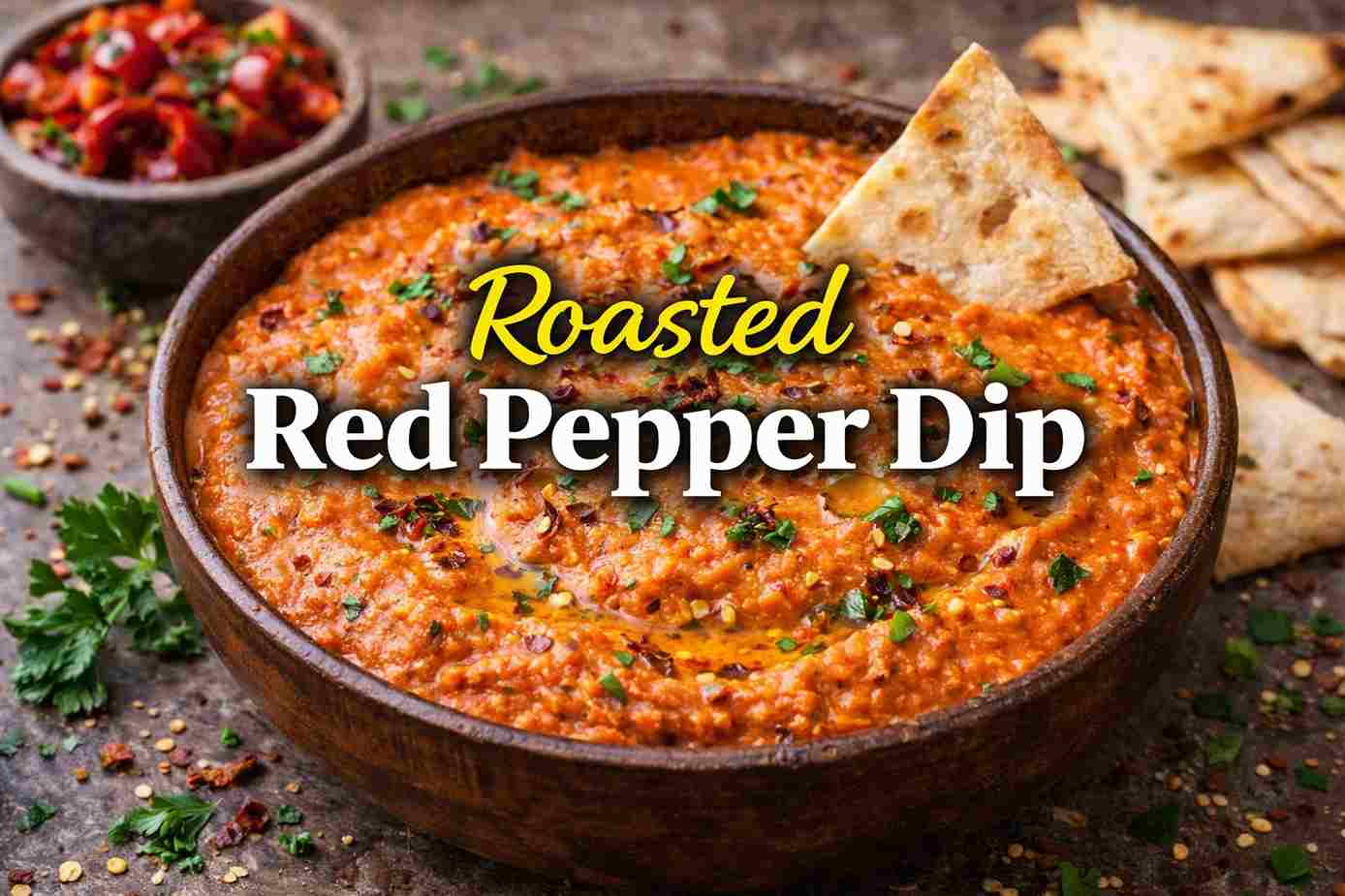
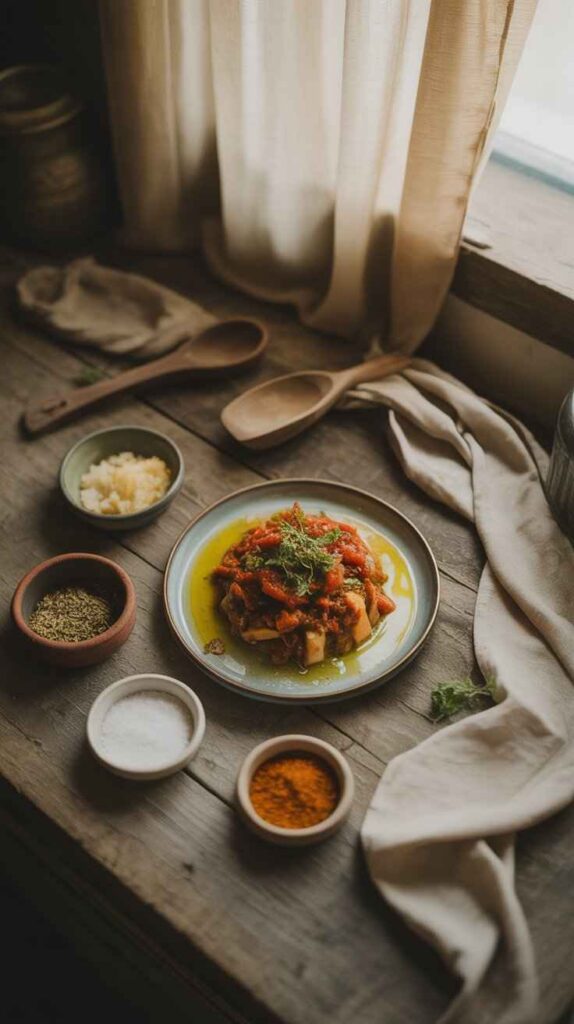
There are certain recipes that stop you mid-bite and make you genuinely wonder why you haven’t been making them your entire life. Köz Biber Mezesi — Turkish roasted red pepper dip — is exactly that recipe. It’s smoky, rich, deeply savory, and has a warmth from the Aleppo pepper that builds slowly and lingers in the most satisfying way. And once you understand how few ingredients and how little effort it takes to make it, you’ll find yourself coming back to it again and again.
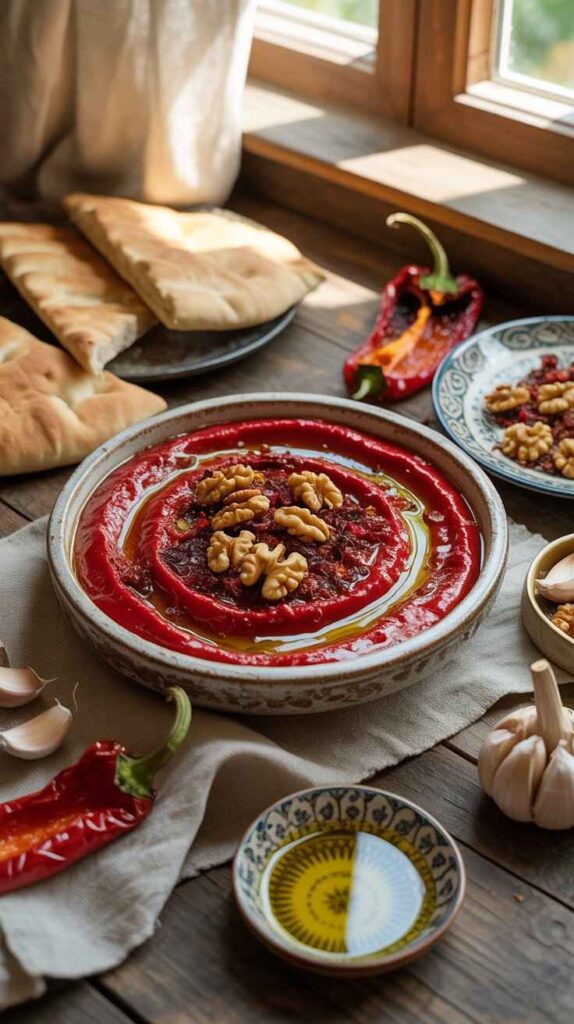
The word “köz” in Turkish refers to the technique of cooking directly over flame or in intense dry heat — the kind of cooking that chars and blisters the outside of a vegetable while concentrating everything sweet and complex inside it. It’s an ancient technique, and for very good reason. When a red pepper meets high heat, something almost alchemical happens. The natural sugars caramelize. The flesh softens into something silky and yielding. The smoky char from the skin transfers its flavor into the pepper itself. What comes out of that oven — or off that flame — is not simply a cooked pepper. It is a transformed ingredient, deeper and more complex than anything raw could ever be.
This particular version of the dip builds on that roasted pepper base with a handful of carefully chosen additions: a generous spoonful of biber salçası (Turkish red pepper paste) that deepens the color and amplifies the pepper flavor, a touch of tomato paste for body and acidity, a handful of walnuts for creaminess and a subtle earthy bitterness, fresh garlic for punch, pul biber (Aleppo pepper flakes) for warmth and fragrance, and a good pour of olive oil to tie it all together into something smooth, glossy, and completely irresistible.
Serve it with toasted bread and watch it vanish from the table in minutes. This is the kind of dip that makes guests stop mid-conversation to ask for the recipe. It is that good.
Recipe at a Glance
| Feature | Details |
|---|---|
| Cuisine | Turkish / Middle Eastern |
| Course | Appetizer / Meze / Side Dish |
| Difficulty | Easy |
| Servings | 4–6 as part of a meze spread |
| Prep Time | 10 Minutes (plus 10 minutes resting after roasting) |
| Cook Time | 25–30 Minutes |
| Total Time | ~50 Minutes |
| Calories per Serving | ~160–190 kcal |
What Is Köz Biber Mezesi?
Meze — the Turkish and broader Middle Eastern tradition of small shared dishes served before or alongside a main meal — is one of the most convivial and generous food traditions in the world. A proper Turkish meze spread might include a dozen or more small plates: yogurt-based dips, stuffed vine leaves, fried vegetables, cured fish, marinated olives, and always, always, at least one or two roasted pepper preparations.
Köz Biber Mezesi holds a specific and beloved place within that tradition. Unlike the sweet, mild flavor of a simple roasted pepper, this dip has real depth and personality. The pepper paste (biber salçası) is a distinctly Turkish ingredient — a concentrated, deeply flavored paste made from slow-cooked and dried red peppers that is used across Turkish cuisine the way Italians use tomato paste: as a foundational flavor builder. When it’s blended into an already-roasted pepper base, the result is an intensity of red pepper flavor that is layered and complex rather than one-dimensional.
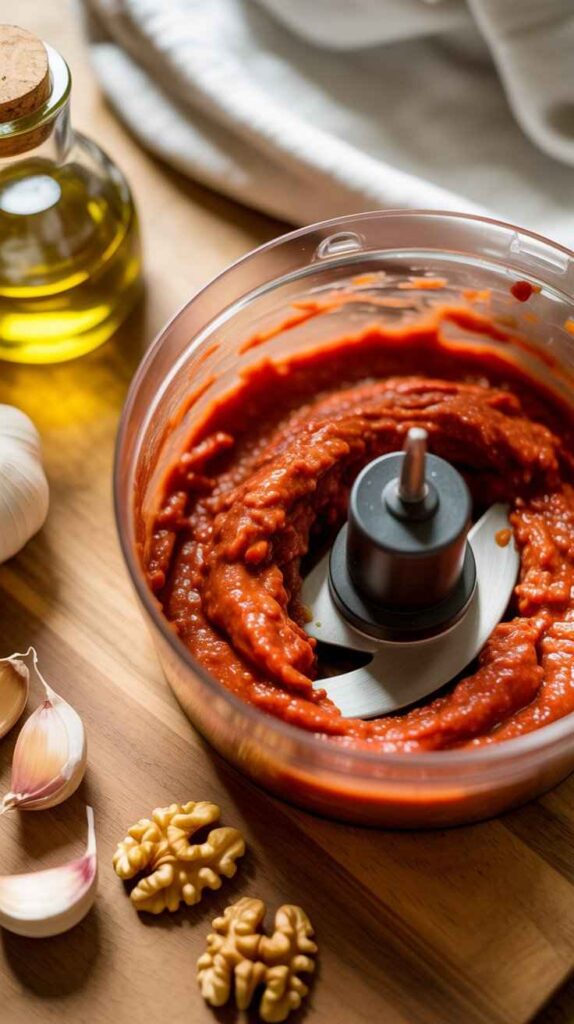
The walnuts are another distinguishing feature. They contribute a subtle bitterness and a smooth creaminess when blended, and they help give the dip a thicker, more substantial body than a pure pepper puree would have. Think of the way tahini functions in hummus, or how nuts function in a romesco — they’re doing structural and textural work here, not just adding flavor.
This is a dip that deserves to be on your regular rotation, not just saved for special occasions.
Ingredients
- 4 large Capia peppers (red pointed peppers — also called Italian sweet peppers, Romano peppers, or red pointed peppers depending on where you shop)
- 1 small pinch of fresh flat-leaf parsley
- 1 handful of walnuts (approximately 30–35g)
- 1 heaped teaspoon red pepper paste (biber salçası — available at Turkish, Middle Eastern, or specialty grocery stores, and increasingly online)
- 1 teaspoon tomato paste
- 2 cloves of garlic
- 1 heaped teaspoon Aleppo pepper flakes (pul biber — this is not the same as standard red chilly flakes; it is fruitier, oilier, and less aggressively hot)
- 1 teaspoon salt
- 4 to 5 tablespoons extra-virgin olive oil (the recipe notes this as nearly half a small tea glass, which is a charming and very Turkish way of measuring)
A Note on the Key Ingredients
Capia Peppers
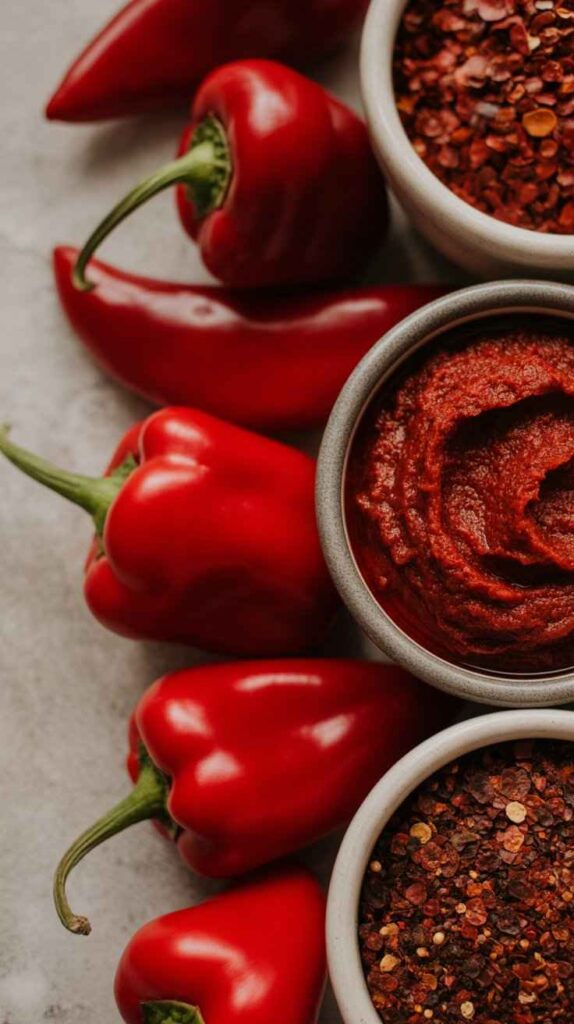
Capia peppers are a specific variety of sweet red pepper with a pointed tip, thick flesh, high sugar content, and relatively low moisture compared to standard bell peppers. They are ideal for roasting because their dense flesh concentrates beautifully under high heat rather than becoming watery. If you cannot find Capia peppers specifically, Romano peppers (red pointed peppers) are an excellent substitute. Standard red bell peppers will also work, though they have more water content and a slightly less sweet flavor when roasted.
Biber Salçası (Red Pepper Paste)
This is the ingredient that non-Turkish cooks are most likely to be unfamiliar with, and it is also the ingredient most worth seeking out specifically. Turkish red pepper paste is sold in two versions: tatlı (sweet) and acı (hot/spicy). Either works in this recipe depending on your preference. It is available at Turkish or Middle Eastern grocery stores and is increasingly found online. In a pinch, a small amount of harissa can function as a rough substitute, though the flavor profile is different.
Pul Biber (Aleppo Pepper)
Aleppo pepper flakes are named for the Syrian city of Aleppo and are widely used across Turkish and Syrian cooking. They have a moderate heat level, a fruity, slightly oily texture, and a flavor that is more complex and rounded than standard dried red chilly flakes. They are not interchangeable with regular chilly flakes — the flavor difference is significant. Seek them out at specialty stores or online. If genuinely unavailable, a mixture of sweet paprika and a very small amount of cayenne can approximate the flavor.
Step-by-Step Instructions
Step 1: Roast the Peppers
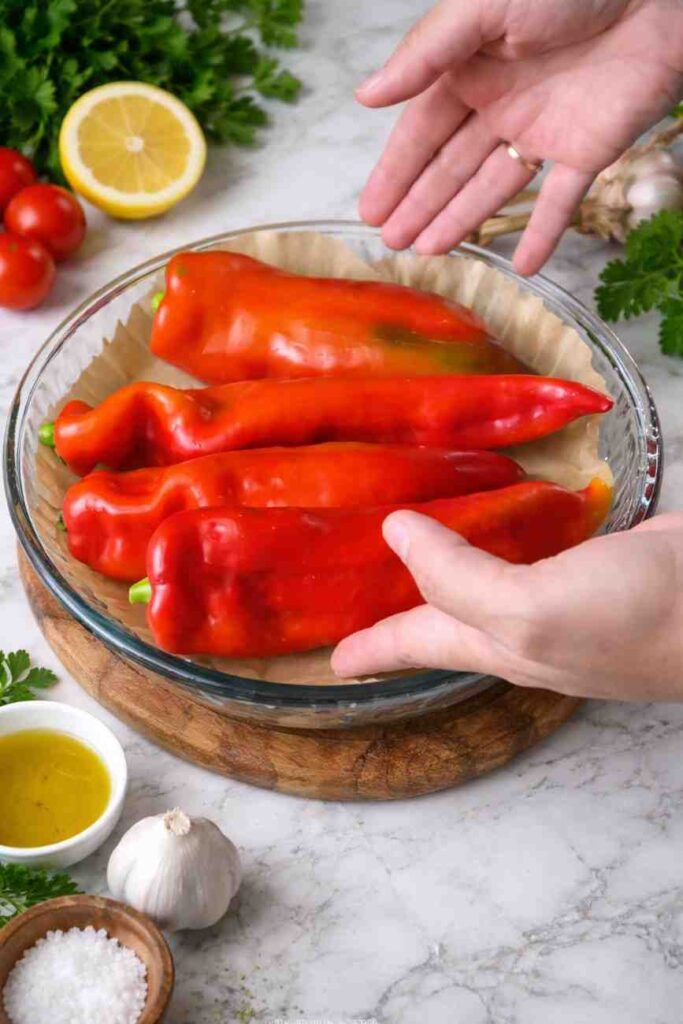
Preheat your oven to 200°C (390°F). Line a baking tray with aluminum foil — this makes cleanup significantly easier and prevents the caramelized pepper juices from burning onto the tray.
Wash your Capia peppers and dry them well. Place them whole on the prepared baking tray. Do not cut them, core them, or remove the seeds at this stage. Roasting them whole traps steam inside the pepper as it cooks, which helps the flesh cook evenly and the skin blister and loosen more effectively.
Place the tray on the middle rack of the oven and roast for 25 to 30 minutes. You are looking for significant blistering and charring on the skin — the peppers should look wrinkled, collapsed, and darkened in patches. This is not burning; this is exactly what you want. The char on the skin transfers a subtle smokiness into the flesh beneath it, which is fundamental to the flavor of the finished dip.
If your oven has a grill or broiler function, you can switch it on for the final 3 to 4 minutes of cooking to intensify the charring and achieve an even more pronounced roasted flavor.
Alternatively, for an even more traditional result, you can roast the peppers directly over the open flame of a gas burner, turning them with tongs every minute or so until they are charred all over. This produces the most intensely smoky flavor of any method, though it requires more active attention.
Step 2: Steam and Peel the Peppers
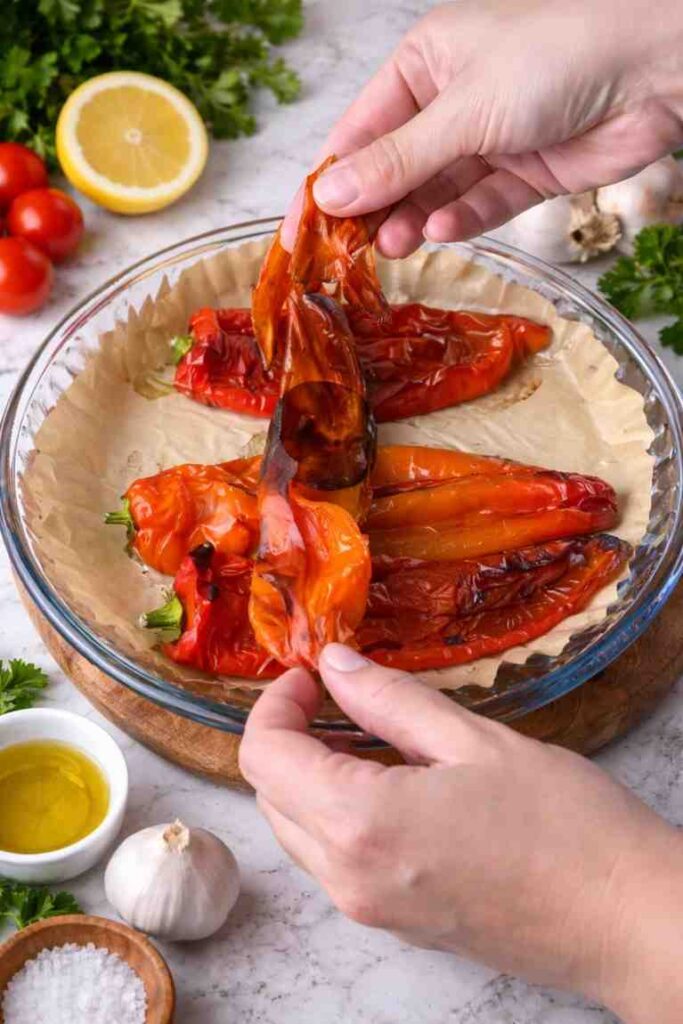
This step is where patience pays dividends, and it’s also where the recipe includes one genuinely brilliant tip that makes the entire peeling process dramatically easier.
As soon as the peppers come out of the oven — while they are still very hot — transfer them immediately into a bowl and cover the bowl tightly with plastic wrap. Alternatively, place them directly into a zip-lock bag and seal it shut. Either way, the goal is to trap the steam that is still rising from the hot peppers in an enclosed space.
Let the peppers rest in this steam chamber for a full 10 minutes. During this time, the steam works between the charred skin and the pepper flesh, loosening the adhesion between them. When you open the bowl or bag after 10 minutes, you’ll find that the skins peel away almost effortlessly — they practically slide off in large sheets with almost no effort or tearing.
Once the peppers are cool enough to handle safely, peel away and discard all the charred skin. Remove the stems and pull out the seed cores, discarding those as well. Don’t worry about removing every single seed — a few remaining seeds in the blender won’t affect the final dip. Do not rinse the peeled peppers under water, tempting as this might be — rinsing washes away the surface flavor compounds and some of the smokiness you worked to develop during roasting.
Place the peeled, de-seeded peppers into your food processor or blender.
Step 3: Add the Remaining Ingredients
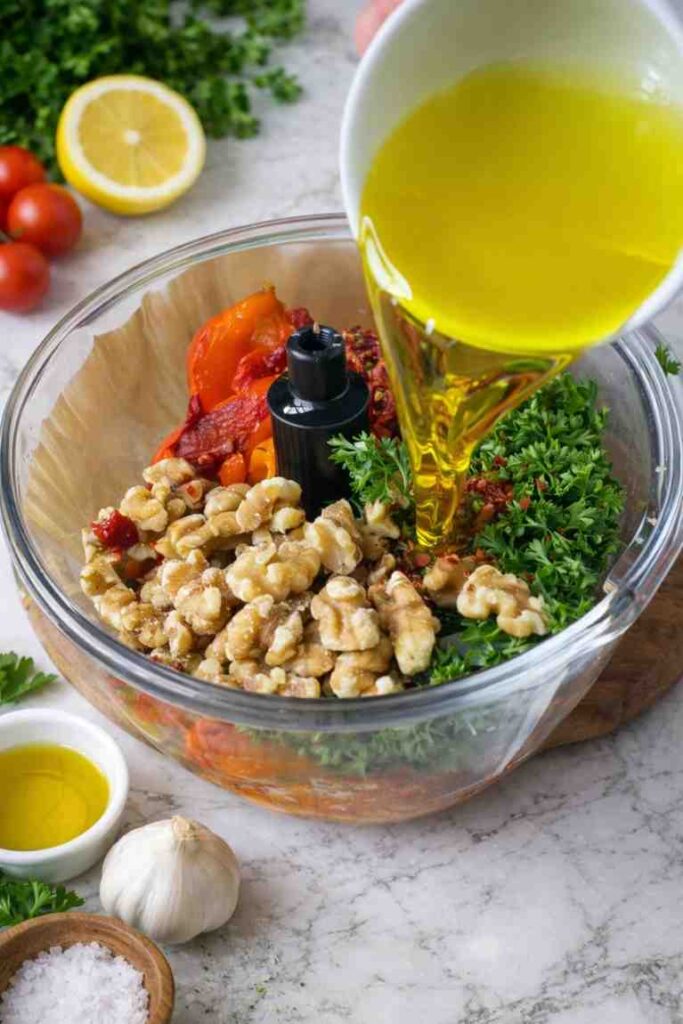
To the blender or food processor with the roasted peppers, add the following in this order: the walnuts, the heaped teaspoon of red pepper paste (biber salçası), the teaspoon of tomato paste, the two cloves of garlic (peeled but whole), the heaped teaspoon of pul biber, the salt, and finally the olive oil.
The order matters slightly for getting a smooth blend — adding the olive oil last means it will emulsify into the other ingredients as they blend rather than just sitting on top.
A note on the garlic: two cloves of raw garlic will produce a fairly assertive, sharp garlic flavor. If you prefer a milder garlic presence, you can roast the garlic cloves alongside the peppers (they’ll take about 20 minutes and can be squeezed out of their skins), which transforms their flavor from sharp and pungent to sweet, mellow, and slightly caramelized.
Step 4: Blend to a Smooth Puree
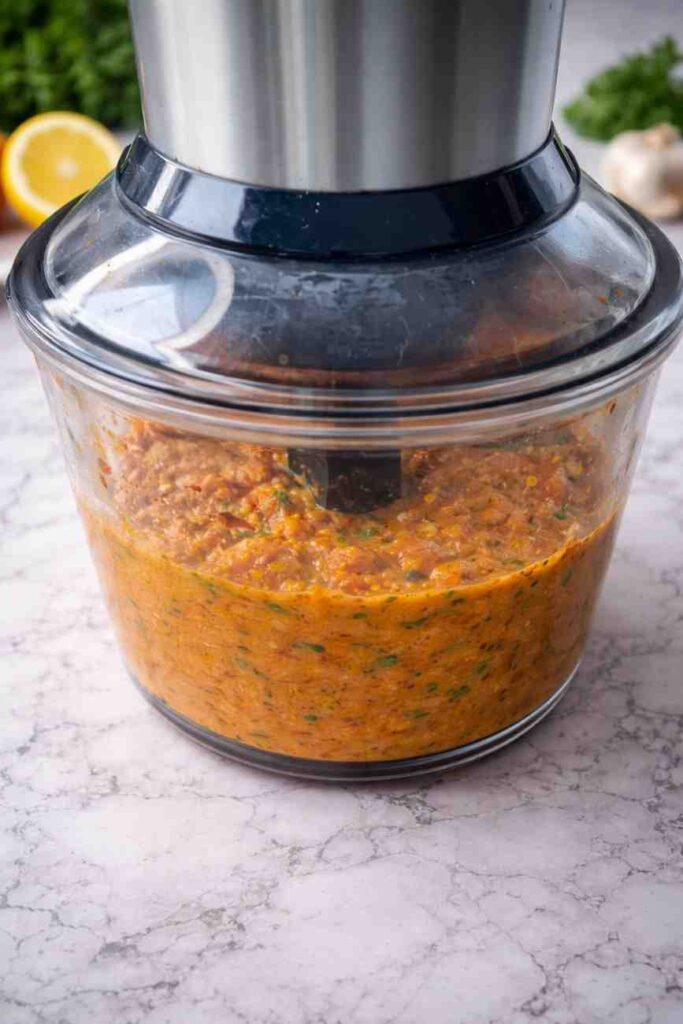
Process everything together in the food processor or blender until you have a smooth, homogeneous puree. This typically takes about 60 to 90 seconds of blending on high speed, stopping once or twice to scrape down the sides of the bowl with a spatula to ensure everything is incorporated evenly.
The finished dip should be smooth but with a little body — not completely thin or liquid. The walnuts contribute to this texture significantly. If the dip seems too thick for your liking, add an extra tablespoon of olive oil and blend briefly to incorporate. If it tastes too sharp or intense, a tiny squeeze of lemon juice can brighten and balance the flavors beautifully, though this is not in the original recipe.
Taste the finished dip carefully and adjust seasoning. You may want a touch more salt, a little more pul biber for heat, or an extra half-teaspoon of pepper paste for deeper color and intensity. This is the moment to make it your own.
Step 5: Plate and Serve
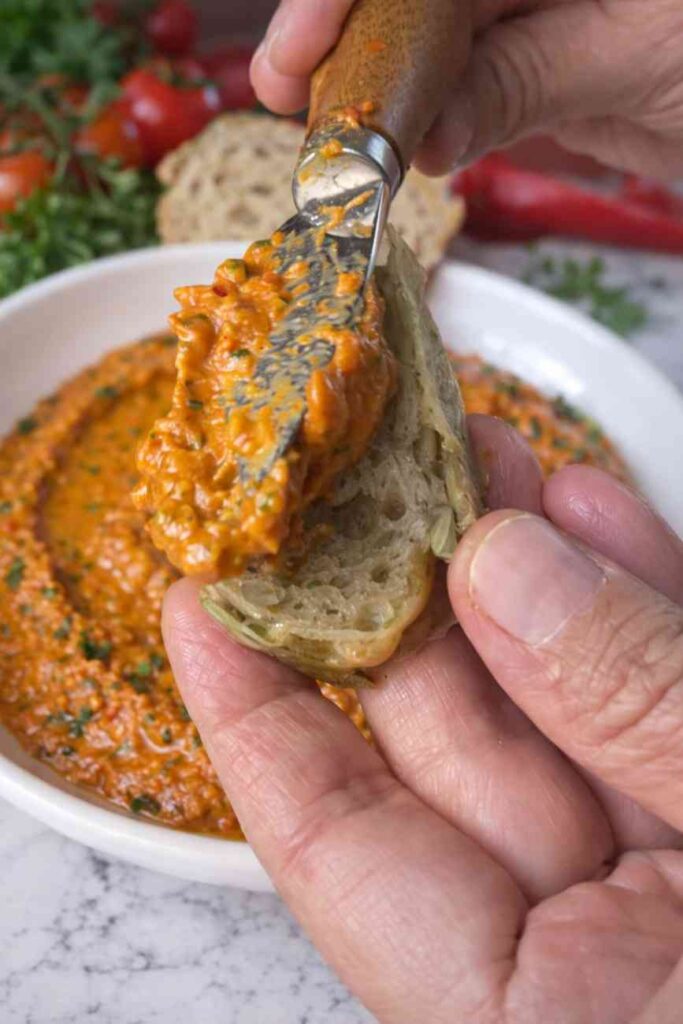
Transfer the dip to a wide, shallow serving bowl or plate. Use the back of a spoon to spread it in a thin, even layer across the surface — this creates a beautiful visual presentation and gives you more surface area to drizzle with olive oil.
Drizzle a generous amount of good-quality extra-virgin olive oil over the surface. Scatter a pinch of pul biber across the top for color and a hint of additional heat. A few fresh flat-leaf parsley leaves make an elegant garnish and add a note of freshness that contrasts nicely with the deep, smoky richness of the dip.
Serve immediately, or refrigerate and serve cold — this dip is genuinely delicious both warm (when the olive oil is still slightly warm and fragrant) and cold (when the flavors have had time to meld together even more deeply in the fridge). Serve alongside warm toasted bread, fresh flatbread, or pita. It is also wonderful as a spread in sandwiches, as a sauce alongside grilled chicken or lamb, or stirred through pasta as a quick weeknight sauce.
Roasted Pepper & Walnut Dip
Smoky Capia peppers blended with walnuts, biber salçası & pul biber — Turkish-style mezze
- 4–5 Capia peppers (or red bell peppers)
- ½ cup walnuts
- 1 heaped tsp biber salçası (red pepper paste)
- 1 tsp tomato paste
- 2 garlic cloves, peeled
- 1 heaped tsp pul biber (Aleppo pepper)
- Salt, to taste
- 3–4 tbsp extra virgin olive oil
- Extra olive oil, for drizzling
- Pul biber, for sprinkling
- Fresh parsley leaves
Roast the Peppers
Preheat oven to 200°C (390°F). Line a tray with foil. Place whole peppers (uncut, with seeds) on tray and roast 25–30 min until skin is blistered, wrinkled, and charred in patches. This char = smokiness. Optional: broil final 3–4 min for extra char.
Steam & Peel
Transfer hot peppers immediately to a bowl, cover tightly with plastic wrap (or use a zip-lock bag). Steam 10 min — this loosens skins dramatically. Once cool enough to handle, peel off charred skins (they’ll slide right off). Remove stems and seeds. Do NOT rinse — you’ll wash away the smoky flavor.
Add Remaining Ingredients
Place peeled peppers in food processor. Add walnuts, biber salçası, tomato paste, garlic, pul biber, salt, then olive oil last (it emulsifies better this way). For milder garlic, roast cloves alongside peppers for 20 min.
Blend Until Smooth
Process 60–90 seconds on high until smooth and homogeneous. Scrape down sides halfway through. Should have body, not be liquid. Too thick? Add 1 tbsp more oil. Taste and adjust salt, pul biber, or pepper paste to your preference.
Plate & Serve
Spread dip in a thin layer on a wide shallow plate. Drizzle generously with olive oil. Scatter pul biber and fresh parsley. Serve warm or cold with toasted bread, pita, or flatbread. Also great as sandwich spread or pasta sauce!
Approximate Nutritional Information (Per Serving, Based on 6 Servings)
| Nutrient | Amount (Approx.) |
|---|---|
| Calories | ~165–190 kcal |
| Total Fat | ~15g |
| Saturated Fat | ~2g |
| Carbohydrates | ~8g |
| Dietary Fiber | ~2.5g |
| Protein | ~2.5g |
| Sodium | ~380mg |
Values are estimates based on the ingredients as listed. Nutritional content will vary slightly based on exact olive oil quantity used and serving size.
Storage and Make-Ahead Notes
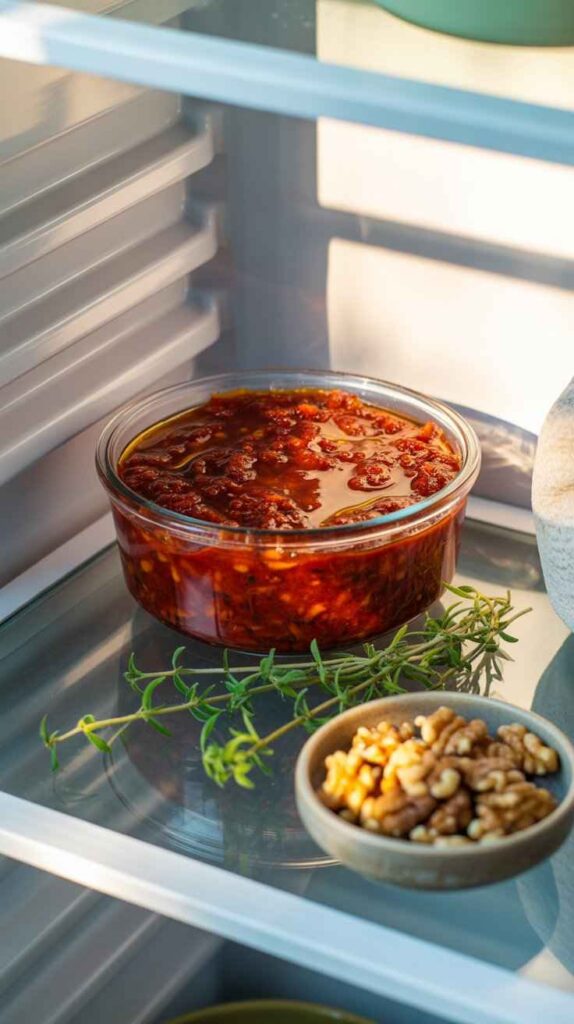
Köz Biber Mezesi stores remarkably well and, many people would argue, tastes even better the day after it is made, when the flavors have had overnight to settle and deepen.
Store the dip in an airtight container in the refrigerator for up to 4 to 5 days. Press a piece of plastic wrap directly onto the surface of the dip before sealing the container — this prevents oxidation and the color darkening on the surface. Before serving from the refrigerator, let the dip come to room temperature for 15 to 20 minutes and give it a stir, then drizzle with fresh olive oil.
This dip does not freeze particularly well — the texture of the blended walnuts becomes grainy and the emulsion of olive oil can break upon thawing. It is best made fresh and enjoyed within the refrigerator storage window.
Conclusion
Roasted Red Pepper Dip is one of those recipes that quietly demonstrates everything that is great about Turkish cuisine: the instinct to coax maximum flavor out of simple, accessible ingredients through technique, patience, and a considered combination of spices. There is nothing complicated happening here. There is no advanced skill required. What there is, instead, is a deep understanding of how heat transforms a vegetable, how a few well-chosen condiments can multiply flavor exponentially, and how something as simple as steaming a pepper in a sealed bag for ten minutes can make the difference between a frustrating peeling experience and an effortless one.
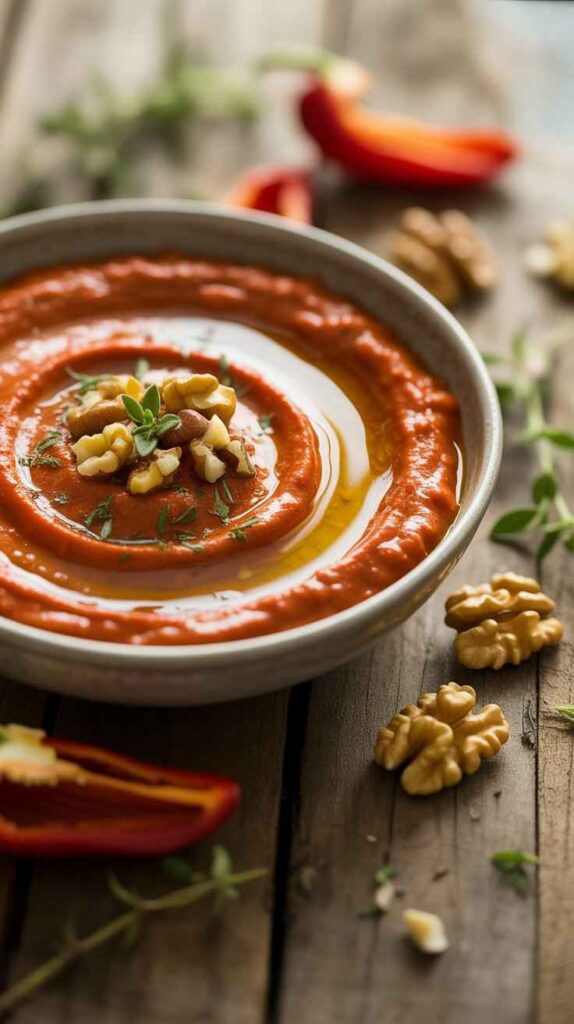
The version of this dip you make at home will be fresher, more vibrant, and arguably more satisfying than anything you’ll find in a jar or from a deli counter. The act of roasting the peppers yourself — watching them blister and collapse in the oven, breathing in the sweet, smoky fragrance that fills your kitchen — is part of what makes eating the finished dip so rewarding. You did that. You coaxed those flavors out of those ingredients. And it shows in every spoonful.
This is a dip that travels beautifully through contexts. It belongs on a mezze table alongside olives and hummus and stuffed vine leaves. It works as a sandwich spread, as a sauce for grilled meats, as a pasta sauce on a busy weeknight, or simply as a reason to tear open a warm piece of bread at any hour of the day. Once you make it, you’ll find uses for it everywhere. And once your guests taste it, you’ll find yourself making it every time you have people over, because someone will always ask for it.
FAQs on Roasted Red Pepper Dip
What are Capia peppers and where can I find them?
Capia peppers are a variety of sweet red pointed pepper with thick, dense, low-moisture flesh and a pronounced natural sweetness. They are widely available in Turkish grocery stores and markets across Europe and the Middle East. In the UK and Australia, Romano peppers or red pointed peppers sold in supermarkets are the closest equivalent. In the US, they are sometimes labeled as “Italian sweet peppers” or “sweet pointed peppers” at specialty produce stores.
Can I use regular red bell peppers instead of Capia peppers?
Yes, though the result will be slightly different. Bell peppers have a higher water content than Capia peppers, which means the roasted flesh will be wetter and the final dip may be slightly looser. To compensate, after roasting and peeling, you can gently press the peeled bell pepper flesh between paper towels to remove some excess moisture before blending. The flavor will also be slightly less sweet and complex, but still very good.
What is biber salçası and why is it used here?
Biber salçası is a concentrated Turkish red pepper paste made from slow-cooked, reduced, and dried red peppers. It is available in two varieties — tatlı (sweet) and acı (spicy hot). It functions similarly to how tomato paste functions in Italian cooking: as a deeply concentrated flavor booster that adds intensity, color, and body to a dish. In this dip, it amplifies the red pepper flavor of the roasted Capia peppers significantly.
Can I use sweet paprika instead of pul biber?
Sweet paprika is far milder than pul biber and lacks the fruity complexity and gentle heat. If substituting, use a combination of sweet paprika (for color and base flavor) and a very small pinch of cayenne (for heat). This is an imperfect substitute but functional if pul biber is genuinely unavailable.
Can I use an outdoor grill or barbecue to roast the peppers?
Absolutely, and this produces an exceptional result. Place the whole peppers directly over hot coals or over a high gas grill flame. Turn every 2 to 3 minutes until charred and collapsed all over. The charcoal smoke adds an extra layer of complexity that takes the dip to another level. This is the version to make when you have a barbecue already going.
Why should I not rinse the peppers after peeling them?
Rinsing removes the thin layer of caramelized, smoky flavor compounds that have migrated from the charred skin into the outer surface of the pepper flesh during roasting and steaming. These compounds are a significant part of what makes roasted pepper dip taste the way it does. Any remaining charred bits that don’t come off cleanly during peeling can be removed with a dry piece of kitchen paper rather than water.
Browse Every Recipe
The Complete Recipe Collection
From comforting weeknight dinners to elegant cocktails — every recipe from Relish the Recipe, all in one place.
- Beef Bourguignon
- Steak au Poivre
- Perfect Filet Mignon
- Grilled Coffee-Cola Skirt Steak
- Grilled Mojo Beef
- Vietnamese Lemongrass Chicken
- Honey Balsamic Pomegranate Glazed Chicken
- Mushroom Stuffed Chicken Breast
- Zesty Herb Marinated Grilled Chicken Thighs
- Baked French Onion Chicken
- One-Pan Tuscan Orzo with Chicken
- Creamy Peri Peri Chicken Pasta
- One-Pan Chicken Chorizo Orzo
- Jamaican Jerk Chicken & Plantain Skillet
- Pan Seared Pork Tenderloin in Peppercorn Gravy
- Citrus Glazed Roasted Pork Ribs
- Smothered Pork Chops with Mushroom Gravy
- Teriyaki Pork Noodles
- One-Pan Chorizo Rice Skillet
- Greek Lemon Roast Lamb & Potatoes
- Greek Lamb with Orzo
- Classic Greek Beef Stifado
- Sausage Ragù
- Italian Sausage & Lamb Ragù
- Sausage & Pepper Bolognese
- Sausage Ragù with Spinach & Ricotta
- Sausage & Zucchini Rigatoni
- 3 Italian-Style Meatloaves
- Brown Butter & Sage Mezzi Rigatoni
- Red Pesto Gnocchi
- Creamy Chicken Meatball Orzo
- Creamy French Onion Orzo Casserole
- Quick Vegan Lasagna
- Vegan Ramen
- Spicy Maple Tofu Rice Bowl
- Oven-Baked Potatoes with Meatballs & Cheese
- Oven-Roasted Crispy Potatoes
- Crispy Potato Tacos
- Korean Sweet & Spicy Beef Meatballs
- Lean Jalapeño Beef Burger
- Vegan Bulgogi Pinwheels
- Vegan Cabbage Rolls
- Creamy Broccoli & Garlic Soup
- New England Creamy Clam Chowder
- Manhattan Clam Chowder
- Split Pea Soup
- Ham & Bean Soup
- Hearty Vegetable Barley Soup
- Creamy Asparagus Soup
- French Cream of Chestnut Soup
- Classic Provençal Fish Soup
- Carnival Squash Soup with Turmeric
- Vegan Chicken & Dumpling Soup
- 30-Minute Creamy Shrimp Alfredo
- Crispy Buffalo Chicken Wonton Cups
- Buffalo Chicken Cauliflower Dip
- Buffalo Chicken Garlic Bread
- Crispy Garlic Parmesan Wings
- Garlic Butter Cheese Bombs
- Quick Ham & Cheese Pinwheels
- Philly Cheesesteak Stuffed Rolls
- Bacon Cheeseburger Dip
- Pepperoni Pizza Dip
- Brown Sugar Bacon-Wrapped Smokies
- Chili Crisp Egg Avocado Toast
- Crispy Rice Cake Benedict
- Savory Chicken Salad Cucumber Rolls
- Cabbage & Lentil Rolls
- Shrimp Bruschetta
- Honey Butter Cornbread
- Spinach & Onion Savory Jam
- Ultimate Big Mac Salad
- Chicken & Potato Croquettes
- High-Protein Lentil Crackers
- Blueberry Tiramisu
- Kunafa Tiramisu
- Lighter Eggnog Tiramisu
- Mirror Glaze Raspberry Mousse Cake
- Ombré Heart Buttercream Cake
- Valentine’s Day Mini Cakes
- Molten Mini Chocolate Lava Cakes
- High-Protein Pumpkin Mousse
- No-Bake Oreo Delight
- No-Bake Pistachio Cheesecake
- No-Bake Banana Pudding
- Samoa Brownies
- Cream Cookie Chunk Fudge
- Thin & Chewy Chocolate Chip Cookies
- Red Velvet Cookies
- Valentine Heart Cookies
- Strawberry Cheesecake Tacos
- Healthy Oatmeal Apple Banana Cake
- Sugar-Free Oat Cakes
- Sugar-Free Banana Oat Brownies
- Coconut Cove Baked Oatmeal
- Blueberry Apple Morning Oats Cake
- Sugar-Free Dates, Banana & Chocolate
- Low-Carb Cottage Cheese Ice Cream
- Keto Schnitzel
- Keto Beef Roulades
- Fluffy Keto Cloud Bread
- Keto Muffins
- Keto German Chocolate Cake
- Keto Yogurt Almond Cake
- Keto Spinach & Feta Omelette
- Keto Bacon Cheeseburger Casserole
- Keto Eggplant Parmesan
- 15-Min Keto Creamy Garlic Chicken
- Low-Carb Tuscan Chicken Bake
- One-Pot Zoodle Alfredo
- Keto Garlic & Herb Breadsticks
- Keto Chocolate Chip Banana Bread
- Keto Tortillas
- 3-Ingredient Carnivore Bun
- Mediterranean Stuffed Roasted Peppers
- Red Lentil Bread
- Classic Whiskey Sour
- Old Fashioned
- Manhattan
- Hot Apple Whisky Lime
- Classic Margarita
- Frozen Strawberry Margarita
- Strawberry Coconut Margarita
- Mango Chilli Margarita
- Paloma
- Aperol Spritz
- Moscow Mule
- Strawberry Basil Mule
- Vodka Cranberry
- 3 Ways: Blueberry Vodka Lemonade
- Homemade Piña Colada
- Mermaid Mimosa
- Passion Fruit Martini
- Honolulu Highball
- Angel Face
- Mandarin Sunrise
- Pomegranate Gimlet
- Southside Gin Cocktail
- Paper Plane
- White Lady
- Almond Joy Cocktail
- Green Tea Shot
- Black Grapes Mojito
- 10 Best Rum Cocktails