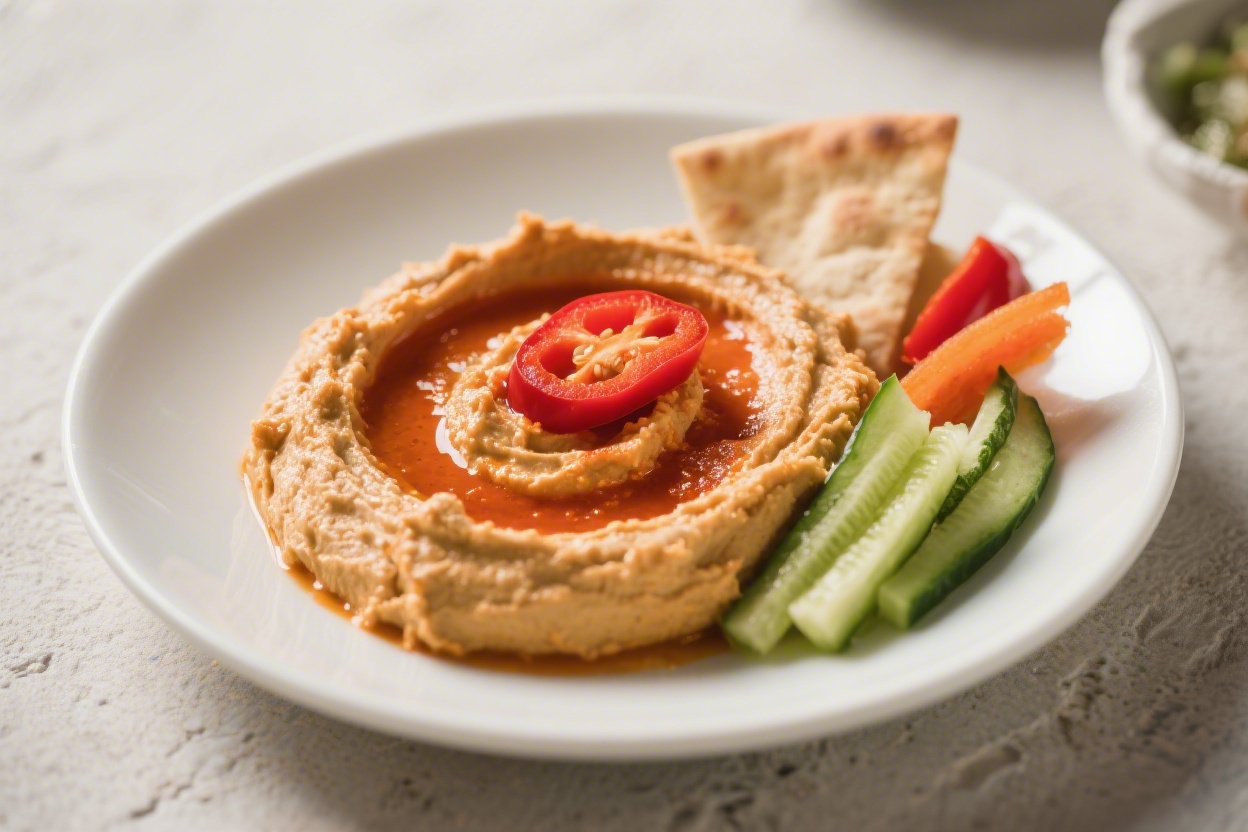
This roasted red pepper hummus is creamy, smoky, and just a little sweet. It’s the kind of snack that disappears the moment you set it down, especially when surrounded by fresh, crunchy veggies. You don’t need any special skills to make it—just a blender or food processor and a few pantry staples.
Jump to RecipeThe result is a bold, colorful dip that feels special but comes together in minutes. Keep it on hand for busy weekdays, casual gatherings, or anytime you want a wholesome, satisfying bite.
Why This Recipe Works
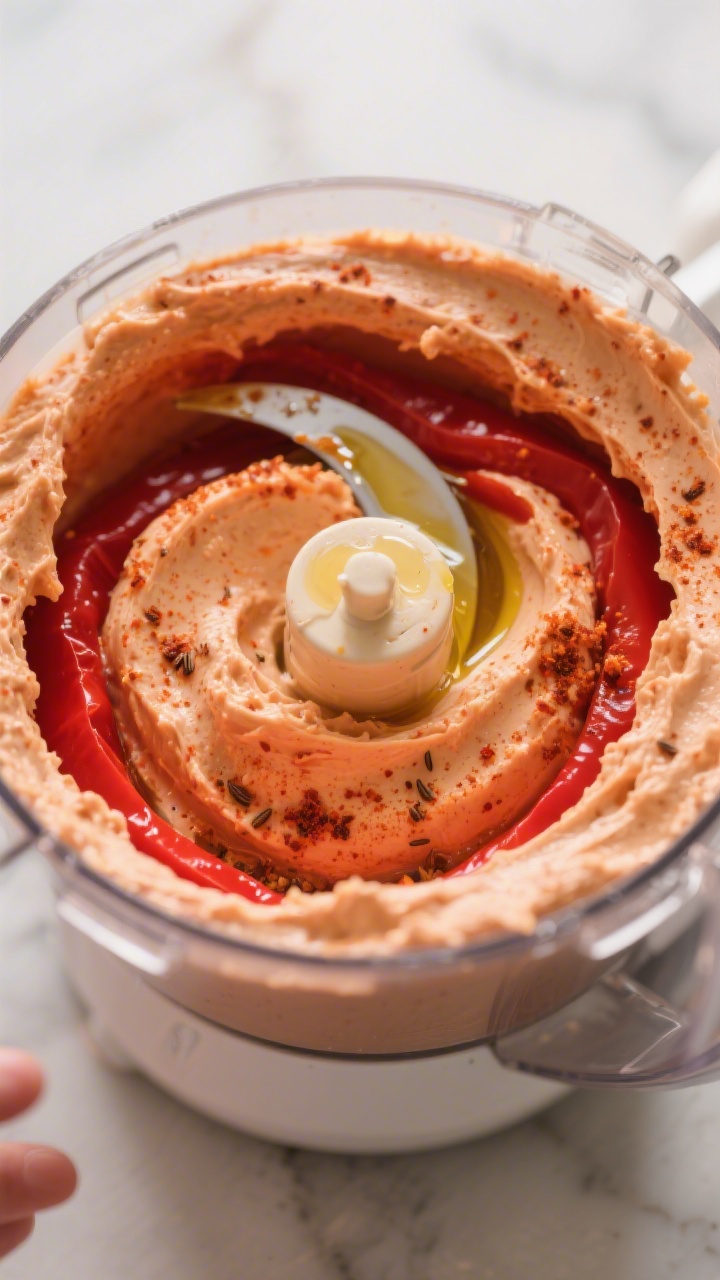
This hummus balances rich, velvety chickpeas with bright roasted peppers, lemon, and a touch of garlic. The roasted peppers add depth and a subtle sweetness that keeps you coming back for another scoop.
Tahini gives the dip a smooth body and a nutty flavor, while olive oil rounds everything out. A pinch of smoked paprika ties it all together, adding a gentle smoky note without overpowering the fresh taste. It’s simple, fast, and versatile—great as a dip, spread, or sauce.
What You’ll Need
- 1 (15-ounce) can chickpeas, drained and rinsed (or 1.5 cups cooked chickpeas)
- 1 cup jarred roasted red peppers, well drained (or 2 large homemade roasted peppers)
- 3 tablespoons tahini (stirred well)
- 2 tablespoons extra-virgin olive oil, plus more for serving
- 2–3 tablespoons fresh lemon juice, to taste
- 1 small garlic clove (or 1/2 clove if you prefer mild garlic)
- 1/2 teaspoon ground cumin
- 1/2 teaspoon smoked paprika (optional but recommended)
- Salt and black pepper, to taste
- 2–4 tablespoons cold water, as needed for texture
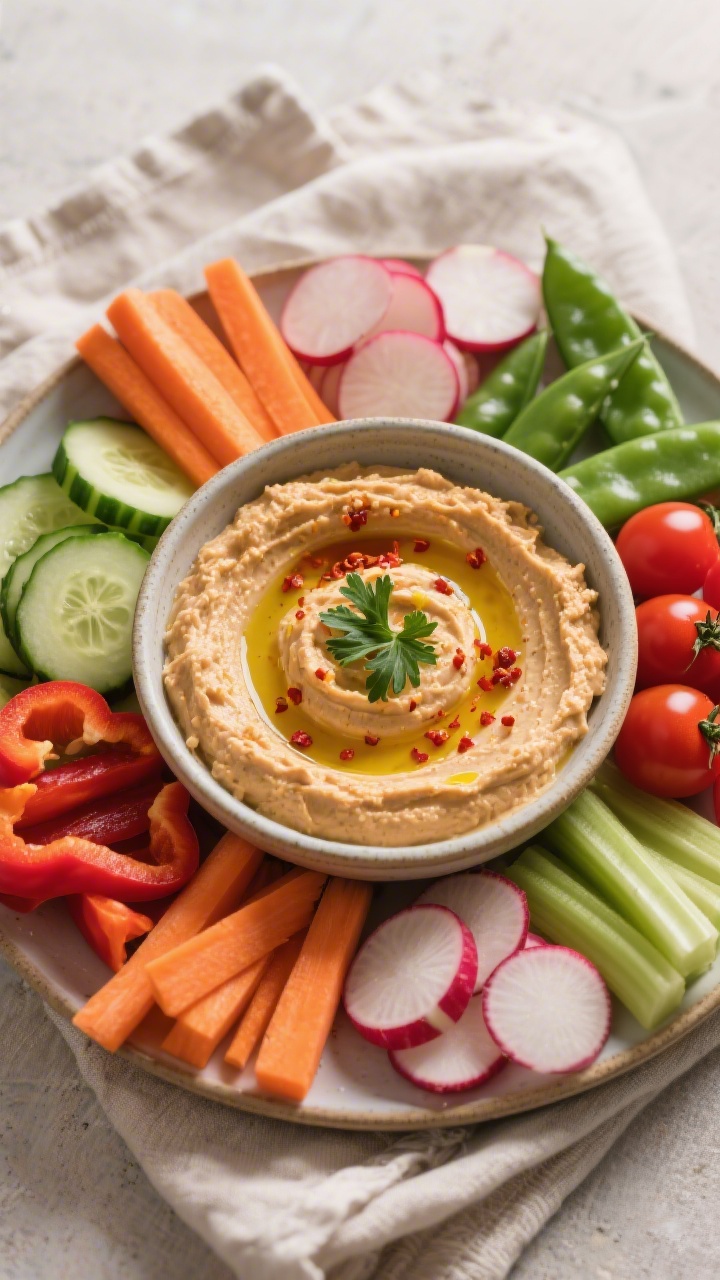
- Veggies for serving: cucumber rounds, carrot sticks, bell pepper strips, cherry tomatoes, snap peas, radishes, celery
- Optional garnishes: chopped parsley, toasted pine nuts, red pepper flakes, a swirl of olive oil
How to Make It
- Prep the chickpeas. Drain and rinse the chickpeas well.For extra-smooth hummus, pinch off some of the skins as they loosen under running water. It’s optional but does make a difference.
- Dry the peppers. If using jarred roasted peppers, pat them dry with a paper towel. Excess liquid can make the hummus watery, so this step matters.
- Start with the base. In a food processor, add tahini, lemon juice, and garlic.Blend for 30–45 seconds until creamy. This step helps the tahini whip and creates a lighter texture.
- Add seasonings and chickpeas. Add cumin, smoked paprika, salt, and pepper. Add the chickpeas and process for about 1 minute, scraping down the sides as needed.
- Blend in peppers and oil. Add roasted red peppers and olive oil.Blend until smooth and fluffy, 1–2 minutes. If it’s too thick, drizzle in cold water a tablespoon at a time until silky.
- Taste and adjust. Add more lemon, salt, or paprika to suit your taste. You want a bright, savory, slightly smoky flavor with a clean finish.
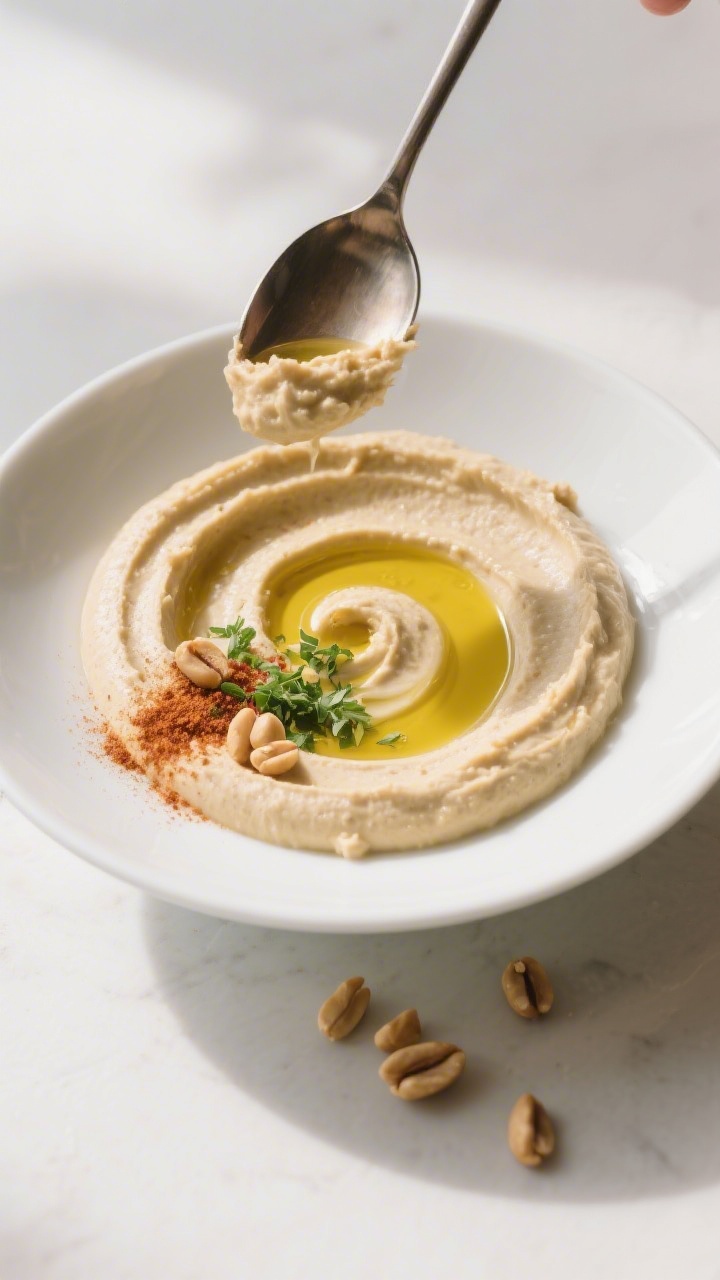
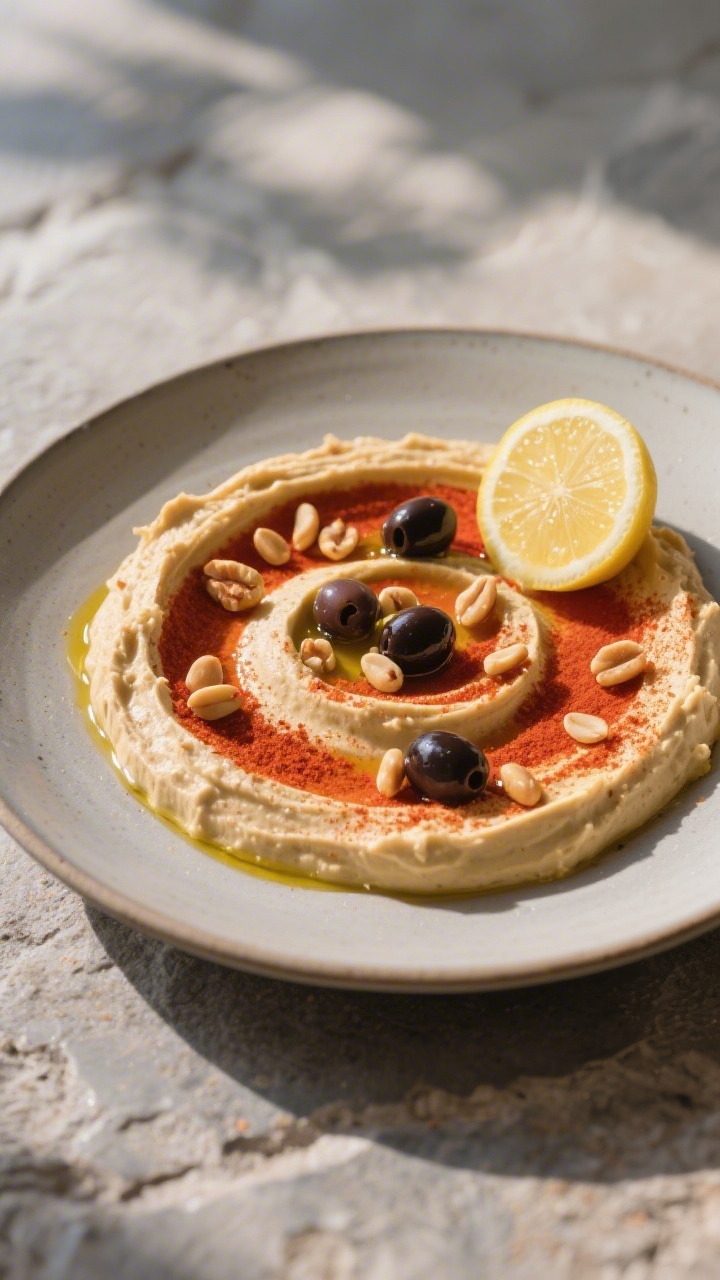
- Plate and garnish. Spoon into a shallow bowl, make a small well, and finish with a light swirl of olive oil.Top with chopped parsley, a sprinkle of paprika, or a few toasted pine nuts for crunch.
- Serve with fresh veggies. Arrange cucumbers, carrots, bell peppers, and whatever crisp vegetables you like around the hummus. Keep it colorful for maximum appeal.
Roasted Red Pepper Hummus with Veggies
Creamy hummus, smoky roasted peppers, and crisp fresh veggies — a vibrant snack that disappears fast
For the Hummus
- 1 (15-ounce) can chickpeas, drained and rinsed (or 1½ cups cooked chickpeas)
- 1 cup jarred roasted red peppers, well drained (or 2 large homemade roasted peppers)
- 3 tbsp tahini, stirred well
- 2 tbsp extra-virgin olive oil, plus more for serving
- 2–3 tbsp fresh lemon juice, to taste
- 1 small garlic clove (or ½ clove for milder garlic)
- ½ tsp ground cumin
- ½ tsp smoked paprika, optional but recommended
- Salt and black pepper, to taste
- 2–4 tbsp cold water, as needed for texture
For Serving
- Cucumber rounds
- Carrot sticks
- Bell pepper strips
- Cherry tomatoes
- Snap peas
- Radishes
- Celery sticks
Optional Garnishes
- Chopped parsley
- Toasted pine nuts
- Red pepper flakes
- Swirl of olive oil
- Extra smoked paprika
Instructions
- Prep the ChickpeasDrain and rinse the chickpeas well. For extra-smooth hummus, rub or pinch off some of the loose skins under running water, though this step is optional.Removing some of the skins gives the hummus a smoother, more whipped texture, but it is not essential if you want to keep things quick.
- Dry the PeppersPat the roasted red peppers dry with paper towels if using jarred peppers. Removing excess moisture helps keep the hummus thick, creamy, and full of concentrated flavor.Do not skip this step — watery peppers can make the hummus loose and dilute the smoky sweetness.
- Whip the Tahini BaseIn a food processor, combine the tahini, lemon juice, and garlic. Blend for 30–45 seconds until the mixture looks creamy and light.Blending the tahini with lemon first helps create a fluffier, silkier hummus than adding everything at once.
- Add the Chickpeas and SeasoningsAdd the chickpeas, cumin, smoked paprika if using, salt, and black pepper. Process for about 1 minute, stopping to scrape down the sides as needed.Taste after this step so you can judge the base seasoning before the peppers go in.
- Blend in the Peppers and OilAdd the roasted red peppers and olive oil, then blend for 1–2 minutes until smooth and fluffy. If the hummus feels too thick, add cold water 1 tablespoon at a time until it reaches your preferred texture.Add water slowly — it is much easier to loosen hummus than to fix it once it becomes too thin.
- Taste and AdjustTaste the hummus and adjust with more lemon juice, salt, black pepper, or smoked paprika as needed. The final flavor should be creamy, savory, slightly smoky, and bright.If the hummus tastes flat, it usually needs a little more lemon or salt rather than more oil.
- Plate and GarnishSpoon the hummus into a shallow bowl and use the back of a spoon to create a small well. Drizzle with olive oil and add parsley, paprika, toasted pine nuts, or red pepper flakes if you like.
- Serve with VeggiesArrange the vegetables around the hummus or on a platter alongside it. Serve immediately, or chill until ready to enjoy.Keep the veggie platter colorful and varied for the freshest look and best texture contrast.
Tips for the Best Results
- Pat the roasted peppers dry well so the hummus stays thick and flavorful.
- Blend the tahini and lemon juice first for a lighter, creamier texture.
- Use cold water to loosen the hummus gradually instead of adding all the liquid at once.
- Start with a small amount of garlic — raw garlic gets stronger as the hummus sits.
- Fresh lemon juice is important for keeping the flavor bright and balanced.
- If your tahini tastes bitter or stale, the hummus will too, so use a fresh, well-stirred jar.
- For an oil-free version, use a little extra tahini and thin with cold water or aquafaba instead of olive oil.
- For a spicy version, blend in harissa, cayenne, or a small chipotle in adobo.
- Store hummus in an airtight container in the fridge for up to 5–6 days and stir before serving.
- Freeze in portions for up to 2 months, then thaw overnight in the fridge and whisk or blend again until smooth.
Storage Instructions
Store hummus in an airtight container in the fridge for up to 5–6 days. Press a small piece of parchment directly onto the surface before sealing if you want to reduce oxidation.
If it thickens in the fridge, stir in a teaspoon of water or olive oil to loosen it. For longer storage, freeze in portions for up to 2 months; thaw overnight in the fridge and reblend or whisk until smooth.
Health Benefits
- Plant-based protein: Chickpeas offer steady, satisfying protein that helps keep you full.
- Heart-healthy fats: Tahini and olive oil provide unsaturated fats, which support heart health when eaten in moderation.
- Fiber-rich: Chickpeas and veggies deliver fiber for digestion, stable energy, and balanced blood sugar.
- Vitamins and antioxidants: Roasted red peppers are rich in vitamin C and antioxidants that support immune health and skin.
- Lower-sodium control: Making hummus at home lets you manage salt and avoid excess preservatives.
What Not to Do
- Don’t skip drying the peppers. Too much liquid leads to runny hummus and diluted flavor.
- Don’t add all the water at once. Add gradually so you can control the texture—creamy, not soupy.
- Don’t use old tahini. Stale or separated tahini tastes bitter. Stir it well or use a fresh jar.
- Don’t overload the garlic. Raw garlic is potent; start small and adjust to taste.
- Don’t forget the acid. Lemon brightens everything.Without it, the hummus can taste flat.
Variations You Can Try
- Spicy Harissa Hummus: Add 1–2 teaspoons harissa paste or a pinch of cayenne for heat.
- Smoky Chipotle: Blend in 1 small chipotle in adobo and a squeeze of lime for a southwest twist.
- Roasted Garlic: Swap raw garlic for 2–3 cloves of roasted garlic for a sweet, mellow flavor.
- Herb Lovers: Fold in chopped cilantro, basil, or parsley for a fresh, green edge.
- Protein Boost: Add 2 tablespoons plain Greek yogurt for extra creaminess and tang.
- Nutty Crunch: Top with toasted almonds, pistachios, or pine nuts for texture.
- Olive Studded: Stir in chopped Kalamata olives at the end for briny pops.
- No Tahini: Replace tahini with 2 tablespoons almond or cashew butter and a bit more lemon.
FAQ
Can I make this without a food processor?
Yes. A high-speed blender works well, though you may need to stop and scrape down the sides more often. If using a regular blender, add liquids first and blend in batches.
A potato masher can do the job in a pinch, but the texture will be chunkier.
Are dried chickpeas better than canned?
Cooked-from-scratch chickpeas can taste sweeter and creamier, but canned is perfectly fine and very convenient. If you use dried, soak overnight and cook until very soft. Save a little cooking liquid to thin the hummus—it adds body and flavor.
How do I roast my own red peppers?
Place whole red peppers on a baking sheet under the broiler or over a gas flame, turning until charred on all sides.
Transfer to a bowl, cover for 10 minutes to steam, then peel, core, and seed. Pat dry before adding to the hummus.
My hummus is too thin. How can I fix it?
Add more chickpeas or tahini, a spoonful at a time, and blend.
Chilling in the fridge for 30 minutes can also help it thicken slightly. Next time, drain the peppers more thoroughly and add water more slowly.
Jump to RecipeWhat veggies pair best with this hummus?
Crisp, juicy vegetables work best: cucumbers, carrots, bell peppers, celery, snap peas, radishes, and grape or cherry tomatoes. For variety, add lightly blanched broccoli or cauliflower and cool it completely before serving.
Can I make it oil-free?
Yes.
Increase tahini slightly and use cold water or aquafaba (the liquid from canned chickpeas) to blend to a creamy texture. Adjust salt and lemon to keep the flavor bright.
How far ahead can I make it for a party?
Make it 1–2 days ahead. Store airtight and garnish just before serving so it looks fresh and vibrant.
Give it a quick stir and taste for seasoning before plating.
Is this hummus gluten-free and vegan?
Yes, it’s naturally both gluten-free and vegan. Just make sure any dippers you serve—like crackers or pita—match your dietary needs.
Jump to RecipeIn Conclusion
Roasted red pepper hummus with veggies is colorful, quick, and full of bold flavor. It’s a simple way to eat well without overthinking it, and it suits nearly any occasion.
Keep a batch in the fridge for easy snacking, last-minute guests, or a fast lunch with pita and greens. Once you make it at home, you might never go back to store-bought.