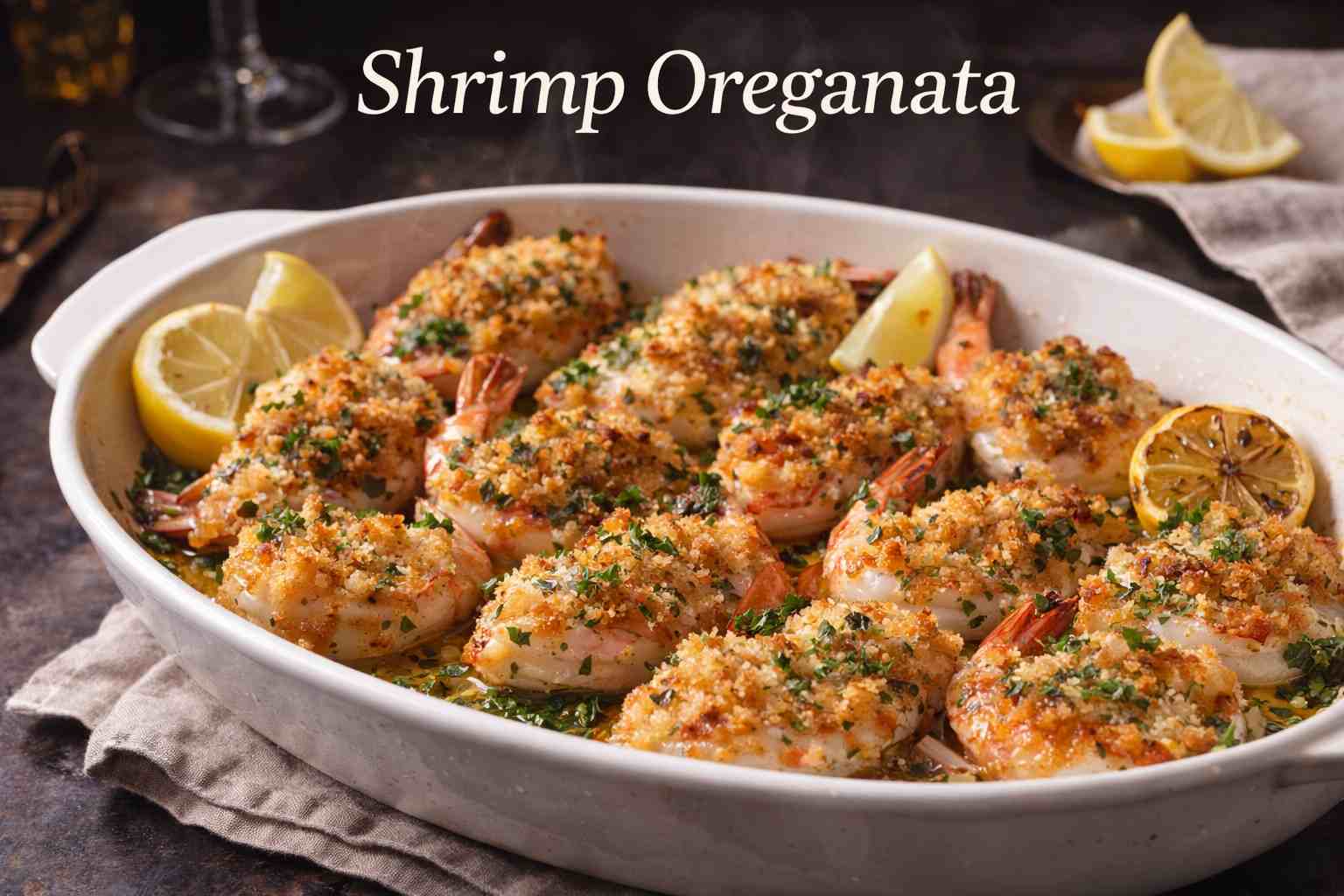
If you have ever sat down at an Italian-American restaurant, ordered something from the seafood section of the menu, and thought to yourself — “I wish I could make this at home” — then Shrimp Oreganata is the recipe that will change your life in the kitchen. This iconic dish has been a cornerstone of Italian-American dining for decades, beloved for its extraordinary combination of textures and its ability to transform a humble ingredient like shrimp into something that looks and tastes genuinely luxurious. The name itself comes from the Italian word for oregano — the herb that anchors the entire dish with its earthy, Mediterranean fragrance and its unmistakably bold flavor. Colossal shrimp are butterflied open, bathed in a garlicky olive oil marinade, and then crowned with a golden Panko and Parmesan crust that crackles with every single bite.
What makes this recipe particularly exciting from both a culinary and a search perspective is how perfectly it sits at the intersection of “impressive” and “achievable.” It is the kind of dish that guests will photograph before eating, yet it comes together in under 30 minutes from start to finish. The techniques involved — butterflying shrimp, building a breadcrumb topping to the right consistency, and mastering the high-heat roast — are skills that, once learned, will serve you across dozens of other recipes. Whether you are planning a romantic dinner for two, a dinner party appetizer that will generate genuine compliments, or a special holiday starter, Shrimp Oreganata delivers every single time. This guide will walk you through every step in forensic detail so that your first attempt is also your best one.
Recipe Details at a Glance
| Detail | Info |
|---|---|
| Cuisine | Italian-American |
| Course | Appetizer / Main Course |
| Difficulty | Easy to Intermediate |
| Servings | 4 people |
| Prep Time | 20 minutes |
| Cook Time | 8–10 minutes |
| Calories per Serving | Approximately 280 kcal |
Ingredients
For the Shrimp and Marinade:
- 1 lb colossal or jumbo shrimp, peeled and deveined, tails on
- 2 tbsp extra virgin olive oil
- 2 garlic cloves, finely minced
- 1 tbsp fresh parsley, chopped
- Zest of 1 lemon
- 1 tsp dried oregano
- A pinch of crushed red pepper flakes
- Salt to taste
For the Oreganata Topping:
- ½ cup Panko breadcrumbs
- 2 tbsp grated Parmesan cheese
- 3 tbsp unsalted butter, melted
- 1 garlic clove, finely minced
- Additional fresh parsley, chopped
- Additional lemon zest
- A pinch of red pepper flakes
For Serving:
- Lemon wedges
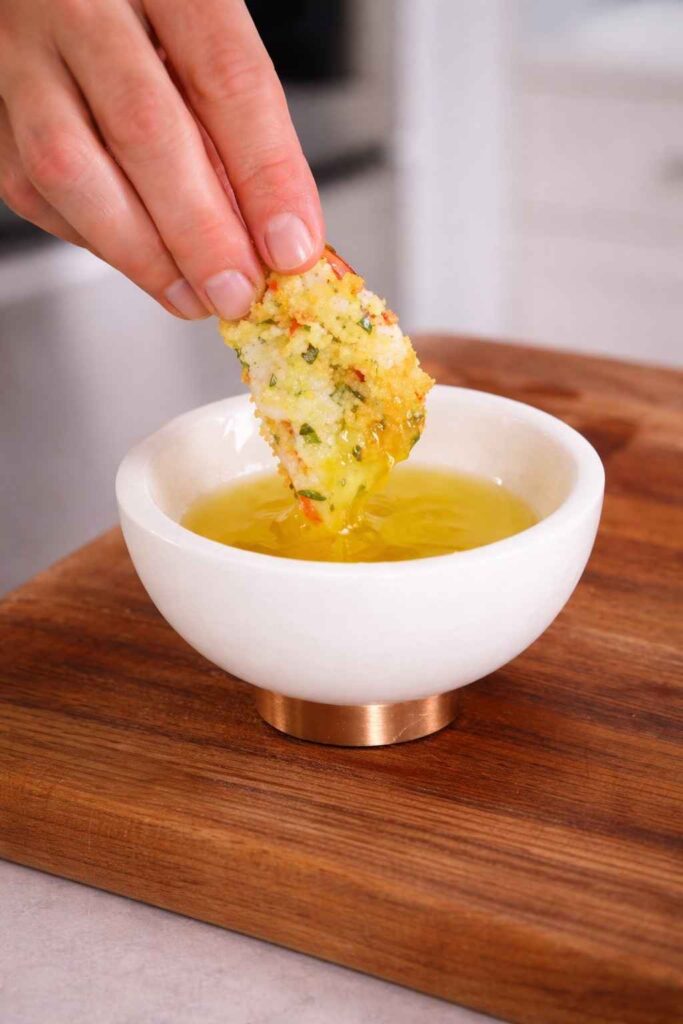
- Lemon butter for dipping (optional)
Step-by-Step Instructions
Step 1: Clean and Butterfly the Shrimp
This is the foundational step of the entire recipe, and it deserves your full attention. Begin by ensuring your shrimp are completely peeled and deveined. If you are buying shrimp with the shell on, peel them from the underside while keeping the tail section intact — the tail stays on for presentation purposes and doubles as a practical handle when eating the shrimp as an appetizer.
To devein, use a small, sharp paring knife to make a shallow cut approximately ¼ inch deep along the curved outer back of each shrimp. You will see the dark digestive tract running along this channel. Lift it out with the tip of your knife or a toothpick, and rinse each shrimp briefly under cold water. Removing this tract is not merely aesthetic — it eliminates a slightly gritty, bitter flavor element that would compromise the clean, sweet taste of properly cooked shrimp.
Now comes the butterflying. Using the same paring knife, continue the cut you made for deveining, cutting deeper and further along the back of the shrimp — almost all the way through the body, but stopping just before you cut it in half completely. Open the shrimp out flat like a book. Press gently to flatten it. You have now created a dramatically larger surface area on each shrimp — a flat, open canvas on which the breadcrumb topping will rest securely during roasting. This step is what separates Shrimp Oreganata from lesser shrimp dishes; without the butterfly, the topping slides off and the shrimp cooks unevenly. Once all the shrimp are butterflied, pat them thoroughly dry with paper towels. Any surface moisture will prevent the marinade from adhering properly.
Step 2: Marinate for Flavor Depth
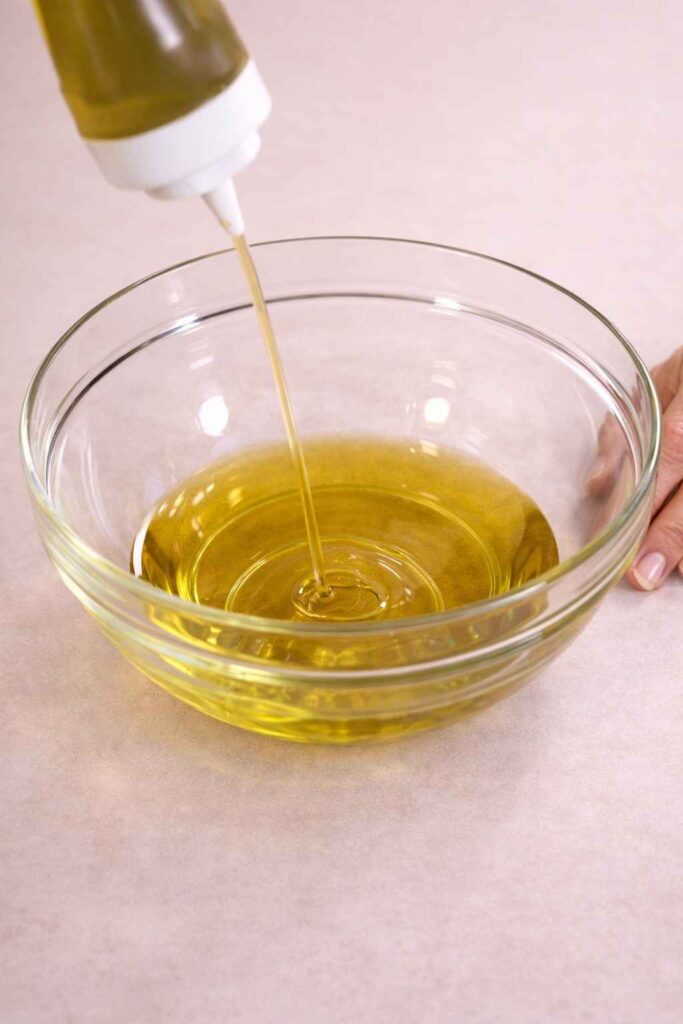
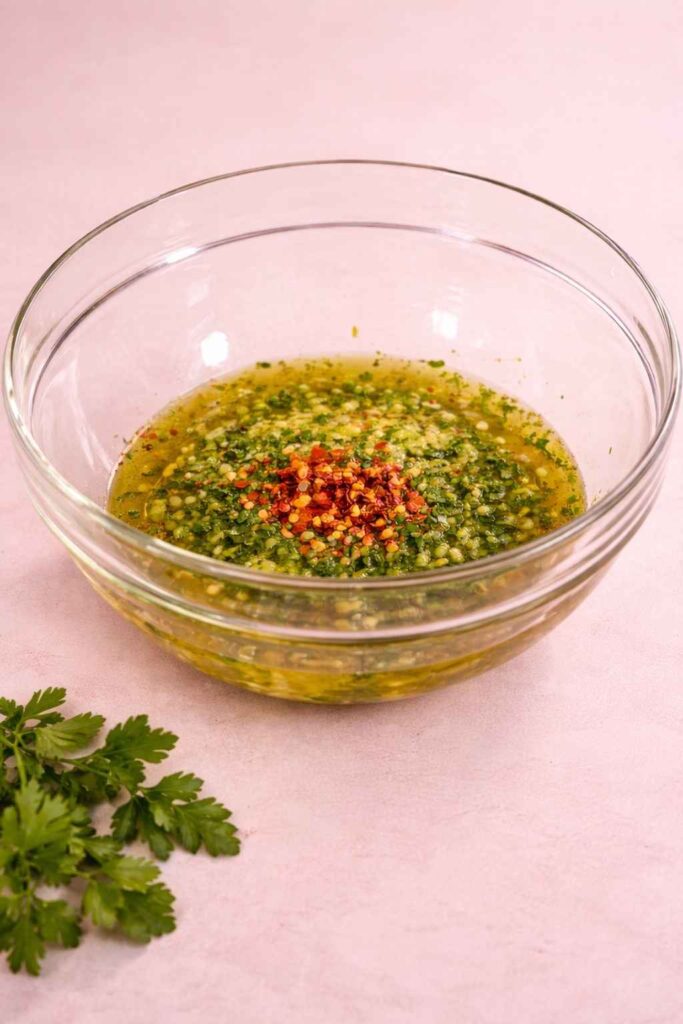
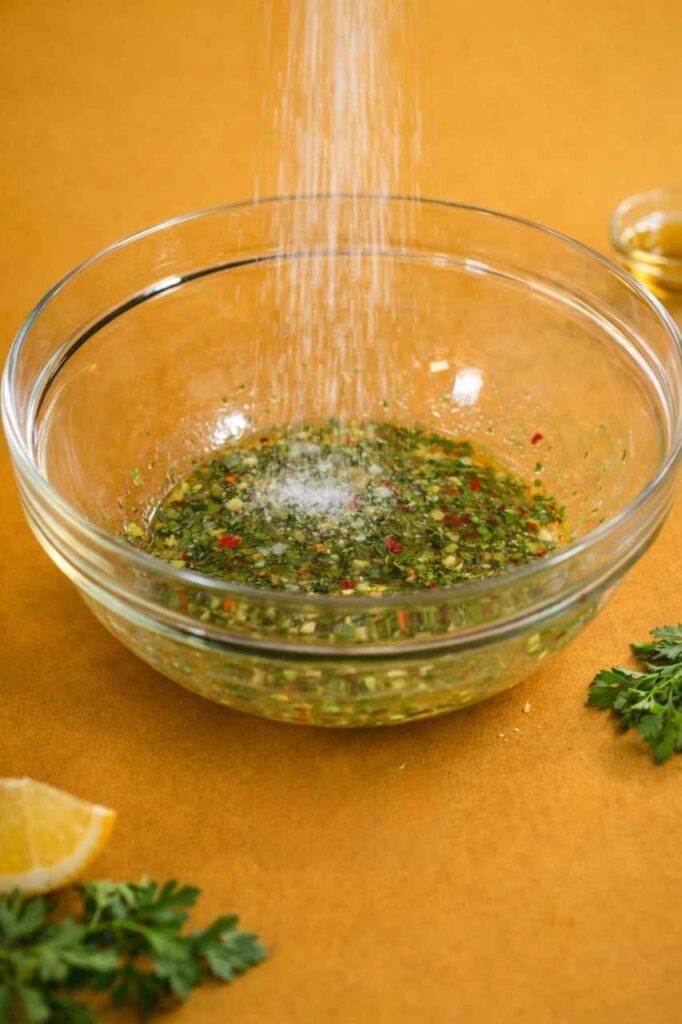
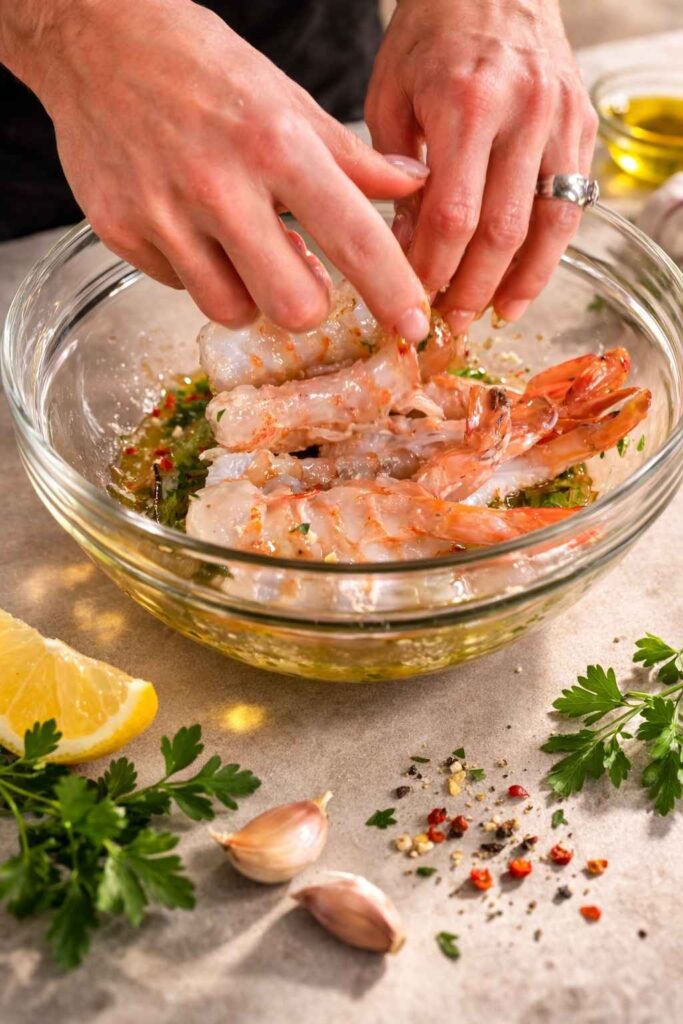
In a medium mixing bowl, combine two tablespoons of extra virgin olive oil, two finely minced garlic cloves, one tablespoon of chopped fresh parsley, the zest of one full lemon, one teaspoon of dried oregano, a generous pinch of crushed red pepper flakes, and a seasoning of salt to your taste. Whisk everything together until the marinade is uniform.
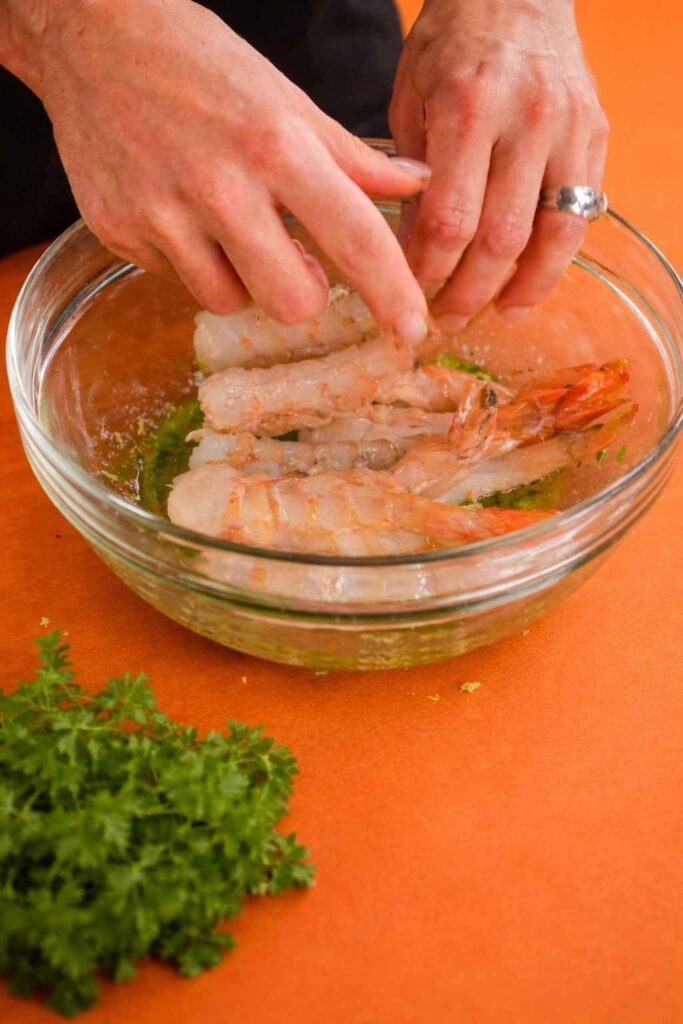
Add the butterflied, dried shrimp to the bowl and toss well, making sure the marinade coats every surface — the cut interior, the exterior, and the area around the tails. Be gentle; you do not want to break the butterflied shape you have just created. Let the shrimp sit in the marinade at room temperature for 10 to 15 minutes. This window is carefully chosen — long enough for the aromatics to penetrate the shrimp meat and for the garlic and oregano to begin releasing their essential oils into the olive oil, but short enough that the salt and acid from the lemon zest do not begin to chemically alter the shrimp’s protein structure the way a longer marinade would. Beyond 20 minutes, you risk the shrimp beginning to cure rather than simply marinate, which will change their texture after roasting.
Step 3: Build the Oreganata Topping
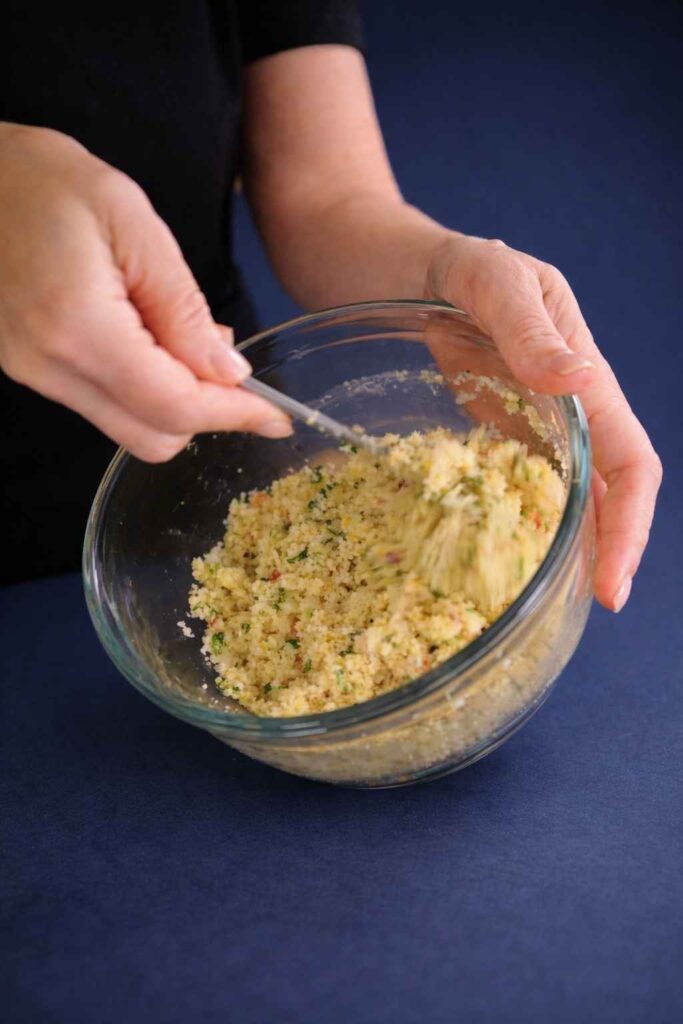
While the shrimp marinate, prepare the signature topping — the element that gives this dish its name, its texture, and much of its character. In a separate small bowl, combine half a cup of Panko breadcrumbs and two tablespoons of grated Parmesan cheese. Stir to mix these two dry ingredients together evenly.
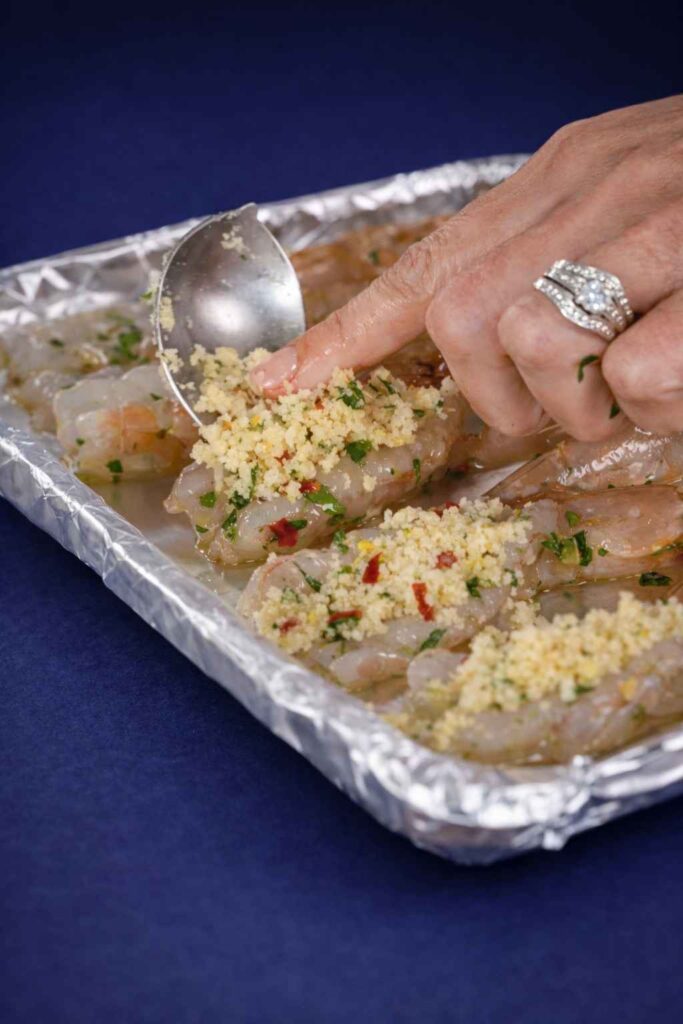
Now add the three tablespoons of melted unsalted butter, one more finely minced garlic clove, an additional pinch of red pepper flakes, a small amount of freshly chopped parsley, and another small amount of fresh lemon zest. Stir everything together thoroughly. The texture you are looking for is precisely described as “wet sand” — the mixture should be moist enough that when you press a small amount between your fingers, it clumps together and holds its shape, but it should still feel crumbly and loose, not dense or gluey. If the mixture feels too dry, add a small additional drizzle of melted butter, half a teaspoon at a time. If it feels too wet, add a pinch more Panko.
The Panko is a deliberate modern upgrade in this recipe. Traditional Italian breadcrumbs are finer and denser, and while they work, they tend to compact during roasting into a less textually interesting crust. Panko’s larger, flakier structure means more air pockets, which means more surface area for browning and a significantly more satisfying crunch in the final result. The Parmesan adds saltiness and, critically, contributes to browning through the Maillard reaction of its proteins — it essentially helps the topping turn golden faster and more evenly than breadcrumbs alone would.
Step 4: Assemble the Dish
Preheat your oven to 450°F (230°C) now if you have not already, as it needs to be fully up to temperature before the shrimp go in. Line a baking sheet with parchment paper — this prevents any stray breadcrumbs or butter from burning onto the pan surface and makes cleanup effortless.
Remove the shrimp from the marinade and arrange them on the prepared baking sheet with the cut, butterflied side facing up and the tail pointing away from you. Space them so they are not touching — crowding the pan traps steam, which is the enemy of a crispy topping. Each shrimp should have a small, flat, exposed surface ready to receive the topping.
Using a small spoon or simply your fingertips, take a generous amount of the breadcrumb mixture and mound it onto each butterflied shrimp. Do not be stingy. The topping should form a visible, domed layer on each piece. Once the topping is placed, use your fingertip or the back of a spoon to press it down firmly against the shrimp meat. This gentle pressing step is critical — it ensures the breadcrumb layer bonds to the surface of the shrimp and does not simply slide off or scatter on the baking sheet when the butter in the topping melts during roasting. The topping should feel secure and adhered, not loose.
Step 5: High-Heat Roasting and Final Broil
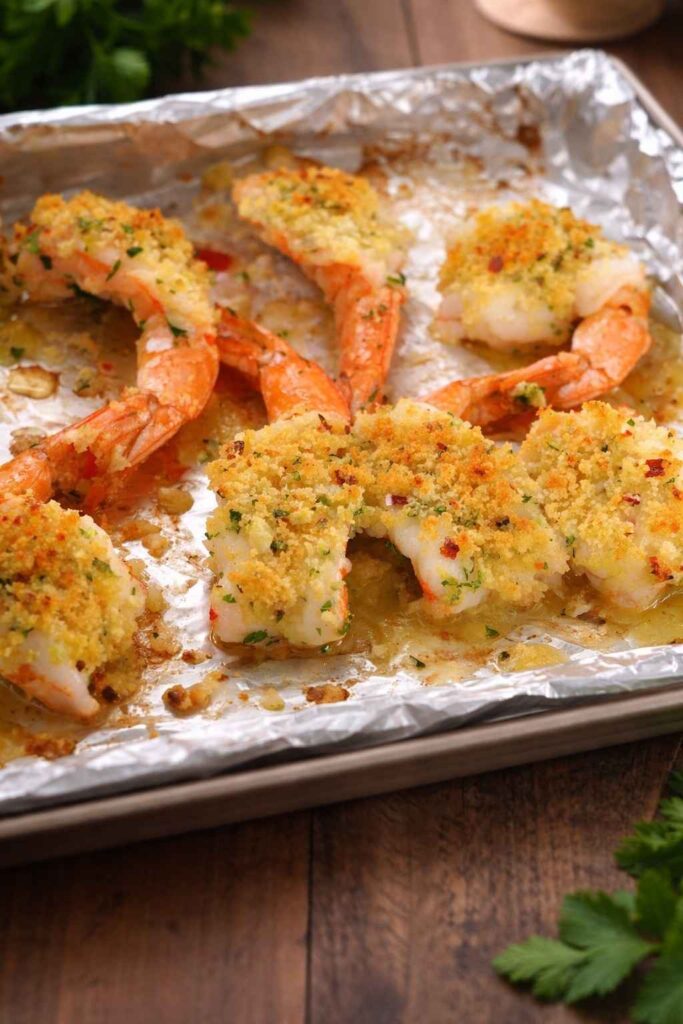
This is where everything comes together, and where precision pays off. Slide the baking sheet into your fully preheated 450°F oven. At this temperature, several things happen simultaneously and rapidly: the shrimp begin to cook from the residual heat of the pan below and the hot oven air around them, the butter in the topping melts and disperses through the Panko, and the Parmesan begins to brown. Roast for eight to ten minutes total, but start checking at the eight-minute mark.
The shrimp are done when they have turned opaque throughout and have curved into a loose “C” shape — the reliable visual indicator of properly cooked, not overcooked, shrimp. Resist any temptation to leave them in longer “just to be safe.” Overcooked shrimp tighten into a hard “O” shape and become rubbery and dry in a matter of seconds of additional heat exposure.
In the final 60 seconds of cooking, switch your oven to broil on high. Position the rack so the shrimp are approximately four to six inches from the broiler element. Watch the pan continuously during this broil — do not walk away, do not check your phone. The broiler applies intense, direct top-down radiant heat that rapidly caramelizes the surface of the Panko topping, pushing it from pale golden to deep amber with a satisfying crunch. One minute is usually sufficient. Remove the pan the moment the topping reaches the color you want, as it will continue to cook briefly from residual heat even after it leaves the oven.
Step 6: Plate and Serve
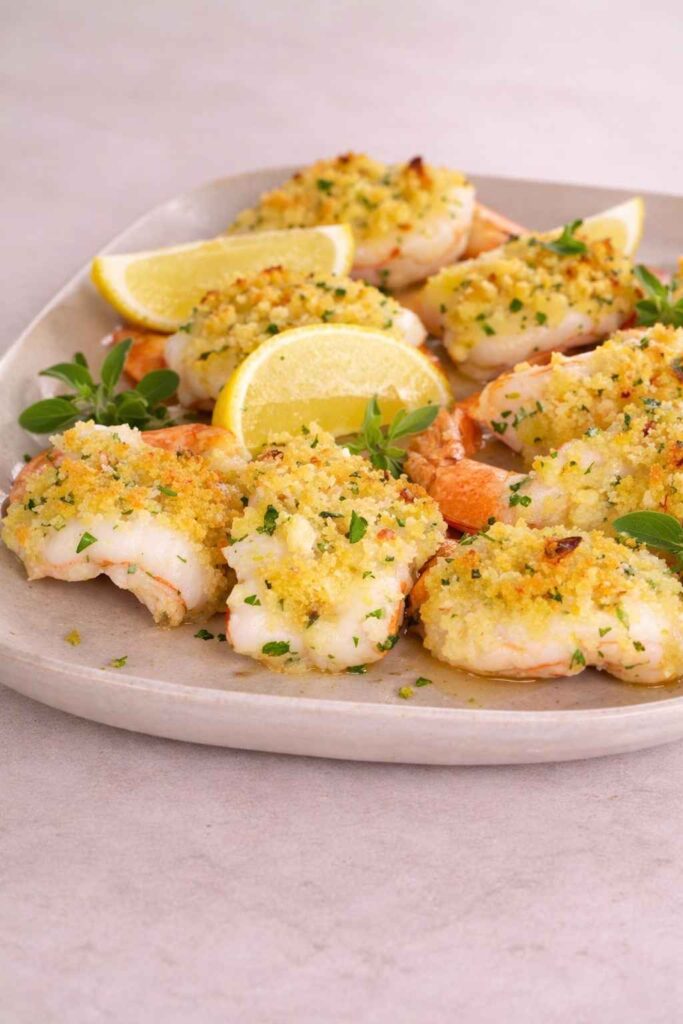
Transfer the shrimp immediately to a warmed serving platter using tongs or a spatula, being careful not to disturb the topping. Arrange them neatly, tails pointing outward for visual appeal. Tuck lemon wedges between and around the shrimp — guests will squeeze these over the top just before eating, and the fresh acid of the lemon juice cuts beautifully through the richness of the butter and cheese in the crust. If you are serving a lemon butter dipping sauce alongside, place it in a small ramekin at the center of the platter. Serve immediately; this dish does not wait well and is at its absolute peak in the first two to three minutes after it leaves the oven.
Shrimp Oreganata
Butterflied shrimp with a lemony Parmesan-Panko crust—roasted hot, finished under the broiler
- 1 lb jumbo/colossal shrimp, peeled & deveined (tails on)
- 2 tbsp extra-virgin olive oil
- 2 garlic cloves, minced
- 1 tbsp fresh parsley, chopped
- Zest of 1 lemon
- 1 tsp dried oregano
- Pinch crushed red pepper flakes
- Salt, to taste
- ½ cup Panko breadcrumbs
- 2 tbsp grated Parmesan
- 3 tbsp unsalted butter, melted
- 1 garlic clove, minced
- Extra parsley + lemon zest
- Pinch red pepper flakes
- Lemon wedges
- Optional: lemon butter for dipping
Clean & Butterfly
Devein, then cut deeper along the back to butterfly (don’t cut through). Open flat; pat very dry.
Quick Marinade
Toss shrimp with olive oil, garlic, parsley, lemon zest, oregano, red pepper flakes, and salt. Rest 10–15 min.
Make “Wet Sand” Topping
Mix Panko + Parmesan. Stir in melted butter, garlic, parsley, lemon zest, and flakes until clumpy but crumbly.
Assemble
Heat oven to 450°F (230°C). Arrange shrimp cut-side up on lined sheet. Mound topping on each; press gently to adhere.
Roast + Fast Broil
Roast 8–10 min (start checking at 8). Broil high for ~60 sec to deepen color—watch nonstop.
Serve
Transfer carefully so topping stays on. Serve hot with lemon wedges (and optional lemon butter).
Conclusion
Shrimp Oreganata is proof that Italian-American cooking, at its best, is not about complexity or long preparation times — it is about understanding your ingredients and treating them with respect and precision. The butterfly cut maximizes the shrimp’s surface area and ensures even cooking. The 15-minute marinade builds aromatic depth without compromising texture. The Panko and Parmesan topping, pressed firmly and built to the exact right consistency, delivers a crust that is genuinely extraordinary: golden, buttery, garlicky, and crackling with every bite. And the high-heat roast followed by a brief broil produces results in under 10 minutes that would take a line cook at an Italian restaurant the same amount of time to achieve with their professional equipment.
From a home cooking and culinary SEO standpoint, this recipe fills a very specific and important gap: it is the dish that proves you do not need lobster, expensive cuts of fish, or elaborate preparation to create a genuinely special seafood experience. The total cost of ingredients for four servings hovers well below what a single plate of Shrimp Oreganata would cost at a quality restaurant, and the techniques you have learned here — butterflying, marinating, building a breadcrumb crust, and controlling a high-heat oven roast — will serve you in countless other recipes for the rest of your cooking life. Make this once, and it will permanently earn a place in your go-to dinner party repertoire. Make it twice, and you will be teaching others how to do it. That is the mark of a truly great recipe: it does not just feed people. It turns the person who makes it into a better cook.
Common Questions About Shrimp Oreganata Recipe
Why are colossal or jumbo shrimp specifically recommended over smaller sizes?
Colossal shrimp, typically classified as U/10 or U/15 (meaning fewer than 10 or 15 per pound), provide enough body mass to butterfly effectively and hold a generous mound of topping without becoming overwhelmed by it. Smaller shrimp cannot be butterflied as cleanly, cook in less time (increasing the risk of the topping burning before the interior is done), and provide less satisfying textural contrast between the shrimp meat and the crust. The size of the shrimp is not a luxury choice but a functional one.
Why is dried oregano used in the topping rather than fresh?
Drying concentrates oregano’s essential oils — particularly carvacrol and thymol, the compounds responsible for its earthy, slightly bitter, medicinal aroma — making dried oregano significantly more potent per unit of volume than fresh. Fresh oregano, by contrast, has a higher water content and a somewhat lighter flavor profile that dissipates quickly under high oven heat. For a breadcrumb topping that needs to deliver bold herbal flavor in a 10-minute roast, dried oregano is the technically superior choice.
Why does the recipe specify unsalted butter rather than salted butter?
The Parmesan cheese in the topping already contains significant sodium, and the marinade is salted as well. Using salted butter on top of these existing sodium sources would risk making the dish uncomfortably salty overall. Unsalted butter gives you complete control over the final salt level. You can always add more salt at any stage, but you cannot remove it once it is in the dish.
Why is it important to press the breadcrumb topping firmly onto the shrimp before roasting?
The Panko topping is a loose, crumbly mixture that — prior to roasting — has no structural integrity on its own. The only thing holding it to the shrimp in the first minutes of roasting is the adhesion created by pressing it into direct contact with the moist, marinated surface of the shrimp meat and the slight tackiness of the melted butter. Without pressing, the dry edges of the topping lose contact with the shrimp surface immediately as the pan heats up, and the topping slides off onto the baking sheet rather than forming a crust on the shrimp.
Can white wine be incorporated into this recipe, and what would it contribute?
Yes. A small splash — roughly two tablespoons — of dry white wine such as Pinot Grigio or Sauvignon Blanc can be drizzled into the baking pan around (not over) the shrimp before roasting. In the oven, the wine steams, creating a slightly moist aromatic environment at the base of the pan. This steam carries wine-derived flavor compounds up and around the shrimp during the initial roasting phase, adding a subtle acidity and complexity to the overall flavor profile. The alcohol evaporates entirely during cooking, leaving only the flavor.
What is the visual indicator that shrimp are perfectly cooked versus overcooked?
A correctly cooked shrimp curls into a loose “C” shape as its muscles contract from heat exposure. The meat is uniformly opaque throughout — no translucent gray remaining at the center — but has not tightened beyond that loose curve. An overcooked shrimp curls further, tightening into a compact “O” or circular shape as the muscle fibers continue to contract well beyond their optimal cooking point. The moment you see “C” shapes, remove the pan from the oven immediately.
Discover an even more extensive selection of culinary creations spanning every meal and occasion imaginable. Begin your day with our five egg breakfast ideas, chili crisp egg avocado toast, and protein powder cinnamon rolls. For healthier morning choices, try healthy oatmeal apple banana cake, coconut cove baked oatmeal, and blueberry apple morning oats cake. For lunch, savor our ultimate big mac salad, quick ham and cheese pinwheels, crispy potato tacos, and vegan bulgogi pinwheels. Our impressive main courses include Vietnamese lemongrass chicken, honey balsamic pomegranate glazed chicken, mushroom stuffed chicken breast, baked French onion chicken, and low carb Tuscan chicken bake. Meat enthusiasts will delight in three Italian style meatloaves, pan seared pork tenderloin in creamy peppercorn gravy, citrus glazed roasted pork ribs with creamy mushroom potatoes, beef bourguignon, sausage ragu, and Korean sweet spicy beef meatballs. For pasta and seafood lovers, explore shrimp aglio e olio, creamy chicken meatball orzo, red pesto gnocchi, one pan Tuscan orzo with chicken, creamy peri peri chicken pasta, teriyaki pork noodles, one pan chicken chorizo orzo, and brown butter and sage mezzi rigatoni. Our soup collection spans creamy broccoli and garlic soup, carnival squash soup with turmeric, split pea soup, ham bean soup, hearty vegetable barley soup, creamy asparagus soup, French cream of chestnut soup, classic Provençal fish soup, New England creamy clam chowder, and Manhattan clam chowder soup. Vegetarian delights include vegan ramen, quick vegan lasagna, vegan cabbage rolls, spicy maple tofu rice bowl, and vegan chicken and dumpling soup. Side dishes shine with garlic butter cheese bombs, oven baked potatoes with meatballs and cheese, broccoli recipes that taste amazing, oven roasted crispy potato, honey butter cornbread, and 3-ingredient carnivore bun. Appetizers feature the ultimate crispy buffalo chicken wonton cups, the ultimate buffalo chicken cauliflower dip, the ultimate buffalo chicken garlic bread, garlic parmesan wings, brown sugar bacon wrapped smokies, Philly cheesesteak stuffed rolls, bacon cheeseburger dip, and pepperoni pizza dip. Desserts range from blueberry tiramisu and heavenly molten mini chocolate lava cakes to thin and chewy chocolate chip cookies. Special occasion treats include red velvet cookies, Valentine heart cookies, ombre heart buttercream cake, and homemade Valentine’s day mini cake delight. Keto enthusiasts can enjoy keto schnitzel, sugar free keto German chocolate cake, keto yogurt almond cake, keto beef roulades, fluffy keto cloud bread, keto muffins, Korean marinated eggs, and low carb cottage cheese ice cream. Health-conscious options also feature sugar free oat cakes and sugar free banana oat brownies. For cocktail lovers, explore our collection including classic whiskey sour, hot apple whisky lime cocktail, easy margarita, Paloma tequila cocktail, vodka cranberry cocktail, Angel Face cocktail, Mandarin Sunrise cocktail, Aperol Spritz, homemade Piña Colada, virgin Piña Colada mocktail, Moscow Mule, Old Fashioned, Manhattan cocktail, Pomegranate Gimlet, Southside gin cocktail, Paper Plane cocktail, Mango Chilli Margarita, and our ten best rum cocktails. This comprehensive collection ensures there’s a perfect recipe for every craving, celebration, and culinary occasion.