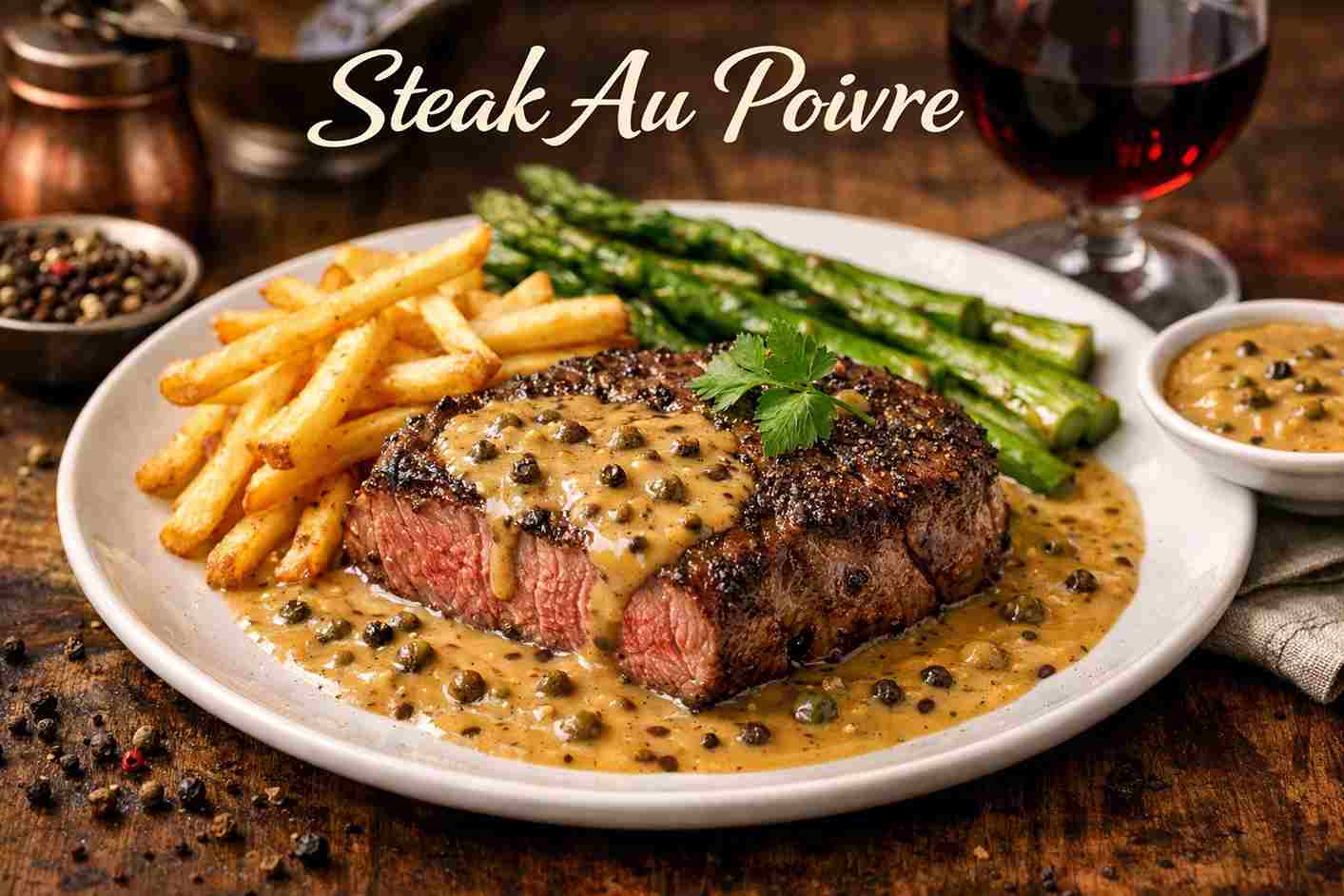
There are few dishes in the world of French cuisine that command as much admiration and appetite as Steak Au Poivre. Translated literally as “pepper steak,” this iconic bistro classic has graced the tables of Parisian restaurants for well over a century, and for very good reason. It is bold, rich, aromatic, and deeply satisfying — a dish that turns a simple cut of beef into something truly extraordinary. If you have ever sat down at a French bistro and watched a plate of steak arrive draped in a glossy, cognac-laced cream sauce, you already know the power this dish holds.
What makes Steak Au Poivre so special is the harmony of contrasts at play. The fiery, crackling crust of coarsely cracked peppercorns meets the silky tenderness of a perfectly seared filet mignon. The sharp, boozy warmth of cognac is mellowed by heavy cream into a sauce so luxurious it seems almost indulgent. Every single element earns its place on the plate.
The best part? You do not need to book a flight to Paris or make a reservation at a fine-dining restaurant to experience it. With the right technique, a handful of quality ingredients, and a trusty cast-iron skillet, you can recreate this legendary dish in your own kitchen tonight. This complete, step-by-step guide will walk you through everything you need to know — from selecting the right cut of beef to nailing the sauce reduction — so you can serve a flawless Steak Au Poivre every single time.
Recipe Overview
| Detail | Information |
|---|---|
| Cuisine | French |
| Course | Main Course |
| Difficulty | Intermediate |
| Servings | 4 |
| Prep Time | 20 minutes |
| Cook Time | 25 minutes |
| Calories per Serving | ~650 kcal |
What Is Steak Au Poivre?
Steak Au Poivre is a classic French preparation in which a steak — most traditionally filet mignon or New York strip — is encrusted with coarsely cracked black peppercorns, seared in a hot pan, and served with a rich pan sauce made from cognac, beef broth, and heavy cream. The dish originates from French bistro cooking, where bold flavors and simple, high-quality ingredients are valued above all else.
The peppercorn crust is not merely a seasoning. It forms a textural shell around the meat that sears and toasts in the hot fat, releasing complex, resinous, almost floral notes that ground black pepper simply cannot replicate. The sauce — built directly in the same pan using the leftover drippings — captures every bit of flavor the meat leaves behind and transforms it into something spectacular.
This dish is a perfect introduction to classic French cooking techniques including pan-searing, butter basting, flambéing, and sauce reduction. Once you master Steak Au Poivre, you will have unlocked a foundation of skills that applies to dozens of other restaurant-quality recipes.
Ingredients
| Ingredient | Quantity |
|---|---|
| Filet Mignon steaks | 4 (6 oz each) |
| Whole black peppercorns (or peppercorn mélange) | 2 tbsp |
| Shallot, finely minced | 1 medium |
| Unsalted butter | 2 tbsp |
| Canola oil | 1 tbsp |
| Cognac or brandy | 1/3 cup |
| Beef broth | 1/2 cup |
| Heavy cream | 3/4 cup |
| Brined green peppercorns (optional but recommended) | 1 tbsp |
| Kosher salt | To taste |
Ingredient Notes and Substitutions
The Steak: Filet mignon is the traditional choice for Steak Au Poivre because of its tender, buttery texture. However, a well-trimmed New York strip or ribeye works beautifully as well. Whichever cut you choose, aim for steaks that are at least 1.5 inches thick. A thinner steak will overcook before the crust has a chance to develop properly.
The Peppercorns: Always use whole peppercorns and crack them yourself. Pre-ground black pepper is too fine, burns easily, and lacks the bold, layered heat of freshly cracked peppercorns. A peppercorn mélange — combining black, white, pink, and green peppercorns — adds a more complex, nuanced flavor profile to the crust.
The Cognac: Cognac is the classic choice and delivers a warm, oaky depth to the sauce. If you do not have cognac on hand, a good-quality brandy or even bourbon makes a worthy substitute. Avoid cooking wines or low-quality spirits, as the sauce is built almost entirely around this ingredient.
The Green Peppercorns: Brined green peppercorns are the unsung hero of this recipe. They are softer, milder, and brinier than their dried counterparts, adding a bright, acidic pop that cuts through the richness of the cream. Do not skip them if you can find them.
Step-by-Step Instructions
Step 1: Prepare the Peppercorns
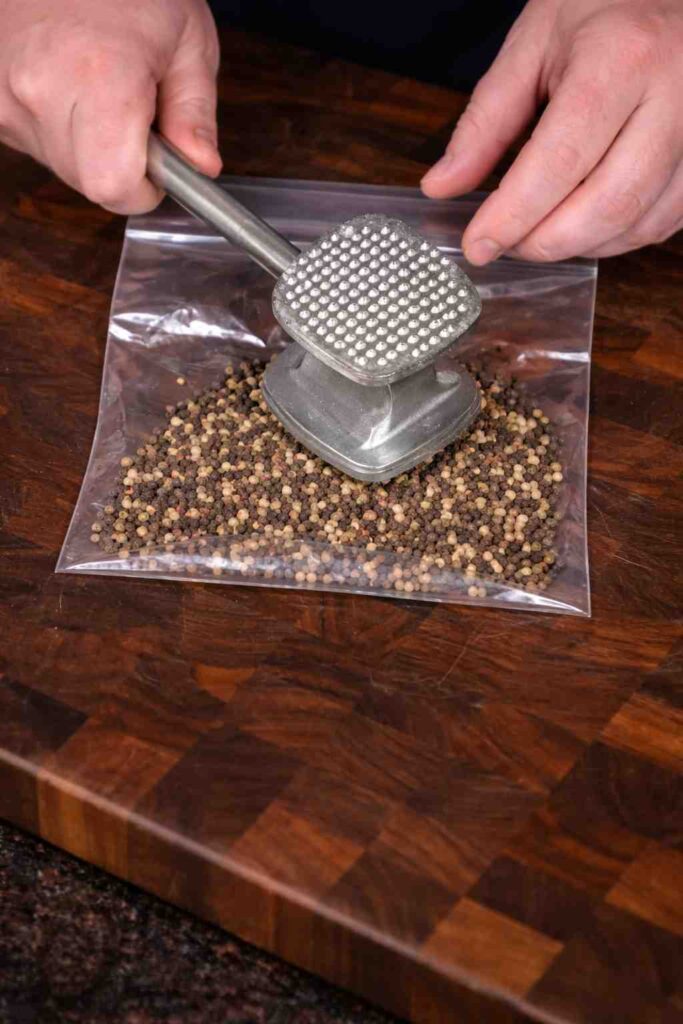
Place your whole peppercorns inside a zip-top bag and seal it tightly. Using a meat mallet, the bottom of a heavy skillet, or a rolling pin, crush the peppercorns into a coarse, uneven crack. You are not grinding them into a powder — you want chunky, irregular pieces that will form a real crust. Spread the cracked peppercorns out on a flat plate and set aside.
Step 2: Prepare and Crust the Steaks
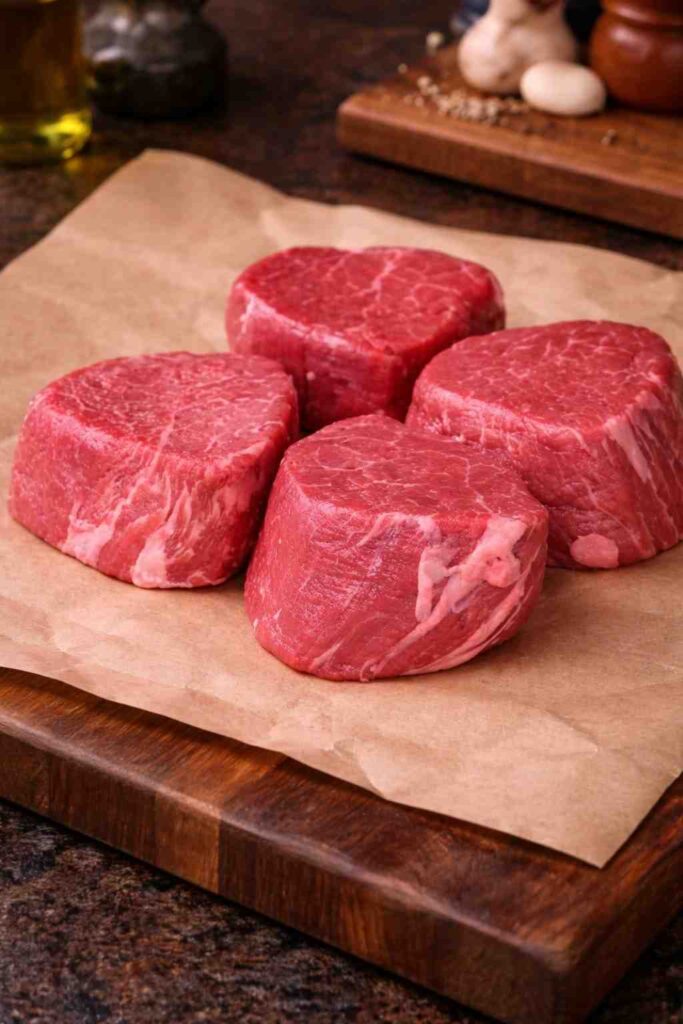
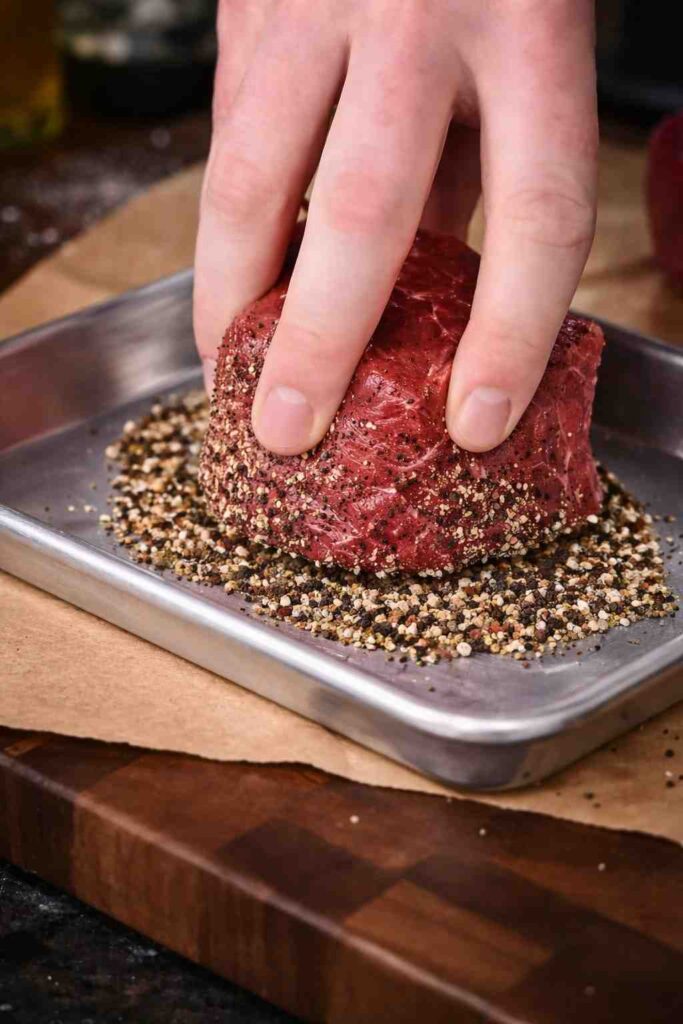
Remove the steaks from the refrigerator at least 30 minutes before cooking to bring them closer to room temperature. This ensures a more even cook throughout the meat. Pat the steaks completely dry on both sides using paper towels — moisture is the enemy of a good sear.
Season one side of each steak generously with kosher salt. Then press that seasoned side firmly down into the cracked peppercorns, applying steady pressure to embed them into the surface of the meat. Season the other side with salt only, leaving it free of peppercorns.
Step 3: The Initial Sear
Heat the canola oil in a heavy-bottomed skillet — ideally cast iron or stainless steel — over medium-high heat until the oil is shimmering and just beginning to smoke. Carefully place the steaks into the pan with the unpeppered side facing down. This is intentional. By searing the clean side first, you develop a deep, even mahogany crust without risking burning the peppercorns before the meat is ready to flip.
Sear without moving the steaks for approximately 3 to 4 minutes, allowing a proper crust to form.
Step 4: Butter Baste the Peppered Side
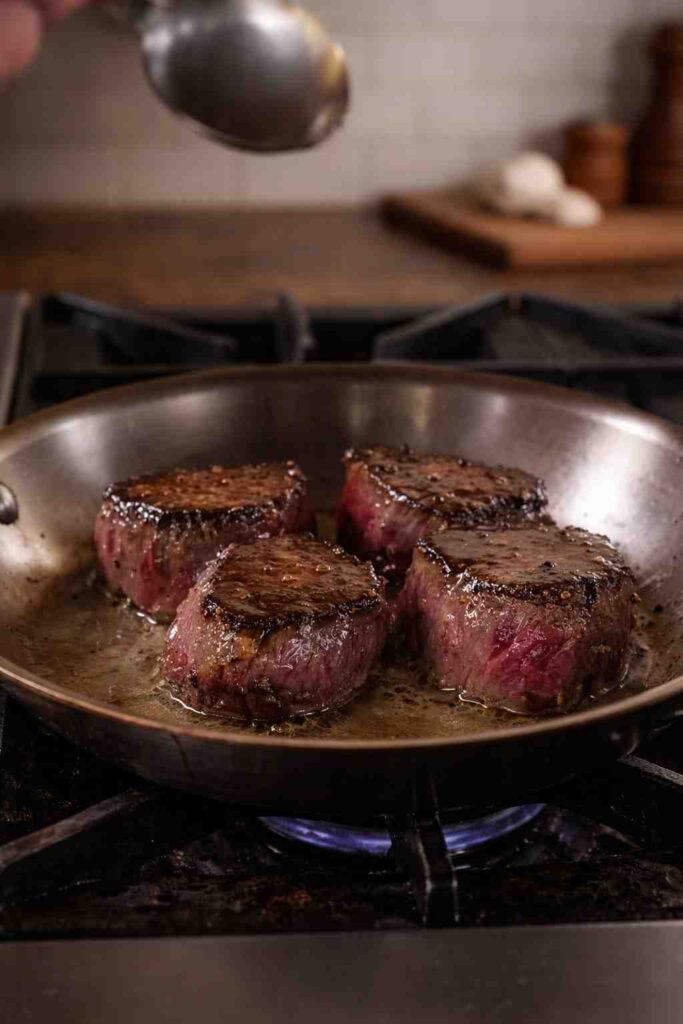
Flip the steaks so the peppered crust is now facing down. Immediately add the unsalted butter to the pan. As it melts and begins to foam, tilt the pan slightly and use a large spoon to continuously baste the top of the steaks with the hot, aromatic butter. This technique, known as arroser in French cooking, simultaneously cooks the top of the steak with reflected heat while keeping the peppercorns from burning in direct contact with the pan surface.
Continue basting for another 2 to 3 minutes, depending on thickness and desired doneness.
Step 5: Finish in the Oven
For a perfectly even cook on thick filets, transfer the steaks to a wire rack set over a rimmed baking sheet. Place them in a preheated oven at 400°F (200°C) and cook until they reach your preferred internal temperature. Use an instant-read thermometer for accuracy.
| Doneness | Internal Temperature |
|---|---|
| Rare | 120–125°F (49–52°C) |
| Medium Rare | 130–135°F (54–57°C) |
| Medium | 140–145°F (60–63°C) |
| Well Done | 160°F+ (71°C+) |
Once done, remove the steaks and allow them to rest on the rack for at least 5 minutes before plating. Resting allows the juices to redistribute throughout the meat rather than spilling out the moment you cut into it.
Step 6: Build the Pan Sauce
Do not clean the skillet. Those dark, caramelized bits stuck to the bottom — called fond — are concentrated flavor and the very foundation of your sauce. Return the pan to medium heat and add the finely minced shallots. Sauté, stirring frequently, for about 2 minutes until they are soft, translucent, and just beginning to turn golden.
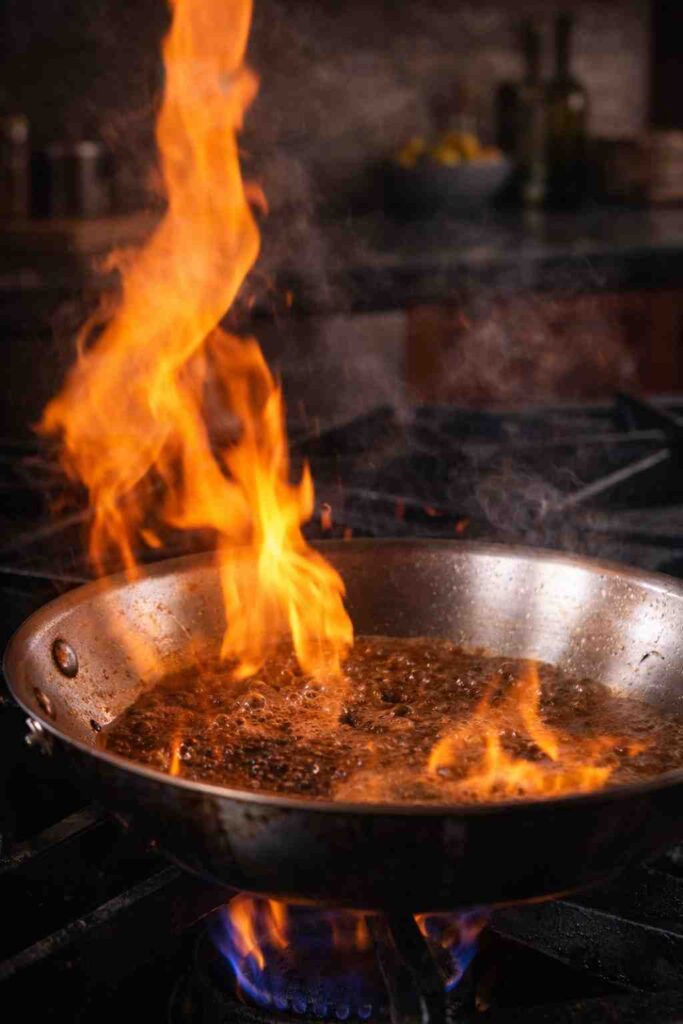
Remove the pan from the heat entirely. Add the cognac to the pan. At this point, you have two options: carefully tilt the pan toward the flame to flambé the cognac for a dramatic effect and rapid alcohol burn-off, or simply let it simmer over medium heat until the sharp alcohol aroma fades, which takes about 2 minutes. Either method works perfectly well.
Step 7: Add the Cream and Reduce
Return the pan to medium heat and stir in the beef broth. Let it simmer for a minute to begin picking up all of the fond from the bottom. Then pour in the heavy cream and add the brined green peppercorns. Stir everything together and allow the sauce to simmer gently, uncovered, for approximately 8 to 10 minutes. You are looking for a sauce that thickens enough to coat the back of a spoon cleanly when you draw a finger through it.
Taste and adjust seasoning with salt as needed. The sauce should be deeply savory, creamy, and fragrant with the warming notes of cognac.
Step 8: Plate and Serve
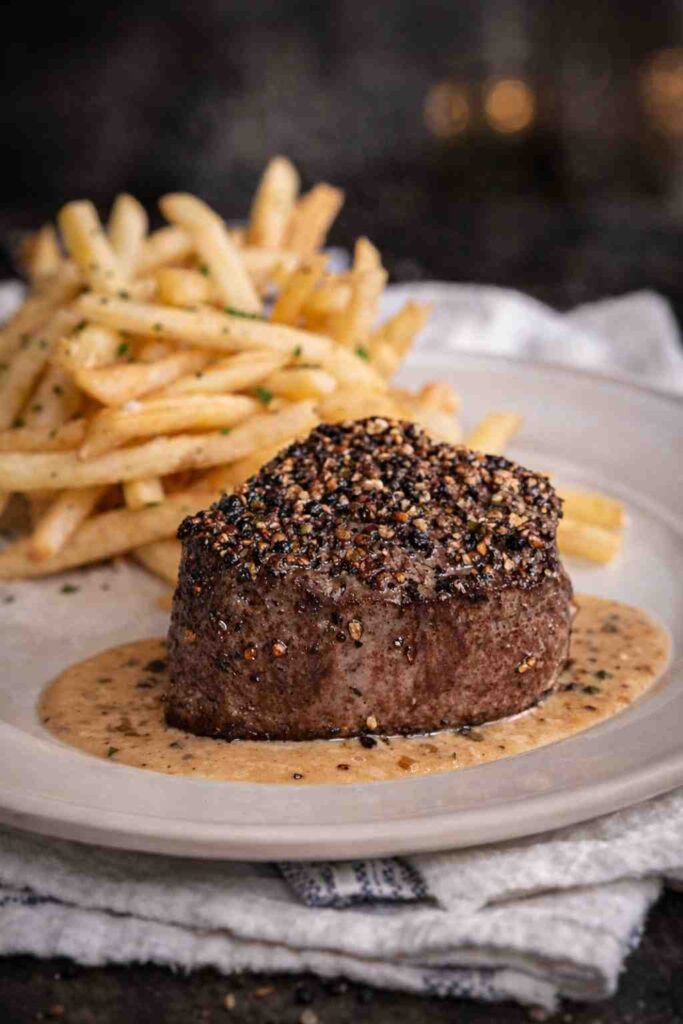
Spoon a generous pool of sauce directly onto the center of each warmed plate. Set the rested steak on top of the sauce rather than pouring it over the meat. This crucial plating choice keeps the peppercorn crust perfectly crispy rather than letting it soften and steam under a blanket of cream sauce. Serve immediately alongside classic steak frites, buttery mashed potatoes, or a simple green salad.
Expert Tips for the Best Steak Au Poivre
Use a heavy pan. Cast iron or stainless steel retains and distributes heat far better than non-stick cookware. A proper sear requires a screaming-hot pan, and lightweight pans lose temperature the moment the cold steak hits the surface.
Do not crowd the pan. If your skillet cannot comfortably fit all four steaks without them touching, sear in two batches. Crowding causes steaming instead of searing.
Let the fond do the work. Resist the urge to wipe the pan between the sear and the sauce. Every dark speck left in that pan is flavor waiting to be dissolved into your sauce.
Measure your alcohol carefully. A third of a cup may seem modest, but cognac is potent and the sauce should complement the steak, not overpower it.
Conclusion
Steak Au Poivre is the kind of recipe that rewards you far beyond the time and effort you invest in it. It is a dish rooted in the timeless traditions of French bistro cooking — honest, unfussy, and completely dependent on technique and quality ingredients rather than fancy equipment or exotic components. Every step in this recipe, from cracking the peppercorns to building the pan sauce, teaches you something valuable about how heat, fat, and flavor interact in a professional kitchen.
Once you have cooked this dish once, you will find yourself returning to it again and again. It is the perfect centerpiece for a romantic anniversary dinner, an impressive option when entertaining guests, or even just a way to make an ordinary Saturday night feel like something worth dressing up for. The cognac cream sauce alone is worth the price of admission — silky, complex, and deeply satisfying in a way that very few sauces manage to be.
Do not be intimidated by the flambé or the sauce reduction. These are simply techniques, and techniques are learned by doing. Your first Steak Au Poivre may not be perfect, but it will still be exceptional — and your second one will be even better. That is the quiet magic of classic French cooking. It meets you where you are and pushes you forward with every attempt.
So go ahead. Heat that skillet, crack those peppercorns, and pour yourself a small glass of cognac for the recipe — and perhaps one for yourself as well. A dish this good deserves to be enjoyed from start to finish. Bon appétit!
🍽️ Explore More Recipes
Browse our collection by category