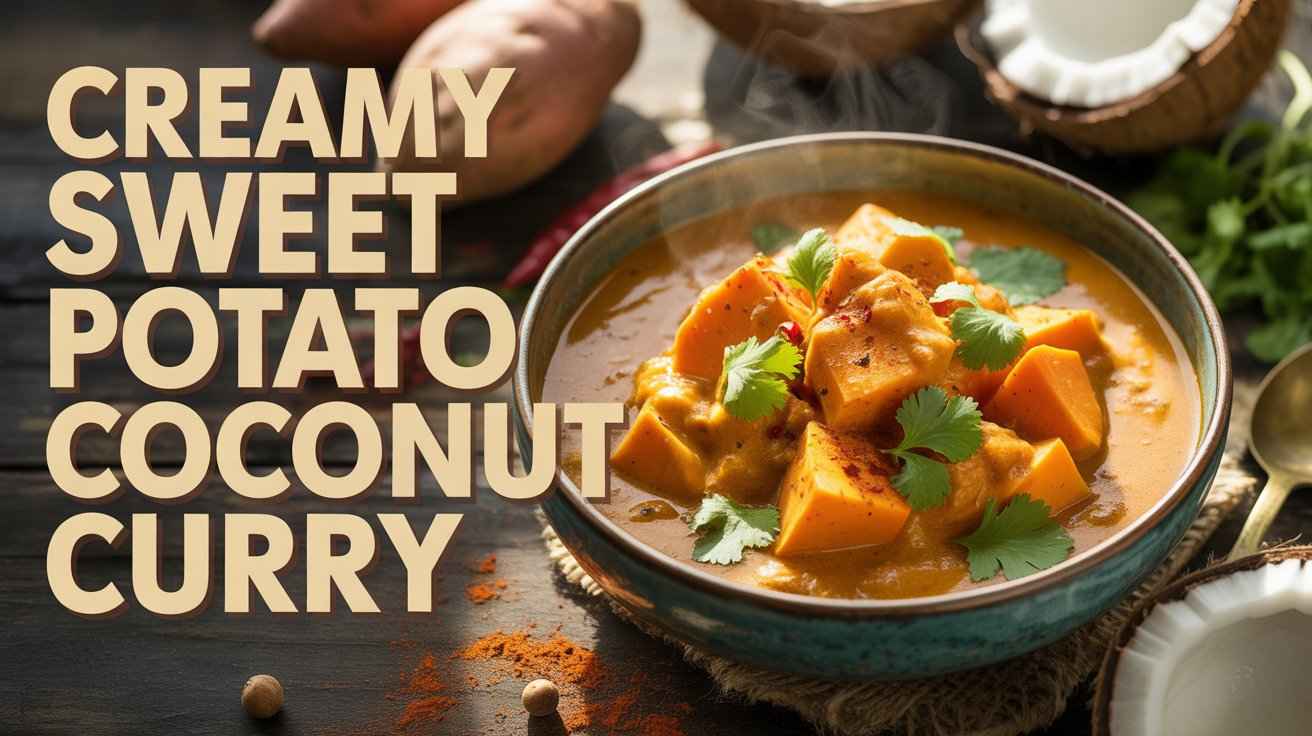
This Sweet Potato Coconut Curry Soup is the kind of recipe that feels like it was made for cold evenings and tired afternoons — the sort of meal that warms you from the inside out, fills the whole house with an incredible aroma while it cooks, and delivers genuine nourishment alongside pure, unapologetic comfort. What makes it so special is the way every ingredient plays its part: sweet potatoes bring a natural earthiness and starchy body that blends into an almost impossibly silky texture, fresh ginger adds brightness and zesty heat, garlic and onion build a deep aromatic foundation, curry powder weaves warmth and complexity throughout, and full-fat coconut milk, stirred in right at the end, transforms everything into something luxuriously creamy, rich, and deeply satisfying — all without a drop of dairy and all in under 45 minutes.
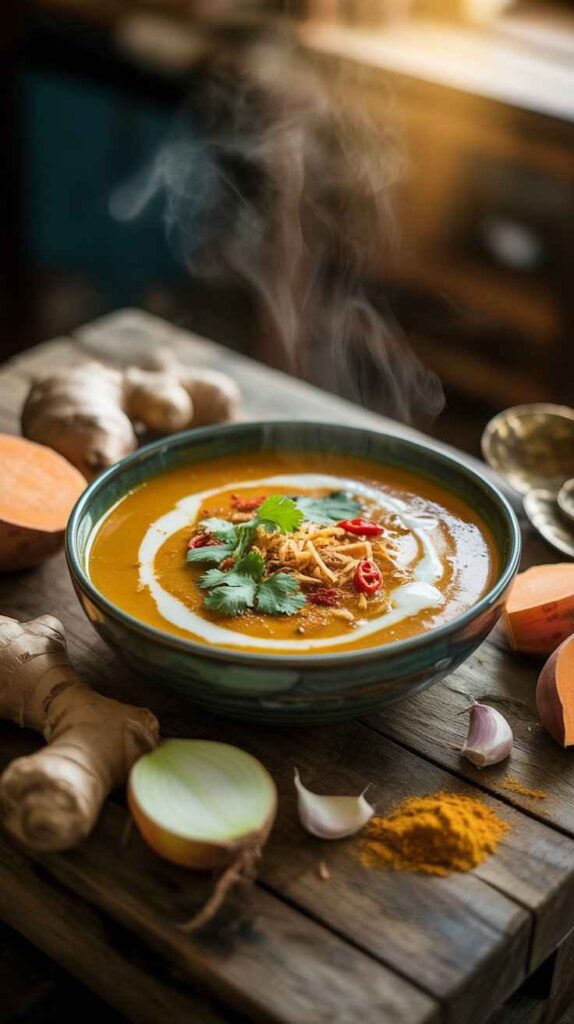
It is also one of the most accessible and forgiving soups you can make, requiring no specialist equipment, no hard-to-find ingredients, and no advanced cooking skills, just three simple phases: building a flavor base, simmering until tender, and blending to a smooth finish. Nutritionally, it punches well above its weight, delivering beta-carotene, vitamin C, potassium, fiber, anti-inflammatory ginger, healthy medium-chain fatty acids from the coconut milk, and the antioxidant power of turmeric-rich curry powder all in a single bowl. And because it keeps in the refrigerator for up to five days and freezes beautifully, it is one of the smartest dishes you can add to your weekly meal prep — equally at home as an elegant dinner party starter, a relaxed family meal, or a warming flask lunch on the go.
Recipe Details
| Detail | Info |
|---|---|
| Cuisine | Fusion / Healthy Comfort |
| Course | Soup |
| Difficulty | Easy |
| Servings | 4–6 |
| Prep Time | 15 minutes |
| Cook Time | 25–30 minutes |
| Calories Per Serving | ~250–300 kcal |
Ingredients
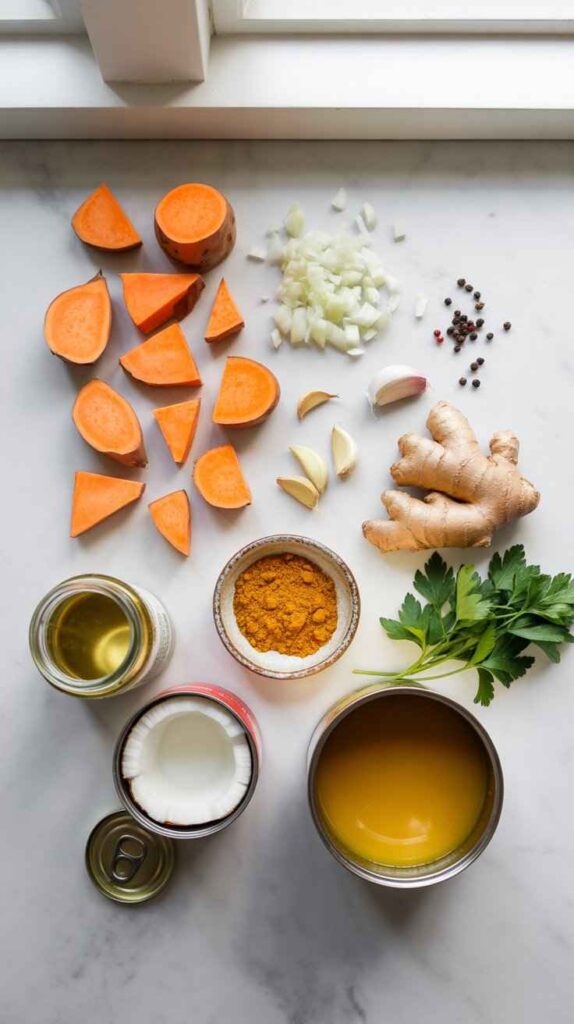
- 3 to 4 large sweet potatoes, peeled and chopped into even pieces
- 1 white onion, roughly chopped
- 3 to 4 cloves of garlic, minced
- 1 piece of fresh ginger (approximately 2 to 3 inches), peeled and finely chopped
- 2 tbsp coconut oil
- 1 to 2 tbsp curry powder (adjust to your heat preference)
- 1 quart (approximately 4 cups / 950 ml) chicken broth or vegetable broth
- 1 can (400 ml / 13.5 oz) full-fat coconut milk
- Salt and pepper, to taste
To garnish (optional but highly recommended):
- A dollop of crème fraîche, sour cream, or goat cheese
- Fresh parsley, chopped
- A crack of black pepper
Step-by-Step Instructions
Step 1: Build the Aromatic Flavor Base
Start by heating 2 tablespoons of coconut oil in a large stockpot or Dutch oven over medium heat. Allow the oil to melt fully and the pan to come up to temperature before adding any ingredients — a properly preheated pan means the aromatics will soften and caramelize rather than stew in cold fat.
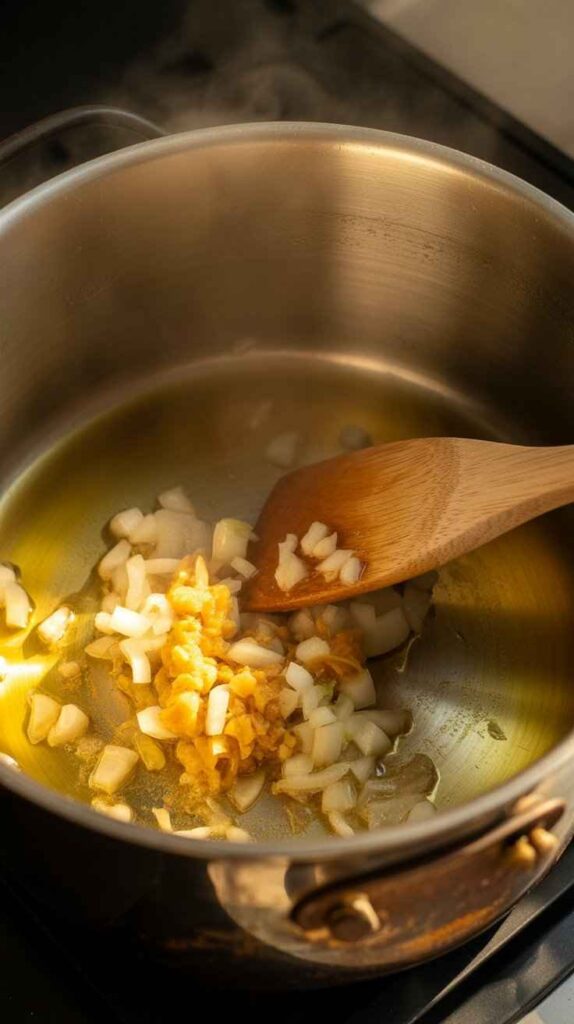
Add the chopped white onion, minced garlic, and freshly chopped ginger all at once. Stir everything together and sauté over medium heat for 5 to 7 minutes, stirring occasionally. You are looking for the onion to become completely translucent and soft, and for the garlic and ginger to become intensely fragrant. The smell at this stage should already be remarkable — warm, aromatic, and deeply inviting. Do not rush this step by turning up the heat, as properly softened aromatics create a much more rounded and flavorful base than ones that have been rushed or slightly scorched.
Once the onion is soft and the garlic and ginger are fragrant, add the curry powder directly into the pot. Stir everything together constantly for approximately 60 seconds, making sure the spice is coating the softened vegetables and cooking in the residual fat in the pan. This technique — known as blooming spices — is one of the most important steps in the entire recipe. When curry powder is cooked briefly in oil rather than added directly to liquid, the heat releases the essential oils locked inside the spice blend, dramatically deepening the aroma, color, and flavor. The pot will smell absolutely incredible at this point and the color will deepen to a rich, warm golden-orange.
Step 2: Add the Potatoes and Simmer
Pour in the chicken or vegetable broth and stir well, scraping up any spiced bits from the bottom of the pan. Add the peeled and chopped sweet potatoes, making sure they are submerged in the liquid. If the broth does not quite cover the potatoes, add a small extra splash until they are just covered — this ensures even cooking throughout.
Bring the pot to a gentle simmer over medium heat, then reduce the heat to medium-low, cover with a lid, and cook for 15 to 20 minutes. The potatoes are ready when they are completely fork-tender — a knife or skewer should slide through the center of the largest piece with absolutely no resistance whatsoever. Undercooked sweet potato will create a grainy, unpleasant texture when blended, so it is worth taking a moment to test a few pieces from different parts of the pot before moving on to the next step.
If you want to add an extra layer of caramelized depth to the soup, consider roasting the sweet potatoes in a hot oven with a drizzle of oil and a pinch of salt before adding them to the broth. Pre-roasted sweet potatoes bring a concentrated, slightly caramelized sweetness to the soup that raw potatoes cannot replicate. It adds about 25 minutes to the total preparation time, but the flavor improvement is considerable and well worth it if you have the time.
Step 3: Blend to a Silky Smooth Consistency
Once the sweet potatoes are completely tender, remove the pot from the heat. Using an immersion blender — also called a stick blender — blend the soup directly in the pot, working in circular motions and making sure the blender head stays fully submerged to avoid hot liquid splashing. Continue blending until the soup is completely smooth, uniformly colored, and absolutely velvety in texture with no lumps or chunks remaining.
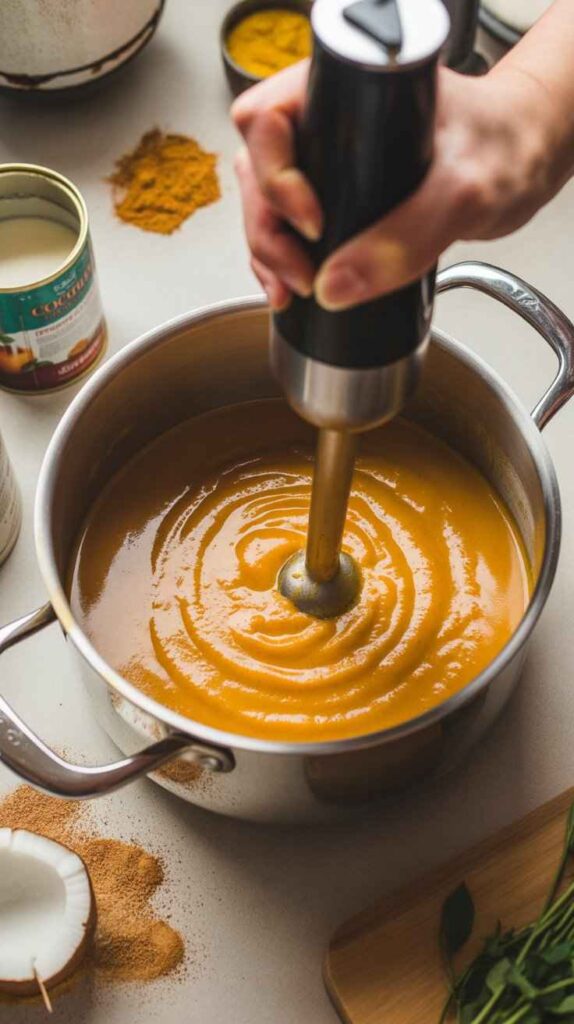
If you do not have an immersion blender, transfer the soup in batches to a standard countertop blender. When blending hot liquids in a standard blender, never fill the jug more than halfway, always remove the center piece from the lid and hold a folded kitchen towel over the opening instead, and start on the lowest speed to allow steam to escape gradually. Overfilling a blender with hot liquid is a genuine safety hazard, so take your time and work in small batches.
After blending, taste the soup and adjust the seasoning with salt and pepper as needed. At this stage, the soup will look beautifully smooth and have a deep, spiced flavor — but it will not yet have the final creamy richness that makes this recipe so special.
Step 4: Stir in the Coconut Milk
Return the pot to low heat and pour in the full can of coconut milk. Stir gently and continuously until the coconut milk is completely incorporated and the soup is a uniform, gorgeous golden-orange color. Allow the soup to warm through over low heat for 3 to 5 minutes, stirring occasionally. Do not let it boil vigorously at this stage — a gentle heat preserves the delicate, creamy character of the coconut milk.
Taste the soup one final time and adjust the seasoning. If you want more spice, a pinch of extra curry powder or a small crack of black pepper works beautifully. If the soup is very thick, thin it with a small splash of additional broth until you reach your desired consistency.
Step 5: Garnish and Serve
Ladle the hot soup into warmed bowls. Add a generous dollop of crème fraîche, sour cream, or crumbled goat cheese directly in the center of each bowl — the slight tanginess of these garnishes provides a wonderful contrast to the sweet, spiced soup and adds an element of visual elegance. Scatter a pinch of freshly chopped parsley over the top and finish with a crack of black pepper. Serve immediately with crusty sourdough bread, warm garlic naan, or a simple green salad on the side.
Tips for the Best Sweet Potato Coconut Curry Soup
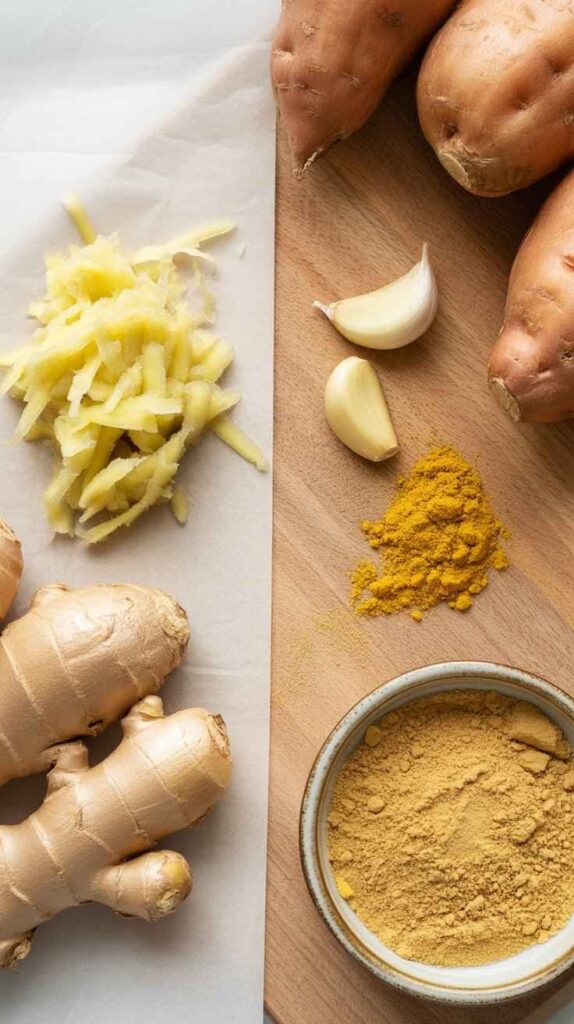
Do not skip blooming the curry powder. Adding the spice to the hot oil for that 60-second bloom before adding the liquid is what separates a flat, one-dimensional curry soup from one with genuine depth and complexity. It is a small step that makes an enormous difference to the final flavor.
Use fresh ginger, not ground. Fresh ginger has a bright, lively, slightly floral heat that ground ginger simply cannot replicate. Ground ginger is more concentrated and slightly dusty in character — it works in a pinch, but fresh ginger is strongly preferred here. Use about half a teaspoon of ground ginger if fresh is unavailable.
Always use full-fat coconut milk. The fat content in full-fat coconut milk is what creates that signature velvety, luxurious texture. Light coconut milk is mostly water and will make the soup noticeably thinner and less satisfying. The calorie difference is minimal compared to the texture improvement — full-fat is absolutely worth it.
Season the soup in layers. Add a pinch of salt when the onions are sautéing, another when the broth goes in, and then taste and adjust at the very end. Layered seasoning creates a much more balanced flavor than seasoning everything at once at the finish.
Allow the soup to rest before serving. If you have a few extra minutes, letting the finished soup sit off the heat for 5 minutes before serving allows the flavors to settle and deepen. This is a small detail but makes a noticeable difference to the overall balance.
Conclusion
This Sweet Potato Coconut Curry Soup is the kind of recipe that proves beyond any doubt that healthy, plant-based cooking can be indulgent, deeply satisfying, and full of bold, layered flavor. It requires minimal skill, a handful of accessible ingredients, and less than 45 minutes of your time — yet the result is a soup that tastes genuinely restaurant-worthy. The combination of sweet potato, warming curry, bright ginger, and luxurious coconut milk creates something that is greater than the sum of its parts: a bowl that nourishes, comforts, and genuinely delights in equal measure. Make it on a cold evening, serve it with good bread, and watch it become one of the most requested recipes in your household. It is that kind of dish — the kind you come back to again and again, through every season and every craving, because nothing else quite does the job in the same way.
Frequently Asked Questions
Can I make this soup completely vegan? Yes, this recipe is very easy to make vegan. Simply substitute the chicken broth with a good-quality vegetable broth. All other ingredients in the recipe are already entirely plant-based. The flavor with vegetable broth is slightly lighter and more delicate, but absolutely delicious and completely suitable for a vegan or plant-based diet.
Do I need to peel the sweet potatoes before cooking? Yes, it is recommended to peel the sweet potatoes for this soup. Unlike baby potatoes in a salad, where the skin adds a pleasant rustic texture, sweet potato skin does not blend smoothly and can leave fibrous, slightly tough bits in the finished soup even after thorough blending. Peeling ensures a completely smooth, velvety result.
Can I use ground ginger instead of fresh ginger? Fresh ginger is strongly recommended for the best flavor — it has a bright, lively, slightly citrusy heat that ground ginger cannot replicate accurately. If you need to substitute, use approximately half a teaspoon of ground ginger in place of the fresh piece called for in this recipe, as ground spices are more concentrated in flavor. Add it along with the curry powder during the blooming stage.
What is the best blender to use for this soup? An immersion blender is the most convenient and safest option for this recipe, as it allows you to blend the soup directly in the pot without transferring hot liquid. If you only have a countertop blender, it works perfectly well — just blend in small batches, never filling the jug more than halfway, and hold a folded kitchen towel over the lid to allow steam to escape safely.
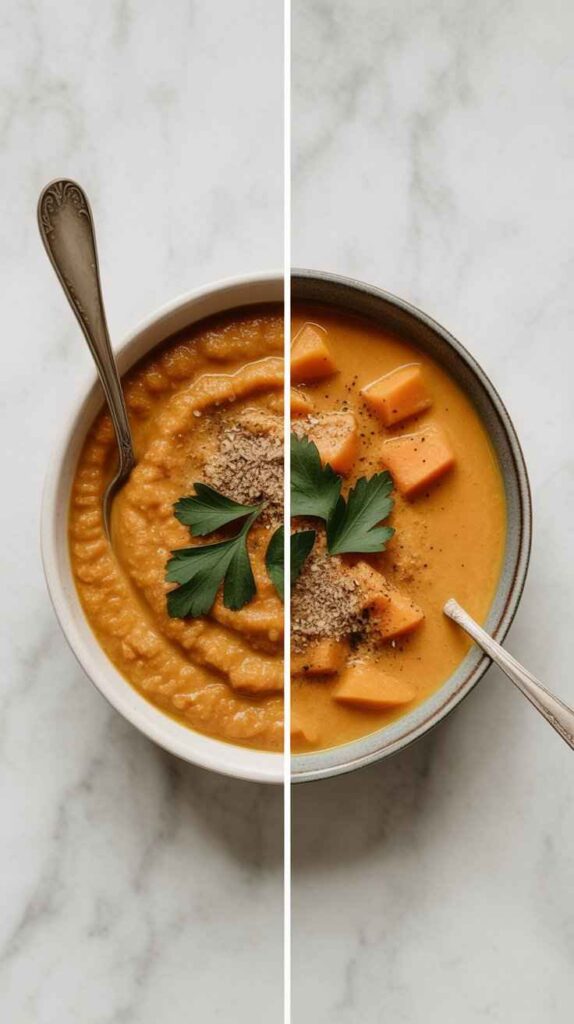
Can I make this soup thicker or thinner? Absolutely. For a thicker soup, simply use fewer potatoes or reduce the amount of broth slightly, or simmer the finished soup uncovered for a few extra minutes to let some liquid evaporate. For a thinner, more broth-forward consistency, add a splash of extra vegetable or chicken broth after blending until you reach your preferred texture.
Can I freeze this soup? Yes, this soup freezes exceptionally well and is an ideal candidate for batch cooking and freezing. Allow it to cool completely before transferring into freezer-safe containers or bags. It will keep in the freezer for up to 3 months. Thaw overnight in the refrigerator and reheat gently on the stovetop, stirring occasionally and adding a small splash of broth if it has thickened during freezing.
How long does this soup keep in the refrigerator? Stored in an airtight container in the refrigerator, this soup stays fresh and delicious for 4 to 5 days. The flavors actually deepen and improve after the first day as the spices continue to develop in the coconut milk base, making this an excellent make-ahead recipe for weekly meal preparation.
Should I roast the sweet potatoes before adding them to the soup? Roasting is optional but genuinely worthwhile if you have the extra time. Pre-roasting the sweet potatoes in a hot oven with a drizzle of oil and a pinch of salt creates a layer of caramelized, concentrated sweetness that raw potatoes cannot achieve. It adds approximately 25 minutes to the total preparation time but creates a noticeably more complex and deeply flavored finished soup.
Can I use light coconut milk instead of full-fat? You can, but the texture and richness of the finished soup will be noticeably affected. Full-fat coconut milk is mostly fat and water in a thick emulsion, creating that signature velvety, luxurious consistency. Light coconut milk is primarily water with a much lower fat content, resulting in a thinner, less creamy soup. Full-fat is strongly recommended for the best result.
What can I substitute for crème fraîche as a garnish? Full-fat sour cream is the most direct substitute and provides a very similar tangy richness. Plain Greek yogurt is an excellent lighter option that adds a pleasant tartness. Crumbled goat cheese adds a more complex, slightly funky flavor that works beautifully with the warm curry spices. For a fully vegan option, a dollop of plain coconut yogurt or a drizzle of good-quality coconut cream is wonderful.
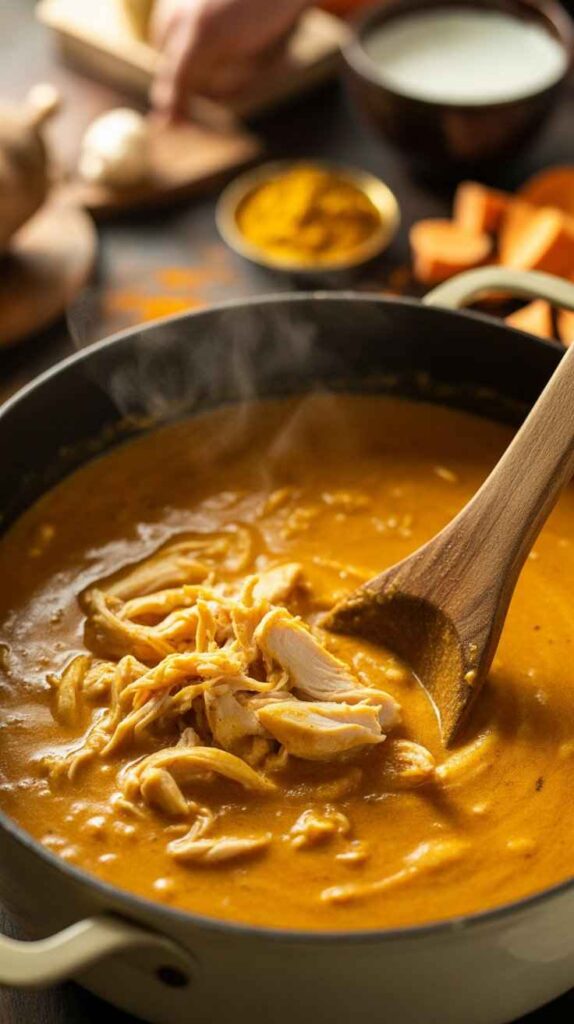
Can I add protein to make this soup more filling? Yes, several protein additions work beautifully in this soup. Shredded poached or rotisserie chicken stirred in after blending is a very popular option. Canned chickpeas, drained and rinsed, can be added before blending for extra body and protein while keeping the dish fully vegan. Silken tofu blended directly into the soup adds protein and extra creaminess without changing the flavor.
How do I prevent the soup from splattering when using an immersion blender? The key is to keep the blender head fully submerged in the liquid at all times before and during blending, and to keep the motor running before lifting it near the surface. Starting the blender while partially out of the liquid is what causes hot splatter. Work in slow, deliberate circular motions close to the bottom of the pot and bring the blender up gradually only after the immediate area around it is fully pureed.
Is this soup suitable for children? Yes, this soup is wonderfully family-friendly. The natural sweetness of the sweet potatoes is universally popular with children, and the richness of the coconut milk makes it feel comforting and mild. For younger children or anyone sensitive to spice, start with just half a tablespoon of mild curry powder and taste before adding more. The finished soup, even with the full amount of curry powder, is warmly spiced rather than hot.
What other vegetables can I add or substitute in this soup? This recipe is very adaptable. Butternut squash can replace some or all of the sweet potato for a slightly less sweet, more savory flavor. Carrots add natural sweetness and blend very smoothly. Parsnips add an interesting earthy, slightly spicy quality. Red bell pepper can be added to the aromatics for sweetness and color. All of these vegetables work within the same cooking time and blend beautifully with the curry and coconut base.
Why does the recipe add curry powder after sautéing the aromatics rather than directly to the broth? This technique is called blooming spices, and it is one of the most important steps in developing the flavor of any curry-based dish. When curry powder is added to hot oil, the heat releases the volatile aromatic compounds and essential oils locked inside the spice blend, activating and deepening their flavor significantly. Curry powder added directly to liquid never achieves the same level of warmth, depth, or aroma as spice that has been properly bloomed in fat first.
Can I make this soup in a slow cooker? Yes. Add all ingredients except the coconut milk to the slow cooker and cook on high for 3 to 4 hours or on low for 6 to 8 hours, until the sweet potatoes are completely tender. For the best flavor, still take a few minutes to sauté the onion, garlic, ginger, and curry powder in coconut oil on the stovetop first before adding them to the slow cooker. Once the potatoes are tender, blend with an immersion blender, stir in the coconut milk, and serve.
What is the best way to reheat this soup? The stovetop is the best method for reheating this soup. Pour the desired portion into a small saucepan and warm over low to medium heat, stirring occasionally, until heated through. Add a small splash of broth or water if the soup has thickened during storage. Microwave reheating also works well — heat in a covered bowl on medium power, stirring halfway through. Avoid boiling the soup aggressively during reheating as this can affect the coconut milk’s texture.
What bread pairs best with this soup? Crusty sourdough is the classic and most satisfying choice — its tangy chew and open crumb are perfect for mopping up the rich, spiced broth. Warm garlic naan or plain naan is a natural match given the curry flavor profile of the soup. A simple herbed flatbread works beautifully as well. For a gluten-free option, a slice of good-quality gluten-free seeded loaf or rice crackers are both excellent pairings.
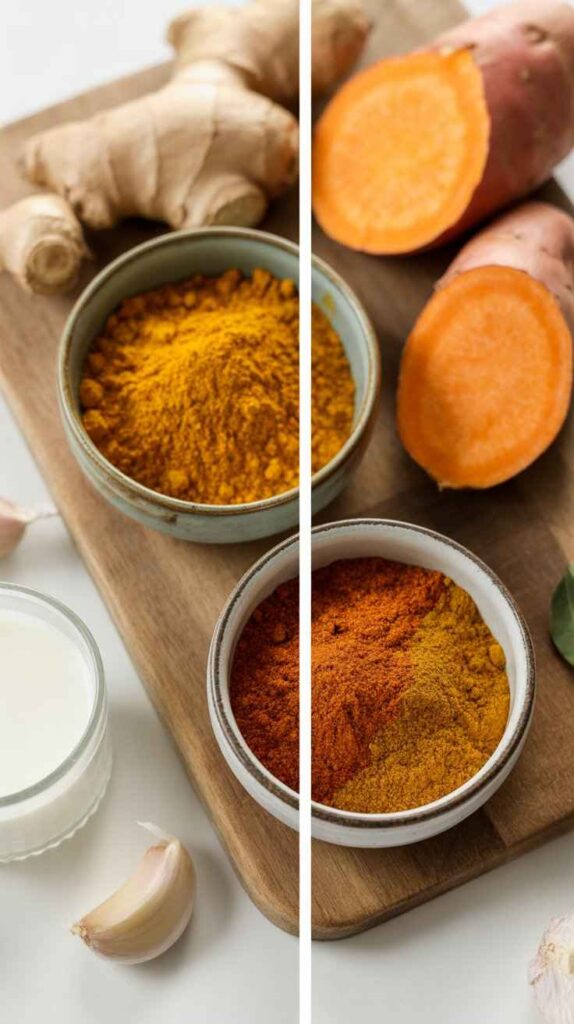
How spicy is this soup as written? As written with one to two tablespoons of standard curry powder, this soup is warmly and pleasantly spiced rather than hot. The heat level depends significantly on the specific curry powder you use — some mild curry powders are very gentle, while hot curry powders will create a noticeably spicier result. The coconut milk also tempers the heat considerably, making the overall profile comforting and approachable for most people. Start with one tablespoon if you are unsure of your heat tolerance and add more after tasting.
Can I use coconut cream instead of coconut milk? Yes, coconut cream can be used for an even richer, thicker, and more intensely coconut-flavored soup. Use slightly less than the full amount called for in the recipe — roughly three-quarters of a can — as coconut cream is considerably more concentrated than coconut milk. You may also want to add a small extra splash of broth to compensate for the reduced liquid volume and reach your desired consistency.
Printable Recipe Card
Want just the essential recipe details without scrolling through the article? Get our printable recipe card with just the ingredients and instructions.