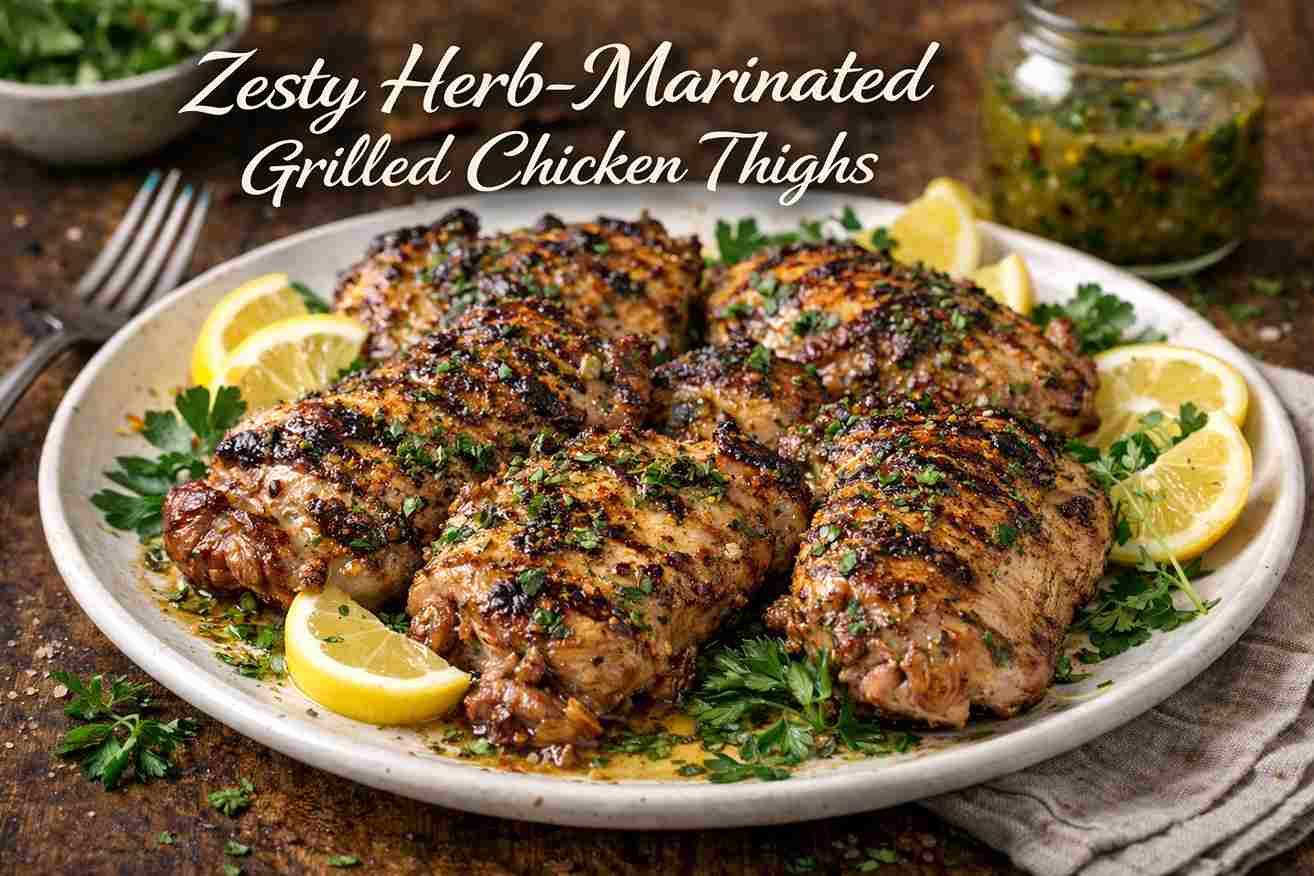
There is a moment in outdoor cooking that every grill enthusiast knows intimately — the moment when something deeply marinated, fragrant with fresh herbs and citrus, hits a hot grill grate and immediately fills the surrounding air with an aroma so specific, so layered, and so immediately evocative of warm evenings, good company, and unhurried meals that everyone within range stops whatever they are doing and moves instinctively toward the source. Zesty Herb-Marinated Grilled Chicken Thighs produce this moment with reliable, generous consistency, and they do so through a marinade philosophy that is simultaneously simple and deeply considered: fresh lemon — both its juice and its zest — paired with sage, rosemary, garlic, and good extra-virgin olive oil in proportions that create an Italian-Mediterranean flavor profile as old and as honest as the Tuscan hillside cooking that inspired it.
The recipe’s central ingredient intelligence is the lemon, understood and deployed with the full breadth of what it is capable of providing. Most cooks use lemon juice as an acidic brightener — a squeeze at the end to lift a dish — and this is a good and correct use of it. But this recipe uses lemon for everything it can do: the juice provides acidity that partially denatures the chicken’s surface proteins during marinating, creating a more porous structure that allows the marinade’s fat-soluble and water-soluble flavor compounds to penetrate deeper into the meat before the heat has a chance to denature those proteins permanently and seal the surface. The zest provides the essential oils — primarily limonene, linalool, and citral — that are intensely aromatic, fat-soluble, and capable of surviving heat exposure far better than the juice’s volatile compounds, meaning they remain flavor-active in the finished chicken long after the juice’s acidity has cooked off. And then there is the recipe’s most quietly brilliant technique: the second lemon, cut in half and placed cut-side down on the grill alongside the chicken, caramelizing and mellowing as the chicken cooks, its sugars browning through Maillard and caramelization reactions while its bitterness softens — producing a warm, concentrated, sweet-acid lemon juice that is fundamentally different from anything squeezed from a raw lemon, used to finish the chicken at the moment of serving with a flavor depth that no bottle or no raw squeeze can replicate.
The choice of bone-in, skin-on chicken thighs is equally deliberate. Thighs have a fat content three to four times higher than breast meat, and that intramuscular fat does two things during the high-heat grill that make them the definitively correct cut for this preparation: it continuously bastes the meat from the inside as it renders, preventing the moisture loss that dries breast meat out during extended grill exposure; and it drips onto the grill grates and ignites brief flares that deposit the specific volatile phenolic compounds of char-smoke onto the chicken’s skin surface — the compounds responsible for the irreproducible “this was cooked on a real grill” flavor that no oven or pan can provide. With a two-hour minimum marinade and this technique, you are producing, in twenty minutes of active grill time, something that tastes like it has been tended for far longer. This is the recipe’s most genuine accomplishment: the transformation of accessible ingredients through intelligent technique into a result that is genuinely gourmet.
Recipe Details
| Detail | Info |
|---|---|
| Cuisine | Italian-American |
| Course | Main Course |
| Difficulty | Easy |
| Servings | 4 People |
| Prep Time | 15 Minutes (plus marinating time) |
| Marinating Time | Minimum 2 Hours; Overnight Preferred |
| Cook Time | 15–20 Minutes |
| Total Active Time | 30–35 Minutes |
| Calories per Serving | Approx. 320 kcal |
| Dietary Compatibility | Gluten-Free, Keto-Friendly, Dairy-Free |
Ingredients
- 4–6 bone-in, skin-on chicken thighs
- ¼ cup extra-virgin olive oil
- 2 lemons — 1 for zesting and juicing (the marinade), 1 for grilling (the finishing step)
- 2 tbsp fresh sage, finely chopped
- 1 tbsp fresh rosemary, finely chopped
- 3 cloves garlic, minced
- 1 tsp red pepper flakes (optional, for heat)
- Kosher salt and freshly ground black pepper, to taste
Step-by-Step Instructions
Step 1 — Prepare the Marinade: Building the Flavor Foundation
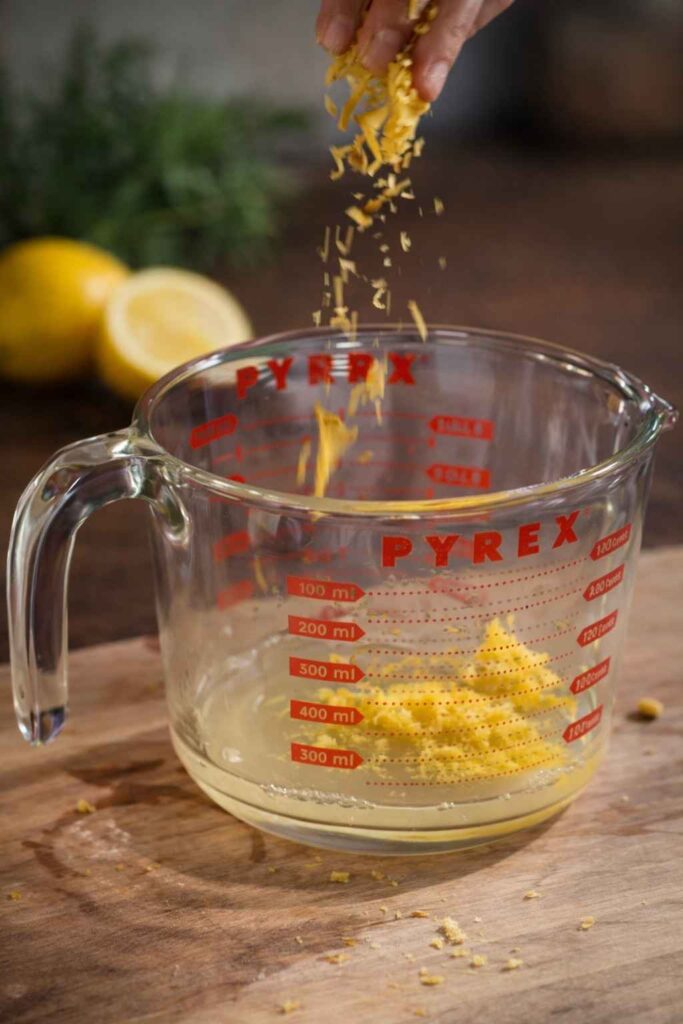
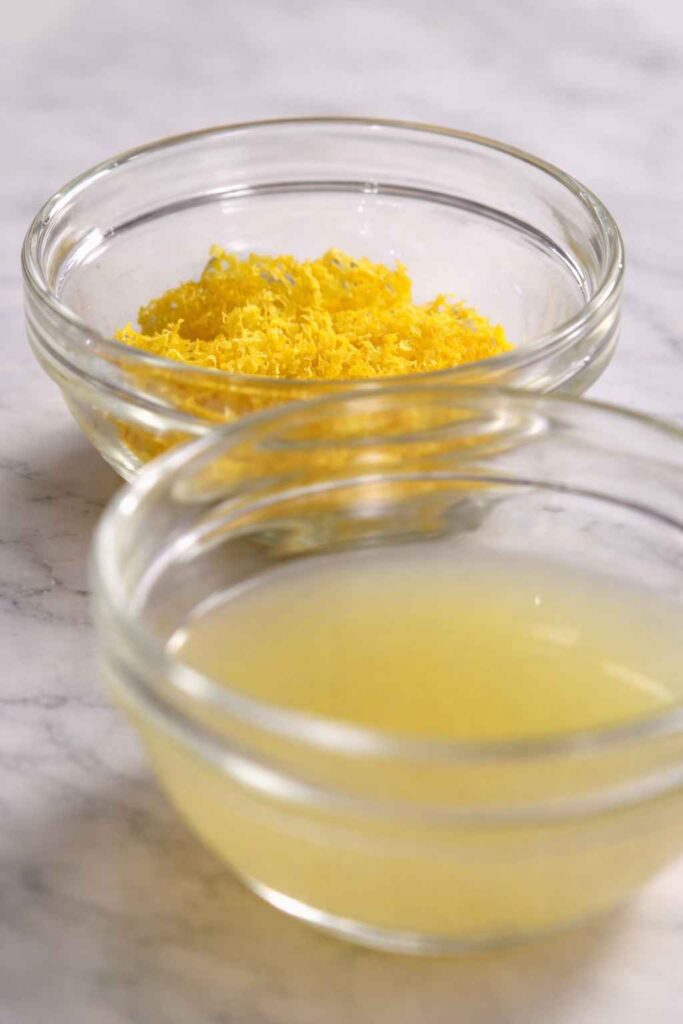
Before the chicken is touched, the marinade must be assembled — and it must be assembled with the correct sequencing of ingredients to maximize the flavor extraction from each component. Take the first lemon and zest it completely before cutting it for juicing — a firm, whole lemon provides the structural rigidity necessary for clean, controlled zesting, while a halved, partially juiced lemon is too floppy to handle cleanly against a microplane. Zest only the yellow flavedo layer — the outermost portion of the peel where the essential oil glands are concentrated — stopping before reaching the white pith beneath, which carries bitter limonin compounds that would introduce unwanted bitterness into the marinade. A properly zested lemon should yield approximately 1 teaspoon of fine, fragrant zest.
In a medium bowl, combine the ¼ cup of extra-virgin olive oil with the lemon zest and whisk briefly to begin distributing the zest through the oil. The fat-soluble essential oils in the lemon zest dissolve immediately and readily into the olive oil’s lipid phase — this oil-zest combination is effectively a flavored oil at this point, and every subsequent ingredient added to the bowl will be infused with its citrus-aromatic character. Add the freshly squeezed juice of the zested lemon, the chopped sage, the chopped rosemary, the minced garlic, and the red pepper flakes if using. Whisk the entire mixture together until the oil and lemon juice are combined into a loose emulsion and all solid ingredients are evenly distributed.
A brief note on the herbs: fresh sage and rosemary are not interchangeable with their dried counterparts in this recipe’s marinade application. Fresh herbs contain their full complement of volatile aromatic compounds — thujone and camphor in sage, 1,8-cineole and camphor in rosemary — in intact oil glands that burst and release these compounds when the herbs are chopped and when they make prolonged contact with the olive oil during marinating. Dried herbs have lost a significant portion of these volatiles through the drying process and what remains is qualitatively different — more concentrated and harsher in certain aromatic dimensions — producing a marinade with a less fresh, less nuanced character. During the marinating period, the olive oil progressively extracts additional aromatic compounds from the fresh herb surfaces, becoming increasingly infused over time in a way that dried herbs, with their largely depleted volatile oil reserves, cannot contribute.
Step 2 — Season and Marinate the Chicken
Season the chicken thighs generously on all surfaces — top, bottom, and around the bone — with kosher salt. This presalting is not the same as salting immediately before cooking: applied before marinating, salt draws a small amount of the chicken’s surface moisture outward through osmosis, creating a slightly concentrated brine on the skin surface that then reabsorbs into the meat’s cells, carrying dissolved salt ions into the protein structure itself. This process — which requires time to complete — results in chicken that is seasoned throughout its interior rather than only on its surface, and that retains more of its internal moisture during cooking because the dissolved salt ions increase the water-holding capacity of the myofibrillar proteins.
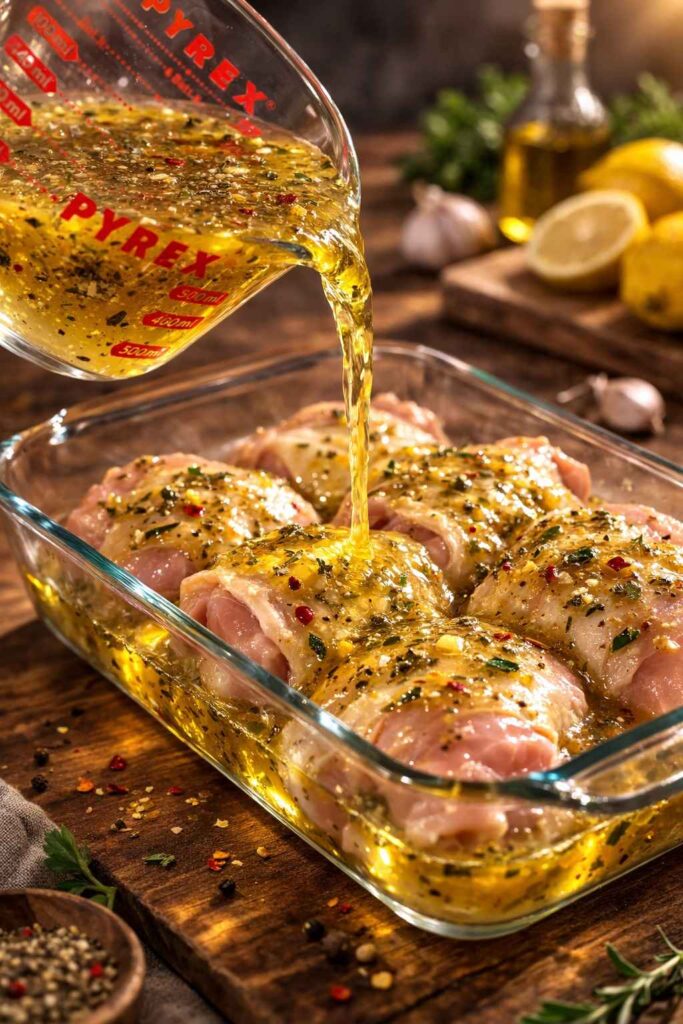
Place the seasoned chicken thighs in a single layer in a shallow baking dish or in a large resealable plastic bag. Pour the marinade over the chicken, ensuring that every surface of every thigh is completely coated. If using a dish, turn the thighs several times to coat thoroughly and press the herb pieces flat against the skin surfaces so they make maximum contact during marinating. If using a bag, seal it after pressing out as much air as possible and massage the marinade through the bag to coat every surface.
Step 3 — The Resting Time: Why Patience Produces Better Chicken
Cover the marinating chicken and refrigerate for a minimum of 2 hours. Overnight marination of 8 to 12 hours produces a meaningfully superior result for three reasons that compound on each other over time. First, the lemon juice’s citric acid has more time to work on the chicken’s surface protein structure — partially denaturing the myosin proteins in the outermost muscle layers, creating a slightly more open, more porous surface through which the marinade’s fat-soluble flavor compounds can penetrate inward. Second, the olive oil has more time to extract and distribute aromatic compounds from the sage, rosemary, and garlic throughout the marinade liquid, ensuring that by the time the chicken reaches the grill, the oil coating its surface is richly infused with the full complexity of all the marinade’s aromatics. Third, the garlic’s allicin compounds — produced at the moment of mincing and converting to secondary allyl sulfur compounds over time — mellow from their initial harsh, pungent state to a softer, sweeter, more integrated aromatic character that complements rather than dominates the surrounding herbs.
One important marinating caution: do not marinate the chicken at room temperature for longer than 2 hours. The USDA’s food safety guidelines specify that raw poultry in the temperature danger zone of 40–140°F (4–60°C) should not be held for more than 2 hours cumulative, as bacterial multiplication rates at ambient temperature (approximately 68–72°F/20–22°C) can bring Salmonella and Campylobacter from safe initial concentrations to potentially illness-causing concentrations within this timeframe. Overnight marination must be conducted under refrigeration at or below 40°F (4°C), where bacterial doubling times are sufficiently slow that even 12 hours of exposure produces negligible population growth.
Step 4 — Grill the Chicken: Skin-Side First, Medium-High Heat
Remove the marinated chicken thighs from the refrigerator 20 to 30 minutes before grilling, allowing them to approach room temperature. Cold meat placed on a hot grill creates a steep temperature gradient between the surface and the center — the surface reaches cooking temperature rapidly and risks charring before the center has had adequate time to cook through to the required 165°F internal temperature. Room-temperature meat cooks more evenly because the starting temperature differential between surface and center is smaller, meaning both progress toward their respective target temperatures at a more synchronized rate.
Preheat your grill to medium-high heat — approximately 400–450°F (204–232°C) at the grate surface. A properly preheated grill is essential for two reasons: the grate must be hot enough to prevent the chicken skin from adhering to the metal (the Leidenfrost effect created by sufficient heat produces a thin steam layer between the skin and the grate that prevents sticking), and it must be hot enough to develop the Maillard reaction at the chicken skin surface within the first minute of contact — producing the visible char marks and the deeply browned, caramelized skin color that is the visual and flavor signature of properly grilled chicken.
Place the chicken thighs skin-side down first — this is the most important single decision in the entire grilling process. The skin contains the highest concentration of subcutaneous fat of any part of the thigh, and this fat must be rendered from the skin before the skin can crisp. Starting skin-side down allows the fat to render slowly and completely during the first 7 to 9 minutes of cooking, producing a thin, crispy, fully rendered skin layer that provides textural contrast to the tender meat beneath. Starting skin-side up and finishing skin-down does not provide adequate time for the fat to render fully before the desired internal temperature is reached — resulting in a pale, soft, fatty skin rather than the golden, crackling skin that defines a correctly grilled chicken thigh. Grill skin-side down for 7 to 9 minutes without moving the chicken — allow the grill marks to develop fully and the skin to render before flipping. Flip once and grill the bone side for another 7 to 9 minutes until the internal temperature measured at the thickest part of the thigh (away from the bone) reads 165°F (74°C) on an instant-read thermometer.
Step 5 — The Grilled Lemon: The Recipe’s Defining Technique
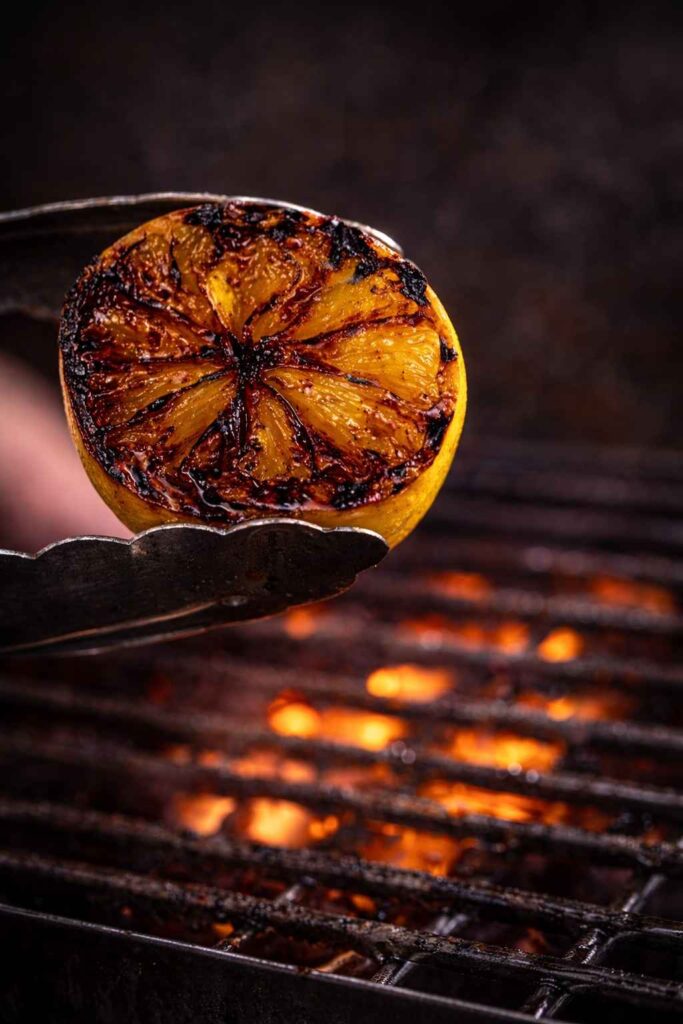
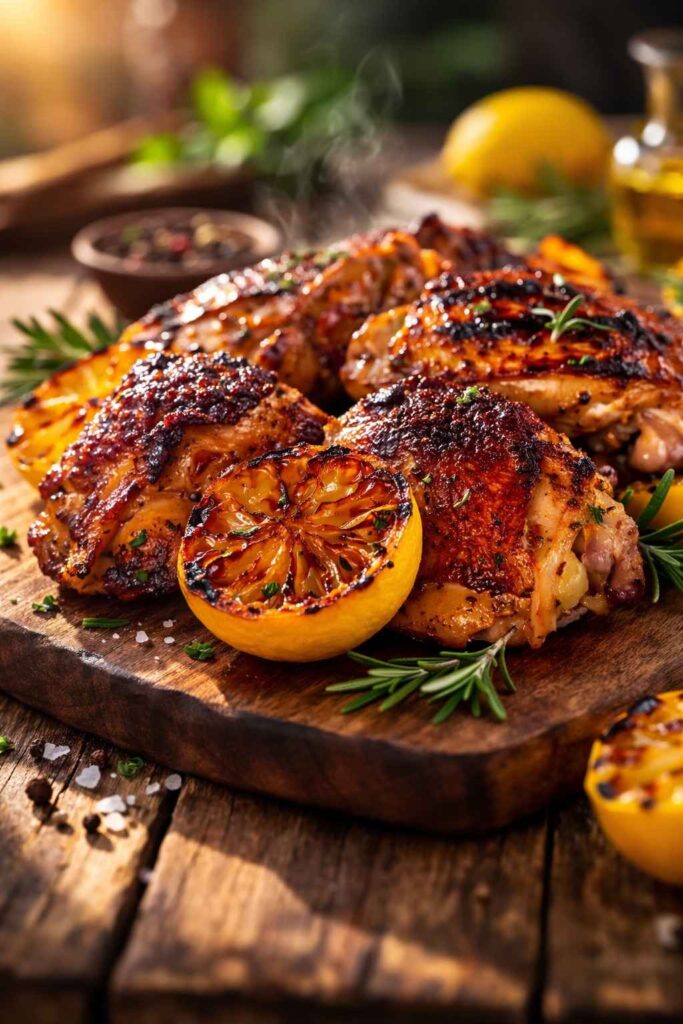
While the chicken is on the grill, cut the second lemon in half crosswise and place both halves cut-side down on the hottest available section of the grill. This step — which takes no additional attention or effort — transforms the lemon from a raw acidic ingredient into something fundamentally different in flavor character. As the cut surface of the lemon makes direct contact with the hot grate, the Maillard reaction occurs between the lemon flesh’s amino acids and its reducing sugars, producing brown melanoidin compounds and caramelization products that simultaneously deepen the lemon’s color to a dark amber-gold and transform its flavor from the sharp, one-dimensional sourness of raw lemon juice into a complex, sweet-bitter-acid character with caramelized depth. The heat also drives off a portion of the limonene and other volatile compounds responsible for lemon’s raw bitterness, mellowing the juice’s overall character. Allow the lemon halves to caramelize for 4 to 6 minutes — until the cut surface shows clear dark grill marks and feels soft when pressed — and remove them from the grill with tongs when the chicken is nearly done.
Step 6 — Rest and Finish
Remove the grilled chicken thighs from the grill and allow them to rest on a warm plate or cutting board for a full 5 minutes before serving. This rest period is non-negotiable and not merely conventional: during the intense heat of grilling, the chicken’s muscle proteins contract and squeeze the intracellular fluid toward the center of the meat, away from the hot exterior. During the rest period, as the temperature gradient between the surface and center equalizes, the pressure differential that caused this fluid migration disappears and the muscle fibers relax — allowing the moisture to redistribute more evenly throughout the entire piece. A chicken thigh cut immediately off the grill releases a dramatically larger quantity of juice onto the cutting surface than one rested for 5 minutes — every milliliter of that juice that pools on the plate rather than remaining in the meat represents lost moisture and lost flavor.
Immediately before serving, squeeze the warm, caramelized lemon halves directly over the rested chicken thighs — pressing firmly to extract every drop of the transformed juice. The combination of this finishing squeeze with the marinade’s herb-and-citrus-infused crust on the grilled skin produces the dish’s defining final flavor: warm, complex, sweet-acid citrus layered over the char-smoke of the grill and the herbal depth of the sage and rosemary. Serve immediately.
Conclusion: The Marinade as Flavor Architecture
Zesty Herb-Marinated Grilled Chicken Thighs demonstrate with clarity and elegance the principle that a great marinade is not merely a flavor coating but a flavor architecture — a system of ingredients designed to interact with the chicken’s protein structure, fat content, and cooking environment in ways that produce a result meaningfully superior to what any single component could achieve alone. The lemon juice’s acidity opens the meat’s surface. The olive oil carries the fat-soluble herb aromatics deep into that opened surface during the marinating period. The zest’s essential oils survive the grill’s heat and remain flavor-active in the finished dish. The salt’s osmotic action seasons the meat throughout its interior. The rosemary and sage’s volatile compounds infuse the surrounding oil and transfer to the meat surface during cooking, surviving as flavor-active compounds in the rendered fat of the finished skin. And the grilled lemon’s caramelized finishing squeeze layers a final dimension of complex, mellowed citrus over everything — a dimension that could only have been produced by heat, and that only a cook who understood what heat does to lemon could think to deploy.
The choice of bone-in, skin-on thighs rewards this technique perfectly. The skin renders to a crackling, herb-infused crust that encases the succulent, evenly seasoned dark meat beneath — providing both a textural contrast and a flavor concentration (the rendered fat carries the marinade’s aromatic compounds throughout its structure) that boneless, skinless alternatives simply cannot produce. At approximately 320 calories per serving, this is a nutritionally generous main course with substantial protein (approximately 28–32g per serving from the thigh meat), meaningful healthy monounsaturated fat from both the chicken and the olive oil, and no carbohydrates in its base form — fully compatible with ketogenic, gluten-free, and dairy-free dietary approaches.
Pair these thighs with a crisp green salad dressed with nothing more than the same olive oil and lemon used in the marinade, or with roasted potatoes whose browning echoes the grill’s own Maillard character, or with light couscous that absorbs the chicken’s resting juices when plated alongside. In any configuration, at any occasion from a weeknight family dinner to a summer backyard gathering, these chicken thighs deliver the specific pleasure of outdoor cooking at its most honest and most accomplished.
🍽️ Explore More Recipes
Browse our collection by category